


Table of Contents Show
Architectural diagrams are powerful tools, serving as the lifeblood of architectural design and communication. They provide a visual language that architects use to explore, understand, and communicate architectural concepts. This article aims to delve into the significance and types of architectural diagrams, catering to both practicing architects and budding students in the field.
As we know that architectural diagrams are graphic representations of architectural concepts, ideas, or designs. They help translate abstract ideas into concrete visuals, ensuring that a design concept is clearly understood by all stakeholders. These visualizations are typically used to articulate design intentions, contextual relationships, functional aspects, and structural solutions in a way that’s easy to comprehend. They encapsulate complex design concepts and help establish a common ground for discussions among architects, designers, clients, and builders.

Significance of Architectural Diagrams
Architectural diagrams facilitate effective brainstorming and communication of ideas, serving as an essential part of an architect’s design journey. They allow architects to synthesize, analyze, and communicate complex spatial situations swiftly and effectively.
Moreover, diagrams are instrumental in conceptualizing and envisioning new spaces, especially during the early stages of design development. They form the backbone of design, informing the project’s direction and helping architects communicate their vision with various stakeholders.
Types of Architectural Diagrams
While diagrams can be broadly categorized into two types—conceptual and technical—there are numerous variations within these categories. Let’s take a look at some of these:
- Concept diagrams are used in the initial stages of the design process to convey the central concept or the main idea behind the design. They are abstract and less detailed but effectively communicate the core principles of the design. They could represent various elements, such as spatial relationships, site context, or the main architectural idea.
- Spatial diagrams highlight the organization and relationships between different spaces in a design. They can show circulation paths, areas of public and private space, or how indoor and outdoor spaces relate to each other.

- Site diagrams depict the proposed design in relation to its site context. They show the design’s location, orientation, topography, existing features, and relationship with the surroundings. They can also illustrate environmental aspects like sunlight, wind, and views.
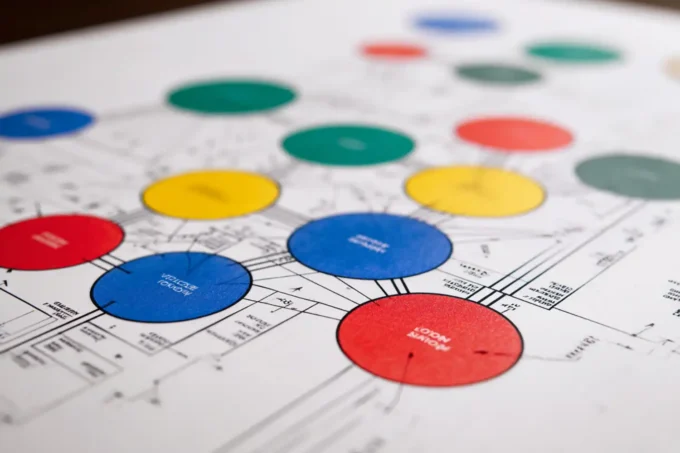
- Functional or bubble diagrams represent the functionality and relationship between different spaces or components of a building. They are used to show how different spaces work together, their hierarchies, and their adjacency requirements.

- Structural diagrams depict the structural system of a building. They can illustrate elements like load paths, structural grids, and the relationship between different structural components.
- Technical diagrams are detailed diagrams that show specific elements of a design, such as construction details, HVAC systems, plumbing, and electrical systems. They are more detailed and specific, often used during the construction phase of a project.
Creating Effective Diagrams
A good diagram is not just aesthetically pleasing, but it also efficiently communicates the essence of the design. It requires a deep understanding of architecture, a grasp of visual design principles, and proficiency in design software and tools.
The essence of a good diagram lies in its clarity and simplicity. It should be easy to understand, without overloading the viewer with information. The focus should be on representing the core idea succinctly. The use of colors, symbols, and labels should be consistent and intuitive, aiding in comprehension rather than causing confusion!
Tools for Creating Architectural Diagrams
Diagrams can be made with almost any medium, and most architects move between several. Quick hand sketches and trace paper remain the fastest way to think through an idea. For polished, presentation-ready diagrams, vector tools such as Adobe Illustrator or Affinity Designer give clean lines, consistent line weights, and easy color. Many architects model in SketchUp, Rhino, or a BIM tool, export simple line views, and then refine them in Illustrator or Photoshop. The tool matters less than the clarity of the result.
Diagrams Across the Design Process
Diagrams are not only an early-stage tool. At the start of a project they capture the concept, analyze the site, and test programmatic relationships. In the middle of design they explain circulation, structure, and environmental strategy to the team and the client. Near the end they communicate the finished idea in competitions, planning submissions, and portfolios. The same visual language carries an idea from the first sketch to the final presentation.
Conclusion
Architectural diagrams are the shorthand of design, turning complex spatial ideas into images that anyone can read. By understanding the main types, keeping each diagram clear and focused, and choosing the right tool for the job, architects and students can communicate their thinking far more effectively, whether they are exploring a first concept or presenting a completed project.
- and architectural visualization
- Architectural Diagram
- architectural diagram basics
- Architectural Diagram Create
- Architectural Diagram Design
- Architectural Diagram Design Guide
- Architectural Diagram Guide
- architectural diagram symbols
- Architectural Diagram Tips
- Architectural Diagram Tutorials
- Architectural Diagrams
- architectural diagrams for beginners
- architectural drawing guide
- architecture diagram examples
- architecture diagram techniques
- architecture diagram tutorial
- how to read architectural diagrams
- learn architectural diagrams
- types of architectural diagrams
- understanding architectural diagrams

















Leave a comment