


Table of Contents Show
Shenzhen modern architecture didn’t arrive quietly. In just a few decades, we watched a fishing village become a global design lab, testing supertalls, transit-first districts, sponge city systems, and cultural hubs that punch well above their age. As urbanists, travelers, or curious design fans, we come to Shenzhen to see how fast-forward city-making looks when it works, and where it still stumbles. Here’s how the city’s buildings and public realm are redefining 21st‑century urban life.

From Fishing Village to Design Powerhouse
Shenzhen’s story is urban alchemy. Designated a Special Economic Zone in 1980, it pulled in talent, capital, and a risk-taking mindset, then turned that into a skyline and street-life formula others try to copy. What sets the city apart isn’t just scale: it’s iteration. Buildings here act like prototypes: façades tune daylight and heat, podiums layer retail with transit, and districts test governance ideas such as sponge city benchmarks and 15‑minute neighborhoods. We’ve learned to read Shenzhen not only by its towers but by the connective tissue, greenways, skywalks, waterfronts, that make the city legible and livable.
Skyline Icons That Define the City
Ping An Finance Center
At 599 meters, the Ping An Finance Center slices into the clouds with a tapered, stainless-steel-clad form that shrugs off typhoon winds. The building’s crisp geometry and stacked public sequences, mall, transit links, and an observation deck, turn a private headquarters into a metropolitan anchor.

China Resources Tower (Spring Bamboo)
The “Spring Bamboo” rises over Houhai with a pleated façade that reads like a bundle of stalks. Its radial structure supports column-free interiors, while the tower’s public podium softens the corporate edge with waterfront access and retail that bleeds into the promenade.
KK100 and the Vertical City
KK100’s torpedo-like silhouette helped define Luohu’s earlier wave of vertical growth. We read it as a proof-of-concept for mixed-use stacks in Shenzhen: office, hotel, retail, and transit co-located so daily life happens up, down, and across, not just at street level.
Shenzhen Bay Super Headquarters District Emergence
Planned as a cluster of next-gen supertalls and public spaces on the bay, the Super Headquarters District is where big tech, finance, and civic programs converge. The aim is clear: stitch towers to transit, parks, and waterfront so the area functions as a walkable job center rather than a 9-to-5 office park.
Cultural and Corporate Landmarks Beyond the Skyline
Shenzhen Stock Exchange’s Elevated Podium
OMA’s design lifts the trading floor into a hovering volume, part literal elevation, part metaphor for transparency. The deep overhang creates shaded public space and announces a civic ambition: markets visible to the city, not sealed from it.

Sea World Culture and Arts Center
Maki and Associates delivered a serene ensemble of stacked galleries, terraces, and courtyards at Shekou’s waterfront. As home to Design Society, it’s a cultural hinge where exhibitions, schools, and the promenade intersect, exactly the kind of hybrid program that makes Shenzhen modern architecture feel porous.
Bao’an International Airport Terminal 3
Terminal 3’s honeycomb skin by Studio Fuksas pulls daylight deep into the concourse while controlling glare, reducing artificial lighting needs. If airports are cities’ front doors, this one greets us with a bright, legible field of movement, no drama, just flow.
Tencent Seafront Headquarters and DJI Headquarters
NBBJ’s Tencent campus uses sky bridges and terraced atria to knit vertical neighborhoods, encouraging staff to walk rather than shuttle. DJI’s Sky City by Foster + Partners suspends glass boxes from mega-trusses, doubling as R&D stage set, where drones literally fly through the architecture. Corporate, yes, but also public-facing in spirit: plazas, retail, and edges that engage the street.
Districts and the Public Realm
Qianhai’s Waterfront and Financial Core
Qianhai is Shenzhen’s next big urban lab: a dense financial center with generous waterfront parks, ferries, and metro interchanges. The design briefs emphasize shade, breezeways, and active ground floors so the area hums well past office hours.

OCT Loft and Adaptive Reuse Culture
We love OCT Loft for its proof that adaptive reuse can set a city’s cultural tone. Former factories became studios, cafés, and galleries, stitched together by pocket parks and courtyards. It’s not precious, just comfortable, bikeable, and quietly green.
Parks, Greenways, and Pedestrian Skywalks
From Shenzhen Bay Park’s long coastal ribbon to central green corridors and elevated walkways in areas like Futian and Huaqiangbei, the city keeps adding non-motorized routes that make short trips delightful. These moves are tiny on a map but huge in daily life: shade, seating, vending, and easy crossings.
Building for Climate and Sustainability
Shading, Ventilation, and High-Performance Facades
Subtropical humidity and intense sun force design discipline. We see operable shading, vertical fins, double-skin systems, and high-performance glazing used to cut heat gain while preserving daylight and views. Courtyards, voids, and atria pull breezes through deep plans, old wisdom, new tech.
Blue-Green Infrastructure and Sponge City Strategies
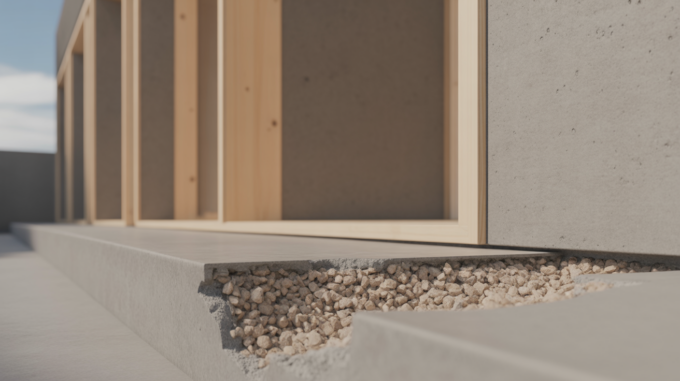
Shenzhen’s sponge city pilots retrofit streets and parks with permeable paving, rain gardens, bioswales, and retention basins that slow and clean runoff. On the waterfront, terraced edges and mangrove-sensitive designs reduce flood risk while restoring habitat.

Transit-Oriented Development and the 15-Minute City
With a rapidly expanding metro and regional rail connections, development clusters around stations: short blocks, active podiums, and last‑mile links via bike and e-scooter. The goal is simple, daily needs within a 15‑minute walk, so residents aren’t hostage to traffic or weather.
Challenges, Contradictions, and Community
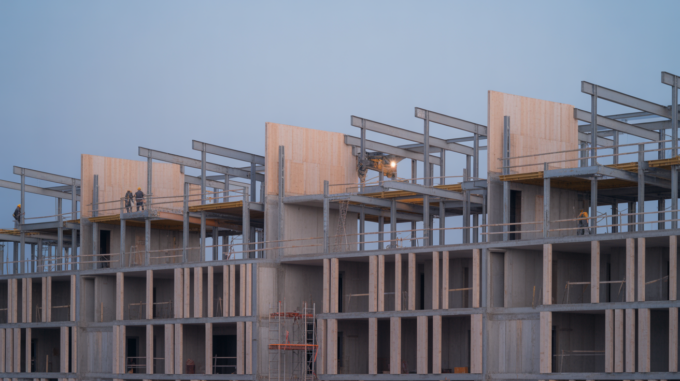
Shenzhen modern architecture moves fast, but speed has a cost. Redevelopment pressure can sideline informal neighborhoods where affordability and social networks thrive. Iconic towers get headlines while older districts ask for better schools, clinics, and shade at the bus stop. Heat stress is rising, and embodied carbon from constant construction isn’t a footnote. Our takeaway? Keep the ambition, slow the churn. Double down on retrofit, preservation of human-scaled blocks, and co-design with residents so upgrades don’t erase community memory. The city’s best work happens when big gestures, towers, transit, waterfronts, meet small comforts: good lighting, trees that actually shade, benches where neighbors linger.
Conclusion
Shenzhen modern architecture shows what’s possible when design, policy, and industry sprint in the same direction. We come for the supertalls and stay for the public realm: skywalks, bayside parks, adaptive reuse, and climate‑savvy streets that make everyday life smoother. If the next chapter leans into retrofit over teardown and community voice over one‑way vision, Shenzhen won’t just keep leading, it’ll age gracefully, too. And that might be the boldest experiment yet.
- architectural innovation Shenzhen
- China modern city architecture
- contemporary buildings Shenzhen
- Future city architecture
- futuristic city design
- innovative urban design
- modern architecture in Shenzhen
- Shenzhen architectural landmarks
- Shenzhen architecture
- Shenzhen building trends
- Shenzhen city planning
- Shenzhen construction boom
- Shenzhen design and architecture
- Shenzhen skyline
- Shenzhen urban transformation
- smart city Shenzhen
- urban development China
- urban development trends China
- urban innovation Shenzhen









Leave a comment