


Table of Contents Show
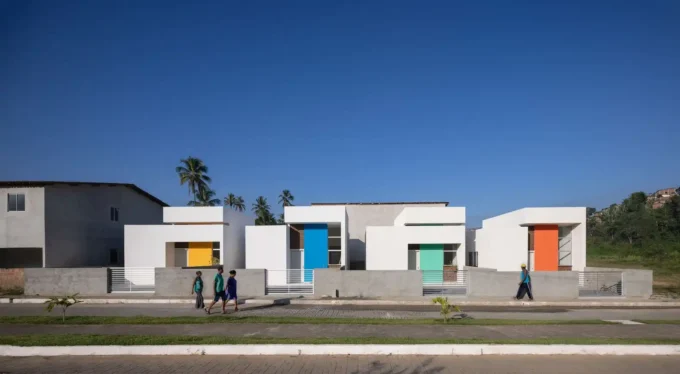
Located five kilometres from the town of Pinotepa Nacional in Oaxaca, this social housing project by HDA: Hector Delmar Arquitectura in collaboration with M+N Diseño stands as a compelling example of participatory, community-driven architecture. Designed for thirty-eight families whose livelihoods are deeply connected to agriculture, the project emerges from an inclusive design process that places inhabitants at the center of decision-making.
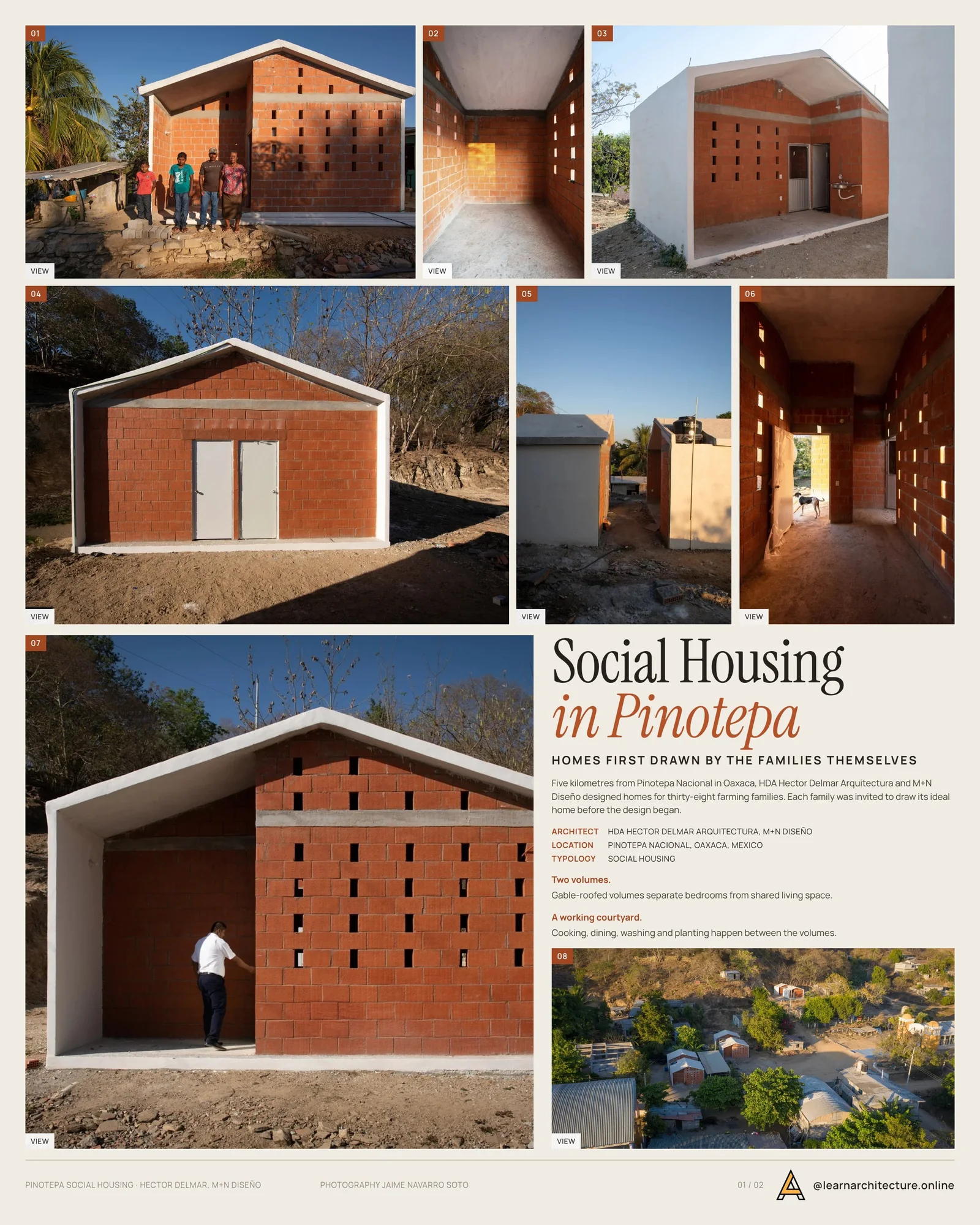
Rather than imposing a standardized housing model, the architects worked closely with future residents, developers, and local actors to understand everyday routines, traditions, and spatial needs. Each family was invited to draw their idea of an ideal home, an exercise that became the foundation for translating social, cultural, and climatic realities into architectural form. The result is not simply a group of houses, but a living framework that supports belonging, autonomy, and long-term adaptability.

Participatory Design as a Social Foundation
At the heart of the project lies a commitment to collective authorship. The design process unfolded through interviews, workshops, and direct exchanges with residents, allowing multiple perspectives to shape the final outcome. These conversations revealed the importance of outdoor life, shared family activities, small-scale agriculture, and flexible spaces that could evolve over time.
This participatory approach ensured that the homes were not abstract solutions, but reflections of real lifestyles. Unlike many social housing developments that are disconnected from their users, this project is built on land already owned by the families and inserted into the existing rural fabric. This decision reinforces a strong sense of ownership and identity, allowing the settlement to grow naturally as part of the community rather than as an isolated intervention.

Spatial Organization: Two Volumes, One Courtyard
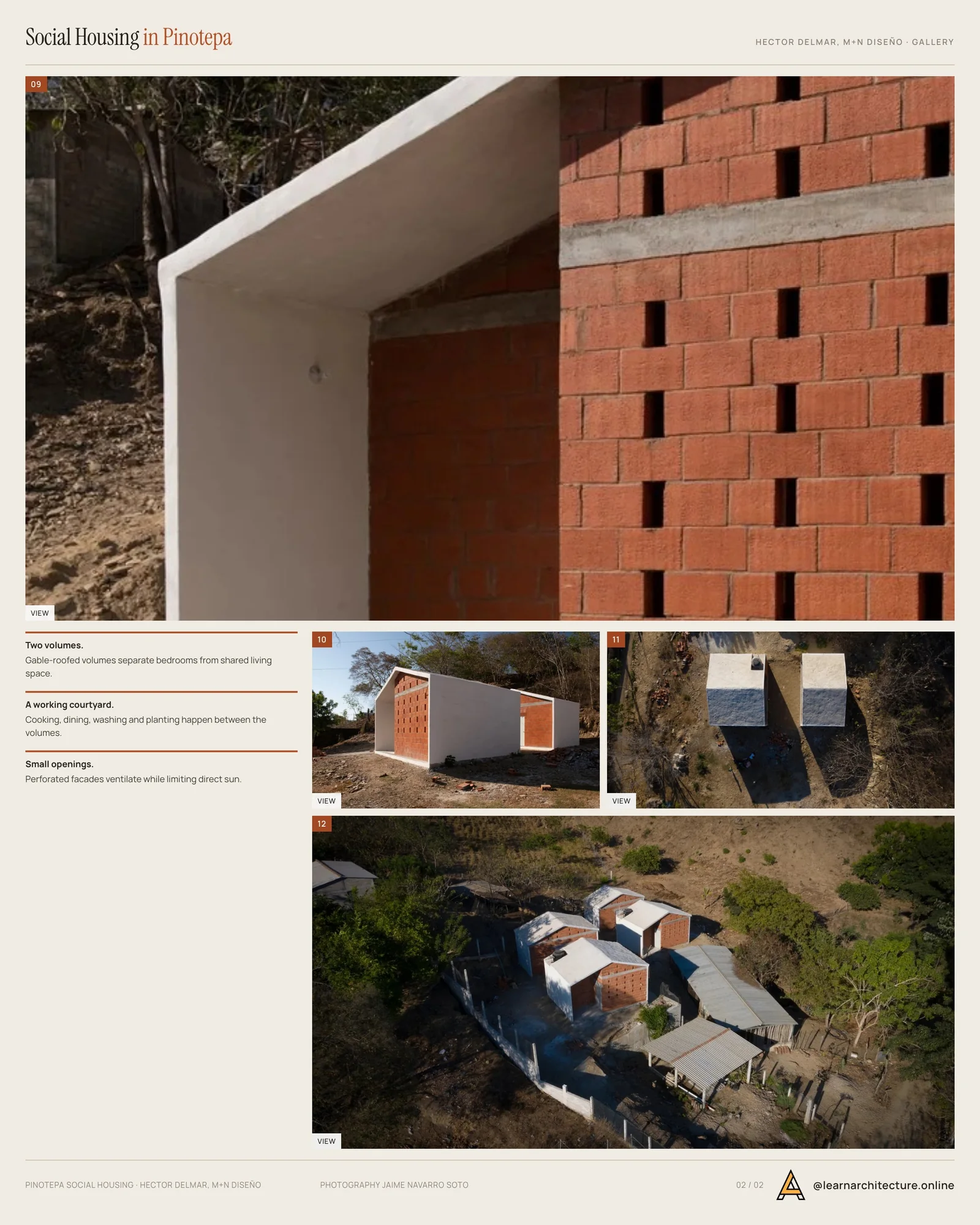
Each dwelling is composed of two simple volumes with gable roofs, a configuration inspired by local vernacular architecture. This dual-volume strategy clearly separates private areas (such as bedrooms) from communal living spaces, responding to both social customs and climatic needs.
Between the two volumes, a central courtyard becomes the core of daily life. More than a circulation space, this semi-private outdoor area functions as an extension of the home, hosting cooking, dining, washing, resting, and productive activities. A covered zone accommodates the kitchen and dining area, while a shared bathroom and open ground allow for planting orchards or raising animals, practices that are essential to the families’ agricultural way of life.
The courtyard acts as a climatic moderator as well, promoting cross-ventilation and providing shaded outdoor living space in a region characterized by high temperatures and humidity.

Climate-Responsive Architecture Inspired by Tradition
The architectural language draws heavily from regional building traditions, particularly in the design of the gable roofs. Their inclination facilitates the dissipation of hot air and reduces humidity accumulation inside the homes, an essential strategy in Pinotepa Nacional’s tropical climate.
Facades are punctuated with small, carefully positioned openings, allowing natural ventilation while minimizing direct solar gain. This balance ensures thermal comfort without relying on mechanical systems, reinforcing the project’s low-cost and low-energy ethos.
By adapting vernacular principles rather than replicating them literally, the project achieves a contemporary expression that remains deeply connected to its context.

Material Choices: Economy, Durability, and Comfort
Material selection was guided by availability, affordability, and performance. The homes are constructed using prefabricated clay blocks, chosen for their thermal properties and familiarity within local construction practices. These walls are wrapped in a concrete envelope, finished with a white coating made from lime and sealants. This treatment reflects sunlight, reduces heat gain, and protects against humidity infiltration.
Beyond cost efficiency, these materials contribute to seismic resistance, an important consideration in a region prone to earthquakes. The construction system balances simplicity with resilience, ensuring long-term durability while remaining accessible to local builders and future maintenance by residents themselves.

Belonging Through Integration, Not Displacement
One of the project’s most significant achievements is its integration into the existing rural landscape. Unlike many social housing initiatives that relocate communities to peripheral or generic sites, this development respects existing land ownership and settlement patterns.
By embedding the homes within the agricultural territory where families already live and work, the project reinforces social networks and cultural continuity. Architecture here becomes a tool for empowerment, not displacement, strengthening ties between people, land, and tradition.

Conclusion: Architecture as a Collective Process
Social Housing in Pinotepa Nacional demonstrates how architecture can emerge from dialogue rather than prescription. Through participatory design, climate-sensitive strategies, and material pragmatism, the project delivers dignified housing that responds to real needs while celebrating local identity.
More than a physical solution, the project represents a social process, one where listening becomes a design tool and where community knowledge shapes the built environment. It offers a powerful model for future social housing initiatives, proving that meaningful architecture is not defined by scale or complexity, but by its ability to support everyday life with care, respect, and adaptability.
Photography: Jaime Navarro Soto


- Affordable housing architecture
- Agricultural housing
- Climate-responsive housing
- Community housing Mexico
- Community-led design
- Courtyard housing
- HDA Hector Delmar Arquitectura
- Housing and social identity
- Latin American social housing
- Lime plaster architecture
- Low-cost housing design
- M+N Diseño
- Mexican contemporary architecture
- Participatory architecture
- Pinotepa Nacional architecture
- Rural housing design
- Seismic-resistant housing
- Social housing Oaxaca
- Sustainable rural architecture
- Vernacular architecture Mexico











Leave a comment