


Table of Contents Show
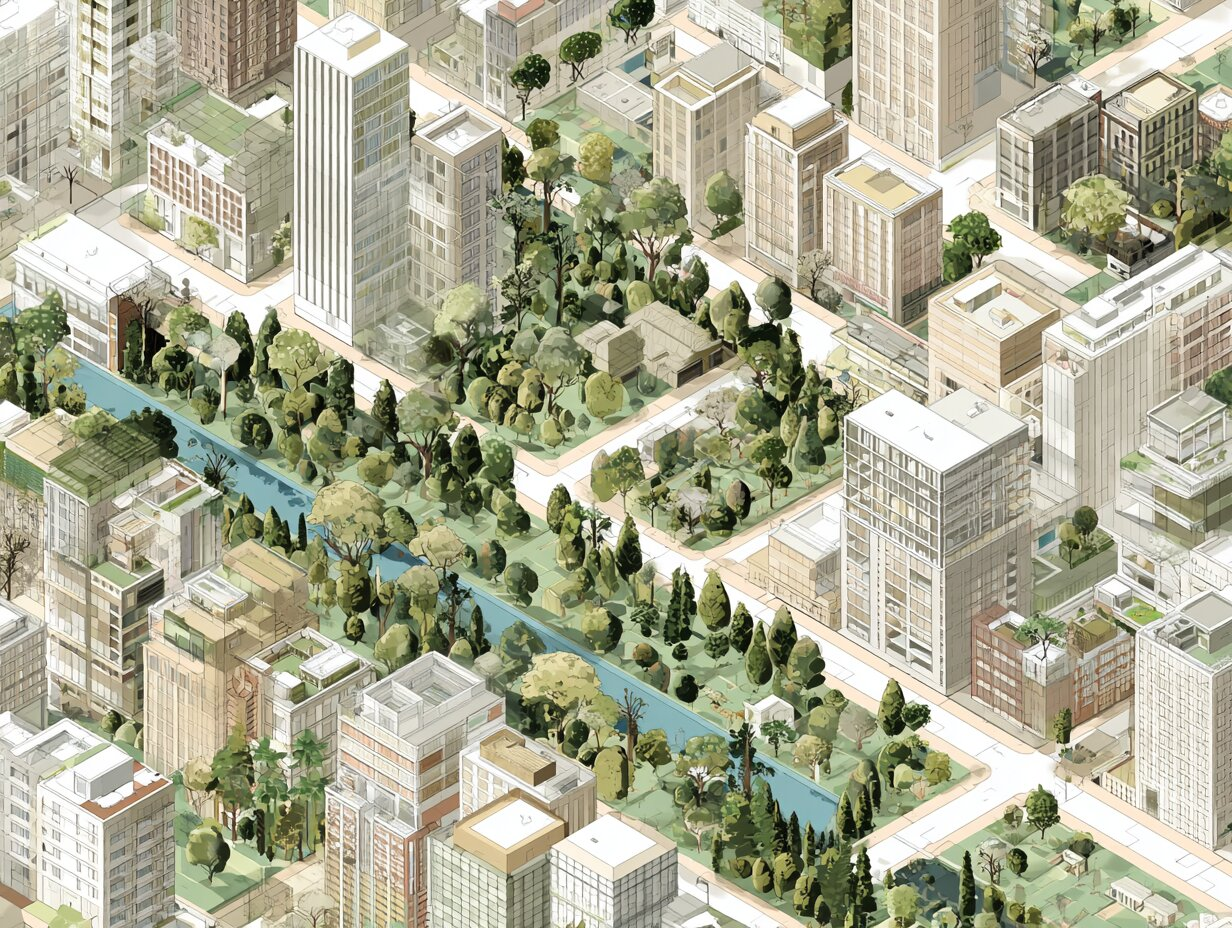
Urban architecture is the practice of designing buildings and public spaces within the dense, layered context of cities, balancing form, function, and the social and ecological systems that hold a city together. It connects building-scale decisions to neighborhood, district, and regional outcomes, and sits at the intersection of architecture, planning, landscape, and policy.
Cities now house more than half of the world’s population, and that share keeps climbing. The way we shape streets, blocks, and buildings determines how communities live, move, and adapt to a warming climate. This guide covers what the discipline includes today, where it overlaps with related fields, and which sustainability ideas matter most.
What This Discipline Covers and Why It Matters
Designing for the city means treating buildings as part of an existing system rather than isolated objects. A tower, library, or housing block is shaped not only by its program and budget, but also by sidewalks, transit lines, sightlines, neighbors, and zoning rules. Good city-scale design treats those constraints as design material.
The reason this matters comes down to scale of impact. According to the UN-Habitat World Cities Report 2024, infrastructure is responsible for 79 per cent of total greenhouse gas emissions and influences 72 per cent of the Sustainable Development Goal targets. Buildings and the systems they sit inside are not a side topic in climate policy; they are the main event.
💡 Pro Tip
When approaching an urban project, study the block before you study the site. Walk the surrounding three or four streets, note where people pause, where wind funnels, and where shade falls in the afternoon. Most early design mistakes on city sites come from treating the parcel as a clean slate instead of a fragment of an existing system.
How City-Scale Design Differs from Standalone Projects
A standalone building can succeed on its own terms: a clear concept, a tight plan, a striking facade. Working in a city has to do all of that while also negotiating with what is already there. A ground floor that ignores the sidewalk creates dead street life regardless of how beautiful the upper floors are. A building that blocks a wind corridor or casts shadow on a public square fails its neighbors even if it earns design awards.
This is why city-focused practitioners spend so much time on edges: setbacks, entries, transitions between private and public space, the height and rhythm of the street wall. The interior plan matters, but the building’s relationship with everything outside it usually matters more.
Urban Design Architecture vs. Urban Planning
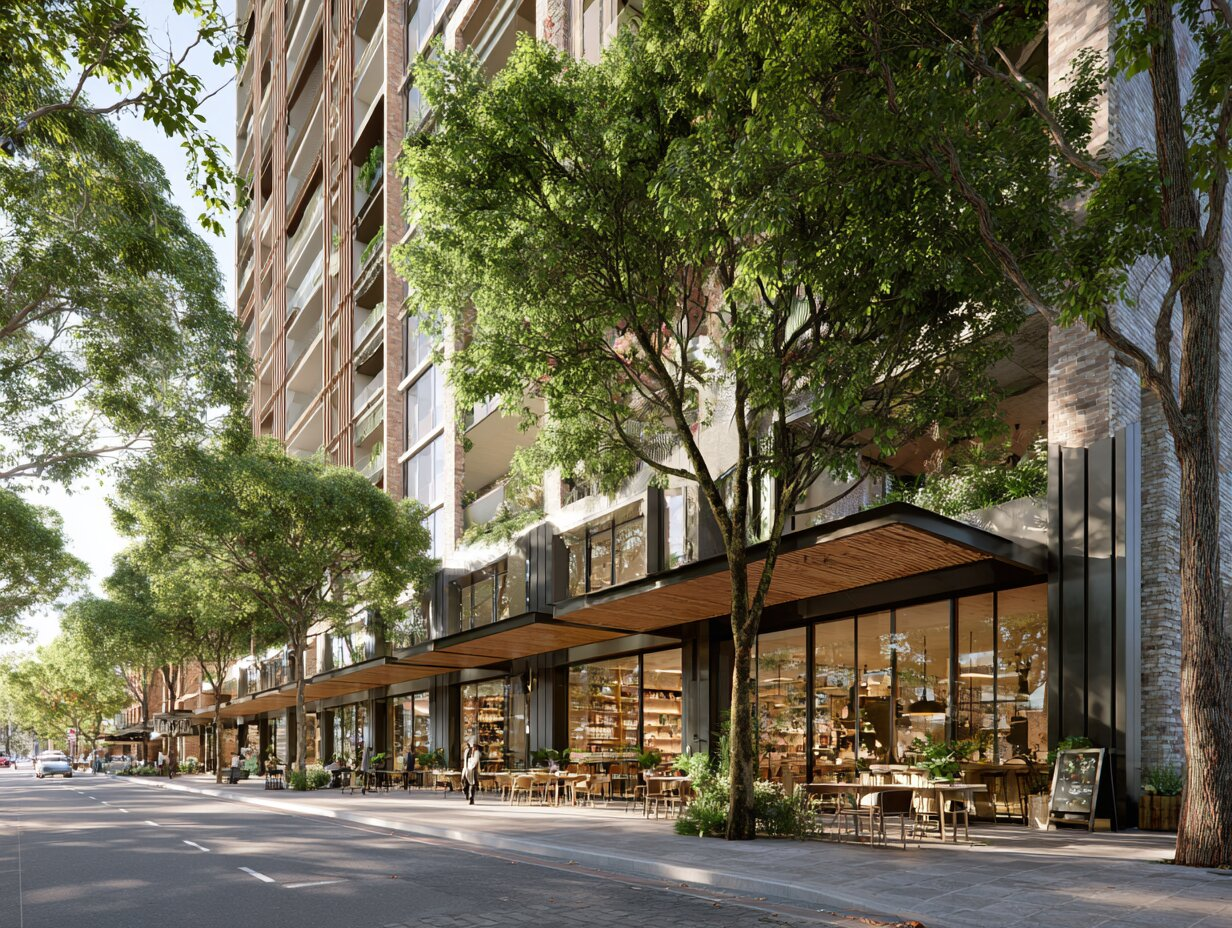
People often use urban design, urban architecture, and urban planning as if they were the same thing. They overlap, but they sit at different scales and answer different questions.
Urban planning works at the largest scale: regional growth, zoning frameworks, transit networks, housing policy, environmental regulation. Architecture and urban planning meet when zoning code shapes what a building can be, or when a transit decision creates demand for new development. The discipline of architecture urban design sits in the middle, focused on the public realm: streets, plazas, blocks, and the relationships between buildings. It is where design intent meets policy and where the rules of urban planning architecture get tested by real form.
How These Disciplines Work Together
| Discipline | Scale | Primary Focus | Typical Output |
|---|---|---|---|
| Urban Planning | Region, city, district | Land use, zoning, transit, policy | Master plans, codes, regulations |
| Urban Design | Neighborhood, block, public realm | Streets, plazas, building relationships | District frameworks, guidelines |
| Urban Architecture | Building and immediate context | Form, program, ground floor, facade | Buildings that fit a specific place |
| Landscape Architecture and Urban Planning | All scales | Open space, ecology, water, climate | Parks, green infrastructure, corridors |
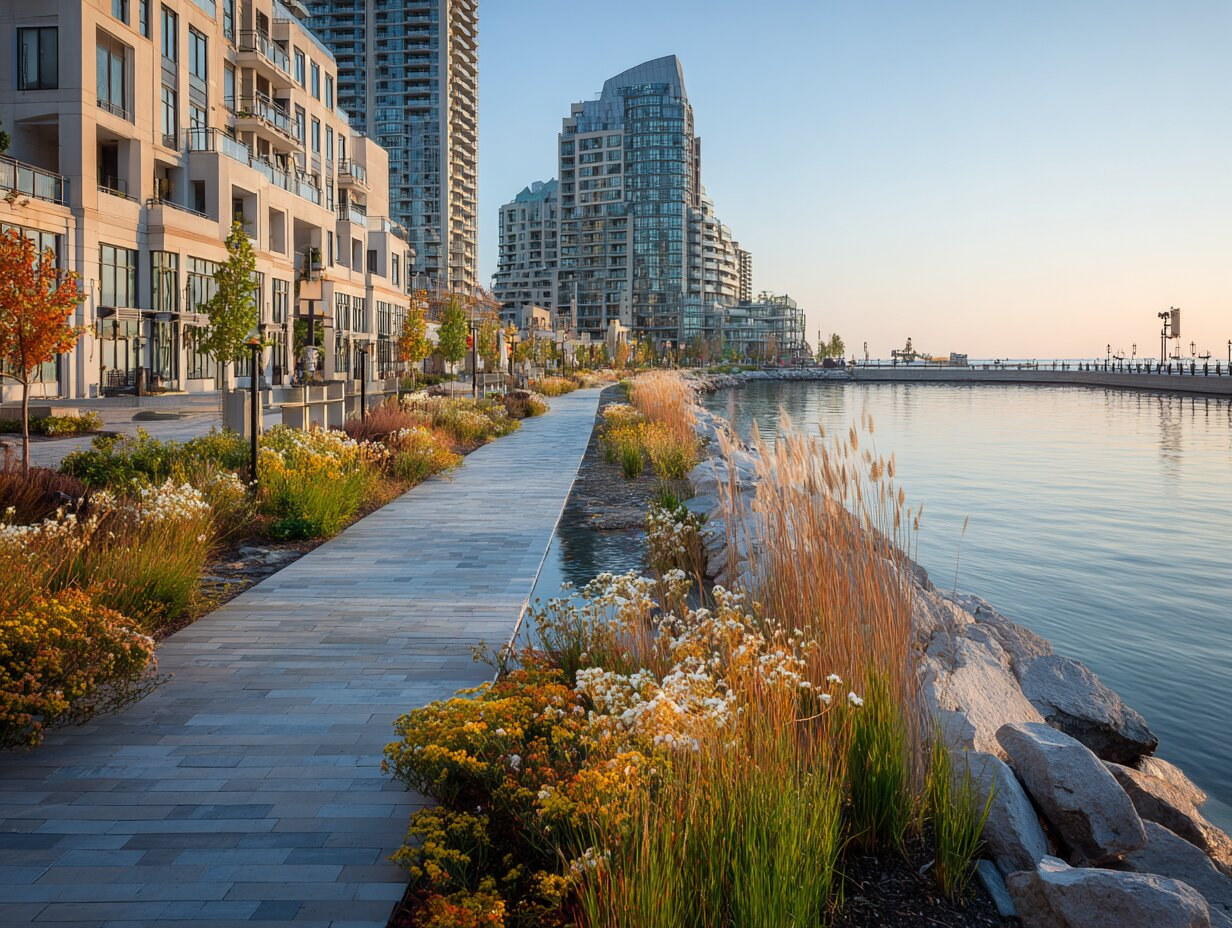
The most resilient projects pull from all four. A waterfront redevelopment, for example, asks planning to set zoning and flood policy, design to shape the public realm, architecture to define the buildings, and landscape to handle ecology and stormwater.
Where Urban Design and Landscape Architecture Meet
The relationship between urban design and landscape architecture has tightened over the last two decades, and the boundary now is mostly historical. Both deal with public space, soft and hard surfaces, microclimate, and the experience of moving through the city. The combined practice of urban design landscape architecture is now standard on waterfronts and climate adaptation projects, where vegetation, water management, and circulation cannot be separated.
🏗️ Real-World Example
Gardens by the Bay (Singapore, 2012): This 101-hectare park, designed by Wilkinson Eyre with Grant Associates, integrates 18 Supertrees standing 25 to 50 meters tall. Eleven of them carry photovoltaic cells that power lighting, and the structures act as air intake and exhaust for the cooled conservatories. The project shows how landscape architecture and urban planning can merge with building design at landscape scale.
Sustainability and Urbanism: The Core Connection
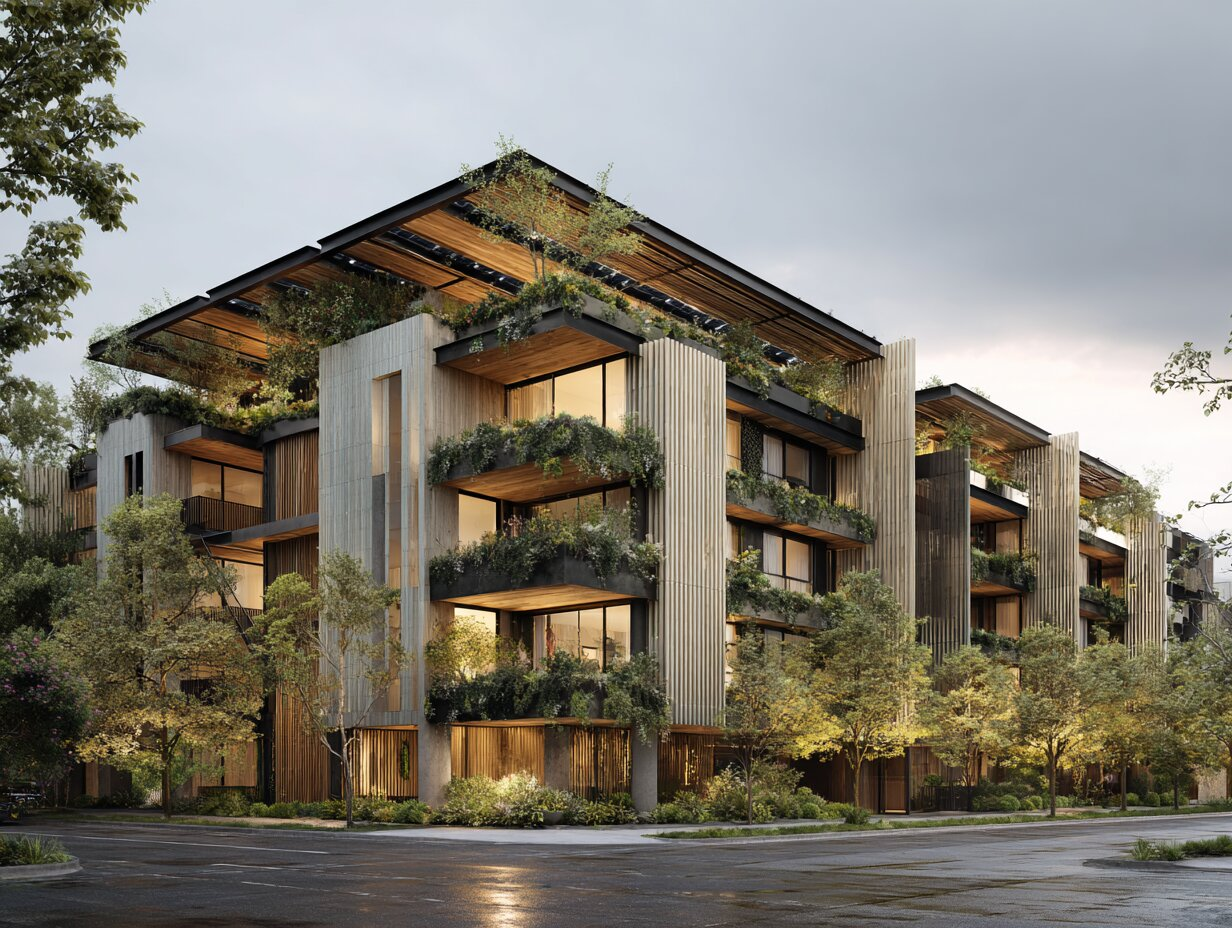
Sustainability and urbanism are now inseparable in serious practice. A city is the largest single artifact a society makes, and the climate cost of how we build and operate cities runs through every other emissions category. The 2024-2025 UNEP Global Status Report for Buildings and Construction puts the buildings sector at roughly 32 per cent of global energy use and 34 per cent of CO2 emissions.
The sustainability and design conversation splits into two related tracks. Mitigation is about reducing what a building or district emits over its life: low-carbon materials, energy-efficient envelopes, electrified systems, daylight, on-site renewables. Adaptation is about making cities able to handle what climate change is already delivering: heat, flooding, fire, drought, displacement.
🔢 Quick Numbers
- Buildings sector: 32% of global energy use, 34% of CO2 emissions (UNEP Global Status Report for Buildings and Construction, 2024-2025)
- Infrastructure responsible for 79% of total greenhouse gas emissions (UN-Habitat World Cities Report, 2024)
- Infrastructure influences 72% of Sustainable Development Goal targets (UN-Habitat World Cities Report, 2024)
The cities handling both tracks well are the ones that translate climate goals into specific tools: shade ordinances, embodied-carbon caps in procurement, density requirements near transit, mandatory green infrastructure on new development. Architecture sits inside these tools, sometimes pushing them forward and sometimes catching up.
Why Sustainable Design Matters Right Now
Sustainable design at the city scale matters now because urbanization and climate change are accelerating at the same time. More people are moving into cities that are getting hotter, wetter, drier, or more fire-prone depending on where they sit on the map. Buildings designed to a 50-year service life are being committed today on a planet whose climate will look quite different by mid-century.
This is also the practical answer to a common client question: why pay more upfront for sustainable strategies? Because the alternative is a building that becomes obsolete, uncomfortable, or uninsurable before its mortgage is paid off. The cost of green architecture design looks different when you account for operating costs and the value of buildings that age well.
⚠️ Common Mistake to Avoid
Treating sustainability as a checklist of products bolted onto a conventional design. Solar panels, low-flow fixtures, and FSC-certified wood do not cancel out a building that ignores orientation, daylight, and natural ventilation. Sustainability lives in the early massing and section decisions far more than in the final specification list.
Key Themes in Contemporary Practice
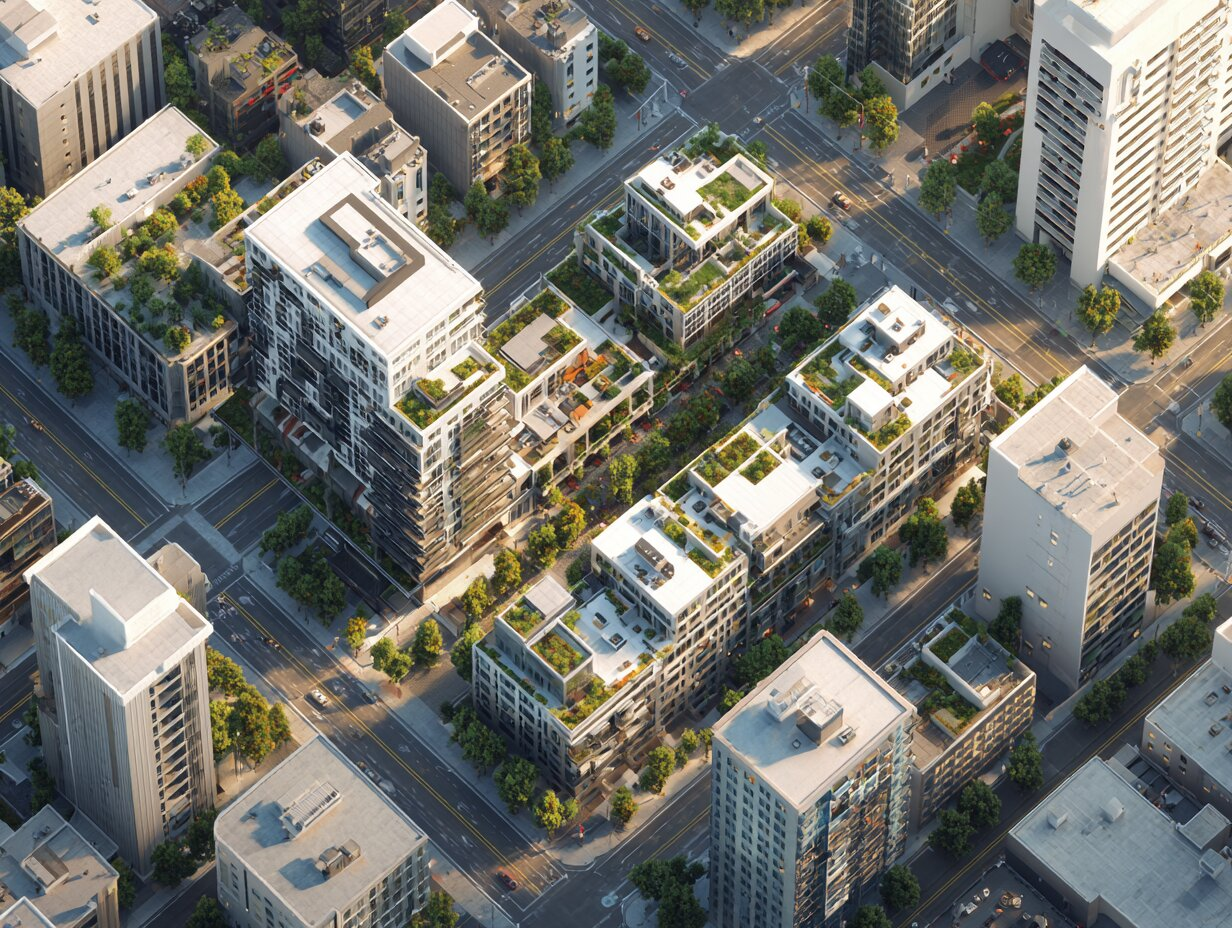
The reading list around city-scale architecture is enormous, but the themes worth following can be grouped into a few clear tracks. Understanding where the field is moving helps you read individual projects more critically.
Density Done Well
Dense cities are usually more efficient per capita than sprawling ones, but density on its own is not a virtue. Badly designed density produces shadowed streets and isolated towers. Well-designed density produces walkable neighborhoods, mixed uses, and buildings that contribute to the public realm. The current generation of practitioners is far less interested in iconic standalone buildings and more interested in fabric: buildings that perform well as part of a block.
Climate-Responsive Form
Form-making is increasingly driven by climate. Shading geometry, cross-ventilation, building orientation, mass timber, and high-performance envelopes are no longer specialty topics; they are entry-level competence. Connected to this is the rise of future-facing sustainable architecture practices that integrate biophilic design, smart controls, and renewable systems from the start of the project.
Public Space and the Ground Floor
Streets and the ground floors that face them are getting more attention than at any point since the 1960s. Cities competing for residents and workers know that the public realm is what people actually experience. A great park or active street can lift the value of every building around it.
Ecology Inside the City
Treating cities as ecosystems rather than as the negation of nature has moved from fringe theory to mainstream practice. Green roofs, biodiverse plantings, urban forests, and daylighted streams are now standard tools for handling stormwater, heat, and air quality at the same time. The shift in thinking around ecological boundaries of urban design reflects a wider understanding that cities and natural systems have to be designed together.
📌 Did You Know?
Singapore’s mandatory Landscape Replacement Policy requires new developments in the central business district to provide green areas equal to or greater than the site’s footprint, distributed across roofs, terraces, and facades. The policy, run through the Urban Redevelopment Authority, has turned what could have been a generic high-rise core into one of the most vegetated dense districts in the world.
Essential Reading Areas for Anyone Entering the Field
There is no single canonical text, but a few topic areas reward serious reading and will give you a solid base for almost any project.
Foundational Theory
Start with mid-century critiques of modernist planning, the responses from the 1960s and 1970s, and the rise of contextual and place-based theory in the 1980s and 1990s. These books explain why most postwar urban renewal failed and how the field rebuilt around walkability, mixed use, and the value of existing neighborhoods.
Climate, Resilience, and Adaptation
The newer literature focuses on how cities respond to heat, flooding, sea-level rise, and shifting weather. Reports from UN-Habitat and the C40 Cities network are useful here, along with work from the U.S. Green Building Council on building-scale standards. Pair this with regional case studies; what works in Rotterdam against flooding will not transfer cleanly to Phoenix dealing with heat.
Urban Ecology and Landscape
The literature on green infrastructure, urban forestry, and ecological design has matured significantly. Reading in this area will reshape how you think about site, materials, and water on every city project. Sustainable materials and ecological systems are increasingly approached as a single problem rather than two.
Equity, Housing, and Social Outcomes
No discussion of city design is honest without engaging the housing crisis, displacement, and the politics of who cities are designed for. Reading on housing policy, gentrification, and community-led design is essential. The connection between architecture and social outcomes is one of the more honest tests of any urban design proposal.
📐 Technical Note
For climate-responsive design, two reference frameworks are worth knowing well: ASHRAE 90.1 (energy standards for buildings) and the Passive House standard (PHIUS or PHI). These are not interchangeable. ASHRAE sets a regulatory floor used by most U.S. codes, while Passive House defines a high-performance target with airtightness around 0.6 air changes per hour at 50 Pascals. Specifying either one in early-stage projects shifts the entire envelope and mechanical conversation.
How to Apply These Ideas in Practice
Reading is only useful if it changes how you draw, specify, and argue for design decisions. The hardest part of this work is translating abstract principles into specific moves on a specific site, with a specific client and budget.
A few habits separate good city-scale architects from technically competent ones. They study the surrounding neighborhood as carefully as the site itself. They ask early what the building will do for the public realm, not just what the public realm will do for the building. They run climate analysis on massing options before getting attached to a single concept. They treat zoning code as a design tool rather than a constraint to negotiate around.
✅ Key Takeaways
- Urban architecture is the design of buildings as part of cities, where the relationship to streets, neighbors, and public space matters as much as the building itself.
- Architecture and urban planning, urban design, and landscape architecture work at different scales but increasingly need to be read together on any serious city project.
- Sustainability and urbanism are now inseparable: buildings and infrastructure drive the majority of climate impact at the city scale.
- Sustainable practice splits into mitigation (reducing emissions) and adaptation (handling impacts already arriving), and good projects address both.
- Reading should span theory, climate, ecology, and equity, because city-scale work is always operating across all four at once.
Final Thoughts
The field is shifting under everyone’s feet. Climate, equity, technology, and the politics of housing are reshaping what good city design looks like, and the next decade will reward designers who read widely and think across scales. The best practitioners do not specialize in one register. They move comfortably from a facade detail to a regional climate plan, and they understand how decisions at each scale shape the others. Whether you come into this work from architecture, planning, landscape, or policy, the path forward runs through the same place: cities designed to be livable, equitable, and durable in a changing world.
Information in this guide is general in nature. Building codes, zoning regulations, and climate guidance vary by jurisdiction. Always consult local authorities and licensed professionals for project-specific decisions.













Leave a comment