


Table of Contents Show
Rustic barn conversions in rural Portugal turn old granite, schist, and slate outbuildings, once used for hay, wine, or livestock, into compact light-filled homes. The existing shell sets the rules, and the new interior has to earn its place within them. For architects and self-builders looking at a barn house conversion, Portugal offers one of Europe’s richest landscapes of raw, convertible rural buildings, spread across the Douro, Alentejo, Beira, and Minho.
What is a Rustic Barn Conversion in Rural Portugal?
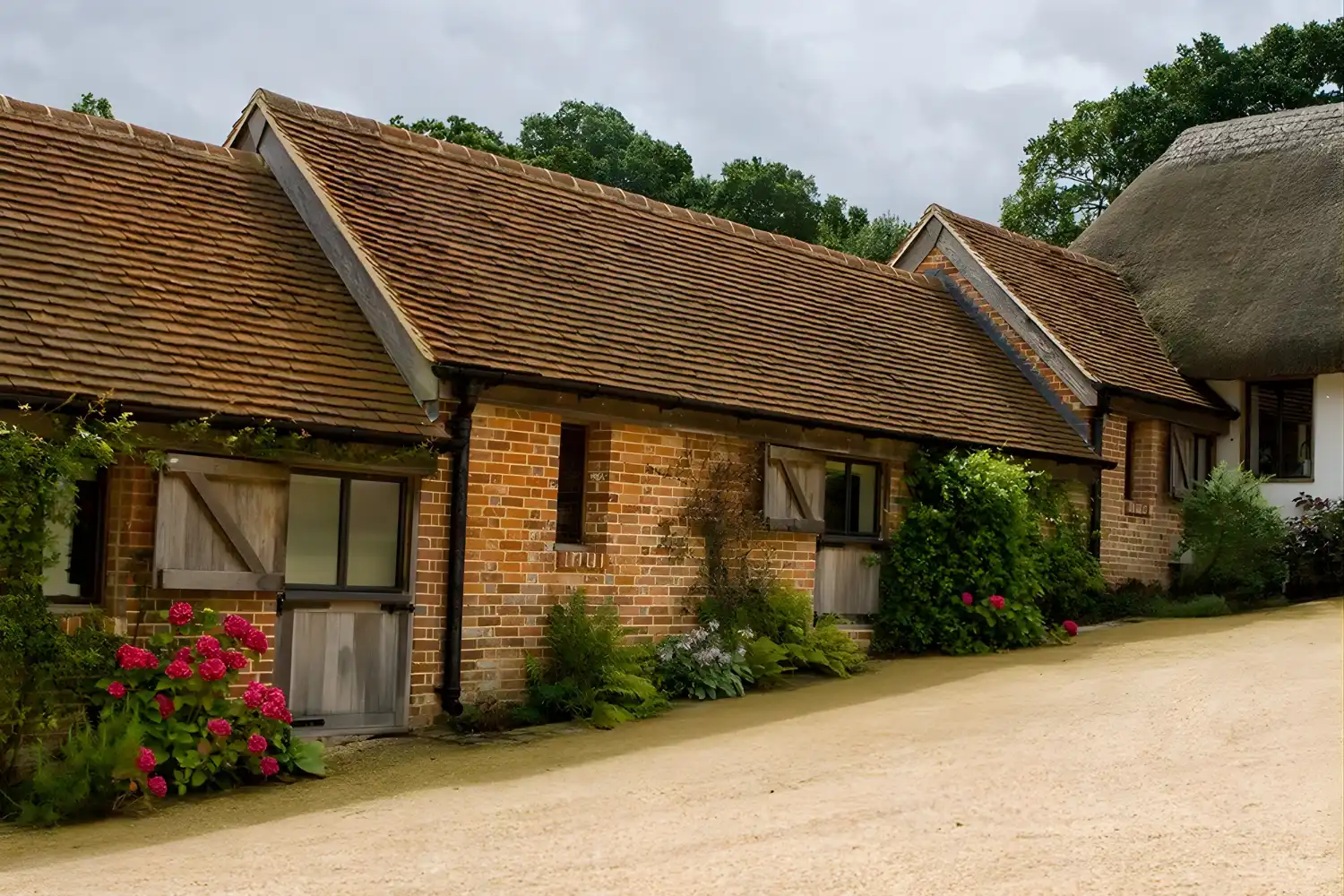
A rustic barn conversion in rural Portugal is the adaptive reuse of a former agricultural outbuilding, typically a stone barn, hayloft, winery annex, or animal shelter, into a residential space while preserving the original vernacular character. The conversion usually retains the exterior stone walls, the double-sloped roof, and the scale of the original volume, rebuilding the interior around modern comfort standards. Smaller single-volume barns of 40 to 80 square metres convert well into one-bedroom homes or guest cottages. Larger quintas with multiple outbuildings become clusters of studios and annexes around a main farmhouse.
💡 Pro Tip
Before signing any promissory contract, commission a structural survey from a Portuguese engineer who has worked on rural stone buildings specifically. Urban surveyors often miss warning signs in traditional masonry, such as bowing walls, failed lime pointing behind a later cement skim, and undersized timber lintels. A two-day site visit can save a year of unplanned structural work later.
Why Rural Portugal Is Well-Suited for Barn Conversions
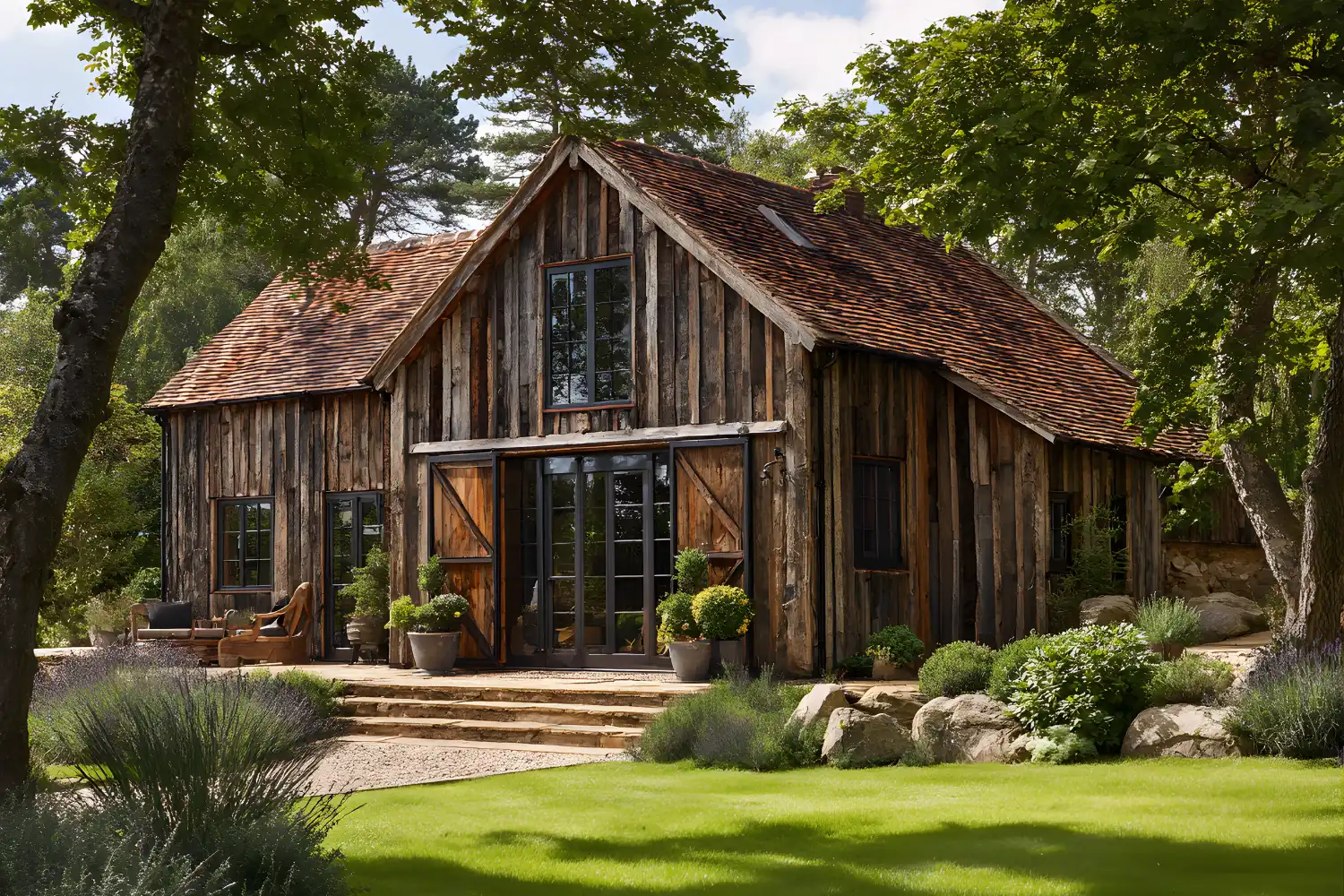
Rural Portugal combines a large stock of underused agricultural buildings, a mild climate forgiving to traditional materials, and a culture of masonry craft that has not yet disappeared. The kind of barn you find depends on where you are: granite dominates in Minho and Trás-os-Montes, slate and schist in Beira, whitewashed masonry or rammed earth in the Alentejo. Using northern granite details on an Alentejo project reads as wrong even to someone who cannot name why.
ArchDaily’s survey of contemporary Portuguese stone houses highlights how renovations and adaptive reuse of former ruins have become a distinct strand of Portuguese residential architecture, valued because the memory of the building is carried forward.
🏗️ Real-World Example
Nogueiras House, Viana do Castelo (Par-Do Architects, 2015): Portuguese architects Sofia Parente and André Delgado converted an ageing stone barn outside Viana do Castelo into a compact two-storey residence by inserting a new structure behind the traditional stone walls, leaving the exterior largely unchanged. The stepped ground floor follows the sloping topography, with a double-height living space and a wooden mezzanine bedroom above.
Legal and Planning Framework for Barn Conversions
Portuguese planning law treats rural buildings very differently from urban ones, and the treatment varies by municipality. Before buying, you need to know how the building is classified, what the local PDM (Plano Diretor Municipal) allows, and what permit the project will need. Converting a barn into a dwelling almost always requires a change of use (alteração de utilização) and a full licence (licença de obras). According to a 2025 guide to renovating in Portugal, any significant structural alteration or change in use requires a full licence, while minor refurbishments may only need a comunicação prévia.
⚠️ Common Mistake to Avoid
Many buyers assume that because a barn has existing stone walls, the footprint is automatically theirs to rebuild inside. That is not how Portuguese rural planning works. If the building is classified as an agricultural support structure on rustic land, habitable use may not be permitted, or may require full reclassification. Always confirm the utilização with the municipal planning department before committing to purchase.
A barn on solo rústico faces stricter rules than one inside a village boundary. A law from 29 January 2025 allows simplified reclassification of rural land into urban land for housing under specific conditions. A good local architect is essential, and the Ordem dos Arquitectos maintains a public register you can verify before signing a contract.
How Much Does a Rustic Barn Conversion in Rural Portugal Cost?
A rough 2025-2026 baseline for construction alone, done to a good modern standard with local contractors, sits between 1,200 and 2,000 euros per square metre, excluding land, design fees, and furnishings. High-end finishes or off-grid systems can push this above 2,500 euros per square metre. Portuguese labour costs grew around 7.1 percent year-on-year in March 2025, and materials like insulation and glass rose roughly 10 percent in the same period.
Where the Money Goes on a Barn Conversion
The table below shows a typical proportional breakdown for a mid-range project.
| Cost Category | Approx. Share | Notes |
|---|---|---|
| Structural works (walls, roof, foundations) | 30-35% | Higher on older ruins |
| Carpentry, windows, doors | 15-20% | Custom joinery pushes this higher |
| MEP (electrical, plumbing, heating) | 15-20% | Off-grid systems add 5-10% |
| Finishes (floors, lime render, fittings) | 15-20% | Local materials reduce cost |
| Design and engineering fees | 8-12% | Typically 5-10% of construction cost |
| Contingency | 10-15% | Essential on rural stone projects |
Cost figures are approximate and vary by region, supplier, and project scope. Always obtain detailed quotes from at least three qualified local contractors before finalising a budget.
Design Principles for a Convincing Conversion
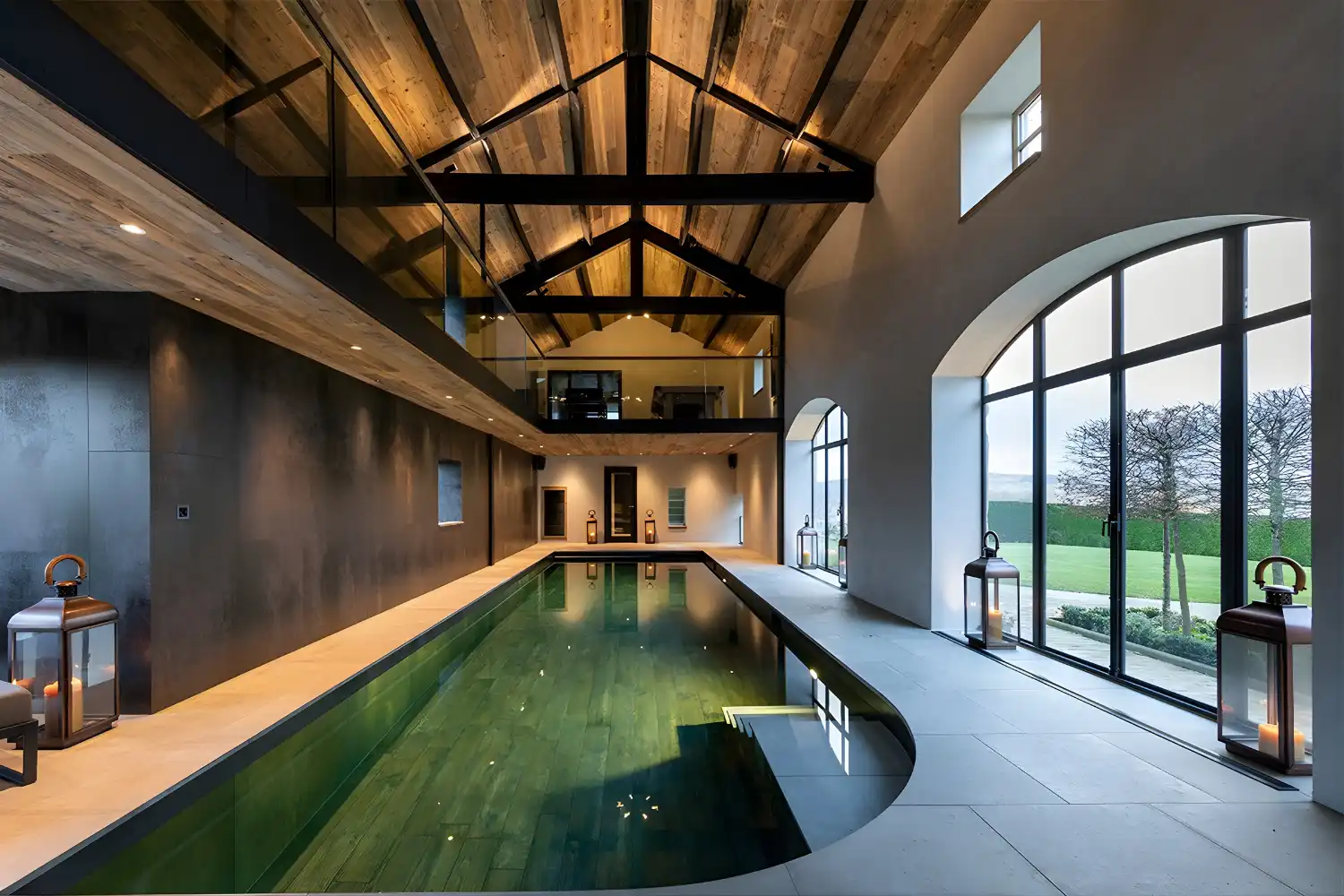
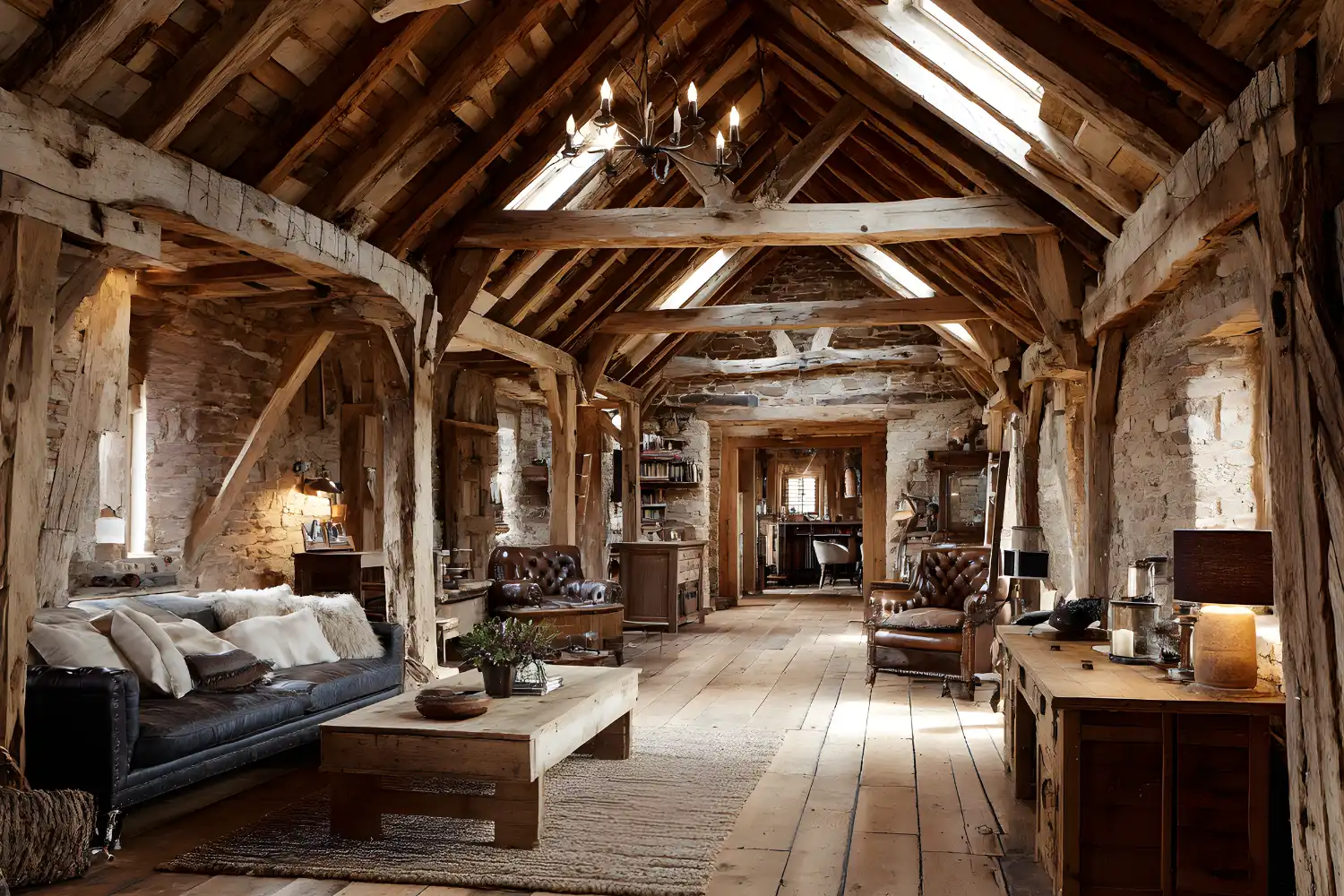
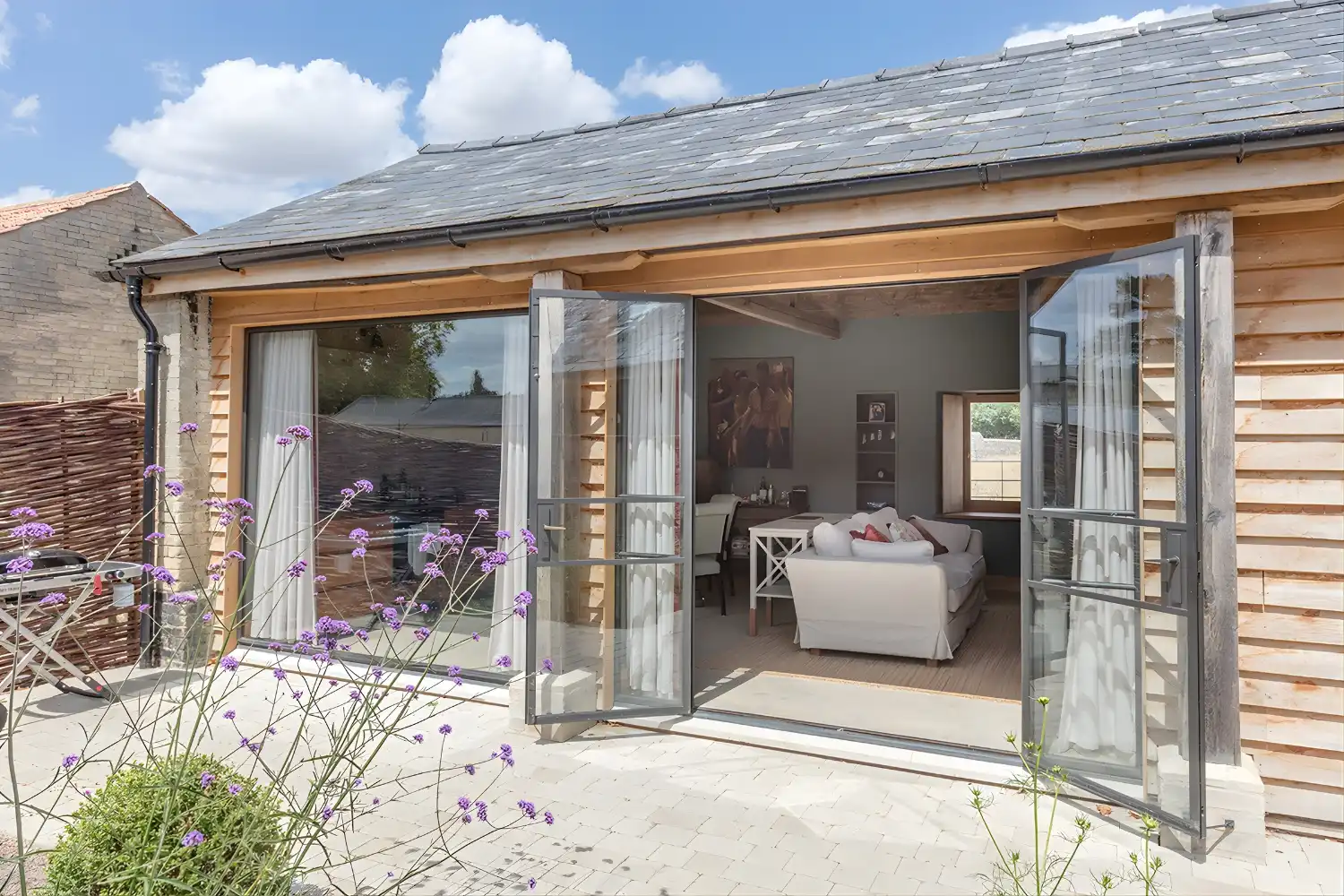
The difference between a conversion that reads as genuine and one that reads as pastiche comes down to a handful of early decisions. A reliable strategy, visible in projects like the Hay Barn Conversion by João Mendes Ribeiro in Cortegaça, is to rebuild from the elementary structure, keeping the façades in slate and the double-sloped roof in place while turning the interior into a simple, intimate living space. The inverse also works: inserting a visibly new volume inside the stone shell, with a clear joint between old and new. A half-compromise, where the interior tries to look old with fake exposed beams and reclaimed stone cladding on new walls, does not.
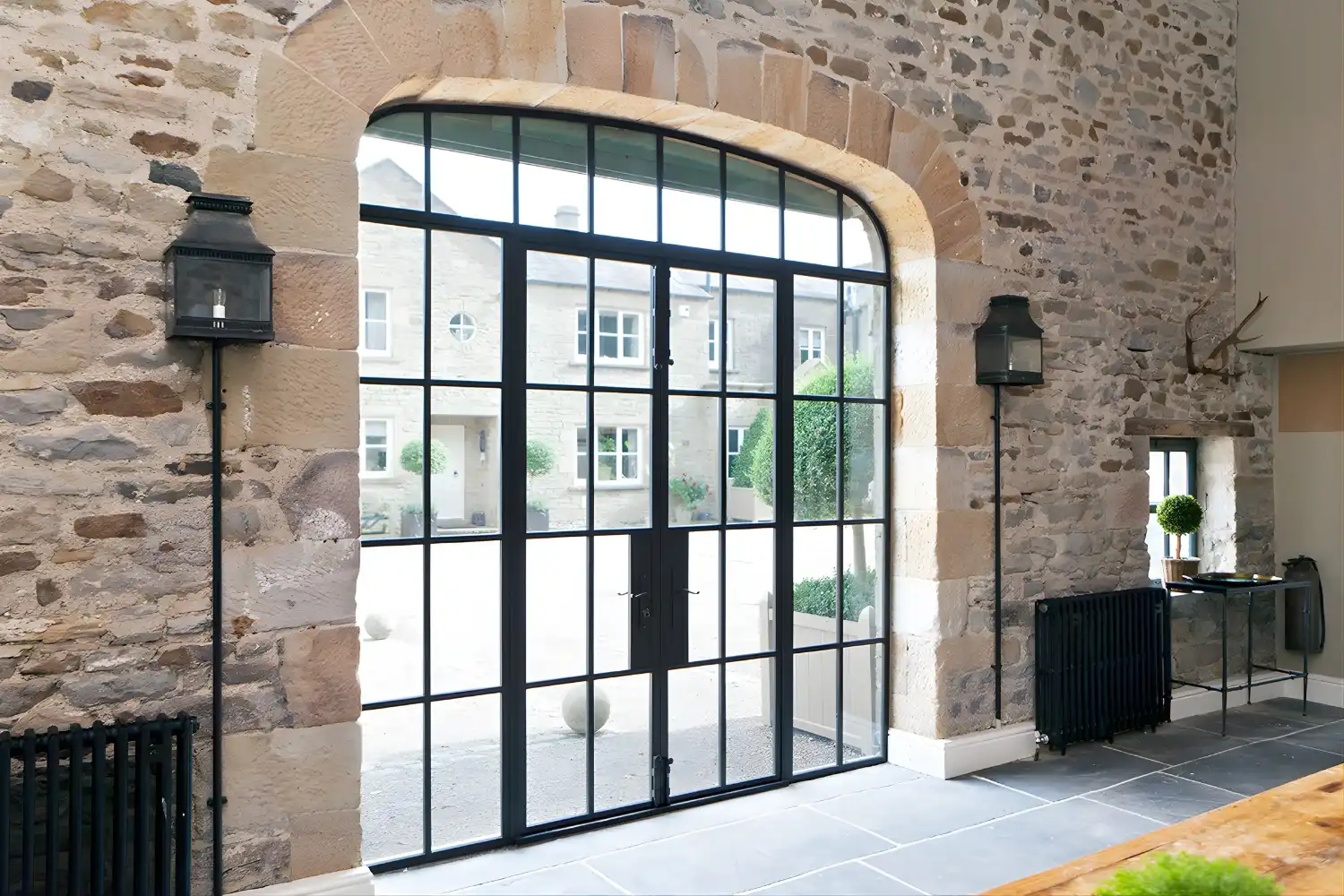
Traditional Portuguese barns were built with small openings to keep heat in during winter and out during summer. Two approaches to modern light levels tend to read better: keep the original openings and bring extra light in from above through new skylights, or open one gable end fully with a large glazed wall where an agricultural door once stood. The most successful conversions also rely heavily on local materials. Local stone matches the existing walls without colour drift, and lime (not cement) lets walls breathe and avoids the black staining cement pointing causes on old masonry. Working with local materials in construction is not just a heritage gesture, it reduces transport cost and ties the building to its setting.
📐 Technical Note
Traditional Portuguese stone barn walls typically range from 500 to 800 mm in thickness, with thermal mass values that moderate internal temperatures even without added insulation. When insulating, use breathable internal systems (wood fibre boards with lime plaster finishes) rather than vapour-closed materials, to avoid trapping moisture within the masonry. This follows conservation practice set out in EN 16883:2017.
Practical Considerations Before You Start
Two practical issues derail more rural barn projects than any design question: utilities and access. Many rural Portuguese barns have no mains water, no mains electricity, and no connection to a municipal sewer. New connections can cost anything from a few thousand euros to tens of thousands. Off-grid alternatives (borehole wells, septic systems, solar PV with battery backup) typically add 25,000 to 50,000 euros to a small conversion budget.
Rural tracks that look charming in summer often become impassable in winter. A site requiring concrete trucks to cross a neighbour’s field needs a written servidão (right of way) in the land registry. A barn on a shared wall with an adjoining farm building needs the neighbour’s formal agreement before structural work begins. Solving these issues before purchase is radically easier than solving them afterwards.
Converting a barn is one of the most sustainable residential projects you can undertake: reusing an existing structure, preserving embodied carbon, and avoiding land disturbance. A well-executed conversion often outperforms a new green build on a whole-life basis, especially when paired with passive strategies suited to the Portuguese climate.
✅ Key Takeaways
- Preserve the original stone shell, roof pitch, and volumetric scale; insert contemporary work rather than disguise it.
- Regional traditions (granite in the north, schist in the centre, whitewashed masonry in the Alentejo) dictate the correct materials.
- Change of use almost always requires a full licence; land classification under the municipal PDM must be confirmed before purchase.
- Realistic 2026 budgets sit between 1,200 and 2,000 euros per square metre for mid-range work, with a 10-15% contingency essential.
- Resolve utilities, access rights, and neighbour agreements before signing a promissory contract.
Final Thoughts
A rustic barn conversion in rural Portugal rewards patience more than ambition. The projects that age well are the ones where the team accepted the logic of the existing building, chose local materials and local trades, and resisted forcing the interior into a fully contemporary plan at the expense of the stone walls. The shell sets the terms, and working within them is what turns an old outbuilding into a home that feels as though it has always belonged there.









Leave a comment