



Table of Contents Show
Must-read books for architects range from ancient treatises on proportion and structure to modern critiques of urban life. The ten titles below cover foundational theory, spatial awareness, material culture, and contemporary practice, giving architects and students a reading list that sharpens both creative instincts and technical knowledge.

Why Books Still Matter for Architects
Screens dominate daily work in architecture offices, yet books offer something different: slow, sustained engagement with ideas. A well-argued chapter on spatial relationships or a visual essay on material expression can shift the way you approach a project more than a dozen tutorial videos. Reading strengthens your ability to articulate design intent to clients, collaborators, and review boards. It also connects you to centuries of accumulated knowledge that no software update can replace.
The best books about architecture do more than inform. They challenge assumptions and open new directions for your own work. The list below includes ten titles that consistently appear on reading lists at leading architecture schools and professional firms, each chosen for its lasting relevance and practical value.
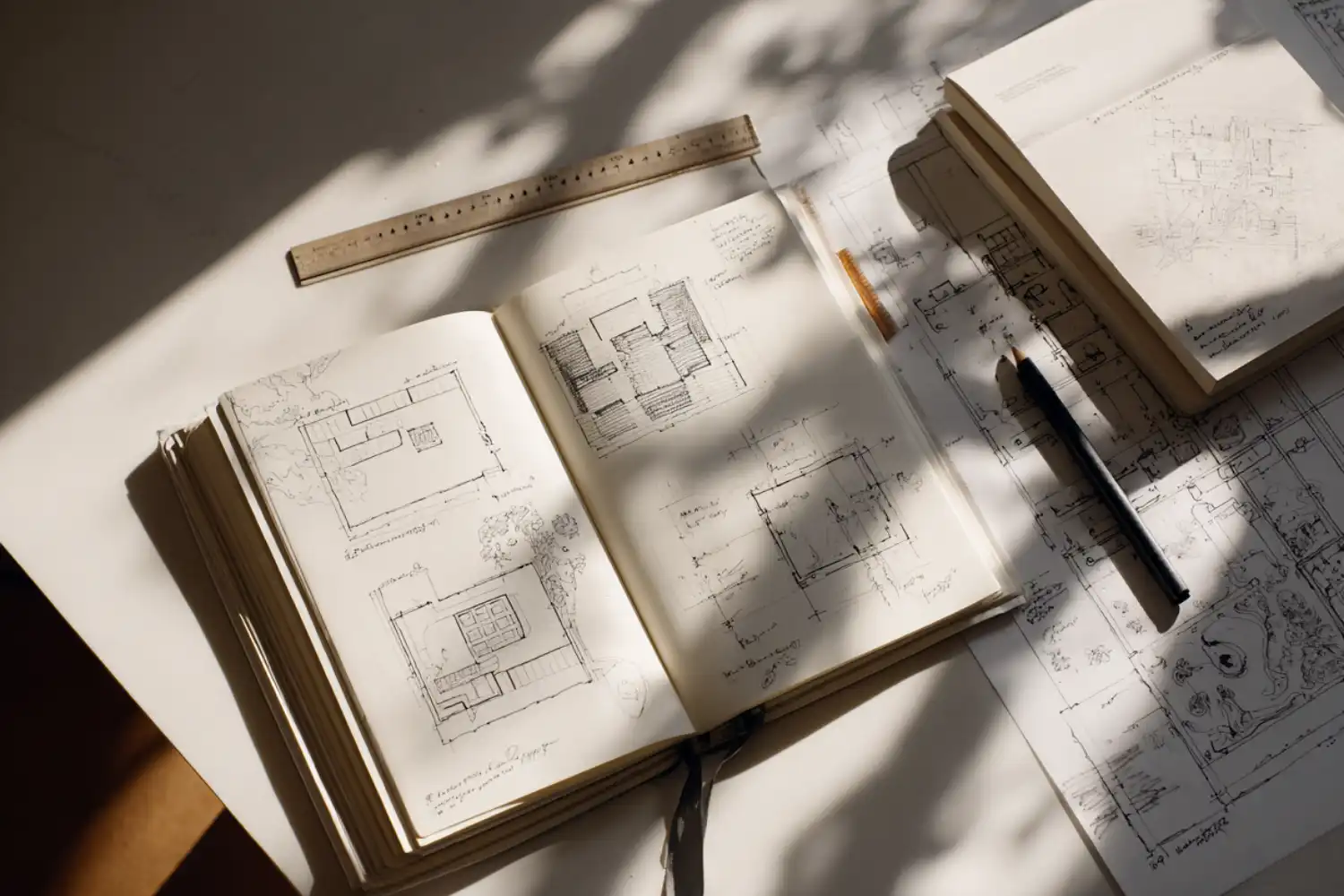
10 Recommended Architecture Books Every Architect Needs
1. Architecture: Form, Space, and Order by Francis D.K. Ching
If one book could serve as the visual dictionary of architecture, this is it. Ching breaks down the building blocks of spatial design through hundreds of hand-drawn diagrams covering proportion, scale, circulation, hierarchy, and enclosure. First published in 1979 and now in its fourth edition, the book remains the standard introductory text at architecture schools worldwide. Students return to it throughout their education, and practicing architects still reach for it when explaining core concepts to clients or junior staff.
What sets Ching apart from other introductory texts is the clarity of his graphic language. Every page teaches you how to see architectural relationships, not just read about them. If you are starting an architecture degree or refreshing your foundational vocabulary, begin here.
💡 Pro Tip
Keep Ching’s book within arm’s reach during studio work. When a design review critique targets your spatial organization or circulation logic, flipping to the relevant diagram section often reveals a solution faster than starting from scratch. Many firms also use it as a shared reference during internal design critiques.
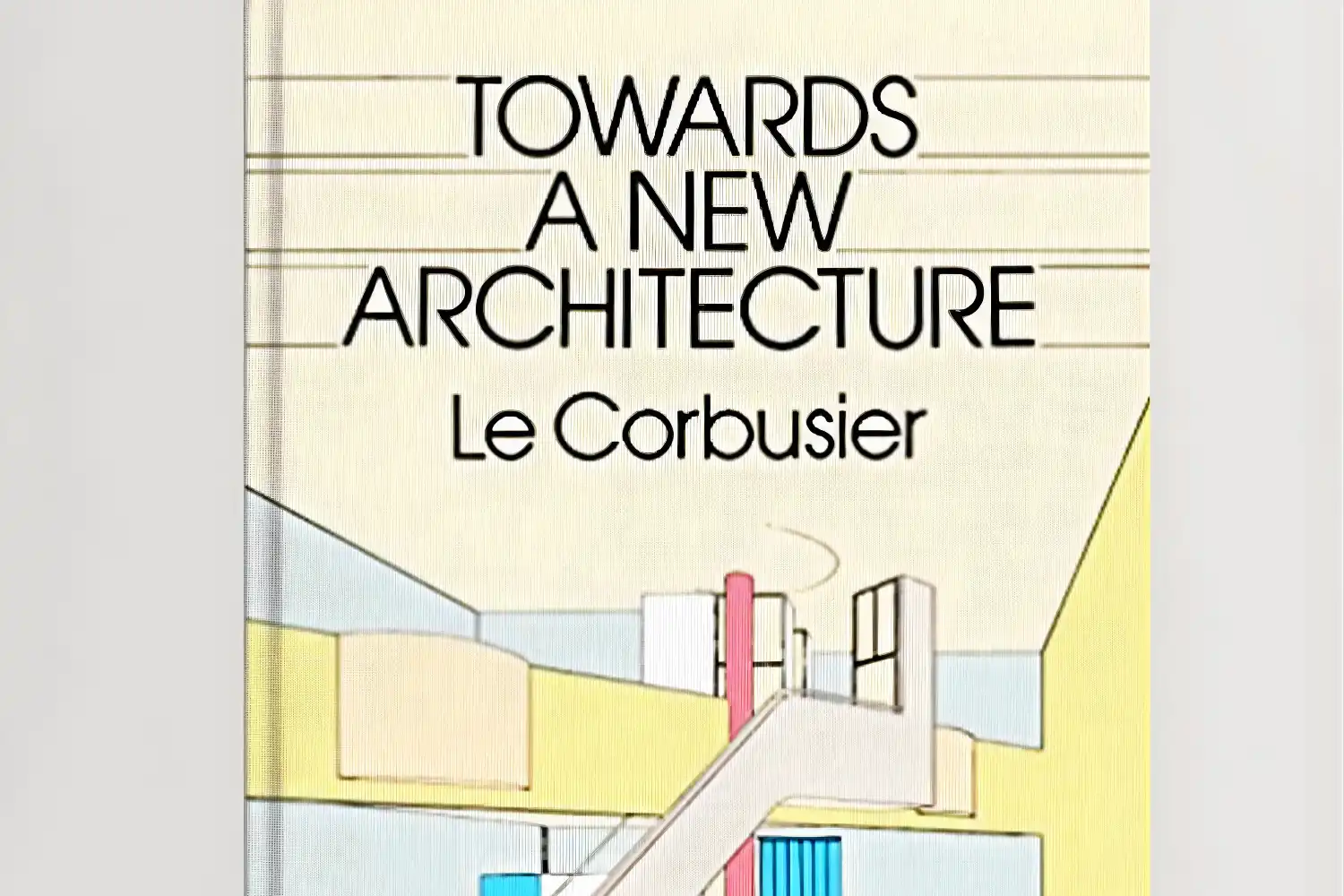
2. Towards a New Architecture by Le Corbusier
Originally published in 1923 as Vers une Architecture, this collection of essays remains one of the most influential texts in modern architecture. Le Corbusier argues that buildings should function with the precision and efficiency of machines while still achieving beauty through proportion and geometry. His comparisons between ocean liners, automobiles, and grain silos with architectural works were provocative at the time and remain thought-provoking today.
The book also introduced the idea that architecture must respond to industrial society rather than cling to historical decoration. Reading it today, you can trace a direct line from Le Corbusier’s arguments to the design principles found in everything from brutalist buildings to contemporary minimalism. Available from many publishers, including Fondation Le Corbusier, which maintains the architect’s archives.
3. Complexity and Contradiction in Architecture by Robert Venturi
Published in 1966 by the Museum of Modern Art, Venturi’s slim volume challenged the dominance of modernist orthodoxy with a single, powerful argument: richness and ambiguity in architecture are more honest and more human than forced simplicity. The book’s opening line is now famous among architects, and its intellectual framework gave rise to postmodern architecture as a serious design movement.
Venturi draws examples from Baroque churches, Mannerist palaces, and everyday American vernacular buildings to demonstrate that contradiction in design is not a flaw but a source of vitality. For architects who feel constrained by reductive “less is more” thinking, this book offers a structured alternative. It is available through the Museum of Modern Art bookstore.
🎓 Expert Insight
“Less is a bore.”
Robert Venturi
Venturi’s famous retort to Mies van der Rohe’s “less is more” captured a generation’s frustration with rigid modernism. His argument was not against simplicity itself but against simplicity used as a blanket rule that ignores context, culture, and the messy reality of human life.
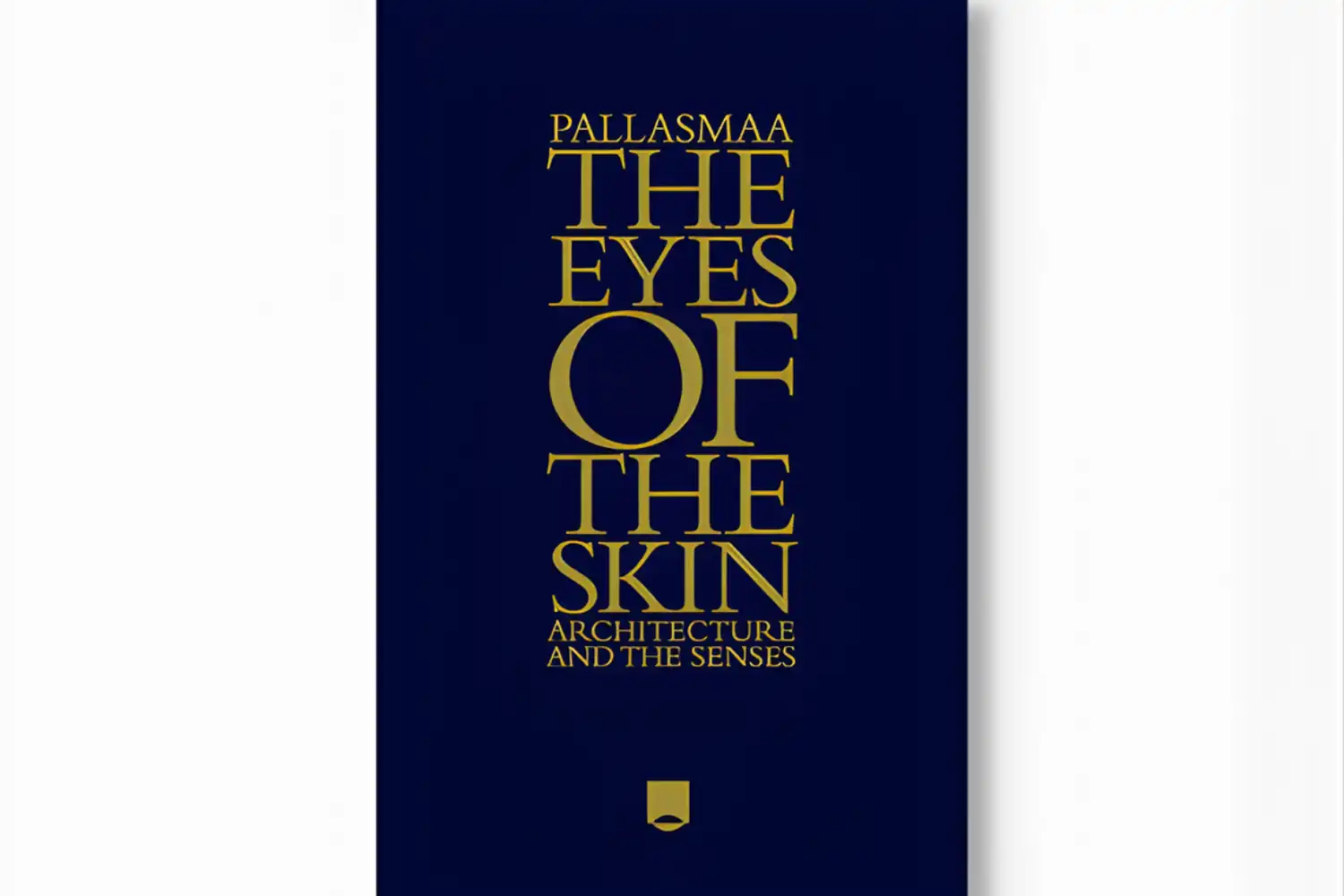
4. The Eyes of the Skin by Juhani Pallasmaa
Pallasmaa’s 2005 book (expanded from a 1996 essay) questions architecture’s heavy reliance on visual experience. He argues that truly memorable buildings engage all the senses: the echo of footsteps in a stone corridor, the warmth of a wooden handrail, the smell of rain on concrete. This perspective is especially valuable in an era where architecture is often evaluated through photographs and renders rather than physical presence.
The book is short (around 80 pages) but dense with ideas drawn from philosophy, neuroscience, and art history. It pairs well with studio work because it encourages you to think beyond floor plans and elevations. If your designs look good on screen but feel flat in person, Pallasmaa’s writing can help you understand why. Architects interested in how spaces shape perception can find related discussions in our article on innovative ideas in architecture.
5. The Architecture of the City by Aldo Rossi
First published in Italian in 1966, Rossi’s book treats the city as a collective artifact shaped by memory, culture, and typology. Rather than viewing urban form as the product of zoning regulations or market forces alone, Rossi argues that certain building types (the palazzo, the courtyard house, the arcade) carry meaning across centuries and give cities their identity.
For architects working on urban projects, infill sites, or adaptive reuse, Rossi’s framework provides a way to design buildings that feel connected to their surroundings rather than dropped in from nowhere. The book is theoretical but readable, and its core ideas about urban typology have influenced architects from Peter Eisenman to David Chipperfield.
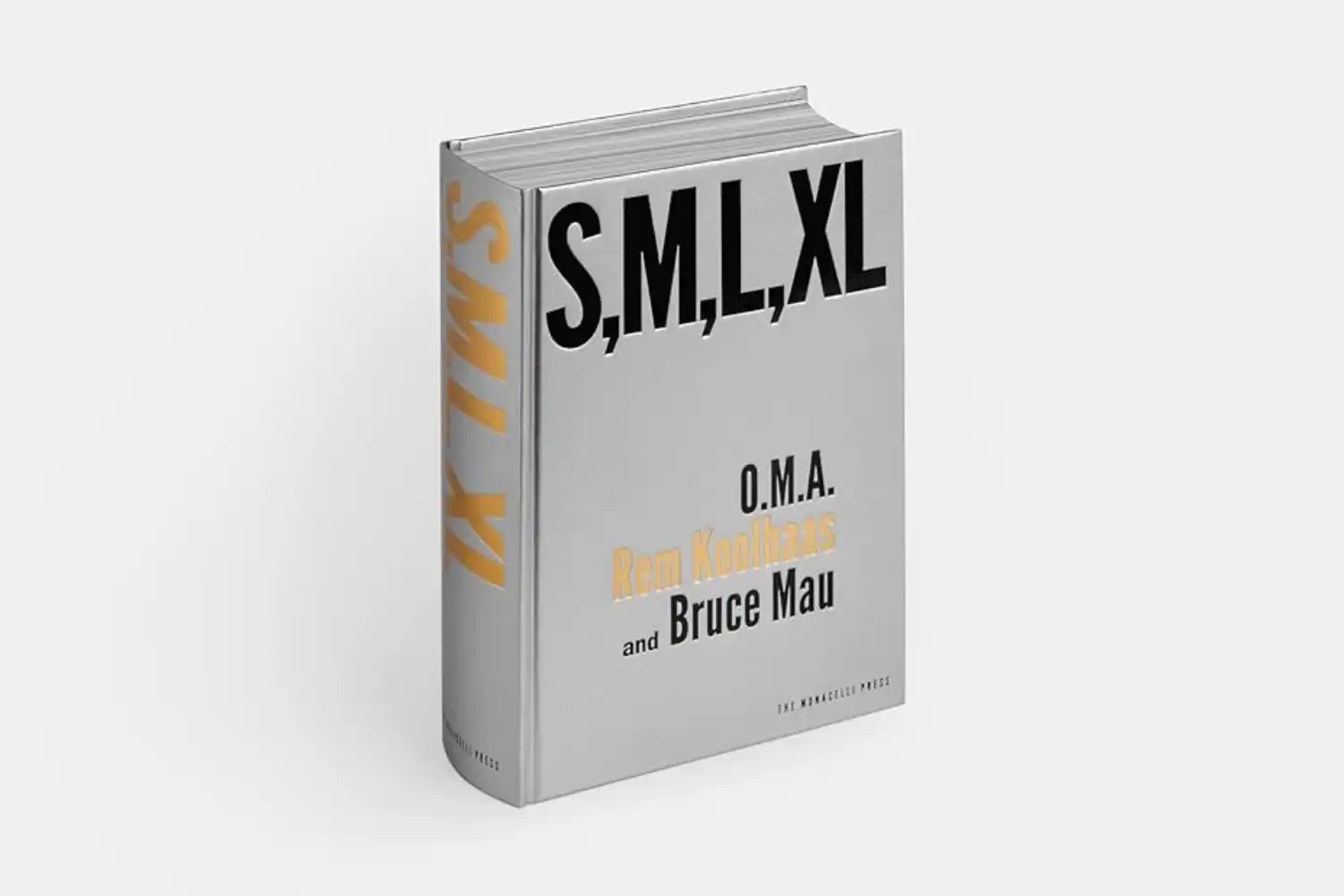
6. S, M, L, XL by Rem Koolhaas and Bruce Mau
Part monograph, part manifesto, part graphic design experiment, S, M, L, XL (1995) documents the work of OMA organized by project scale: small, medium, large, and extra-large. At over 1,300 pages, it is as much an experience as a reference. Koolhaas weaves together project documentation, personal essays, diary entries, found imagery, and theoretical texts into a format that mirrors the chaos and energy of contemporary urban life.
The book’s influence extends beyond architecture into graphic design, publishing, and urban theory. It introduced ideas about contemporary architecture and bigness, “the regime of complexity,” and the architect’s relationship to globalization that remain central to professional discourse. Available from Monacelli Press.
📌 Did You Know?
S, M, L, XL weighs nearly 3 kilograms and was designed by graphic designer Bruce Mau. The book’s physical bulk was deliberate: Koolhaas wanted the object itself to communicate the idea that architecture operates at overwhelming scales. First editions now sell for several hundred dollars on the secondhand market.
7. A Pattern Language by Christopher Alexander
Published in 1977, A Pattern Language contains 253 design patterns arranged from the scale of a region down to construction details. Each pattern describes a recurring problem in the built environment and proposes a solution based on observation and common sense. Patterns like “Light on Two Sides of Every Room” and “Staircase as a Stage” are immediately applicable to daily design work.
Alexander’s influence reaches far beyond architecture. Software engineers adopted his pattern-language concept in the 1990s, and urban planners, landscape architects, and product designers all draw on his work. For architects, the book serves as both a design tool and a philosophical statement: good design comes from paying attention to how people actually live. Learn more about how foundational design thinking shapes recommended architecture books lists.
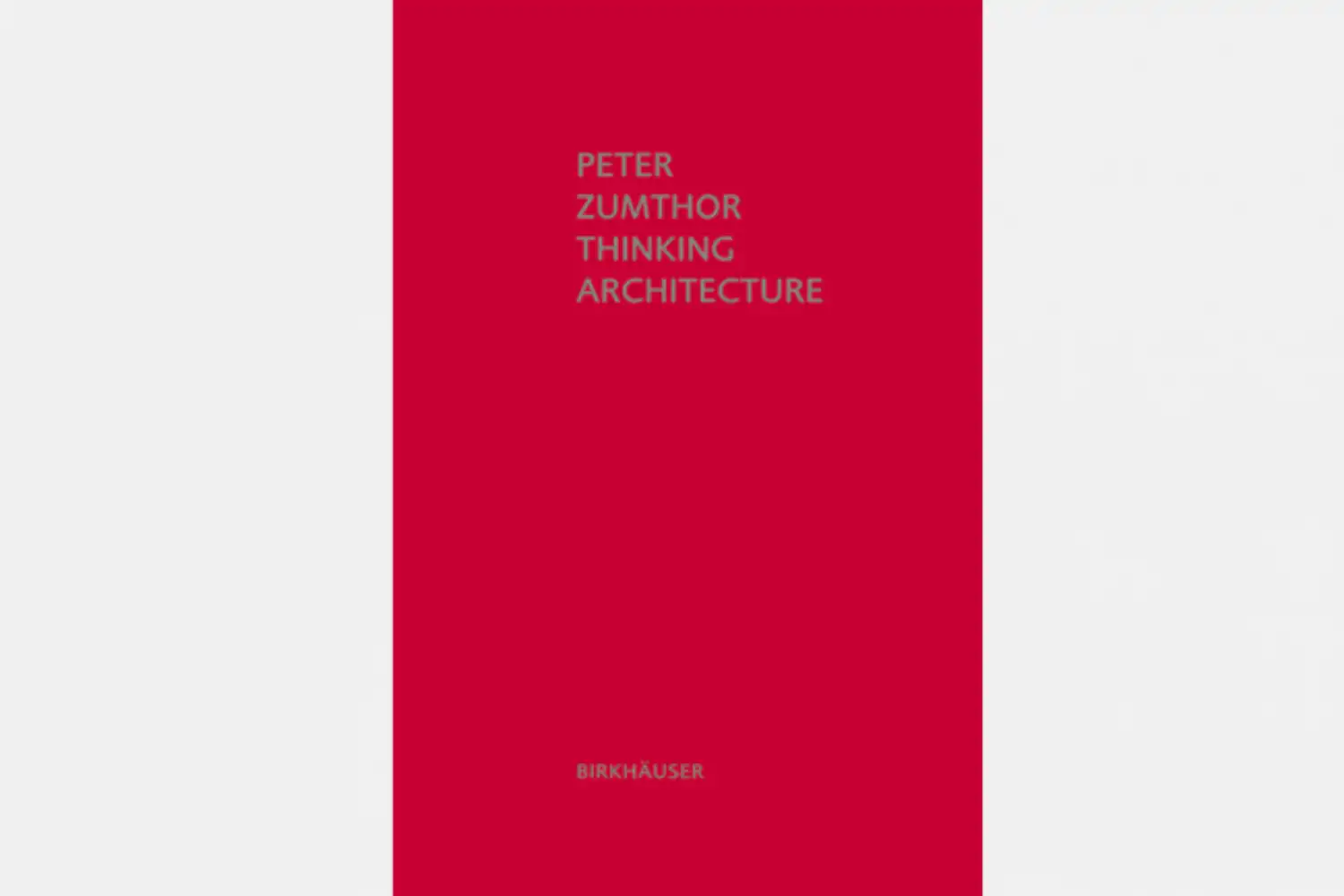
8. Thinking Architecture by Peter Zumthor
Zumthor’s collected essays and lectures offer a rare look into the thought process of a Pritzker Prize-winning architect. The writing is personal, reflective, and grounded in the physical reality of materials, sites, and atmospheres. Zumthor describes how the smell of his aunt’s garden or the sound of rain on a particular roof influenced his approach to designing buildings like the Therme Vals in Switzerland.
The book is slim and reads more like a meditation than a textbook. It appeals to architects who want to reconnect with the sensory and emotional roots of their practice after spending too many hours in front of BIM software. Good architecture, Zumthor argues, comes from careful attention to place, memory, and the qualities of materials under specific light conditions.
💡 Pro Tip
Read Thinking Architecture before visiting one of Zumthor’s buildings (or even studying them in photographs). His writing gives you a framework for noticing the material and atmospheric choices that make his projects feel distinct from conventional contemporary work.
9. Experiencing Architecture by Steen Eiler Rasmussen
First published in Danish in 1957 and in English in 1959, Rasmussen’s book answers a deceptively simple question: how do people actually experience buildings? Rather than focusing on style or theory, he examines architecture through concepts like rhythm, texture, daylight, color, and scale. The writing is clear, accessible, and filled with examples ranging from Roman aqueducts to Copenhagen housing blocks.
The book has been in continuous print for over 65 years, and for good reason. It is one of the few texts on architecture that is equally enjoyable for professionals, students, and general readers. If you are looking for a book to recommend to a client who wants to understand why certain spaces feel better than others, this is the one. Architects interested in good books about architecture for mixed audiences consistently rank it near the top.
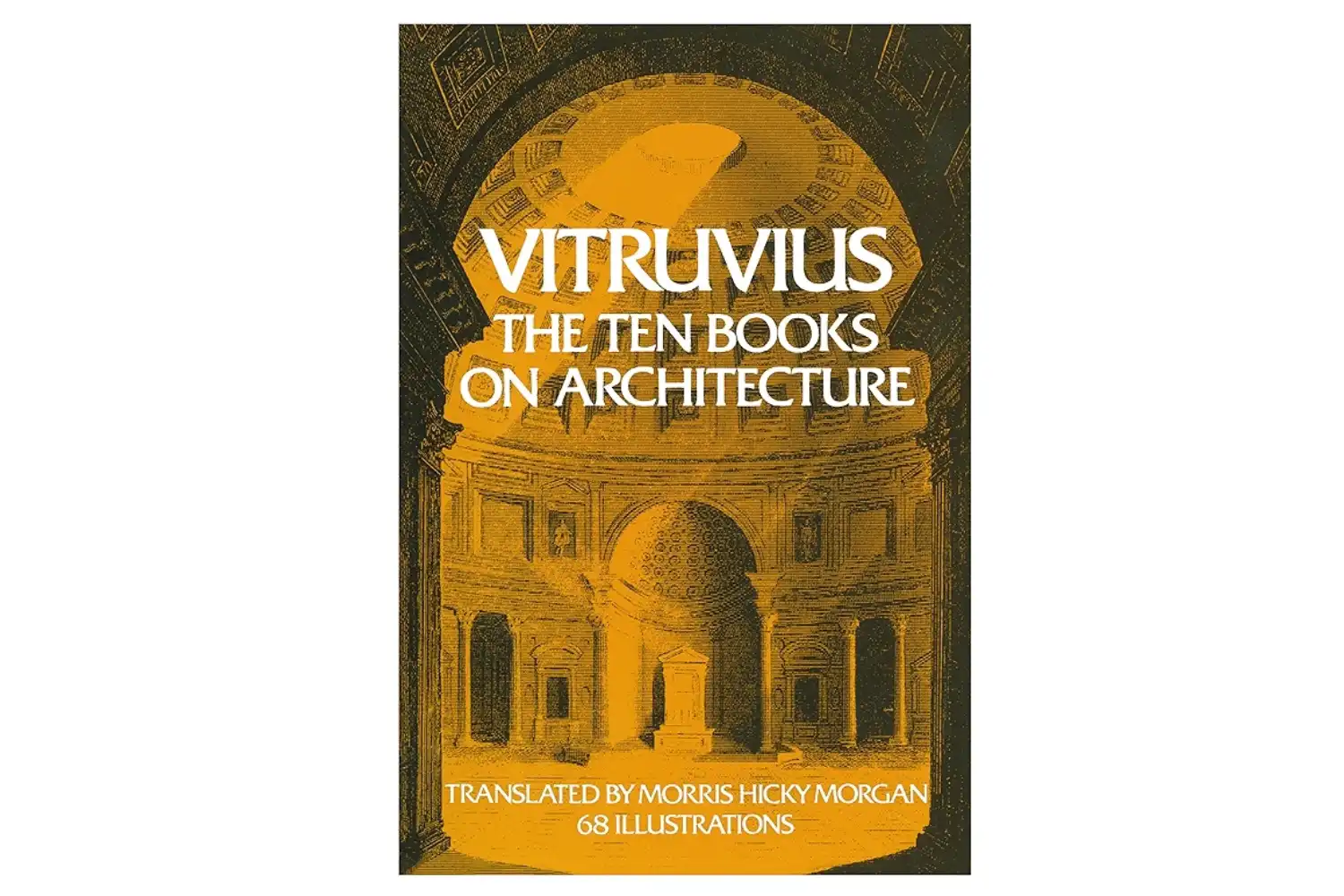
10. The Ten Books on Architecture by Vitruvius
Written around 30-20 BC, Vitruvius’s treatise is the only surviving architectural text from antiquity and the origin of the three classical principles: firmitas (structural soundness), utilitas (functionality), and venustas (beauty). These three words have defined architectural ambition for over two thousand years, and every modern framework for evaluating building quality traces back to them in some form.
The text covers everything from temple proportions and urban planning to water supply systems and military machinery. Modern translations, including the widely available Dover edition, make the content accessible despite its age. Vitruvius is worth reading not for historical curiosity alone but because his emphasis on the architect as a broadly educated professional (knowing music, medicine, law, astronomy) remains a valid argument for interdisciplinary thinking. More about the influence of classical principles on modern practice can be found in our piece on architects who transformed modern architecture.
⚠️ Common Mistake to Avoid
Many architecture students skip Vitruvius because the text feels ancient and disconnected from current practice. That is a missed opportunity. Understanding firmitas, utilitas, venustas gives you a simple evaluation framework that applies to every project, from a residential renovation to a cultural center. When a design review critique feels vague, framing feedback through these three lenses often clarifies the issue.
How to Choose Books About Modern Architecture
Books about modern architecture fall into several categories, and knowing what you need helps you pick the right one. Theory texts like Venturi’s or Rossi’s give you intellectual frameworks for making design decisions. Monographs (like S, M, L, XL) show how specific firms translate ideas into built work. Reference books like Ching’s provide visual tools you return to repeatedly. And experiential texts like Pallasmaa’s or Rasmussen’s sharpen your awareness of how spaces affect people.

A balanced reading diet draws from all four categories. If your shelf is heavy on monographs but light on theory, you may struggle to articulate why your designs look the way they do. If you read only theory, you may find it hard to translate ideas into buildable projects. The ten books on architecture listed above cover all four categories, giving you a well-rounded foundation. For a broader selection organized by skill level, see our guide to must-read architecture books for design enthusiasts.
Building a Reading Habit as an Architect
Architects are busy. Project deadlines, client meetings, and site visits leave little room for reading. But even 15 to 20 minutes a day adds up to several books a year. The key is to treat reading as part of your professional development, the same way you would attend a conference or take a software training course.
Start with shorter texts. Zumthor’s Thinking Architecture and Pallasmaa’s The Eyes of the Skin can each be read in a few sittings. Ching’s book works well as a reference you dip into when needed rather than reading cover to cover. Save longer commitments like S, M, L, XL for vacation periods or slow stretches between projects.
Building a personal library also signals seriousness about your craft. When clients visit your office and see a well-used collection of architecture books and magazines, it reinforces the message that your design decisions are informed by knowledge, not guesswork. For architects at any career stage, these must-read books for architects form the core of that collection.
✅ Key Takeaways
- Francis D.K. Ching’s Architecture: Form, Space, and Order is the standard visual reference for spatial design concepts used by schools and firms worldwide.
- Theoretical texts by Venturi, Rossi, and Pallasmaa provide intellectual frameworks that help architects explain and defend their design decisions.
- Vitruvius’s firmitas, utilitas, venustas framework remains the simplest and most durable method for evaluating architectural quality after over 2,000 years.
- A well-rounded reading list balances theory, monographs, reference books, and experiential texts to strengthen both creative and technical abilities.
- Even 15 to 20 minutes of daily reading builds significant knowledge over a year, making it one of the most accessible forms of professional development for architects.
Final Thoughts
The ten books listed here are not the only good books about architecture, but they represent a tested starting point. Each has shaped how generations of architects think about space, structure, and meaning. Whether you are a student building your first reading list or a practitioner looking for fresh perspective, working through these titles will strengthen your design vocabulary and deepen your understanding of what architecture can achieve. Start with the book that addresses your most pressing gap, and let each one lead you to the next.









Leave a comment