


Table of Contents Show
Biocompatible materials are building products derived from living systems or designed to coexist with human health and ecological cycles without releasing harmful substances. In architecture, the top 5 biocompatible materials are mycelium composites, bamboo, hempcrete, cross-laminated timber (CLT), and bio-based 3D printing feedstocks. These materials reduce indoor pollutants, store carbon, and support healthier building environments.
The conversation around healthy buildings has shifted in the last decade. It used to be enough to call a material “green” if it had recycled content or a low embodied carbon number. That bar is no longer high enough. Architects, clients, and building occupants now ask harder questions: What does this wall release into the air I breathe? Can the panel be returned to the soil? Will the foam insulation around my child’s bedroom off-gas formaldehyde for the next ten years? Biocompatible materials answer these questions in a way conventional petrochemical-based products simply cannot.
This guide looks at the five biocompatible material families that have moved beyond research labs and into real, built projects. For each one, we cover what it is, where it performs well, where it falls short, and how to specify it without ending up with a costly mistake on site.
What Is a Biocompatible Material in Architecture?

A biocompatible material in architecture is a building product that does not introduce toxic, allergenic, or carcinogenic substances into the indoor environment, and that interacts safely with human biology and natural ecosystems across its lifecycle. The original use of “biocompatible” comes from medical engineering, where the term is governed by the ISO 10993 standard series for the biological evaluation of medical devices. In architecture the term is used more broadly: any material that supports occupant health, breaks down without harm at end of life, or is grown rather than synthesized.
The architectural use of “biocompatible” overlaps with three related ideas worth keeping straight. Bio-based materials are made from biological feedstocks like wood, hemp, or fungi. Bio-derived materials, such as mycelium foams or algae resins, are processed from living systems. Bio-inspired materials borrow geometry or behavior from nature without necessarily being grown. A useful breakdown of these categories appears in our piece on biomimicry in architecture, which separates bio-based, bio-derived, and bio-inspired strategies in design.
Biocompatibility in buildings is closely tied to indoor air quality. Many conventional materials release volatile organic compounds (VOCs) like formaldehyde and benzene over years. USGBC’s LEED rating system awards a Low-Emitting Materials credit specifically to reduce these contaminants and protect occupant health. Most biocompatible materials meet or exceed these thresholds by default because their chemistry is closer to wood, lime, or fiber than to petrochemical resins.
💡 Pro Tip
When evaluating a biocompatible material for a project, always ask the supplier for two documents: an Environmental Product Declaration (EPD) and a third-party emissions test report (ideally CDPH Standard Method v1.2 or ANSI/BIFMA M7.1). Marketing language alone tells you nothing. A short stack of certificates tells you whether the product will actually perform on a healthy-building project and survive a LEED or WELL submittal review.
Why Biocompatible Materials Matter for Buildings
Three forces have pushed biocompatible materials from a niche concern to a serious specification topic. The first is climate. The construction sector accounts for a large share of global emissions, and embodied carbon, which is the carbon released to make and ship a material, can no longer be ignored. Bio-based materials store carbon dioxide that the source plant or fungus already pulled from the atmosphere. CLT is the clearest case: each cubic meter of cross-laminated timber stores roughly 0.9 tons of CO₂, according to peer-reviewed life-cycle data published in Nature Communications (2025).
The second driver is occupant health. Research collected in our article on the role of architecture in health and well-being shows that ventilation rates, source control of VOCs, and material selection all directly affect cognitive function, sleep quality, and respiratory outcomes. Specifying low-emitting, biocompatible materials is one of the most effective levers an architect has to influence those outcomes.
The third driver is regulatory. The European Union’s Green Deal, several national net-zero targets, and updated building codes now reward, and in some cases require, lower-impact construction. Material declarations and EPDs (Environmental Product Declarations) are becoming standard in public projects, and biocompatible options often have stronger EPD profiles than their conventional alternatives.
The Top 5 Biocompatible Materials for Architecture
The five materials below are the ones with enough field evidence, supply, and code acceptance to be specified on real projects today, not just shown in a thesis pavilion. The table that follows summarizes their properties side by side, and each material is then covered in detail.
Comparison of the Top 5 Biocompatible Materials
The following table compares the five materials across the criteria architects most often weigh during specification.
| Material | Typical Use | Carbon Profile | Indoor Air Impact | Code Maturity |
|---|---|---|---|---|
| Mycelium composites | Insulation, acoustic panels, temporary cladding, bricks | Carbon-negative, fully compostable | Very low VOCs, no synthetic binders | Emerging |
| Bamboo | Structure, flooring, cladding, finishes | Carbon-storing, rapidly renewable | Low emissions if untreated; check finishes | Mature in Asia, growing in West |
| Hempcrete | Wall infill, insulation, internal partitions | Carbon-negative over the wall life | Hygroscopic, regulates humidity | Code-approved in several EU countries |
| Cross-laminated timber (CLT) | Structural walls, floors, roofs | ~0.9 tons CO₂ stored per m³ | Low VOC if PUR adhesives used | Mature; covered by Eurocode 5 |
| Biocompatible 3D printing materials | Custom components, facade elements, prototypes | Variable; bio-resins reduce footprint | Depends on resin chemistry | Early stage |
1. Mycelium Composites: Mushroom-Grown Bricks and Panels
Mycelium composites are made by feeding the root network of fungi (mycelium) on agricultural waste such as corn stalks, hemp hurds, or sawdust. Over five to ten days the mycelium grows through the substrate and binds it into a solid block, which is then heat-killed to stop further growth. The result is a lightweight, fire-resistant, fully compostable material that can be molded into bricks, panels, or insulation boards.
What makes mycelium genuinely interesting from a biocompatibility standpoint is that it uses no synthetic binders. Conventional engineered wood products and most foam insulations rely on formaldehyde-based or isocyanate-based binders that off-gas over years. Mycelium composites are bound by the fungal network itself, which means very low VOC profiles by default and a clean compostable end-of-life pathway.
🏗️ Real-World Example
Hy-Fi at MoMA PS1 (New York, 2014): Designed by The Living and engineered by Arup, this temporary tower used 10,000 mycelium-and-corn-stalk bricks grown in partnership with Ecovative Design. The structure stood over 12 meters tall, was assembled without adhesives, and the bricks were composted at the end of the summer, returning to the soil within 60 days. Hy-Fi is the most-cited proof of concept for structural mycelium use in architecture.
Where mycelium falls short is on durability and load-bearing capacity. Current composites are not yet suitable for permanent structural elements in conventional buildings, and they need protection from prolonged moisture exposure. The most realistic uses today are interior insulation, acoustic panels, temporary pavilions, and non-load-bearing partitions. Research groups including the team behind a 2025 MDPI review on mycelium bio-composites as energy-efficient sustainable building materials have documented promising thermal performance but flagged moisture sensitivity and mechanical durability as the main remaining barriers.
2. Bamboo: The Fast-Growing Structural Grass

Bamboo is technically a grass, not a tree, and that distinction matters. Some species put on more than a meter of height per day during peak growth and can be harvested in three to five years rather than the 30 to 80 years required for structural timber. Bamboo culms have a tensile strength comparable to mild steel, which lets architects use them as columns, beams, trusses, and roof structures.
From a biocompatibility standpoint, untreated bamboo behaves much like solid wood. It is hygroscopic, which means it buffers indoor humidity. It contains no off-gassing binders. And at the end of its life it can be reused, downcycled into fiber composites, or returned to the soil. Where bamboo gets complicated is in the treatment process. To resist insect attack and decay, raw bamboo is typically treated with borate solutions or, in some markets, more aggressive chemicals. The biocompatibility of the finished product depends entirely on which treatment was used, so this is something to verify with the supplier.
Engineered bamboo products, including bamboo plywood and laminated bamboo lumber, behave more like CLT in the way they perform mechanically. They use adhesives to bond strips together, and the choice of adhesive determines whether the product still qualifies as low-emitting. Specifying products with no-added-formaldehyde (NAF) or ultra-low-emitting formaldehyde (ULEF) resins is the way to keep engineered bamboo within healthy-building limits.
💡 Pro Tip
When sourcing structural bamboo for a project outside Asia, do not assume the supplier has handled treatment correctly. Ask for the specific borate concentration, the soaking duration, and a moisture content report at the time of shipment. Bamboo that arrives above 12% moisture content for interior use will shrink, split, and pull away from connections within the first heating season, regardless of how good the design detailing was.
3. Hempcrete: Lime, Hemp, and Carbon-Negative Walls
Hempcrete is a non-load-bearing infill material made from hemp shives (the woody core of the hemp plant), a lime-based binder, and water. It is cast or sprayed between structural framing to form insulating, breathable walls. The finished assembly is lightweight, fire-resistant, and carbon-negative across its lifecycle because the hemp plant absorbs more CO₂ during growth than the lime binder releases during curing.
The biocompatibility case for hempcrete is built on three properties. First, it contains no plastics, no synthetic insulation, and no formaldehyde. Second, it is hygroscopic: the wall absorbs and releases moisture, which moderates indoor humidity and reduces the risk of condensation, mold growth, and dust mite proliferation. Third, the lime binder is mildly alkaline, which inhibits microbial growth on the wall surface without any added biocides.
The trade-off is structural. Hempcrete cannot carry vertical loads on its own. It always needs a primary structure, typically timber framing, to support the building. It also cures slowly and is sensitive to driving rain during the first months, which means construction sequencing matters more than with conventional walls. The supply side is also uneven outside the EU and a small number of specialist North American suppliers, so projects in other regions need to factor in import lead times.
Hempcrete pairs well with passive design strategies because the wall itself does some of the climate work, particularly in temperate climates with significant humidity swings. Architects working through this kind of envelope strategy may find our guide on passive ventilation strategies for sustainable architecture useful as a companion reference, since hempcrete walls behave very differently from sealed envelopes. For US-specific sourcing of biocompatible alternatives, our overview of sustainable materials for building homes in the USA covers practical procurement considerations.
4. Cross-Laminated Timber (CLT): The Structural Bio-Material
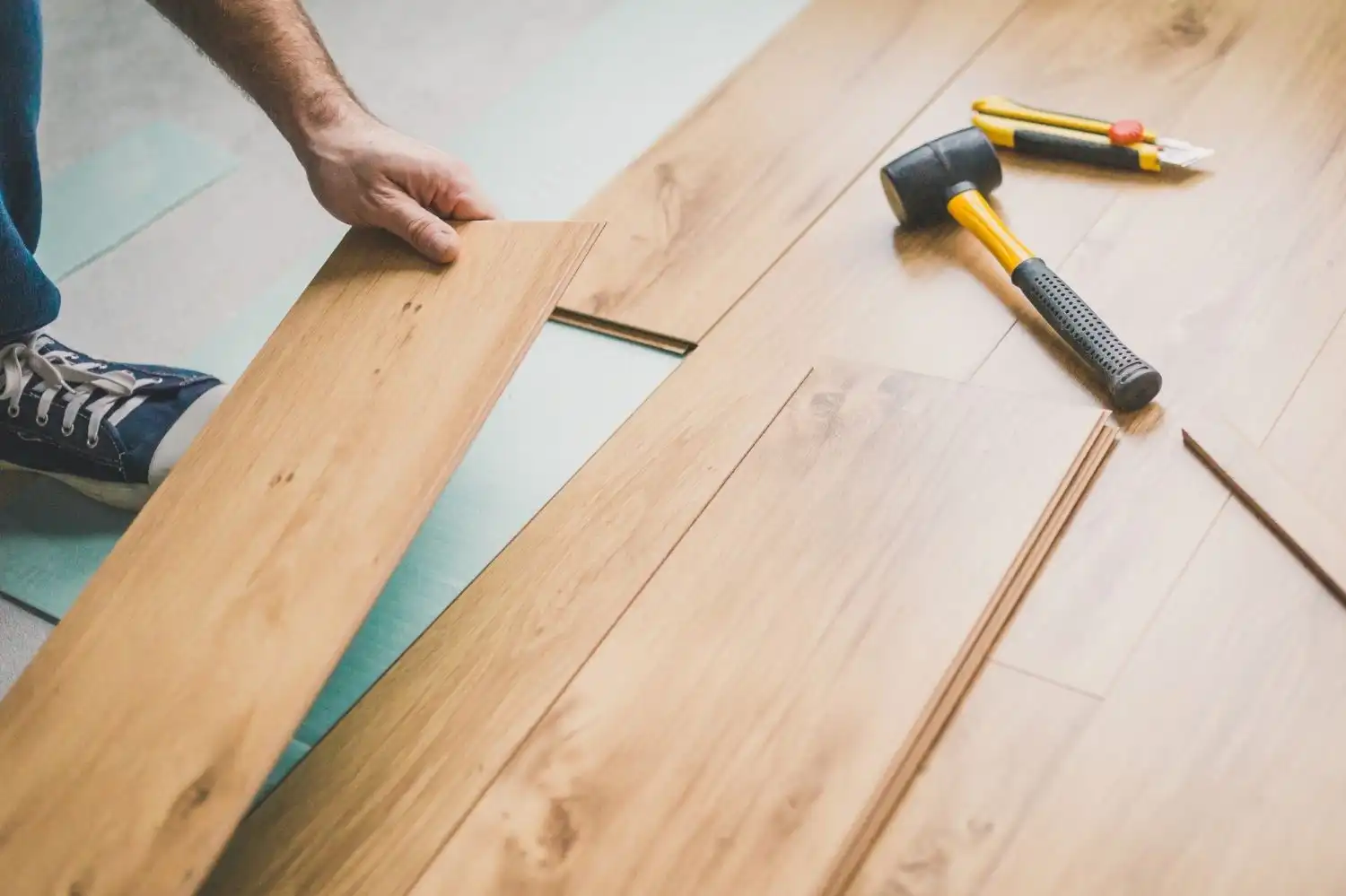
Cross-laminated timber is the most mature biocompatible structural material available today. CLT panels are made by stacking lumber boards in alternating perpendicular layers and bonding them with structural adhesives, producing large solid panels that can serve as walls, floors, and roofs in buildings up to 18 stories or more under updated codes.
From a carbon and air-quality standpoint, CLT is the clearest win in this list. According to the analysis published in Nature Communications (2025), if cumulative global CLT production reaches 3.6 to 9.6 billion m³ by 2100, long-term carbon storage in forests and panels could reach 20.3 to 25.2 GtCO₂e. The same review estimates net life-cycle GHG reductions of 25.6 to 39.0 GtCO₂e once steel and cement substitution effects are included.
🔢 Quick Numbers
- Each cubic meter of CLT stores approximately 0.9 tons of CO₂ equivalent (Market Growth Reports, 2025)
- CLT buildings can have up to 70% less embodied carbon than equivalent concrete structures (Market Reports World, 2026, citing Stora Enso data)
- The global CLT market was valued at USD 1,589 million in 2024, projected to reach USD 5,795 million by 2034 at a 13.9% CAGR (Polaris Market Research, 2025)
The biocompatibility caveat with CLT is the adhesive layer. Most modern CLT uses one-component polyurethane (PUR) adhesives, which contain no formaldehyde and have very low VOC emissions once cured. Older or off-spec CLT can use melamine-urea-formaldehyde adhesives, which are not desirable in healthy-building projects. Specifiers should request the adhesive type and an emissions test report before issuing a purchase order.
📐 Technical Note
Standard CLT panel thicknesses range from 60 mm (3-ply) to 300 mm (9-ply), with panel sizes reaching up to 3.5 m wide and 20 m long. Fire resistance ratings typically fall between 60 and 120 minutes depending on panel thickness and protective layers, calculated according to EN 1995-1-2 (Eurocode 5). Charring rates for design purposes are commonly taken at 0.65 to 0.80 mm/min for solid CLT exposed faces.
5. Biocompatible 3D Printing Materials for Architectural Applications
The fifth category is the youngest of the five and the one that will move fastest over the next decade. Biocompatible 3D printing materials and biocompatible materials for 3D printing are bio-based feedstocks designed for additive manufacturing of architectural components. They include polylactic acid (PLA) and PLA blends, lignin-based filaments, mycelium-printable pastes, algae-derived bio-resins, and cellulose-rich composites.
What makes these biocompatible 3D printing materials relevant to architecture is the combination of two trends. First, large-format 3D printing has matured to the point that custom facade panels, complex formwork, and even small structural components can be printed at scale. Second, the resin and filament side has shifted from petrochemical-only feedstocks to bio-derived alternatives, which dramatically improves the indoor air and end-of-life profile. Material biocompatibility, in this context, is no longer a medical-device concern only; it is a building specification concern as well.
The reality check is that 3d printing biocompatible materials still have narrower performance envelopes than mature alternatives. Many bio-resins are sensitive to UV degradation, which limits exterior use. PLA softens at relatively low temperatures, which limits its use in high-heat environments. And the regulatory and code path for printed structural components is still being established. For now, the most realistic uses are non-structural facade elements, interior partitions and ceiling features, and prototyping of complex geometries that would be wasteful to mill from solid stock.
This category is also where the biocompatible material meaning becomes most fluid. The same printer can produce a part that is fully compostable PLA or one that is a bio-fossil hybrid with limited recyclability, depending on the cartridge loaded. Architects specifying printed components should treat the material data sheet, not the printing process, as the source of truth on biocompatibility.
🎓 Expert Insight
“This was a project to disappear as much as it was a project to appear.”
David Benjamin, The Living
Benjamin’s framing of Hy-Fi captures the design shift biocompatible materials demand. Rather than designing only for the moment a building opens, architects are increasingly designing for the moment it returns to the soil. That mental shift, more than any single material, is what unlocks healthier and lower-impact buildings.
How to Choose a Biocompatible Material for Your Project
The right choice depends on three factors: the role the material plays in the building, the climate, and the procurement reality of the local market. A short, honest framework helps cut through the marketing.
For structural elements in low-rise to mid-rise buildings, CLT is the default biocompatible choice in 2026. Supply chains are mature in Europe and North America, the structural calculations are covered by published codes, and the carbon math is well documented. For non-load-bearing wall infill in temperate, humid climates, hempcrete pairs cleanly with timber framing and gives strong indoor-air benefits. For interior partitions, acoustic panels, and finish-grade insulation, mycelium composites are increasingly viable when the project can absorb a small premium and a slower lead time.
Bamboo deserves separate consideration depending on geography. In Southeast Asia, parts of South America, and increasingly in East Africa, structural bamboo is locally available, well understood by builders, and competitively priced. In most of North America and Europe it is currently best used for finishes, flooring, and engineered bamboo panels rather than primary structure.
Biocompatible 3D printing materials sit at the experimental end of the spectrum and should be specified for components where their geometry advantage is real, not just for novelty. A printed bio-resin facade element on a small commercial project is a reasonable bet today; a printed structural wall is not.
⚠️ Common Mistake to Avoid
A common error is treating “biocompatible” and “natural” as synonyms. A material can be plant-derived and still off-gas problematic compounds if it has been treated with petrochemical preservatives, finished with high-VOC sealants, or bonded with formaldehyde-based glues. Always check the full assembly, including coatings, adhesives, and treatments, before claiming the wall, floor, or panel is biocompatible. The substrate alone does not decide it.
Examples of Biocompatible Materials in Practice
Looking at examples of biocompatible materials in real projects helps clarify which materials are ready for which use cases. Mycelium has been demonstrated at architectural scale in Hy-Fi, the Growing Pavilion in the Netherlands, and a growing list of acoustic-panel installations in offices and educational buildings. Bamboo has been used for entire structures by architects working in Bali, Vietnam, and Colombia, as well as for engineered bamboo flooring in commercial buildings worldwide.
Hempcrete is now standard practice for parts of the residential market in France, the UK, and a handful of US states, and is increasingly specified for school and healthcare projects where indoor air quality drives the brief. CLT is the most visible of the five in dense urban projects, including the wave of mid- and high-rise timber buildings completed across Austria, Sweden, Canada, and Australia over the last several years. Bio-based 3D printed components have appeared on commercial pavilions, expo structures, and one-off residential facades, mainly through specialist fabricators rather than mainstream contractors.
Materials are only one layer of a healthy building. Air quality, daylight, ventilation, and operational practices all interact with the material choice. Our piece on sustainable materials and a greener future for construction covers how these layers fit together at the project level, and is worth reading alongside this guide if your team is putting together a full healthy-building strategy.
✅ Key Takeaways
- Biocompatible materials in architecture are bio-based or bio-derived products that protect indoor air quality and integrate cleanly with ecological cycles.
- The top 5 biocompatible materials with real project track records are mycelium composites, bamboo, hempcrete, cross-laminated timber, and bio-based 3D printing feedstocks.
- Cross-laminated timber is the most mature biocompatible structural option, storing roughly 0.9 tons of CO₂ per cubic meter.
- Hempcrete and mycelium excel as non-structural envelope and interior materials in healthy-building projects.
- Biocompatible 3D printing materials are advancing fast but are best used today for non-structural and custom architectural components.
- “Bio-based” and “biocompatible” are not the same: always verify treatments, coatings, and adhesives across the full assembly.
Cost figures and product availability for biocompatible materials vary significantly by region, supplier, and project scope. Building codes governing structural use, fire performance, and end-of-life pathways differ by jurisdiction, so technical specifications should be verified by a licensed professional for your specific project.
Frequently Asked Questions About Biocompatible Materials

What is biocompatible material in architecture?
A biocompatible material in architecture is a building product that does not introduce harmful substances into the indoor environment and that integrates safely with human biology and natural ecosystems across its lifecycle. The term originated in medical engineering under ISO 10993 and is now used in architecture to describe bio-based, bio-derived, and low-emitting materials such as mycelium, bamboo, hempcrete, and CLT.
What are some examples of biocompatible materials used in buildings?
The most common examples of biocompatible materials in buildings are mycelium composites for insulation and panels, bamboo for structure and finishes, hempcrete for breathable wall infill, cross-laminated timber for structural walls and floors, and bio-based 3D printing feedstocks for custom non-structural components. Each is bio-based, low-emitting, and has a documented end-of-life pathway.
What are biocompatible 3D printing materials?
Biocompatible 3D printing materials for architecture are bio-based feedstocks formulated for additive manufacturing, including polylactic acid (PLA), lignin-based filaments, mycelium-printable pastes, algae bio-resins, and cellulose composites. They reduce the indoor-air and end-of-life impact of printed components compared with petrochemical resins, although they currently have narrower performance envelopes for exterior or high-heat applications.
How is material biocompatibility tested for buildings?
Material biocompatibility for buildings is verified through a combination of VOC emissions testing (commonly CDPH Standard Method v1.2 or ANSI/BIFMA M7.1), formaldehyde emissions testing (CARB ATCM or EPA TSCA Title VI), and Environmental Product Declarations (EPDs) that report life-cycle environmental impacts. Green building rating systems such as LEED v4.1 and v5 require these test reports for the Low-Emitting Materials credit.
Are biocompatible materials more expensive than conventional ones?
Biocompatible materials often carry a 10% to 40% upfront cost premium over conventional alternatives, with the premium varying by material and region. CLT is closest to cost parity with concrete and steel for many mid-rise typologies. Hempcrete and mycelium typically remain more expensive on first cost but can offset that through faster installation, reduced HVAC loads, or healthy-building marketability. Total-cost-of-ownership analysis usually narrows the gap further.
What Biocompatible Materials Do for the People Inside
The material list matters because of what it removes from the air people breathe. Four effects are measurable rather than theoretical.
Lower emissions into indoor air
Conventional products such as particleboard, vinyl flooring and solvent-based paints release volatile organic compounds for months and sometimes years after installation, and those emissions are associated with headaches, respiratory irritation and longer-term conditions. Materials selected for biocompatibility are chosen precisely because they do not off-gas at those levels, which is why the difference shows up in occupied buildings rather than only in test data.
Fewer chemicals in the occupied space
Beyond VOCs, ordinary construction introduces flame retardants in foam insulation, phthalate plasticizers in PVC pipework and heavy metals in some pigments — each with documented health risks. Biocompatible specification avoids these substances rather than managing them, substituting natural fibre insulation and mineral or plant-based finishes.
Thermal comfort and moisture behaviour
Natural fibre and mineral materials buffer humidity in a way sealed synthetic assemblies do not. That reduces condensation risk and the mould that follows it, and it flattens the temperature swings that make a technically compliant room feel uncomfortable.
Lower embodied carbon
Embodied carbon — the emissions from manufacturing, transporting and installing a material — is a growing share of a building’s lifetime total as operational efficiency improves. Timber, bamboo, straw and mycelium-based panels carry substantially less of it than concrete or steel equivalents, so the health argument and the carbon argument point the same way.
How to Apply This on a Project
Biocompatible design works best treated as a set of measurable performance targets rather than as an aesthetic style. Four principles carry across projects.
- Screen every material for health impact rather than trusting a product’s general reputation. Third-party disclosure programmes such as Health Product Declarations and Declare labels exist for exactly this, and an undisclosed formulation should be treated as unknown rather than as safe.
- Set the target at brief stage. Substituting materials late means substituting within whatever assembly has already been designed, which limits the options to the ones that fit the detail rather than the ones that perform.
- Check the whole assembly, not the headline material. A natural fibre insulation behind a vapour-closed membrane can trap moisture that neither component would have caused alone.
- Verify after installation. Indoor air quality testing before handover is the only step that confirms the specification survived the build.
- 3d printing biocompatible materials
- biocompatible 3d printing materials
- biocompatible material
- biocompatible materials
- biocompatible materials examples
- biocompatible materials for 3d printing
- biocompatible materials meaning
- material biocompatibility
- what is a biocompatible material
- what is biocompatible material

















Leave a comment