


Table of Contents Show
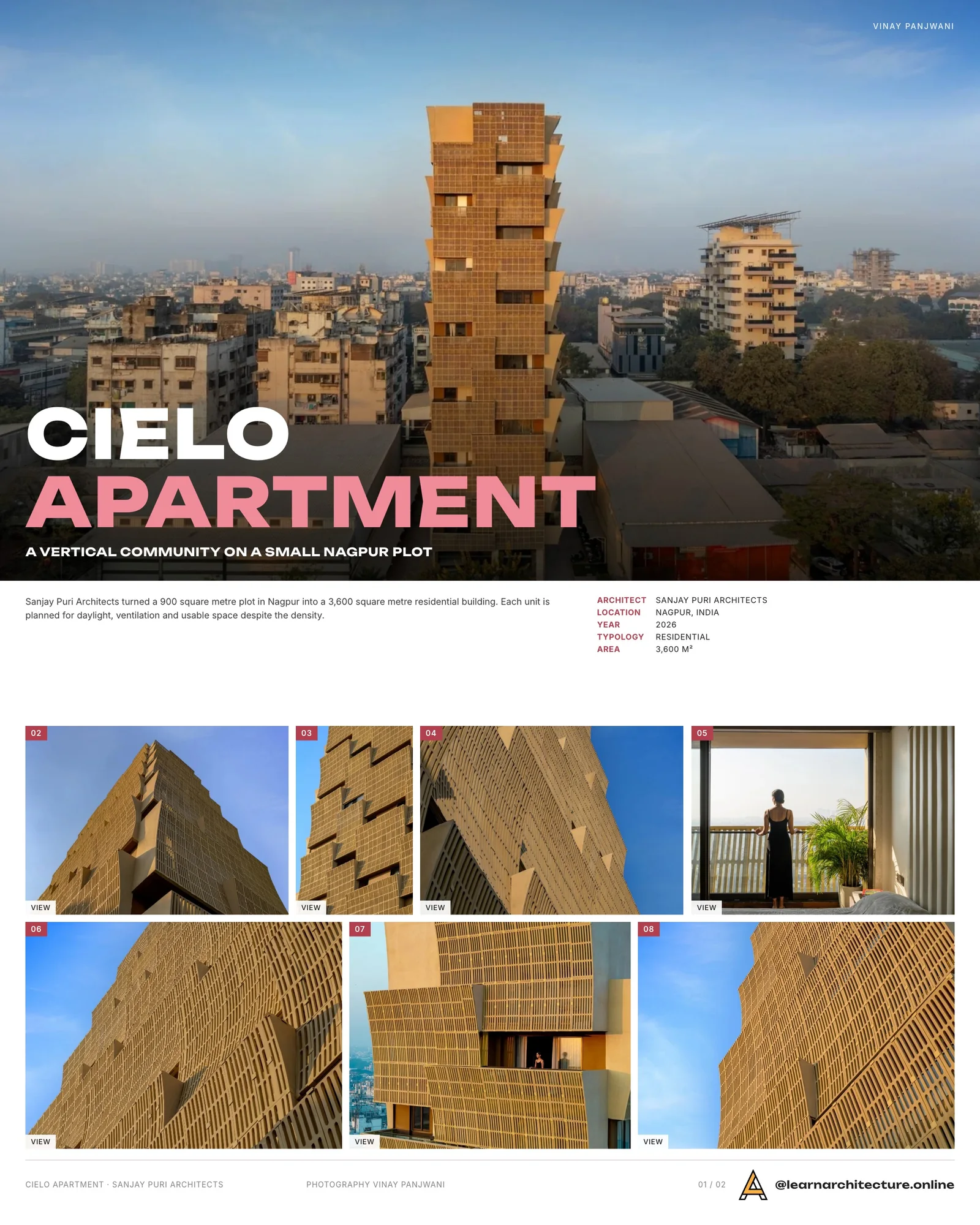
Within the bustling urban fabric of Nagpur, Maharashtra, emerges a compelling example of contemporary residential design that addresses the challenges of limited urban space. The Cielo Apartment, conceived by Sanjay Puri Architects, demonstrates how thoughtful architectural planning can transform a modest 900 square meter plot into a thriving vertical community spanning 3600 square meters. Completed in 2026, this residential building stands as a testament to intelligent space utilization and environmentally conscious design principles.

Architectural Response to Urban Constraints
The fundamental design challenge centered on maximizing buildable area within stringent regulatory frameworks and a relatively constrained site footprint. Rather than viewing these limitations as obstacles, the architectural team embraced them as creative catalysts. The resulting structure efficiently accommodates multiple residential units while maintaining compliance with local building codes and client specifications. This approach reflects a broader trend in sustainable architecture, where resource optimization becomes central to the design methodology.
The project’s success lies in its ability to balance density with livability. Each dwelling unit has been carefully configured to ensure adequate natural light penetration, ventilation, and spatial functionality, critical considerations often compromised in high-density developments. The architects employed strategic planning techniques that prioritize occupant comfort without sacrificing the economic viability demanded by contemporary urban development.

Material Innovation and Facade Expression
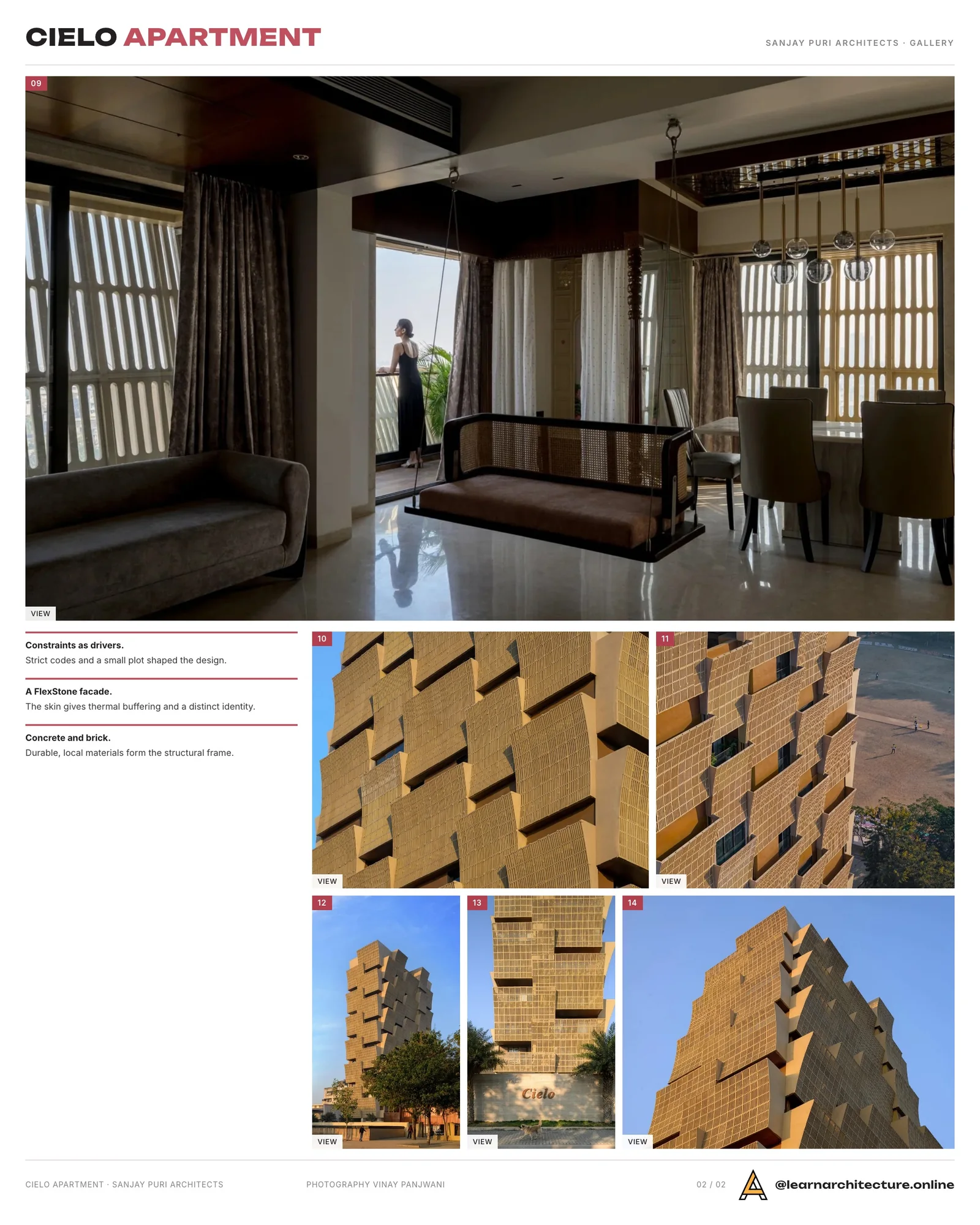
A distinguishing characteristic of the Cielo Apartment manifests in its facade treatment, which employs FlexStone materials to create visual interest and functional performance. This material selection contributes to both the building’s aesthetic identity and its environmental response. The facade system provides necessary thermal buffering while establishing a distinctive architectural expression that sets the project apart from conventional residential towers in the region.
The material palette extends beyond mere surface application, integrating with the structural logic of the building. Concrete and brick, time-tested construction materials, form the primary structural framework, chosen for their durability, local availability, and cost-effectiveness. This pragmatic material strategy aligns with sustainable building practices that emphasize locally sourced resources and reduced transportation impacts.

Structural Engineering and Construction Methodology
The collaboration with Patankar Consultants for structural engineering ensured that the vertical development could safely accommodate the design ambitions while adhering to seismic and structural requirements specific to the Nagpur region. The structural system had to reconcile multiple competing demands: maximizing usable floor area, providing column-free living spaces where possible, and ensuring long-term structural integrity under varying load conditions.
Construction execution was undertaken by Prestige Builders, who navigated the complexities of building in a dense urban context. The construction process required careful coordination to minimize disruption to surrounding properties while maintaining quality standards and project timelines. The successful completion demonstrates the importance of integrated project delivery, where architects, engineers, and contractors function as a cohesive team rather than isolated entities.

Spatial Organization and Residential Planning
The internal spatial arrangement reflects contemporary understandings of residential living patterns. Floor plates have been organized to optimize circulation efficiency while providing each unit with appropriate orientation for daylight and air movement. Common areas and vertical circulation cores occupy strategic positions that enhance rather than compromise individual unit quality.
The design team, including Ruchika Gupta, Nikita Dusing, Krishna Leela, Neha Wadodkar, Diganta Gujaran, and Chanchari Malviya, brought diverse perspectives to the planning process. This collaborative approach ensured that various aspects, from spatial efficiency to material detailing, received appropriate attention throughout the design development phases.

Environmental Sustainability Integration
Although categorized under sustainability, the Cielo Apartment’s environmental credentials extend beyond conventional green building checklists. The compact building form inherently reduces the building envelope’s surface area relative to floor area, thereby decreasing thermal gain and heat loss. This geometric efficiency translates directly into reduced energy demands for climate control, a critical consideration in Nagpur’s warm climate.
Passive design strategies have been embedded throughout the project. Cross-ventilation opportunities, shading devices, and material thermal mass all contribute to occupant comfort while minimizing mechanical system dependence. These approaches demonstrate that sustainable design need not rely exclusively on technological solutions but can emerge from fundamental architectural principles thoughtfully applied.

Context and Urban Integration
Situated within Nagpur’s evolving urban landscape, the Cielo Apartment responds to broader patterns of Indian urban development. Cities across India face unprecedented population growth and urbanization pressures, creating demand for housing solutions that are simultaneously affordable, sustainable, and responsive to local conditions. This project contributes to an emerging vocabulary of compact urban residential typologies suited to these challenging circumstances.
The building’s relationship to its immediate surroundings acknowledges existing urban grain while asserting its own contemporary character. Rather than mimicking neighboring structures, it establishes dialogue through scale, proportion, and material expression. This balanced approach allows new development to enrich rather than diminish urban character, a principle central to successful architectural urbanism.
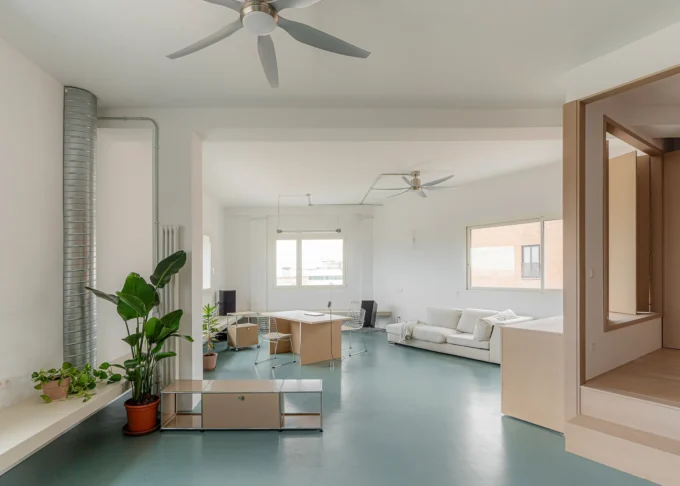
Photographed by Vinay Panjwani, the completed building reveals how architectural intentions translate into built reality. The images capture the interplay between solid and void, the material textures that activate the facade, and the quality of light within residential spaces. These visual documents serve not only as project records but as evidence of architecture’s capacity to enhance daily life through thoughtful design.
Photography: Vinay Panjwani


- Cielo Apartment
- compact residential architecture
- contemporary Indian apartments
- FlexStone facade
- high-density urban living
- Maharashtra residential projects
- Modern apartment architecture
- Nagpur apartment building
- residential building Nagpur
- Sanjay Puri Architects
- space optimization architecture
- sustainable apartment design
- sustainable housing design
- urban housing India








Leave a comment