


Table of Contents Show
The tiny house movement is one of the most significant shifts in residential architecture and lifestyle philosophy of the 21st century. What began as a handful of people questioning the need for oversized homes in the late 1990s has grown into a global phenomenon with a market valued at $21.9 billion in 2024, according to Business Research Insights. Whether you are drawn to tiny house living for financial freedom, environmental responsibility, or a simpler daily routine, this guide covers what you need to know before making the leap.
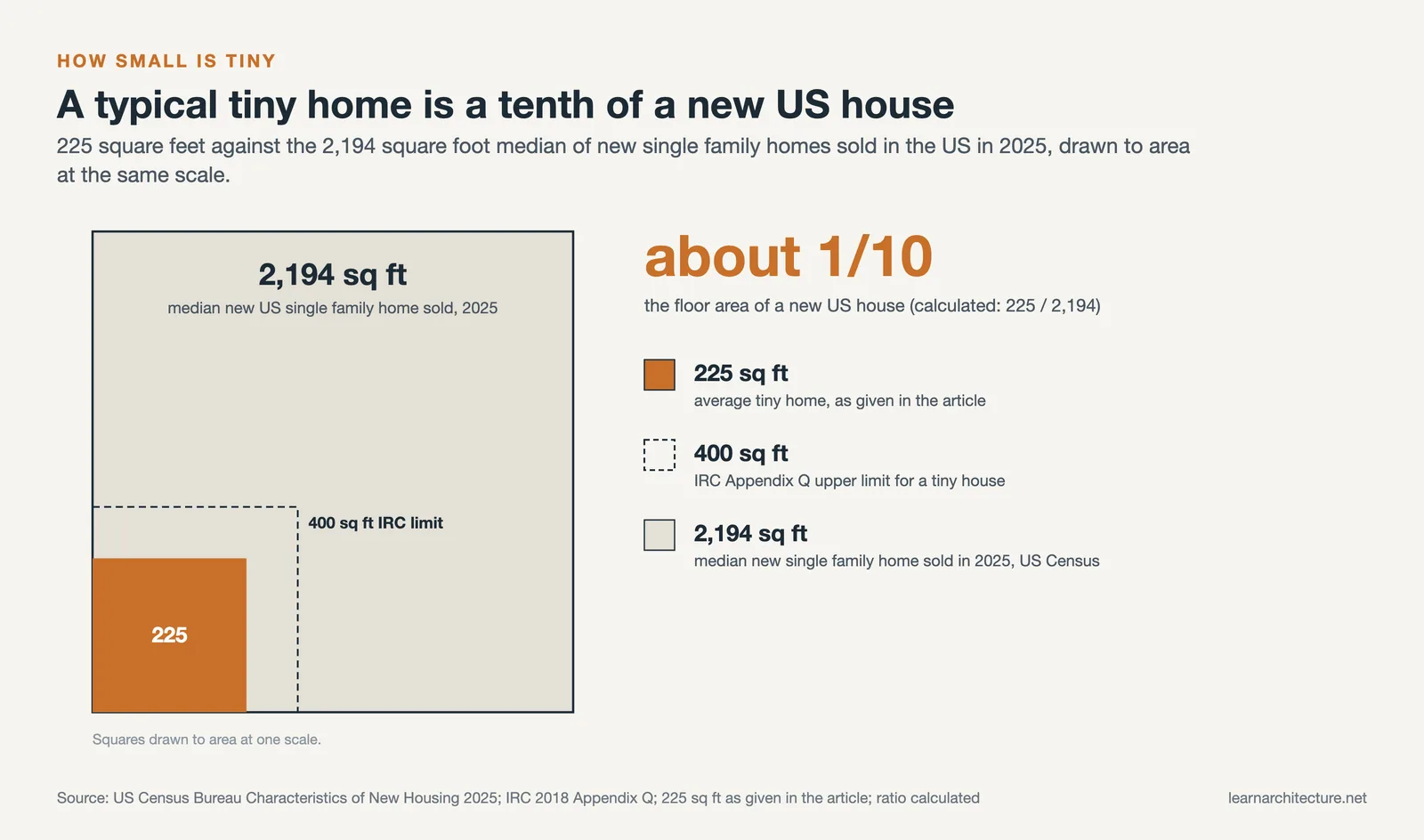
A tiny house is generally defined as a dwelling of 400 square feet or less, according to the International Residential Code. The average tiny home sits around 225 square feet, roughly one tenth the size of a new American house (2,194 square feet median in 2025). But the tiny house movement is about more than square footage. It represents a conscious decision to prioritize experiences, financial independence, and environmental stewardship over the accumulation of space and possessions.
What Is the Tiny House Movement and Where Did It Start?
So, what is the tiny house movement exactly? At its core, it is both an architectural trend and a social philosophy centered on reducing living space to gain freedom in other areas of life. Tiny houses come in many forms: custom-built homes on wheels, converted shipping containers, small cabins on permanent foundations, bus conversions, and prefabricated modular units.
The roots of this tiny little house movement trace back to the late 1990s. Jay Shafer built one of the first modern tiny houses in 1999 in Iowa, an 8-square-meter dwelling that launched a revolution. He later founded the Tumbleweed Tiny House Company, one of the first businesses dedicated to tiny home design and construction. Dee Williams followed in 2004 by building her own tiny home and founding Portland Alternative Dwellings (PAD), which offered workshops and plans for aspiring tiny homeowners. Sarah Susanka’s 1998 book “The Not So Big House” also helped shift public thinking toward smaller, more intentional living spaces.
The 2008 financial crisis accelerated interest. With millions of Americans rethinking mortgages and the cost of traditional homeownership, tiny houses offered a tangible path to debt-free living. Social media and television shows like Tiny House Nation brought the concept into mainstream awareness throughout the 2010s and 2020s.

Why People Choose Tiny House Living
The motivations behind tiny house living are diverse, but they tend to cluster around three major themes: financial freedom, environmental impact, and lifestyle simplification.
Financial Benefits of Going Tiny
According to data compiled by RubyHome from Porch.com and the St. Louis Federal Reserve, the average cost of a tiny home in the United States is approximately $67,000. Compare that to the average sales price of a new home in the US, which was $515,200 in the second quarter of 2025 per the St. Louis Fed. That makes a typical tiny house roughly 87% cheaper than a standard home purchase.
The financial advantages extend beyond the purchase price. About 68% of tiny home owners carry no mortgage at all, compared to just 29.3% of all U.S. homeowners. Monthly housing expenses can drop below $1,000, and many owners report paying off their homes within the first year. For people burdened by student debt or living paycheck to paycheck, this kind of financial relief can be transformative.
Environmental Advantages
Tiny homes require fewer building materials, consume less energy for heating and cooling, and generate less waste during construction. Research reported by Today’s Homeowner indicates that people living in tiny homes have a 45% lower ecological footprint than the average American. Many tiny houses also integrate sustainable features like solar panels, composting toilets, and rainwater collection systems, which further reduce their environmental impact.
Lifestyle and Freedom
Beyond money and the environment, many people are drawn to the sense of liberation that comes with owning less. Fewer possessions means less time spent cleaning, organizing, and maintaining a home. For those with mobile tiny houses on trailers, the ability to relocate offers a flexibility that traditional homeownership simply cannot match. About 54% of Americans who express interest in tiny homes prefer the mobile variety, according to survey data compiled by Building Elements.

Types of Tiny Houses
Not all tiny houses are created equal. The design and construction method you choose depends on your budget, lifestyle goals, and where you plan to live. Here is an overview of the most common types.
Tiny Houses on Wheels (THOWs)
This is the most recognizable type. Built on a trailer, these homes can be towed to new locations. The maximum allowable size for road transport without a special permit is generally 8.5 feet wide, 40 feet long, and 13.5 feet tall, giving a livable area of about 320 square feet. Mobile tiny homes accounted for 52.3% of the global tiny home market in 2024, according to Data Bridge Market Research.

Tiny Homes on Permanent Foundations
Some owners prefer to build their tiny house on a fixed foundation, treating it like a conventional home from a zoning and code perspective. These stationary tiny houses must comply with local building codes, which can be more restrictive but also provide greater legal certainty. This segment is growing fast, with a projected growth rate of 5.37% annually through 2032.
Shipping Container Homes
Repurposed shipping containers offer a durable, modular structure that can be converted into living spaces. A standard 20-foot container provides about 160 square feet, while a 40-foot container offers roughly 320 square feet. Containers are popular for their structural strength and the speed at which they can be converted.
Prefabricated and Kit Homes
Factory-built tiny homes are delivered to your site either fully assembled or as a kit. Prefab models are especially popular in Europe, where urban land is expensive and factory production allows for quality control. Prices for prefab tiny homes start around $75,000 depending on features and customization level.
Tiny House Types at a Glance
The following table compares the main categories of tiny houses across key factors:
| Type | Typical Size | Cost Range (USD) | Mobility | Best For |
|---|---|---|---|---|
| Tiny House on Wheels | 150-320 sq ft | $30,000-$80,000 | Fully mobile | Nomadic lifestyles, renters |
| Foundation-Built | 200-400 sq ft | $50,000-$150,000 | Stationary | Permanent residents, families |
| Shipping Container | 160-320 sq ft | $15,000-$60,000 | Semi-mobile | Budget builds, off-grid living |
| Prefab/Kit Home | 200-400 sq ft | $50,000-$120,000 | Delivered to site | Quick builds, quality control |
| Bus/Van Conversion | 80-250 sq ft | $10,000-$50,000 | Fully mobile | Travel-focused living, DIYers |
Zoning, Legal Challenges, and Where You Can Live Tiny
One of the biggest hurdles for anyone considering tiny house living is navigating local zoning laws and building codes. About 40% of urban municipalities in the United States impose zoning or regulatory restrictions on tiny home construction, according to a Business Research Insights market analysis. The legal landscape varies dramatically depending on whether your tiny house is on wheels or on a foundation, and which state or municipality you are in.
Tiny houses on wheels often fall into a legal gray area. Some jurisdictions classify them as recreational vehicles (RVs), others treat them as mobile homes, and some have no clear classification at all. Foundation-built tiny homes generally face fewer legal obstacles but must meet minimum square footage requirements set by local building codes, which can sometimes exceed 400 square feet.
Several states have become more friendly to tiny living. California, Colorado, Florida, Texas, Oregon, and Washington are among the most popular destinations for tiny home owners, thanks to their relatively progressive zoning laws and established tiny home communities. Communities like Orlando Lakefront in Florida, the Tiny House Village in Portland, and several developments across Texas provide infrastructure and legal frameworks for residents.
The number of tiny home villages for homeless populations has also grown significantly, from 34 in 2019 to 123 by mid-2024, according to Wikipedia’s overview of the movement. This expansion shows how tiny houses are being recognized not just as a lifestyle choice but as a practical solution to housing insecurity.

Design Principles for Tiny Houses
Good tiny home design maximizes every square inch without making the space feel cramped. Architects and designers working in this space rely on several proven strategies.
Vertical space utilization is essential. Sleeping lofts, overhead storage cabinets, and wall-mounted shelving free up the limited floor area for daily activities. Multi-functional furniture is another cornerstone: fold-down desks, convertible dining tables, and murphy beds allow a single room to serve multiple purposes throughout the day. Large windows and strategic placement of mirrors can make a small interior feel dramatically more open. Light color palettes, particularly whites and natural wood tones, further amplify this effect.
Storage is often the greatest design challenge. Experienced tiny home designers integrate storage into stairs (each step doubles as a drawer), under seating, inside walls, and even beneath floors. Pull-out pantries, ceiling-mounted pot racks, and sliding barn doors (which don’t require swing clearance) are all standard solutions in well-designed tiny homes. For couples or families, clearly defined zones for work, sleep, cooking, and relaxation help maintain a sense of order and personal space even within 200 square feet.

The Tiny House Market: Growth and Trends
Market size estimates vary widely because research firms define and count tiny homes differently. Business Research Insights, cited above, values the market at $21.9 billion in 2024 and close to $30 billion by 2033, while more conservative estimates put it at a fraction of that. The global tiny homes market is projected to grow from $6.17 billion in 2025 to $8.20 billion by 2033, at a compound annual growth rate of 3.62%, according to Market Data Forecast. North America leads the way, accounting for roughly 42.5% of global market revenue in 2024 per Data Bridge Market Research.
Roughly 70% of U.S. tiny house owners are millennials, according to data reported by TinyHousePlans.com. The generation’s concerns about student debt, housing affordability, and climate change align naturally with what tiny houses offer. Interest is also growing among retirees looking to downsize and reduce living expenses, as well as investors who use tiny homes as short-term rental properties on platforms like Airbnb.
Technological integration is accelerating. Smart home systems, solar energy setups, and advanced insulation materials are becoming standard features in modern tiny homes. The National Association of Home Builders (NAHB) reported that nearly 40% of builders constructed smaller homes in 2023, and 26% planned to continue building lower-square-footage homes in 2024, signaling that the broader construction industry is responding to demand for compact living.

Challenges and Realities of Going Tiny
Tiny house living is not without drawbacks. Before committing, consider the practical realities that come with significantly reduced space.
Storage limitations are the most frequently cited frustration. Moving into a tiny home requires substantial decluttering, and maintaining that minimal inventory takes ongoing discipline. Hosting guests becomes difficult when your living room, kitchen, and bedroom essentially share the same space. Couples and families face additional challenges around privacy and personal space, particularly during long stretches of time spent indoors.
Resale can also be complicated. Tiny homes, especially those on wheels, lack the established resale market of conventional real estate. Financing is another obstacle: most traditional mortgage lenders do not offer loans for tiny houses, so buyers often need to pay cash, use personal loans, or work with specialized RV or chattel lenders.
It is also worth noting that while the overall price tag is lower, the cost per square foot of a tiny home is actually about 38% higher than a full-sized house. The median price per square foot comes in around $297 for tiny homes versus $215 for standard homes, according to analysis by Porch.com reported through RubyHome.
Cost figures mentioned in this article are approximate and vary by region, material supplier, and project scope. Building codes and regulations vary by jurisdiction; always consult local authorities before beginning a tiny home project.
How to Get Started with the Tiny House Movement
If you are seriously considering joining the tiny house movement, a structured approach will save you time, money, and frustration.
Start by researching zoning laws in your target area. Contact the local planning or building department and ask specifically about minimum dwelling size requirements, whether tiny houses on wheels are permitted, and what utility hookup standards apply. This step alone can narrow your options significantly and prevent costly surprises.
Next, define your budget realistically. Factor in the cost of the home itself, land (if purchasing), utility connections, insurance, and any site preparation work like grading or foundation pouring. If you plan to build yourself, honestly assess your construction skills and timeline; a typical DIY tiny house build takes 3 to 6 months.
Visit existing tiny home communities or attend tiny house festivals and expos where you can tour completed homes and speak with builders. Seeing various layouts in person gives you a far better sense of what works for your lifestyle than photos alone. Online resources like the architecture section on learnarchitecture.net can also help you explore design options and construction methods.
Finally, do a trial run. Rent a tiny house on Airbnb for a week or two. Cook, work, sleep, and relax in a small space to see how your daily routines adapt. Many people discover that they love the concept but need specific features, like a full-size kitchen or a dedicated workspace, that should be prioritized in their design.

Frequently Asked Questions
What is the tiny house movement?
The tiny house movement is a social and architectural trend focused on living in homes of 400 square feet or less. It emphasizes financial freedom, environmental responsibility, and intentional living over the accumulation of large amounts of living space. The movement includes various dwelling types such as homes on wheels, shipping container conversions, and small foundation-built houses.
How much does a tiny house cost?
The average price of a tiny home in the United States is between $30,000 and $80,000, depending on size, materials, and features. DIY builds can start as low as $8,000, while luxury custom tiny homes can exceed $150,000. These figures are significantly lower than the median U.S. home price of over $500,000.
Can you legally live in a tiny house full time?
Yes, but legality depends heavily on your location. Some states and municipalities have adopted zoning codes that explicitly allow tiny houses, while others impose minimum square footage requirements that can be a barrier. Tiny houses on wheels may be classified as RVs, which restricts where you can park them permanently. Always verify local regulations before purchasing or building.
What are the biggest challenges of tiny house living?
The most common challenges include limited storage, difficulty hosting guests, zoning and legal uncertainty, financing obstacles (many banks won’t mortgage a tiny home), and the psychological adjustment to living in a very small space. Resale value can also be unpredictable compared to conventional homes.
Is the tiny house movement still growing?
Yes. Business Research Insights valued the global tiny homes market at $21.9 billion in 2024 and projects it to reach nearly $30 billion by 2033, although other firms, such as Market Data Forecast, publish much lower estimates. Demand has increased significantly since the pandemic, driven by housing affordability concerns, environmental awareness, and evolving lifestyle preferences across multiple generations.






Leave a comment