


Table of Contents Show
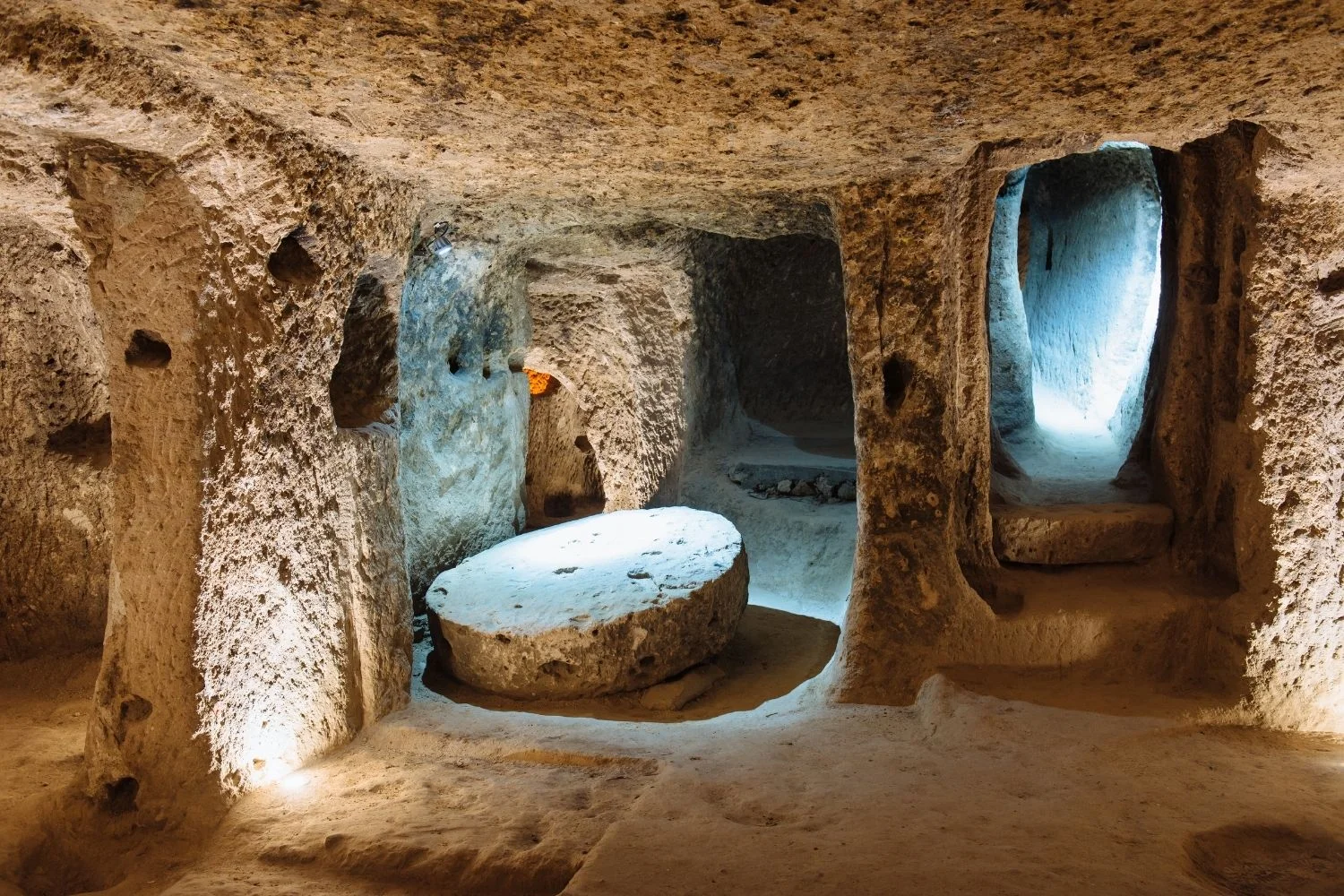
Architectural design underground house projects represent one of the oldest and most resourceful strategies in built history. From ancient civilizations carving entire cities into rock to contemporary architects embedding homes in hillsides to cut energy use, underground architecture has served purposes as varied as survival, spirituality, and sustainability. These eight examples span continents and centuries, each demonstrating a distinct reason to build below ground.
What Is Underground Architecture?
Underground architecture refers to structures built entirely or primarily beneath the earth’s surface or embedded into natural terrain such as hillsides, cliff faces, or volcanic rock. The term covers a broad range: residential homes sunk into slopes, civic buildings hidden under parkland, ancient cities carved into tufa, and transit infrastructure that doubles as public space. What connects them is the deliberate use of the earth as both building material and environmental buffer.
The ground offers natural thermal mass, which keeps interior temperatures stable without mechanical systems. It provides acoustic insulation, structural support, and in many climates a consistent cool-to-warm temperature band that dramatically reduces energy demand. For this reason, architects working on sustainable design have returned to subterranean strategies with renewed interest, drawing on techniques first developed thousands of years ago.
You can trace how these ideas connect to broader sustainable architecture principles and the passive strategies architects apply to reduce a building’s environmental footprint across its lifecycle.
💡 Pro Tip
When assessing an underground or earth-sheltered design, prioritize moisture management in the earliest design stages. Waterproofing membrane selection and drainage layer detailing are far less expensive to resolve in schematic design than during construction or post-occupancy. Most failures in below-grade residential projects trace back to insufficient attention at this phase.
Early Underground Architecture: Greece and the Ancient World
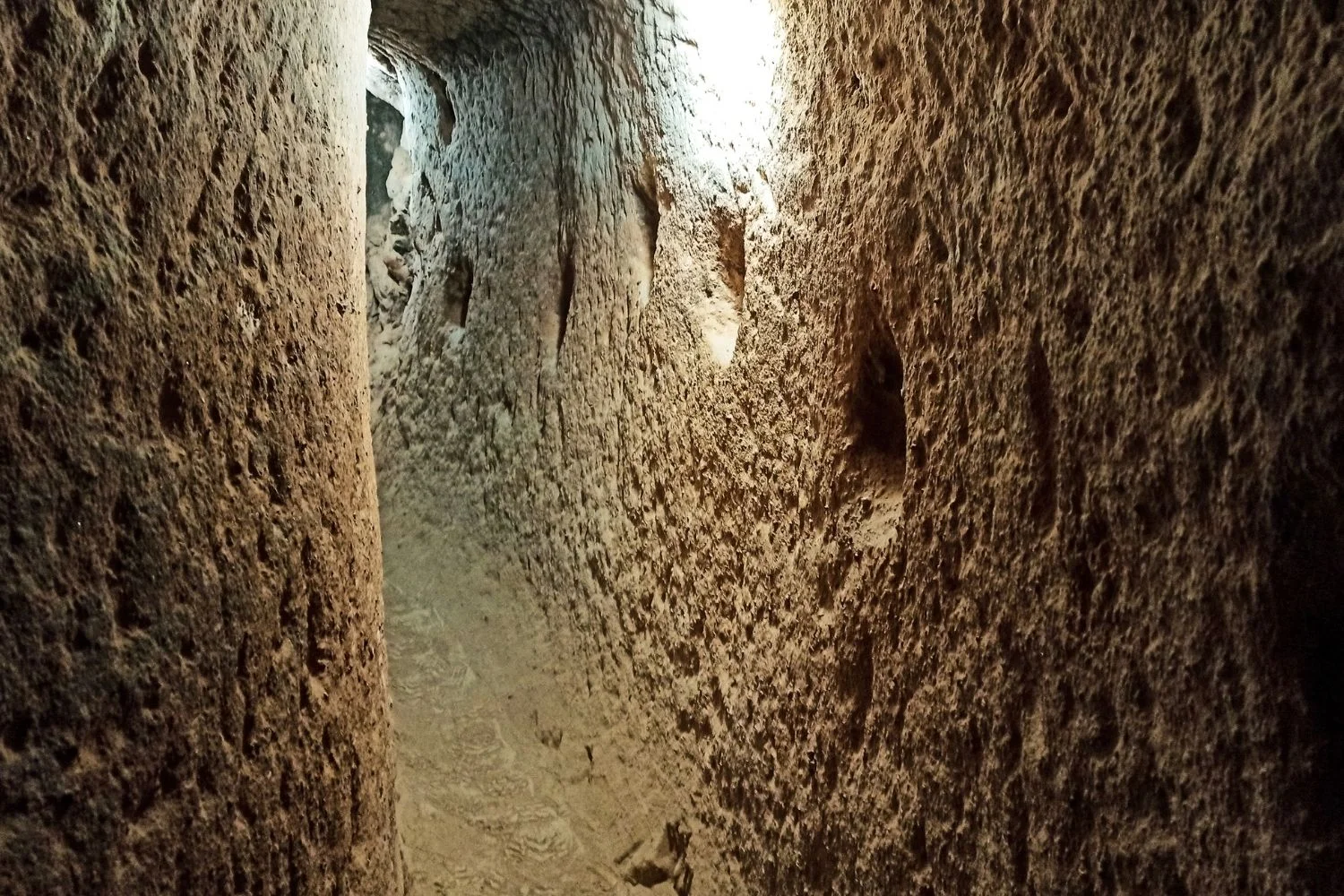
Early underground architecture in Greece developed primarily around religious and civic functions. The Treasury of Atreus at Mycenae, constructed around 1250 BCE, is among the most technically accomplished subterranean structures from the ancient world. Its dromos (entrance passage) cuts horizontally into a hillside, leading to a circular beehive-shaped burial chamber. The corbelled vault spans approximately 14.5 meters in diameter and stands 13.5 meters high, making it one of the largest unsupported stone spans in the ancient world for centuries after its construction.
Greek architects also used natural cave systems and carved rock chambers for religious sanctuaries, oracle sites, and water cisterns. The Oracle at Delphi operated around subterranean vapors and underground passages, and Mycenaean fortifications relied on secret underground water tunnels, such as the cistern at Tiryns, to survive sieges. These were not primitive shelters but carefully engineered systems that integrated underground space into civic and ceremonial life.
📌 Did You Know?
The Treasury of Atreus corbelled vault at Mycenae held the record as the world’s largest unsupported interior span for roughly 1,300 years after its construction, until Roman engineers developed large-scale concrete dome construction. The lintel stone above its entrance is estimated to weigh over 100 tonnes.
Egypt Underground Architecture: Rock-Cut Temples of Abu Simbel
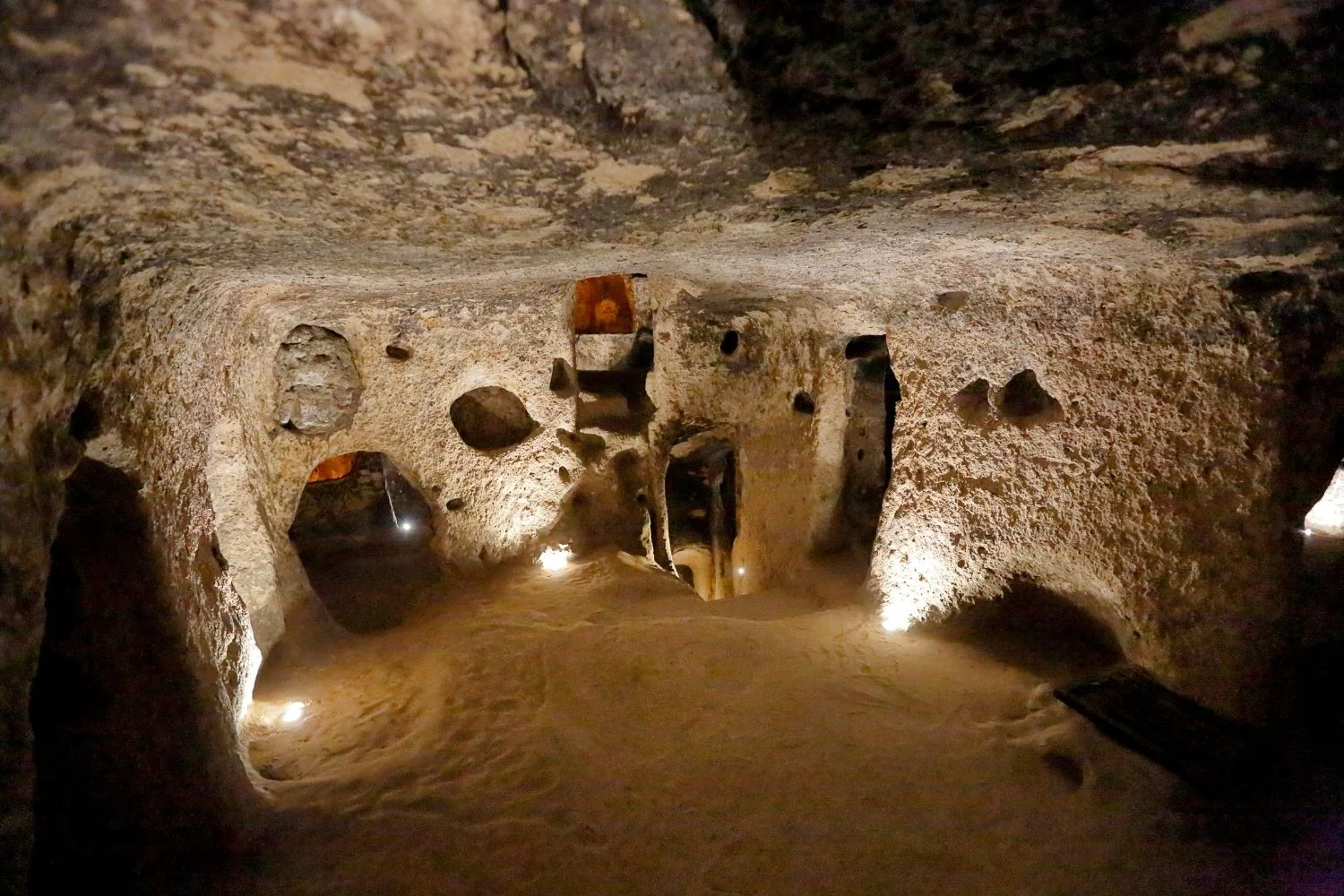
Egypt’s underground architecture tradition is among the most extensive on Earth. The rock-cut temples of Abu Simbel, commissioned by Ramesses II around 1264 BCE, represent one of the most ambitious examples of subterranean construction in the ancient world. Two temples were carved entirely from the sandstone cliff face at the edge of the Nile in Nubia. The larger temple extends 63 meters into the rock, with its four colossal facade statues each standing approximately 20 meters tall.
The temple’s orientation is precise: twice a year, on approximately February 22 and October 22, the rising sun penetrates the full length of the inner sanctuary, illuminating three of the four statues of deities inside. This level of solar alignment required not only astronomical knowledge but a deep understanding of how light moves through carved subterranean space. The rock-cut technique also served a preservation function: the thick sandstone mass maintained stable temperatures and protected the interior from the extreme desert climate.
When the Aswan High Dam threatened to flood the site in the 1960s, UNESCO coordinated a rescue operation between 1964 and 1968 that relocated both temples, cutting them into more than 2,000 blocks weighing up to 30 tonnes each and reassembling them 65 meters higher and 200 meters back from the original site. The project involved 50 countries and cost approximately $80 million.
Derinkuyu: The Underground City of Cappadocia, Turkey
The underground city of Derinkuyu in Cappadocia, Turkey, is the largest fully excavated underground city in the world. Carved from volcanic tufa rock, it extends approximately 85 meters below the surface across 18 levels, and at its peak capacity it could shelter an estimated 20,000 people along with their livestock and food stores. The city dates back at least to the Phrygian period around the 8th to 7th century BCE, though it was substantially expanded during the Byzantine era.
What makes Derinkuyu exceptional from an architectural standpoint is its infrastructure. The city includes ventilation shafts, wells, stables, churches, schools, wineries, and storage rooms. A network of tunnels connects it to other underground settlements in the region, with some passages stretching several kilometers between cities. Large circular stone doors weighing hundreds of kilograms could be rolled into position to seal off corridors from inside, a passive security system that required no mechanical components.
The ventilation system alone involved approximately 52 shafts with the main shaft reaching 55 meters deep. This level of engineering allowed thousands of people to survive extended periods underground during invasions, with adequate air, water, and stored provisions. Derinkuyu was designated part of the UNESCO World Heritage site of Göreme National Park and the Rock Sites of Cappadocia in 1985. More on how ancient engineers solved structural and environmental problems can be found in this overview of architectural wonders that survived millennia.
London Underground Architecture: From Victorian Tunnels to Modern Infrastructure
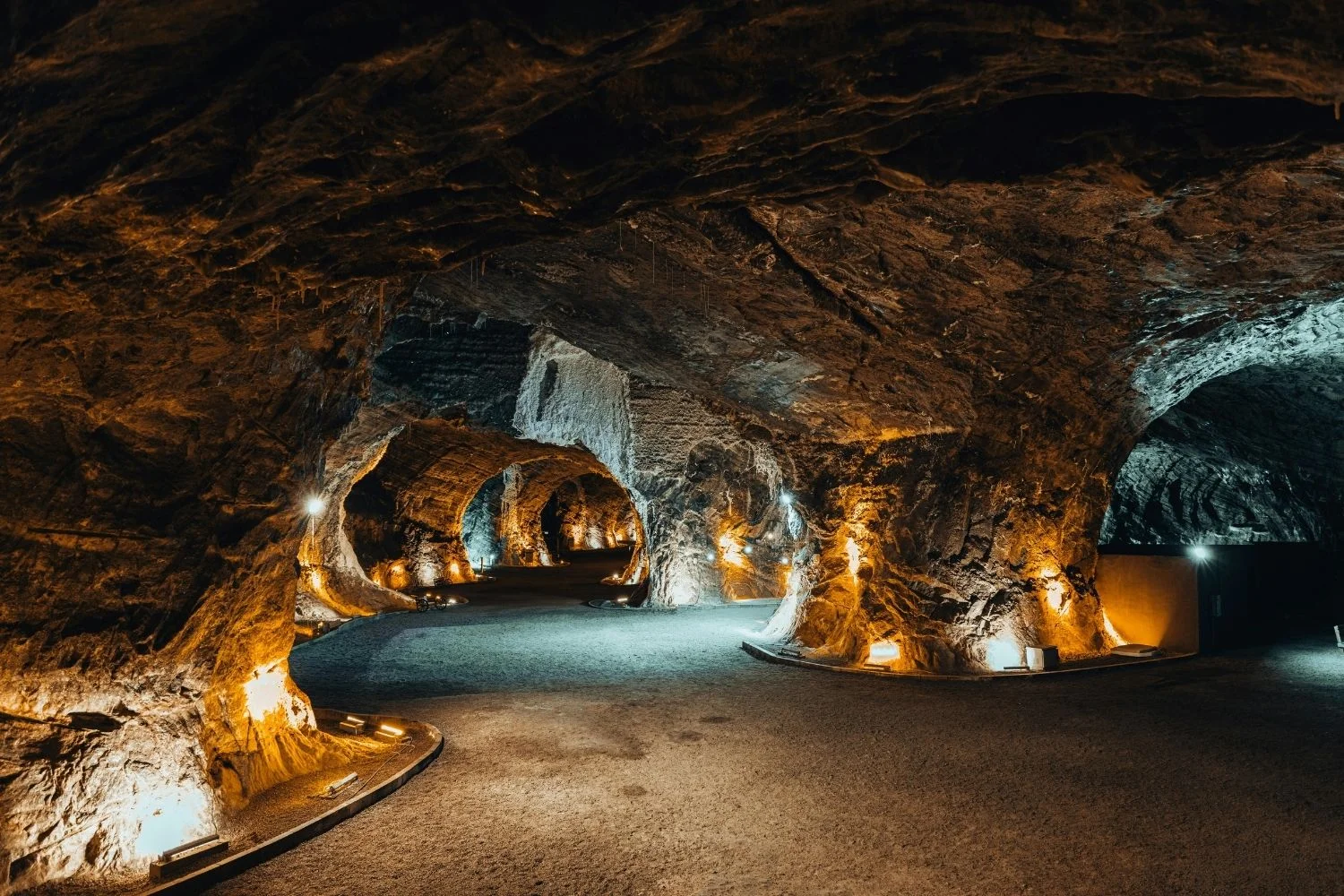
London underground architecture begins with the Metropolitan Railway, which opened in January 1863 as the world’s first underground passenger railway. The original cut-and-cover construction method involved digging a trench along a street, building brick-lined tunnels within it, and covering the structure over to restore the surface. Later engineers developed the deep-level tube method, boring circular tunnels through London’s clay subsoil at depths that allowed the railway to pass beneath existing foundations, rivers, and utility infrastructure.
Beyond transit, London’s subterranean fabric includes wartime deep-level shelters built during World War II, many of which were converted to offices and storage afterward; a network of Post Office Railway tunnels running beneath the city center; and the 21-kilometre Tideway Tunnel, a combined sewer overflow scheme completed in 2024 that runs beneath the Thames. The station architecture above and below ground ranges from Victorian tile-work halls to the modernist platforms of Charles Holden’s designs at Arnos Grove and Southgate.
Contemporary projects continue this tradition. Crossrail (now the Elizabeth line), opened in 2022, required the construction of new deep-level tunnels through 42 kilometers of mixed geology beneath central London and its suburbs, involving the largest civil engineering project the UK had undertaken in a generation. The project’s underground station caverns at Bond Street, Farringdon, and Liverpool Street were designed with acoustics, wayfinding, and spatial quality as primary considerations alongside engineering function.
🎓 Expert Insight
“Underground spaces are, in effect, the urban commons of the future. The question is not whether we build beneath cities, but how well we design what goes there.”
Ricky Burdett, Professor of Urban Studies, London School of Economics
This perspective reflects a shift in how planners and architects approach subterranean space, moving from pure infrastructure to thinking about underground environments as civic space with real design obligations around light, air quality, navigation, and experience.
Modern Underground Architecture: Villa Vals, Switzerland
Modern underground architecture often draws its design logic from landscape integration rather than concealment. Villa Vals, designed by Christian Müller Architects and SeArch and completed in 2009, is one of the most cited contemporary examples of the architectural design underground house concept done well. Located in the Vals valley of Switzerland, the house is built into a steep hillside with the visible facade consisting of a single elliptical opening cut through the turf-covered slope.
The interior is organized around a central circular courtyard carved into the earth, from which all rooms radiate. The courtyard brings light and sky into what would otherwise be a fully dark environment, and it provides natural ventilation. The hillside mass provides excellent thermal insulation, keeping interior temperatures stable across seasons without the energy costs of a conventional above-grade house. The project demonstrates how a contemporary architectural design underground house can achieve both high spatial quality and environmental performance through the same set of design moves.
The architects’ decision to sink the house into the hillside was also a planning response to local heritage restrictions: the site sits near the Vals thermal baths by Peter Zumthor, and the landscape was protected from dominant new construction. Going underground solved the program while leaving the valley’s visual character intact.
🏗️ Real-World Example
Coober Pedy, South Australia (ongoing since 1915): This opal-mining town of approximately 1,700 residents has developed one of the world’s most extensive underground residential communities, known as “dugouts.” Surface temperatures regularly exceed 40°C in summer, but underground homes maintain a stable 22 to 24°C year-round without air conditioning. The town includes underground churches, hotels, shops, and art galleries, making it the largest inhabited underground settlement in the modern world and a live case study in passive thermal performance at community scale.
Architectural Museum Underground: The Tirpitz Museum by BIG, Denmark
The Tirpitz Museum in Blåvand, Denmark, designed by Bjarke Ingels Group (BIG) and opened in 2017, is a defining example of how modern architects approach the architectural museum underground typology. The project involved an existing World War II bunker, part of Hitler’s Atlantic Wall, which had sat abandoned in the protected dune landscape for decades. BIG’s brief was to build a museum around and connected to the bunker without disturbing the listed landscape.
The solution was to excavate four slender exhibition wings radiating from the bunker, with their rooflines following the dune topography so closely that the museum is almost invisible from the surrounding landscape. Narrow cuts between the wings create light wells that bring daylight deep into the galleries. Visitors move between exhibitions through the four underground wings and into the original bunker itself, which houses an exhibition on the Atlantic Wall. The bunker’s 3.5-meter-thick reinforced concrete walls become both artifact and architecture.
From above, the landscape appears nearly untouched. The geometry of the cuts creates dramatic spaces inside that alternate between tight corridors and tall, light-filled rooms. The Tirpitz demonstrates how an underground museum can use the tension between buried space and natural light as a primary architectural experience, rather than treating daylight deprivation as a constraint to work around. You can read more about how architectural styles respond to landscape and cultural context in the guide to architectural styles in history.
Helsinki Underground City: Finland’s Subterranean Infrastructure
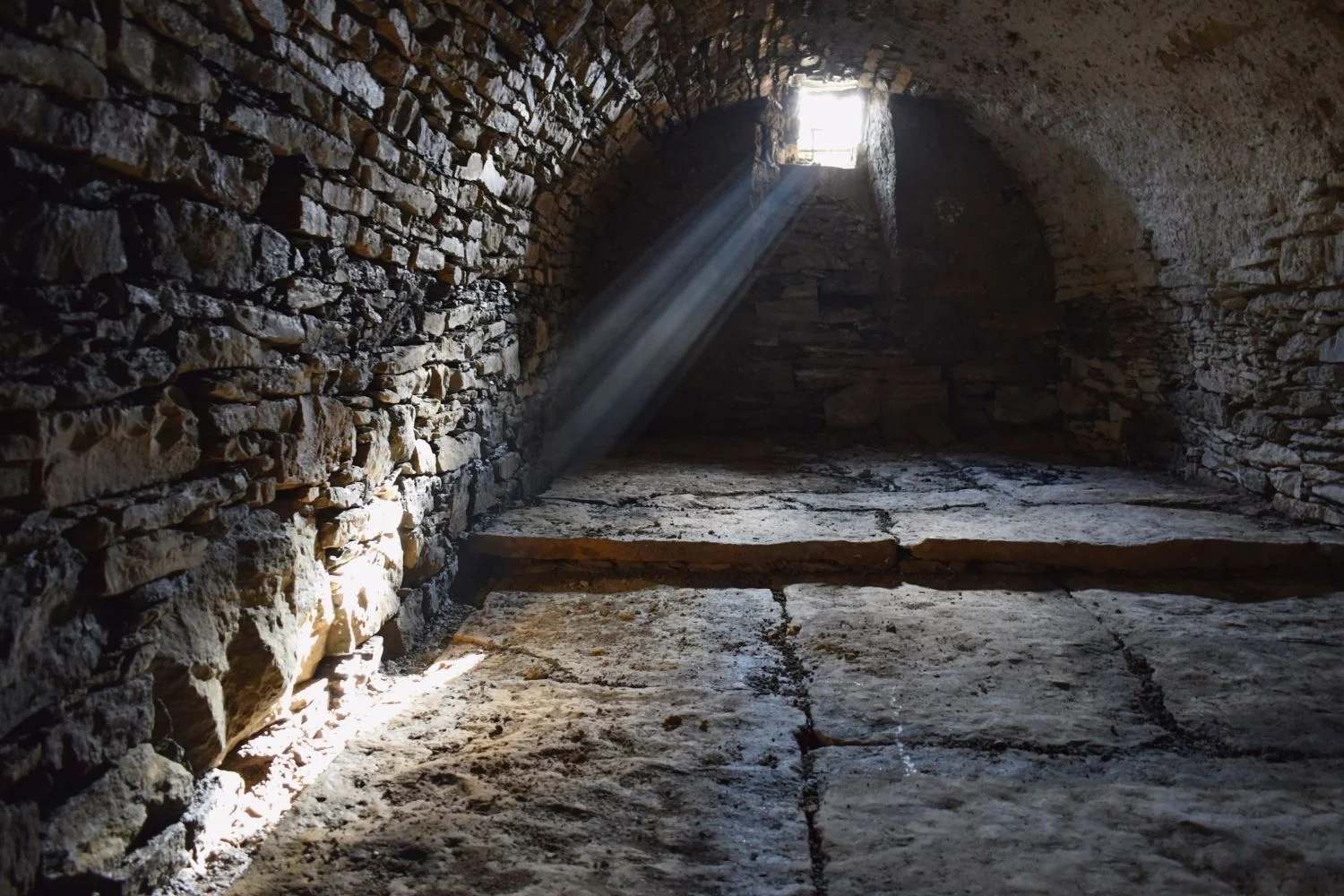
Helsinki has developed one of the most extensive underground urban networks in the world, covering approximately 400 kilometers of tunnels and underground facilities across the city. Finland’s granite bedrock, while requiring significant drilling and blasting to excavate, provides extremely stable and dry conditions for underground construction. This geological advantage, combined with urban land pressure and a need for climate-protected infrastructure, prompted Helsinki to develop a formal Underground Master Plan, first published in 2010 and regularly updated since.
The network includes swimming halls, ice rinks, emergency shelters capable of housing the entire city population, data centers, and a major rock cavern art museum at Tennispalatsi. The Temppeliaukio Church, completed in 1969 by architects Timo and Tuomo Suomalainen, was blasted directly from a granite outcrop in the city center. The church’s circular space retains the natural rock walls as its perimeter, with a copper and glass roof providing the only enclosed boundary. It seats approximately 750 people and has become one of Helsinki’s most visited buildings.
Helsinki’s approach to underground city planning treats subterranean space as a strategic urban resource, reserving the most valuable belowground levels for functions that genuinely require them and mapping ownership, rights of way, and future capacity systematically. This formal planning approach distinguishes Helsinki’s underground development from the piecemeal tunnel networks that characterize most other cities.
📐 Technical Note
Earth-sheltered buildings typically maintain interior temperatures between 10°C and 16°C year-round through passive thermal mass alone, depending on soil type, depth, and climate zone. Finnish granite provides one of the best performance envelopes: its thermal conductivity of approximately 2.5 to 3.5 W/m·K combined with high density (around 2,700 kg/m³) creates very stable thermal lag. In practice, Helsinki’s rock-cut spaces require minimal mechanical heating even through −20°C winters.
Architecture Building Underground: The Lowline, New York City
The Lowline in New York City represents a different direction for architecture building underground: the conversion of abandoned subterranean infrastructure into public amenity. The project proposes transforming a disused trolley terminal beneath the Williamsburg neighborhood of Manhattan into the world’s first underground park, using remote skylights and fiber-optic solar technology to channel natural sunlight below grade to sustain plant life.
The technology involves a collector dish installed at street level that tracks the sun and concentrates its light into a fiber-optic bundle, transmitting it underground where a diffusion panel redistributes it across a planted landscape. A working demonstration lab opened in 2015 and attracted approximately 100,000 visitors, showing that the concept was technically and spatially viable. While full-scale development has remained on hold pending funding and planning approvals, the Lowline has become an influential reference point in discussions about how cities can reclaim underground infrastructure for public use.
This trajectory connects to a broader pattern visible in projects like the High Line (elevated), the Paris catacombs-to-museum conversions, and London’s wartime shelter repurposing. Abandoned infrastructure below cities represents a substantial spatial resource, and designers are increasingly being commissioned to think about how it might serve present needs. For a look at how architecture responds to urban land pressure more broadly, the article on sustainable architecture projects around the world provides useful comparative context.
💡 Pro Tip
When designing or evaluating underground or semi-underground spaces intended for public use, pay particular attention to wayfinding. Studies of underground retail and transit environments consistently show that disorientation is the single biggest factor reducing dwell time and user satisfaction. Clear sightlines, consistent natural light cues, and simple spatial sequences matter more in below-grade spaces than in above-grade ones, because occupants cannot reference external landmarks.
Why Underground Architecture Continues to Matter
The eight projects above show that underground architecture is not a single approach but a family of strategies, each responding to a different combination of climate, program, culture, and constraint. What they share is a recognition that the ground is not just a substrate to build on but a building material in itself, one with thermal, acoustic, structural, and spatial properties that above-grade construction cannot replicate.
As urban land values rise and cities face pressure to reduce energy consumption, the logic of subterranean architecture strengthens. The ancient residents of Derinkuyu and Coober Pedy understood the energy efficiency of earth sheltering without the benefit of energy modeling software. Contemporary architects now have the tools to quantify those benefits precisely and design around them with a level of spatial refinement those earlier builders could not have imagined. The tradition of finding architectural concepts in the environment runs directly through underground design.
What the best examples in this list also demonstrate is that going underground does not mean sacrificing spatial quality. Light, air, materiality, sequence, and surprise are all available to architects working below grade. The Tirpitz, Villa Vals, and the Temppeliaukio Church are not impressive despite being underground. Their subterranean character is precisely what makes the spatial experience distinct.
✅ Key Takeaways
- Underground architecture spans from 1250 BCE rock-cut tombs in Greece to 2022 deep-level rail stations in London, demonstrating that the strategy has always responded to real constraints rather than stylistic fashion.
- Earth-sheltered buildings use thermal mass to maintain stable interior temperatures passively, reducing heating and cooling energy significantly compared to above-grade construction in the same climate.
- Egypt, Turkey, Switzerland, Denmark, Finland, and Australia each represent a distinct regional and programmatic approach to building below ground, from survival infrastructure to civic space to contemporary residential architecture.
- The biggest design challenges in underground architecture are moisture management, natural light provision, and wayfinding. Projects that resolve all three tend to be the most successful as occupied spaces.
- Urban planners are increasingly treating subterranean space as a formal planning resource, with Helsinki’s Underground Master Plan being the most developed example of systematic below-grade city mapping.
For further reading on how architects approach climate-responsive and landscape-integrated design, the overview of biomimicry in architecture covers related strategies in nature-inspired structural and environmental design. The historical context for underground building also connects directly to the broader survey of architectural styles across history that traces how design evolved in response to material, climate, and cultural need.
Key external references and further reading: the Dezeen underground architecture archive documents contemporary projects in detail; UNESCO’s entry on the Rock Sites of Cappadocia covers the historical and geological context of the Derinkuyu underground city; and the ArchDaily underground architecture tag provides a continuously updated database of built and proposed subterranean projects worldwide.













Leave a comment