


Table of Contents Show
Form, function, and modernism in architecture are inseparable threads in a story that reshaped how we design, and how we live. As designers, we inherit a century of debates about ornament, structure, and the purpose of buildings, and we still ask the same core question: what should a building do, and how should that truth appear? In this text, we revisit the origins of modernism, unpack the maxim “form follows function,” and explore how today’s practices reinterpret those ideas for a more sustainable, human-centered future.
Defining Modernism: Origins, Ethos, and Break From Tradition
Industrialization and New Possibilities
Modernism emerged from the shockwaves of industrialization. New machines changed how people worked and moved: new materials, steel, reinforced concrete, and large panes of glass, changed what we could build. Railways and factories demanded efficiency and scale. Architects responded with new typologies and construction systems that prized clarity and performance over historical pastiche. The goal wasn’t to be novel for novelty’s sake: it was to align form, function, and modern life.

From Ornament to Rational Expression
For centuries, ornament carried cultural meaning. Modernists saw it as camouflage. Think of Adolf Loos’s polemic against “crime” in ornament or Le Corbusier’s “house as a machine for living.” The ethos shifted toward rational expression: let the plan, structure, and program lead the aesthetic. Proportions, grids, and light replaced cornices and pilasters. This wasn’t the death of beauty, just a different route to it, grounded in legible organization, honest materials, and spatial clarity.
“Form Follows Function”: Meaning, Myths, and Misuses
Sullivan, Wright, and the Lineage of the Maxim
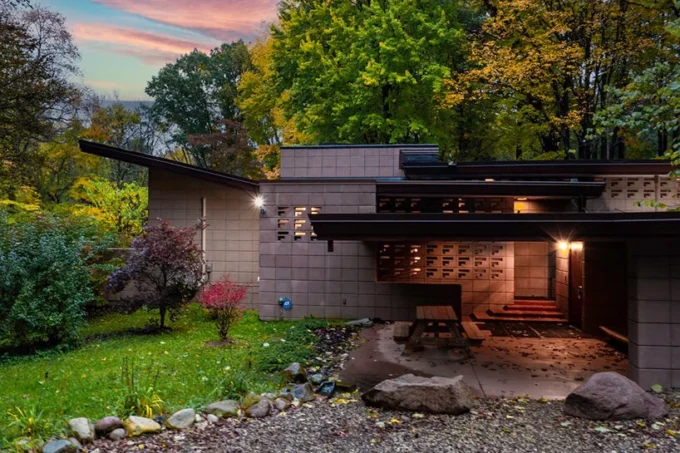
Louis Sullivan coined the phrase in the 1890s, arguing that architectural form should grow out of a building’s purpose, just as in nature. Frank Lloyd Wright expanded the idea, tying function to experience and landscape rather than mere utility. Over time, the pithy line hardened into dogma and was sometimes used to excuse lifeless boxes. The original intent was more generous: let use, structure, climate, and craft shape the outcome.

Function Beyond Utility: Social, Cultural, and Urban Roles
Function isn’t just about room sizes and circulation. Buildings carry social functions, hosting rituals, supporting care, enabling learning. They carry cultural functions, expressing identity, memory, and values. They also play urban roles, forming streets, making shade, channeling breezes, and framing public life. When we design, we consider these layers together. That’s where form, function, and modernism in architecture still resonate: the best modern work connects purpose to place, people, and city.
Materials, Structure, and the Aesthetics of Honesty
Steel, Concrete, Glass, and Open Plans
Steel frames liberated walls from load-bearing duties: concrete allowed long spans and sculptural surfaces: industrial glass brought daylight deep into plans. With structure handling the heavy lifting, partitions could slide and spaces could flow, open plans that adapt as life changes. This technical shift made transparency, visual and ethical, a hallmark of modernism.

Exposed Structure and Modular Order
Exposing columns, slabs, and connections made buildings legible. The grid acted as both a tool and a discipline, organizing facades, services, and furniture. Mies van der Rohe’s mantra “less is more” wasn’t austerity for its own sake: it was an argument that precision and proportion can carry aesthetic weight. When details are true to how things work, beauty often follows.
Landmark Works That Shaped the Modernist Canon
Residential: Villa Savoye to Case Study Houses
Le Corbusier’s Villa Savoye embodies the early canon: pilotis lifting the volume, a free plan, ribbon windows, and a roof garden. Decades later, California’s Case Study Houses (by Eames, Koenig, and others) translated similar principles into affordable, prefabricated living, steel frames, modular panels, and indoor and outdoor continuity. Both showed that domestic life could be lighter, brighter, and more adaptable.

Civic and Corporate: Seagram Building to Brasília
Mies and Philip Johnson’s Seagram Building refined the glass tower with impeccable proportion, a bronze skin, and a generous plaza, demonstrating how corporate modernism could dignify the street. In Brasília, Lúcio Costa and Oscar Niemeyer pursued a visionary national project: heroic axes, sculptural ministries, and vast civic spaces. Admired and critiqued in equal measure, these works reveal modernism’s ambition and its blind spots.
Human Experience, Critique, and the Limits of Functionalism
Standardization, Alienation, and the Rise of Brutalism
Efficiency sometimes slid into monotony. Standardized blocks, weak social supports, and top-down planning contributed to notorious failures. Brutalism, raw concrete, unapologetic mass, sought honesty and social purpose, yet it could overwhelm daily life when scale and maintenance were neglected. The lesson is simple: performance metrics don’t capture delight, dignity, or community.

Postmodern and Regional Responses
By the 1970s and 80s, architects reintroduced color, symbolism, and local patterns. Postmodernism poked holes in utopian universalism: regionalism tuned buildings to climate, craft, and culture. Today, we’ve synthesized those critiques into human-centered design, an approach that starts with lived experience. Practical examples include patient-friendly hospitals with intuitive wayfinding and daylight in recovery rooms: libraries with flexible, acoustic-zoned learning spaces: and transit stations with clear sightlines, accessible routes, and shade where people actually queue. In each case, function expands to include comfort, cognition, and care.
Contemporary Reinterpretations of Form and Function
Performance-Driven Design and Parametrics
Digital tools let us simulate daylight, airflow, structure, and energy performance early in the process, so form becomes evidence-based rather than stylistic whim. Parametric models adjust patterns and facade depth to reduce heat gain, or vary structural members to shave material while maintaining safety. We’ve moved from “one ideal form” to “many calibrated forms,” each tuned to context and program.
Sustainability, Adaptive Reuse, and Biophilia
Climate commitments have reframed function. A building functions well only if it treads lightly: low operational energy, low embodied carbon, and a long, flexible life. Adaptive reuse, turning warehouses into schools or offices, cuts carbon and preserves urban memory. Biophilic strategies, views to nature, operable windows, timber interiors, improve health and productivity. Here again, human-centered design matters: rooftop gardens that manage stormwater also create restorative spaces: mixed-use retrofits add local jobs and eyes on the street: passive shading works harder than tinted glass and feels better, too.

Conclusion
Modernism taught us to align means and ends, to let purpose, structure, and material speak. But the 21st century asks for a broader reading of function that includes ecology, culture, and care. When we design with evidence and empathy, form, function, and modernism in architecture aren’t competing ideals: they’re a single practice of making places that work beautifully, age gracefully, and belong to their communities.
- architectural aesthetics
- Architectural Innovation
- architectural modernist movement
- commercial architecture design
- contemporary architecture
- cutting-edge architecture
- form and function in architecture
- functional architecture design
- functional home design
- innovative building solutions
- minimalist architecture design
- Modern Architecture
- modern architecture firms
- modern building design
- modernism architectural style
- residential modern architecture
- structural modernism
- sustainable modern architecture
- urban modern architecture









Leave a comment