


Table of Contents Show
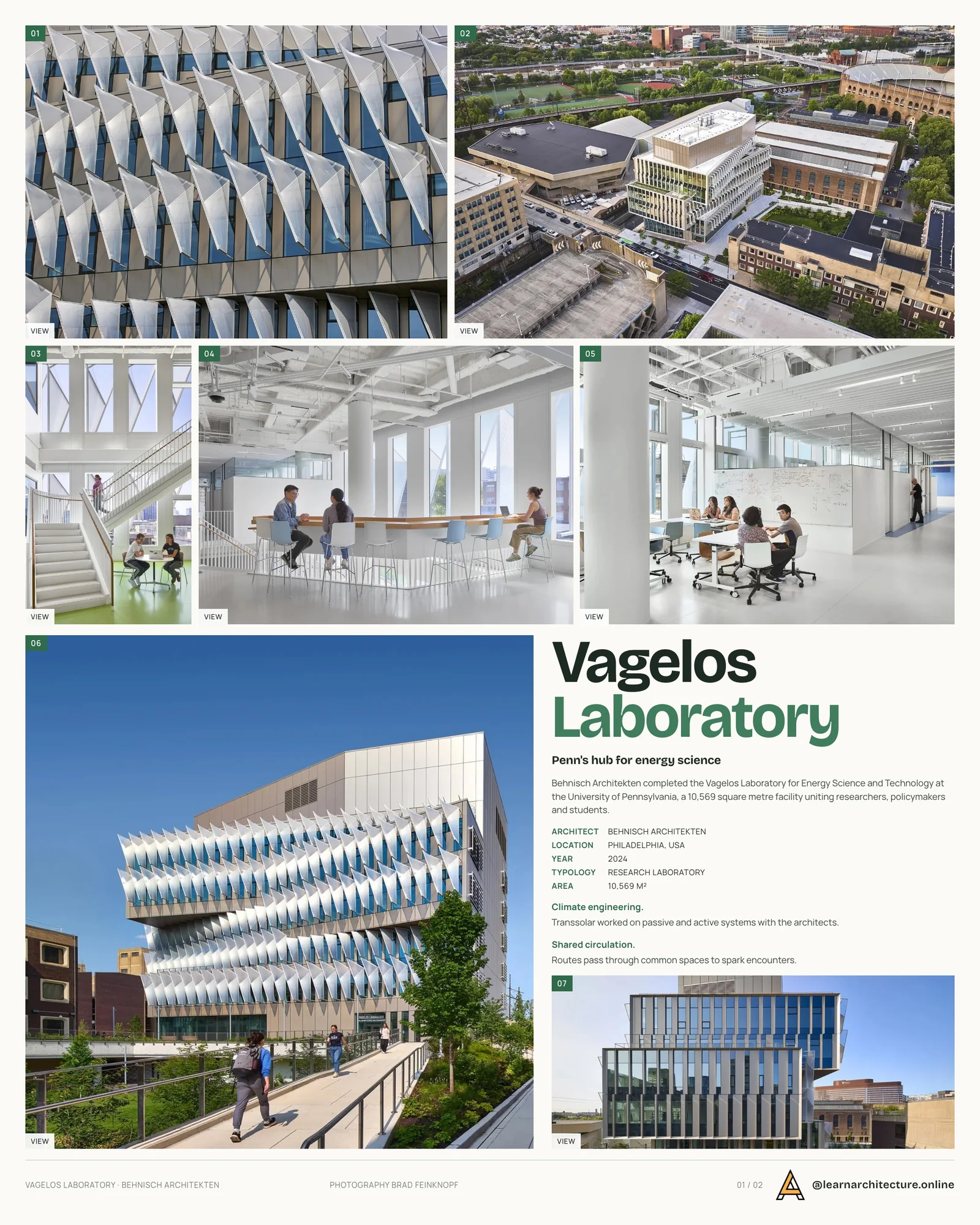
At the University of Pennsylvania, a transformative structure now stands as a beacon for sustainable energy research and architectural innovation. The Vagelos Laboratory for Energy Science and Technology (VLEST), completed by Behnisch Architekten in 2024, embodies the institution’s commitment to advancing renewable energy solutions while establishing new benchmarks in educational architecture. Spanning 10,569 square meters across multiple floors, this interdisciplinary facility unites researchers, policymakers, and students within an environment meticulously crafted to foster collaboration and discovery.

Architectural Vision Rooted in Sustainability
The design philosophy behind VLEST transcends conventional laboratory architecture, embracing principles that align the building’s form with its environmental mission. Rather than creating an isolated research tower, the design team envisioned an integrated campus hub where transparency and connectivity define every spatial relationship. The building’s facade, characterized by its dynamic interplay of glass and solid elements, reflects an intentional dialogue between indoor research environments and the surrounding Philadelphia landscape. This approach to sustainable architecture demonstrates how research facilities can achieve both functional excellence and ecological responsibility.
Climate engineering consultants Transsolar Klima Engineering worked alongside the architectural team to develop passive and active systems that minimize energy consumption throughout the facility’s operational cycle. The integration of advanced building technologies with natural ventilation strategies creates interior conditions optimized for precision scientific work while dramatically reducing dependence on mechanical systems. Every design decision, from the orientation of laboratory benches to the configuration of collaboration zones, emerged from rigorous analysis of energy flows, daylight penetration, and thermal performance.

Spatial Organization Promotes Interdisciplinary Exchange
VLEST’s internal organization breaks away from traditional laboratory layouts that segregate disciplines within isolated wings. The circulation strategy deliberately channels researchers through shared spaces where spontaneous encounters become catalysts for innovation. A central atrium rises through multiple floors, establishing visual connections between research teams while flooding work areas with natural illumination. Wood-accented stairs cascade through this vertical void, their materiality providing warmth against the technical precision of adjacent laboratory environments.
The building accommodates diverse program requirements across its levels, housing specialized research laboratories alongside flexible meeting spaces, computational facilities, and social gathering areas. Ground-level transparency invites campus community engagement, while upper floors provide focused environments for concentrated research activities. This vertical zoning strategy mirrors contemporary approaches to facade architecture, where functional layers respond to varying privacy and environmental control needs.

Material Palette Balances Performance and Expression
Material selection throughout VLEST reflects careful consideration of longevity, maintenance requirements, and aesthetic coherence. The exterior envelope combines high-performance glazing systems with composite cladding panels engineered for thermal efficiency and weather resistance. Glass surfaces, treated with low-emissivity coatings, manage solar heat gain while preserving visual transparency, a critical balance for laboratory environments requiring both daylight access and temperature stability. This sophisticated approach to facade design exemplifies how technical requirements can enhance rather than compromise architectural expression.
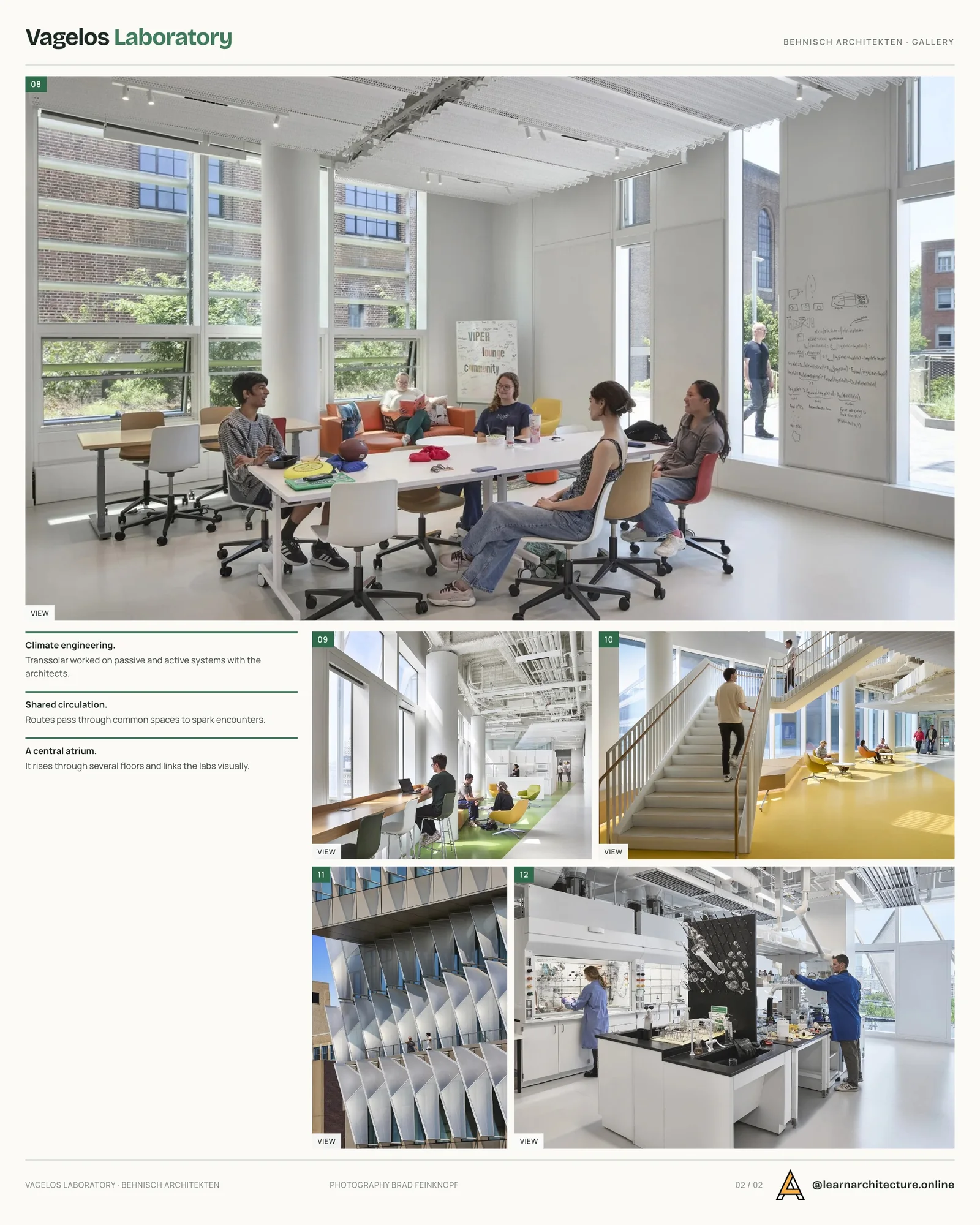
Interior finishes prioritize durability and acoustic performance within spaces subjected to intensive daily use. Terrazzo flooring in circulation areas provides resilient surfaces capable of withstanding heavy equipment transport, while suspended acoustic ceilings in laboratories absorb sound generated by ventilation systems and research activities. The integration of exposed structural elements and mechanical infrastructure celebrates the building’s technical sophistication rather than concealing it behind false ceilings, an honest expression of function that resonates with VLEST’s research mission.

Technological Integration Supports Research Excellence
Beyond its architectural merits, VLEST functions as a highly sophisticated technical environment equipped with specialized systems supporting cutting-edge energy research. Laboratory planning consultants HERA Laboratory Planners collaborated with researchers to design flexible infrastructure accommodating evolving experimental protocols. Modular casework systems allow rapid reconfiguration of workspace layouts, while extensive utility distribution networks provide researchers with immediate access to electrical power, data connectivity, and specialized gases required for experimental procedures.
The building’s mechanical and electrical systems represent significant investments in operational efficiency and research capacity. Advanced HVAC systems maintain precise temperature and humidity control essential for sensitive measurements, while automated shading systems respond to solar angles throughout the day, optimizing daylight harvesting without compromising thermal comfort. These integrated building systems align with broader institutional goals around sustainability and performance, demonstrating how research facilities can model the energy-efficient practices they investigate.

Landscape Integration Extends Environmental Strategy
Andropogon Associates, serving as landscape architects for the project, developed exterior environments that reinforce VLEST’s sustainability objectives while enhancing campus connectivity. Native plantings reduce irrigation demands and support regional biodiversity, while permeable paving systems manage stormwater runoff through infiltration rather than directing it into municipal drainage infrastructure. These landscape interventions extend the building’s environmental performance beyond its physical envelope, creating exterior spaces that function as outdoor laboratories for ecological observation and environmental education.
The relationship between VLEST and its site demonstrates thoughtful urban integration within a dense university campus. Rather than dominating its context, the building establishes respectful connections to adjacent structures through careful massing and scaled transitions. Pedestrian pathways thread through landscaped zones surrounding the facility, creating multiple entry sequences that dissolve boundaries between building and campus. This contextual sensitivity reflects contemporary thinking about university architecture as connective tissue within academic communities rather than isolated monuments to institutional prestige.

Collaborative Spaces Foster Research Innovation
Recognizing that breakthrough discoveries often emerge from unexpected conversations, VLEST dedicates substantial area to informal gathering spaces distributed throughout the building. Coffee bars equipped with writeable wall surfaces encourage impromptu brainstorming sessions, while alcoves furnished with comfortable seating provide refuge for contemplative work away from laboratory benches. The calculated distribution of these social zones ensures researchers regularly encounter colleagues from different disciplines, creating friction points where distinct perspectives generate novel approaches to shared challenges.
Meeting rooms of varying sizes accommodate research groups at different scales, from intimate team gatherings to large symposia bringing together external collaborators. Operable partitions allow room configurations to adapt to shifting programmatic needs, while integrated audiovisual systems support hybrid meetings connecting on-site participants with remote collaborators. This attention to collaborative infrastructure reflects understanding that contemporary research increasingly operates through distributed networks transcending institutional and geographic boundaries, requiring facilities designed for seamless educational collaboration.

Legacy and Future Implications
The completion of VLEST establishes important precedents for future research facility design at universities confronting dual pressures of expanding research capacity while reducing environmental impact. The project demonstrates that high-performance laboratory environments need not sacrifice architectural quality or campus integration to achieve technical sophistication. By prioritizing flexibility, transparency, and interdisciplinary exchange, Behnisch Architekten created a facility capable of adapting to evolving research paradigms over extended operational lifespans.
As institutions worldwide grapple with climate change and energy transition, facilities like VLEST serve dual purposes: advancing scientific understanding of renewable energy systems while modeling sustainable building practices for broader emulation. The building’s performance will be monitored throughout its operational life, generating data about energy consumption patterns, spatial utilization, and user satisfaction that will inform future projects. This commitment to post-occupancy evaluation reflects mature understanding that architectural excellence requires continuous learning and refinement beyond ribbon-cutting ceremonies.
Photography: Brad Feinknopf


- Behnisch Architekten
- climate-responsive architecture
- Educational architecture
- energy science research facility
- green building technology
- interdisciplinary research center
- laboratory planning
- LEED certified laboratory
- Philadelphia university buildings
- sustainable laboratory design
- University of Pennsylvania architecture
- Vagelos Laboratory






Leave a comment