K’s Verandah by Hiren Patel Architects reinterprets the Indian verandah as a serene, tactile dining space centered on a lush courtyard, blending natural light, warm materials, and calm contemporary hospitality.
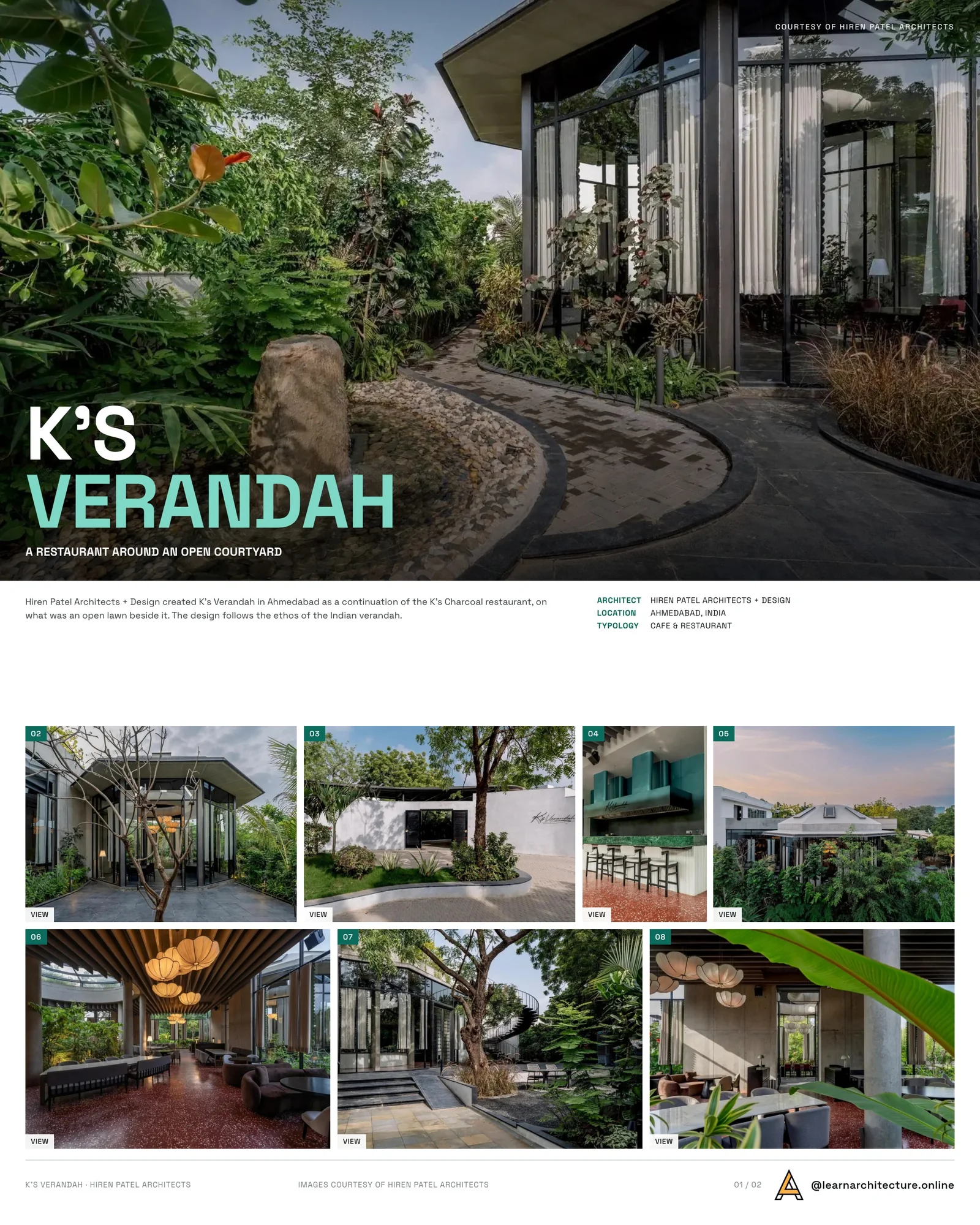
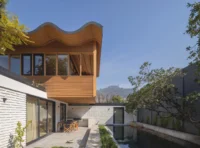
K’s Verandah marks a thoughtful and poetic continuation of the spatial narrative begun by K’s Charcoal in Ahmedabad. Rather than functioning as an add-on or expansion, the project by Hiren Patel Architects + Design (HPAD) reads as a natural evolution: an architectural gesture that deepens the sensory qualities of its predecessor while introducing its own serene identity. What was once an open lawn adjacent to the restaurant has been transformed into a retreat defined by calmness, tactility, and a powerful connection to nature. Its design philosophy is anchored in the ethos of the verandah: a place where thresholds dissolve, breezes travel effortlessly, and indoor living blends seamlessly with the outdoors.
Presentation board: learnarchitecture. Project: K's Verandah by Hiren Patel Architects + Design; Images: courtesy of Hiren Patel Architects
A Verandah Reimagined for Contemporary Dining
At its core, the project embodies a simple and clear intention: to preserve the openness that made K’s Charcoal beloved while grounding it in a more intimate, personal architectural language. The team at HPAD drew inspiration from the timeless Indian verandah, envisioning the new space as an experiential threshold where light, air, and people interact. Rather than enforcing boundaries, the architecture softens them; walls appear to dissolve as glass surfaces and wide openings invite the outdoors inside. Each element encourages a slower pace, inviting diners to organically tune into the changing light, the presence of greenery, and the subtle rhythms of the day.
A Courtyard That Shapes Atmosphere
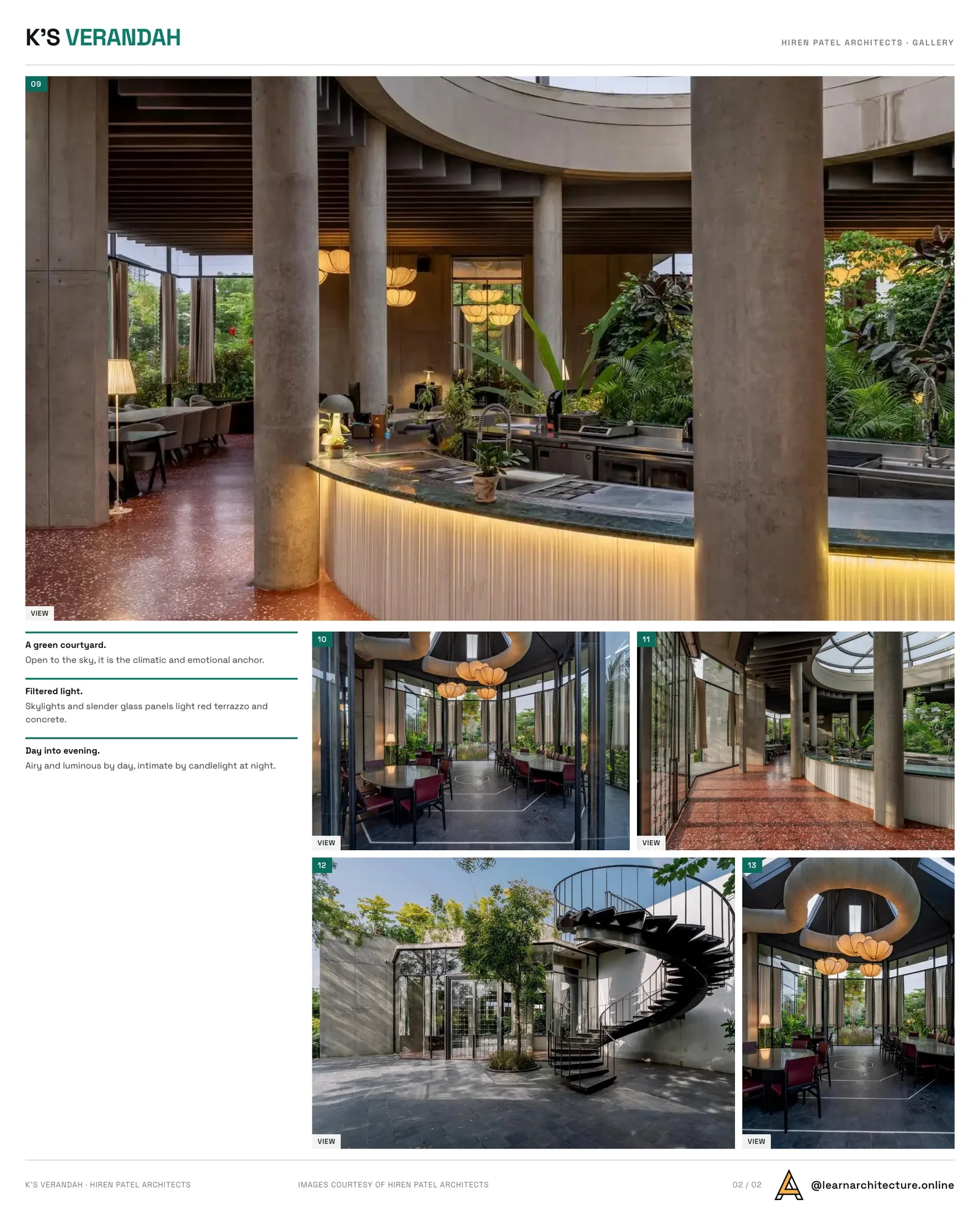
Nature is not an accessory here; it is the protagonist. At the heart of K’s Verandah lies a lush green courtyard, open to the sky, visually porous, and perceptible from multiple vantage points inside the restaurant. The courtyard operates as the central climatic and emotional anchor, shaping both ambience and circulation. Sunlight filters through strategically placed skylights and slender glass panels, sliding across the red terrazzo floor and textured concrete walls, creating an ever-changing interior landscape. In the early hours, the restaurant feels airy and luminous. By evening, the architecture shifts into an intimate atmosphere, where candlelight softens the palette and the courtyard becomes a quiet, reflective void. This evolving sensorial character forms one of the project’s most memorable qualities: a dining space that breathes with natural rhythms.
Materiality Framed by Warmth and Tactility
Material choices reinforce the design’s grounding calmness. Red terrazzo flooring spreads warmth across the space, evoking a nostalgic, earthy tone reminiscent of traditional Indian craft. Exposed concrete walls introduce an honest, textured finish, while elements of deep black polished wood frame edges, counters, and corners, visually anchoring the interior. The sushi counter and bar function as sculptural insertions within the space; their fluted cement surfaces catch light delicately, adding a quiet play of shadow and texture. Kesariyaji green marble tops reflect the courtyard foliage, further binding interior materials to the natural palette. A thin metallic blue strip highlights the sushi counter, introducing a contemporary accent that feels refined and understated. These materials do not compete for attention; instead, they invite guests to slow down and observe the tactile nuances that define the space.
Crafted Details That Speak Softly
Much of the project’s emotional depth lies in its attention to detail. The main entrance door, referencing the geometric vocabulary of traditional verandah jalis, has been reinterpreted with a clean modernity that balances nostalgia and freshness. Interior curtains intentionally stop short of tabletops, ensuring uninterrupted sightlines across the space and toward the courtyard. Green accents found in light fixtures, textiles, and subtle decorative elements forge a visual continuity between indoor seating areas and the central garden. Every gesture feels deliberate yet humble, reinforcing HPAD’s philosophy of creating spaces that enrich daily experience without imposing themselves visually.
Presentation board: learnarchitecture. Project: K's Verandah by Hiren Patel Architects + Design; Images: courtesy of Hiren Patel Architects
An Atmosphere of Calm, Connection, and Presence
More than its materials or layout, K’s Verandah is defined by its atmosphere: one of slow, mindful presence. In a fast-moving urban context, the restaurant becomes a moment of pause. The interplay of light, texture, and greenery creates a gentle sensory envelope that encourages diners to settle into the experience. Each seating area offers a different relationship to the environment: some seats frame the central courtyard, others lie beneath skylights, while a few nestle beside the soft glow of the sushi counter. The design’s generosity emerges through these subtle variations, allowing every visitor to find a personal rhythm within the space.
A Contemporary Verandah for Modern Hospitality
With K’s Verandah, Hiren Patel Architects + Design infuse contemporary dining with the architectural spirit of India’s verandahs, spaces that mediate climate, foster connection, and encourage presence. The project masterfully blends modern materials and restrained geometry with traditional cues, achieving a setting that is both effortless and intentional. Every corner feels complete yet open; every gesture is quiet yet resonant. Ultimately, the restaurant stands as a spatial state of mind (calm, grounded, and intimately connected to its natural surroundings), embodying an evolved chapter in the ongoing narrative of K’s Charcoal.
I create and manage digital content for architecture-focused platforms, specializing in blog writing, short-form video editing, visual content production, and social media coordination. With a strong background in project and team management, I bring structure and creativity to every stage of content production. My skills in marketing, visual design, and strategic planning enable me to deliver impactful, brand-aligned results.
Skip hours of rendering setup. Archfine turns sketches, photos, CAD exports and 3D model screenshots into presentation-ready architectural visuals in seconds. Try it free with 3 renders.








Leave a comment