


Table of Contents Show
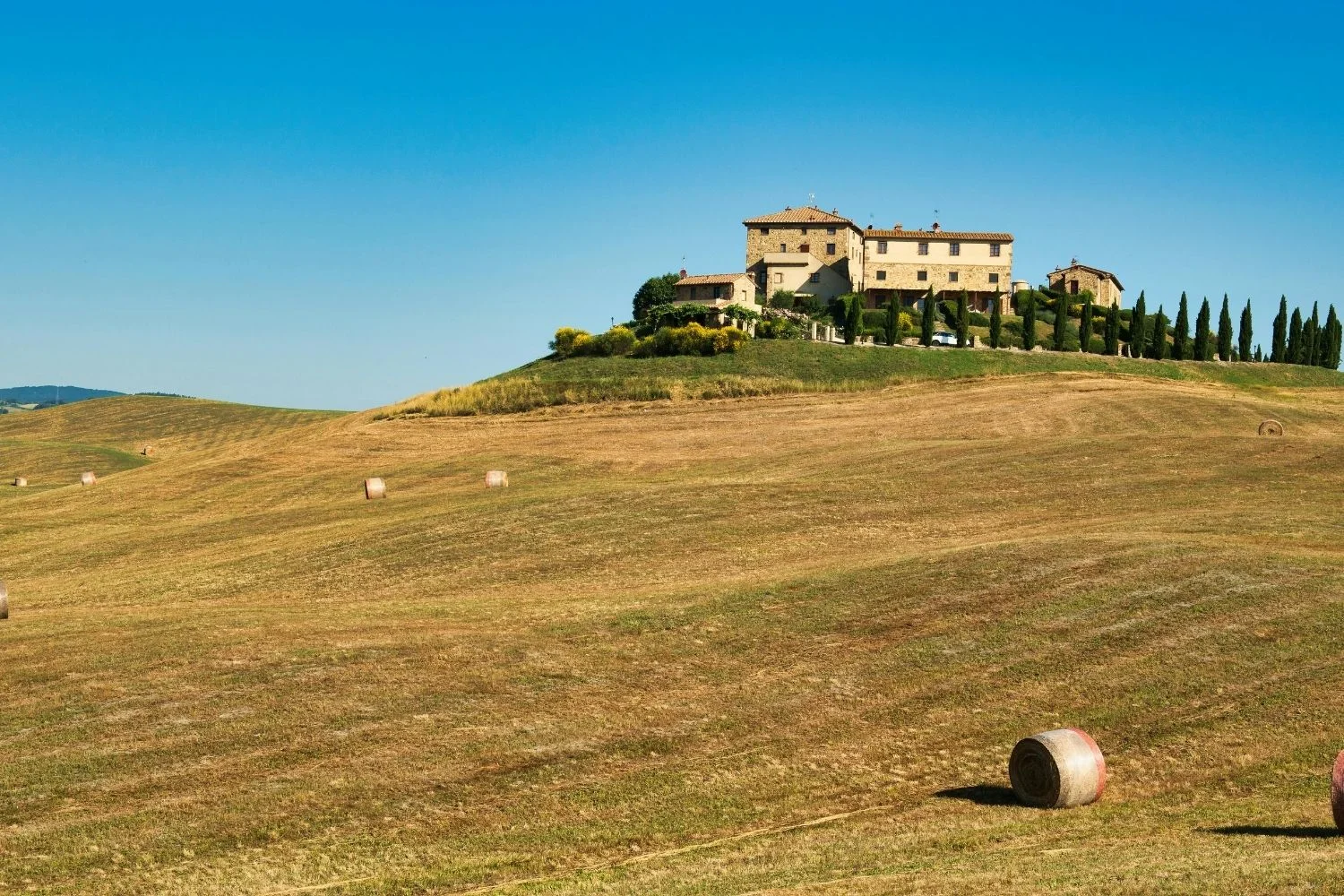
The best farmhouse in Tuscany combines centuries-old stone architecture, terracotta roofs, and views of cypress-lined hills with surprisingly accessible price points. Whether you are searching for a farmhouse holiday in Tuscany, a farmhouse in Tuscany with pool, or an affordable renovation project, the region’s rural properties range from budget agriturismo apartments to full estate restorations across Chianti, Val d’Orcia, and Maremma.
What Makes a Tuscan Farmhouse Special?
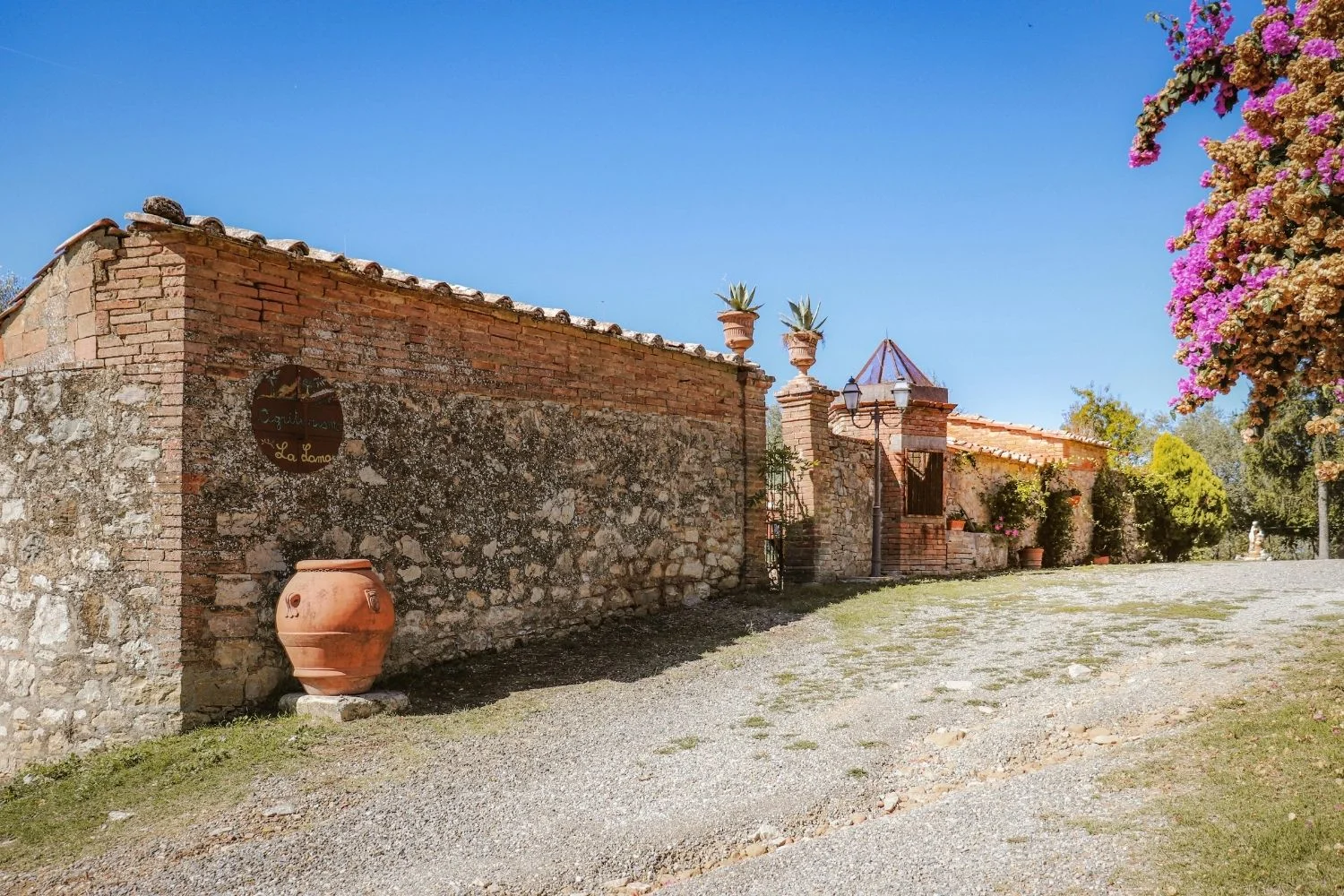
Tuscan farmhouses, called casali or poderi in Italian, were built to serve dual roles: family homes on the upper floor and agricultural workspace below. Their thick stone walls, hand-hewn wooden beams, and terracotta tile floors were shaped by the local landscape, using materials quarried or harvested within walking distance. This tight relationship between building and terrain is what gives Tuscan rural architecture its distinct character, and it is the same quality that draws visitors and buyers from around the world. You can read more about this design philosophy in our article on vernacular architecture and sustainable design.
Unlike mass-produced vacation rentals, a genuine Tuscan farmhouse carries visible layers of history. Arched doorways, vaulted brick ceilings (volte a crociera), external stone staircases, and deep-set window openings all speak to construction techniques refined over five or six centuries. The ground floor typically housed livestock and storage, while the family lived above to benefit from rising warmth and better ventilation. Many of these structural features survive even in fully renovated properties, giving guests or owners a daily connection to rural Italian life that no modern build can replicate.
📌 Did You Know?
After World War II, widespread rural poverty forced Tuscan farming families to abandon their farmhouses and move to cities. Thousands of stone properties stood empty for decades until Italy’s agriturismo legislation in the 1980s and 1990s created financial incentives for restoring them as tourist accommodations, saving an entire architectural heritage from permanent ruin.
Best Regions for Affordable Farmhouse Stays in Tuscany
Not every corner of Tuscany carries the same price tag. Chianti and the Val d’Orcia are iconic, but lesser-known zones can offer the same rolling landscape, local wine, and authentic stone buildings at a fraction of the cost. The trick is knowing where to look.
Chianti: The Classic Choice
The Chianti wine region between Florence and Siena is the most recognized farmhouse territory in Tuscany. Properties here sit among vineyards and olive groves, and the villages of Greve, Radda, and Castellina offer restaurants, shops, and weekly markets within a short drive. Farmhouse accommodation in Tuscany’s Chianti belt tends to be more expensive than other areas, but mid-range options exist if you book outside July and August. Look for smaller agriturismo properties run by families rather than corporate hospitality groups, as they often charge significantly less while delivering a more personal experience.
Maremma: Tuscany’s Budget-Friendly Coast
Southern Tuscany’s Maremma region stretches from Grosseto to the Tyrrhenian coast. It is far less touristy than Chianti, which keeps prices lower across the board. Farmhouse apartments in Tuscany’s Maremma area frequently cost 30 to 50 percent less per night than comparable properties near Siena. The architecture here leans toward rougher stone and tuff (volcanic rock), and the landscapes include coastal marshes, cork oak forests, and thermal springs at Saturnia. For buyers considering a farmhouse renovation in Tuscany, Maremma offers some of the lowest entry prices in the region.
Val d’Orcia: UNESCO-Listed Landscape
The Val d’Orcia south of Siena holds UNESCO World Heritage status for its cultural landscape of cypress-lined ridges, golden wheat fields, and isolated farmhouses. Farmhouse stays here deliver postcard-perfect scenery, but the area’s fame (boosted by films like The Gladiator) has pushed prices higher in towns like Pienza and Montalcino. The best deals are found in less-visited villages like Trequanda, Radicofani, and San Quirico d’Orcia, especially during the shoulder season from March to May or September to November.
💡 Pro Tip
When searching for affordable farmhouse stays, look for properties listed as “agriturismo” rather than “villa” or “boutique hotel.” Italian law requires agriturismos to earn most of their income from farming, which means accommodation prices stay lower and meals often feature produce grown on the property itself.
Lunigiana and Garfagnana: Northern Tuscany’s Hidden Gems
The mountainous northern corners of Tuscany near the Apuan Alps offer rugged stone farmhouses at entry-level prices. These areas attract hikers, chestnut foragers, and visitors drawn to the region’s medieval castles. Accommodation options are fewer, but what exists tends to be authentic, affordable, and quiet. If you are open to a farmhouse holiday in Tuscany with less polished finishes and more raw countryside, these zones reward the effort.
How to Choose the Best Farmhouse Stays in Tuscany
Finding the best farmhouse stays in Tuscany comes down to three practical questions: what you need in terms of space, how close you want to be to towns and restaurants, and whether a pool is a priority. Here is what to consider before booking.
Space and layout matter more than star ratings. A converted barn with original beams, a working fireplace, and a private terrace can be more rewarding than a polished four-star with generic decor. Read reviews that mention specific architectural details, as this signals that the property has retained its character through the renovation process. Our guide on popular interior design concepts covers the principles behind harmonious room layouts if you want to evaluate photos with a trained eye.
Location determines your daily experience. A farmhouse 30 minutes from the nearest village offers deep quiet but requires a car for every meal and errand. Properties within 5 to 10 minutes of a town let you walk to a morning coffee and still enjoy countryside privacy. Check whether the access road is paved; some remote Tuscan farmhouses sit at the end of unpaved strade bianche (white roads) that become muddy in winter.
What Does a Farmhouse in Tuscany with Pool Cost?
A farmhouse in Tuscany with pool is the most popular search among summer travelers, and for good reason: temperatures regularly exceed 35°C from June through August. Nightly rates for poolside farmhouse accommodation in Tuscany range from about €80 to €150 for a one-bedroom apartment at a family-run agriturismo, and from €200 to €500 for an entire restored farmhouse with a private pool. Booking directly with the owner, rather than through large platforms, can reduce costs by 10 to 20 percent and often includes extras like a welcome basket of local olive oil and wine.
⚠️ Common Mistake to Avoid
Many travelers book a Tuscan farmhouse based on photos alone without checking pool availability dates. Shared agriturismo pools often close by mid-September, and some smaller properties only fill the pool from June to August. Always confirm the exact pool season before booking shoulder-season stays if swimming is important to you.
Farmhouse Renovation in Tuscany: What You Need to Know
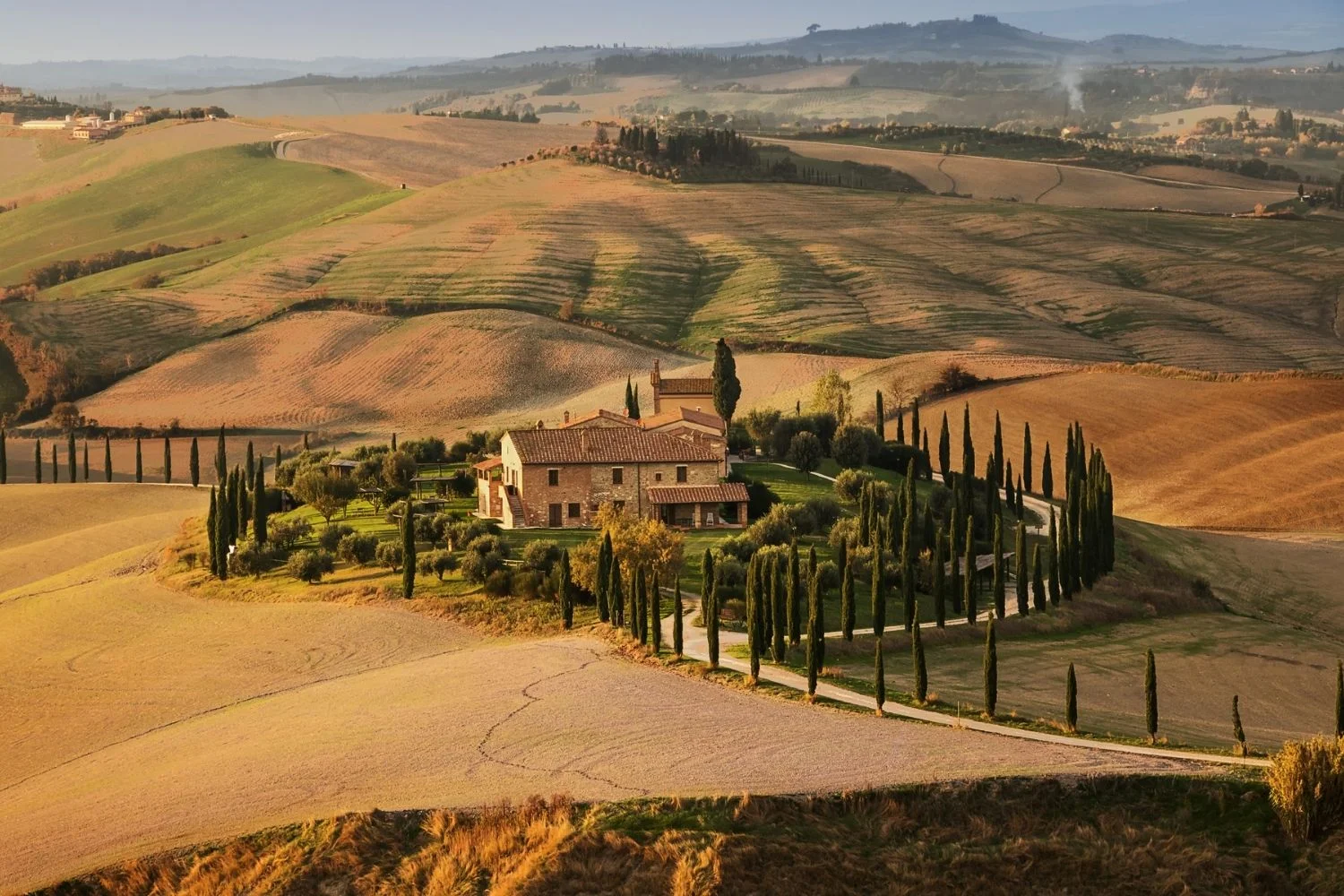
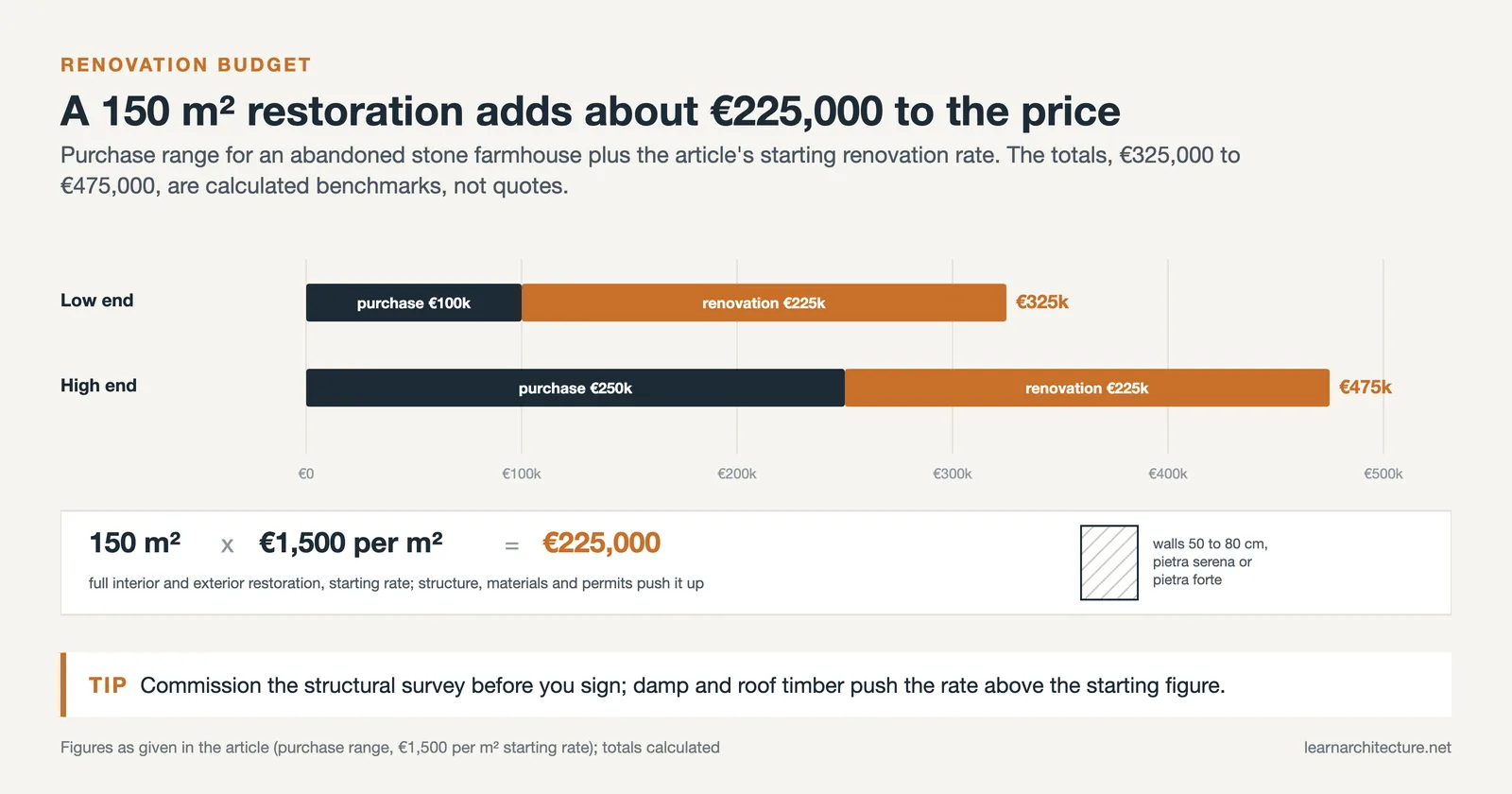
Buying and restoring a farmhouse in Tuscany is a different path, but one that thousands of international buyers have taken successfully. Abandoned stone farmhouses in areas like Casentino, Valdichiana, and upper Maremma can be found from around €100,000 to €250,000 before renovation costs. The appeal is obvious: you get thick stone walls, historic character, and a piece of the Tuscan landscape at a price that would barely cover a studio apartment in Florence.
Renovation costs for a full restoration typically start at approximately €1,500 per square meter, according to Tuscan restoration firms with years of experience on these projects. A 150-square-meter farmhouse needing complete interior and exterior work would therefore require a renovation budget of roughly €225,000, bringing the all-in cost to between €325,000 and €475,000 depending on location and the property’s condition. These figures are rough benchmarks, and actual costs vary based on structural condition, material sourcing, and the complexity of permits. The advantages of using local construction materials are especially relevant here, as Italian building regulations often require that renovation work use regionally sourced stone and reclaimed terracotta.
Cost figures are approximate and vary by region, material supplier, and project scope. Always consult a licensed Italian architect and obtain formal estimates before purchasing.
📐 Technical Note
Tuscan farmhouse walls are typically 50 to 80 cm thick, built from local pietra serena (grey sandstone) or pietra forte (brown ochre sandstone). Italian seismic code NTC 2018 requires structural assessments for any renovation that alters load paths in existing masonry buildings. Depending on the municipality, you may need a SCIA (Segnalazione Certificata di Inizio Attività) or a full Permesso di Costruire to proceed with restoration work.
Key Steps in a Tuscan Farmhouse Renovation
The renovation process follows a fairly predictable sequence, though timelines vary. Start by hiring a local architect (geometra or architetto) who knows the municipal building codes and has relationships with the Soprintendenza, the heritage authority that oversees protected rural structures. For buyers new to the Italian system, Gate-Away’s restoration guide outlines three foundational rules to keep in mind. Next, commission a structural survey to assess the foundations, walls, and roof timber. Only after these assessments should you finalize a purchase.
Material choices define the character of your finished farmhouse. Reclaimed terracotta floor tiles (cotto), hand-finished lime plaster, and chestnut or oak beams are the standard vocabulary of Tuscan rural interiors. Using these materials keeps the renovation authentic and, in many municipalities, is a legal requirement under heritage protection rules. Modern comforts like underfloor heating, insulated windows, and solar panels can be integrated without compromising the exterior appearance, a balance that the best restoration architects handle routinely. For a broader perspective on how buildings adapt over time, our article on adaptive architecture covers strategies for blending old structures with current performance standards.
💡 Pro Tip
Before committing to a farmhouse renovation in Tuscany, visit the property during winter. Stone buildings reveal their weaknesses in the wet season: rising damp, cracked lintels, and failing roof tiles are all easier to spot between November and February. Summer visits can hide these issues behind dry weather and lush vegetation.
Architectural Features That Define the Best Tuscan Farmhouses
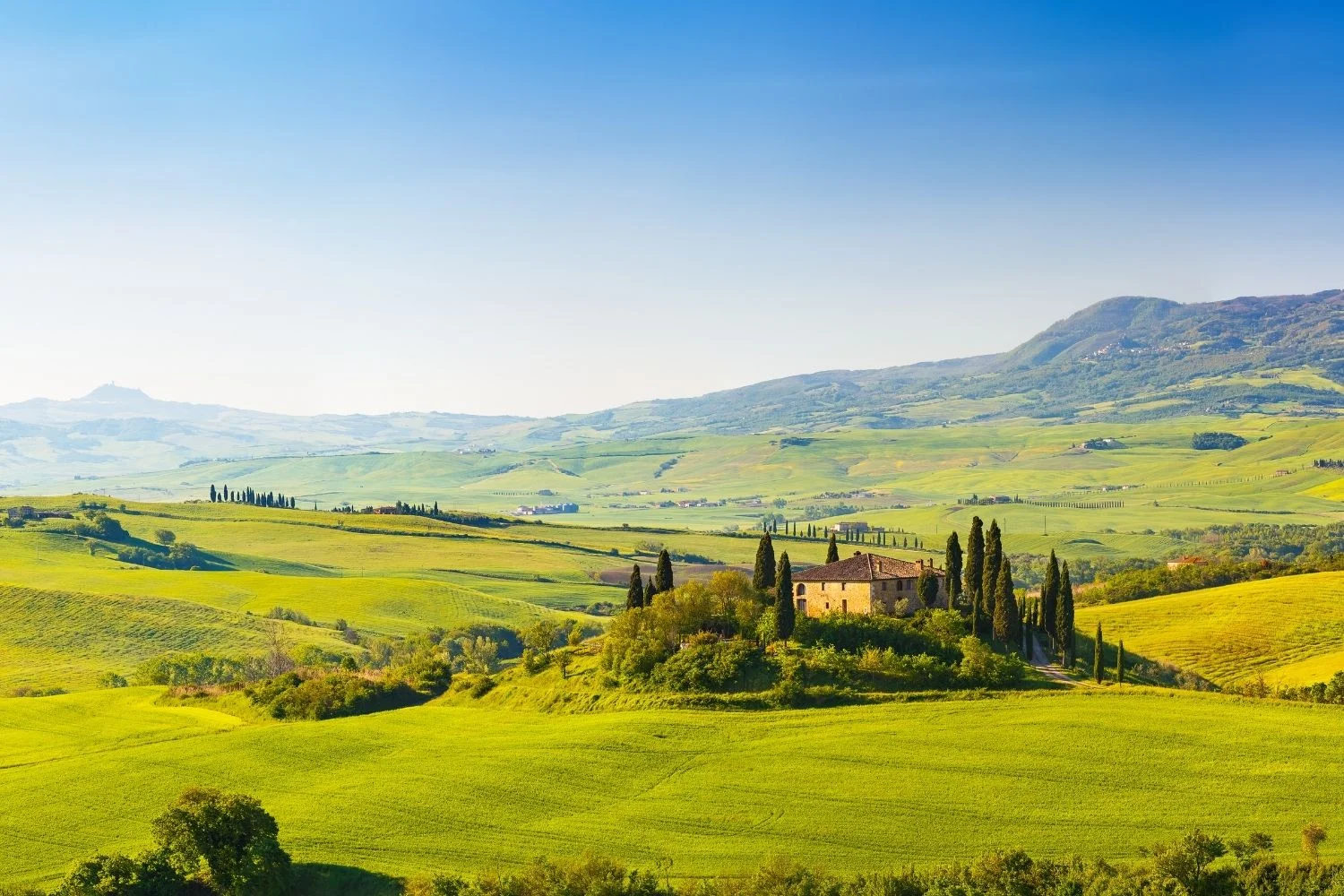
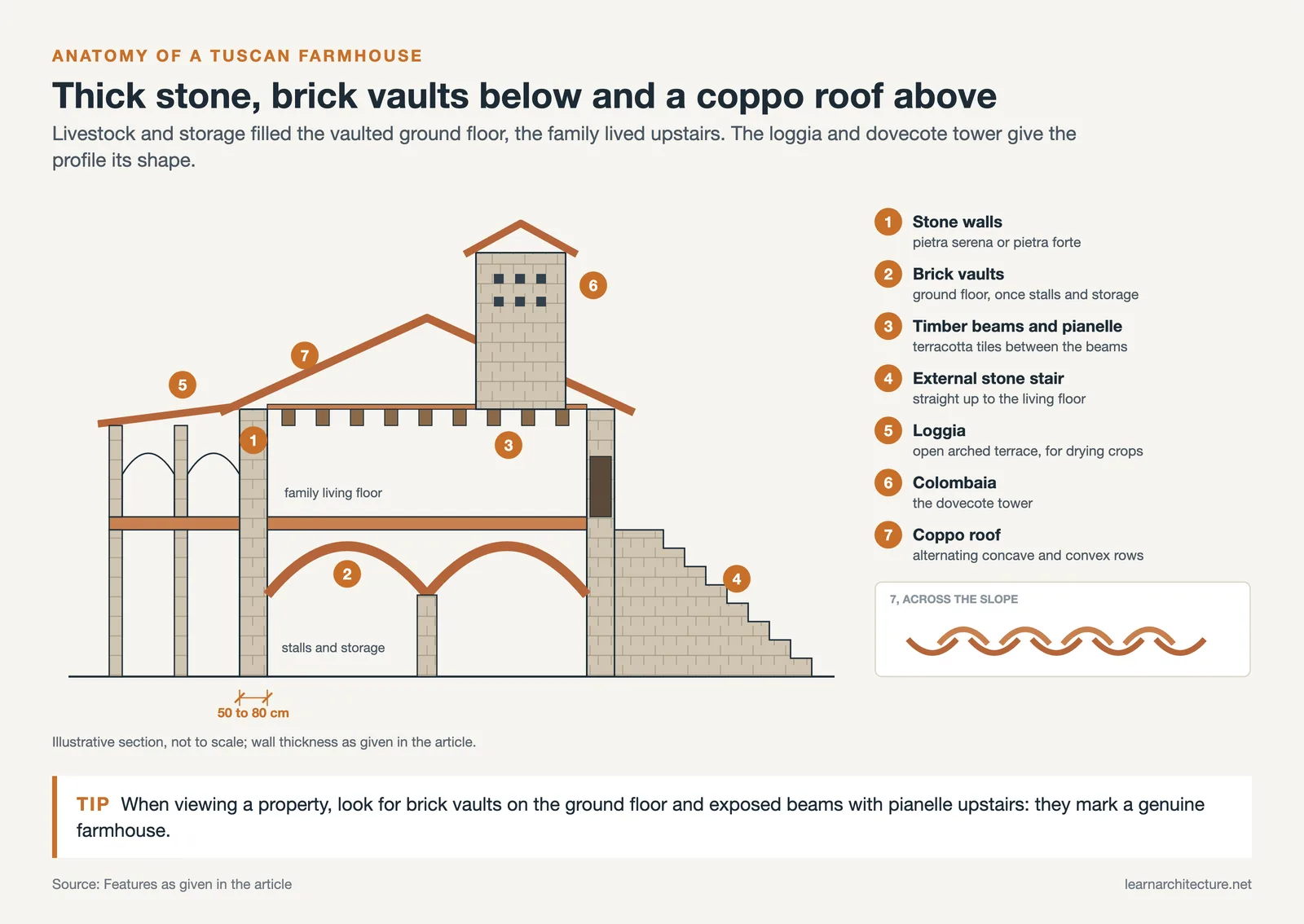
Certain design elements separate an ordinary rural house from a genuine Tuscan farmhouse. Recognizing these features helps you evaluate both vacation rentals and purchase opportunities with more confidence. A good overview of the historical roots of these buildings can be found in this guide to Tuscan farmhouse architecture.
Exterior walls of local stone, often left unplastered on at least one facade, are the most visible signature. The loggia, an open-sided covered terrace supported by stone columns or arches, served as a shaded outdoor workspace for drying crops and is now one of the most desirable features in a restored property. Dovecote towers (colombaie), sometimes converted into bedrooms or reading rooms, add vertical interest to the profile. Clay tile roofs in the classic Roman coppo style, with alternating concave and convex rows, complete the look.
Interior features worth looking for include brick-vaulted ceilings on the ground floor, which provided structural strength and natural insulation. Upper floors typically have exposed timber beams with terracotta tile infill between them (pianelle). Large central fireplaces, stone sink basins, and iron-railed interior staircases round out the traditional interior vocabulary. If these elements interest you from a design standpoint, our guide on contemporary vernacular architecture explains how regional building traditions are being reinterpreted for modern living.
🏗️ Real-World Example
Ricupaglia Farmhouse (Montiano, Maremma, 2025): Architects Valeria Presicci and Carlo Pantanella D’Ettorre renovated this 1950s stone-and-tuff farmhouse by stripping back layers of plaster to reveal original masonry, adding poured concrete floors and stainless steel kitchen elements for contrast, and enlarging windows to connect interior spaces with the surrounding vineyard. The project, featured on Dezeen, is a practical example of how modern interventions can coexist with traditional Tuscan materiality.
How Much Does a Farmhouse Holiday in Tuscany Cost?
Budget expectations for a farmhouse holiday in Tuscany depend heavily on timing, location, and the type of property you choose. Here is a realistic breakdown.
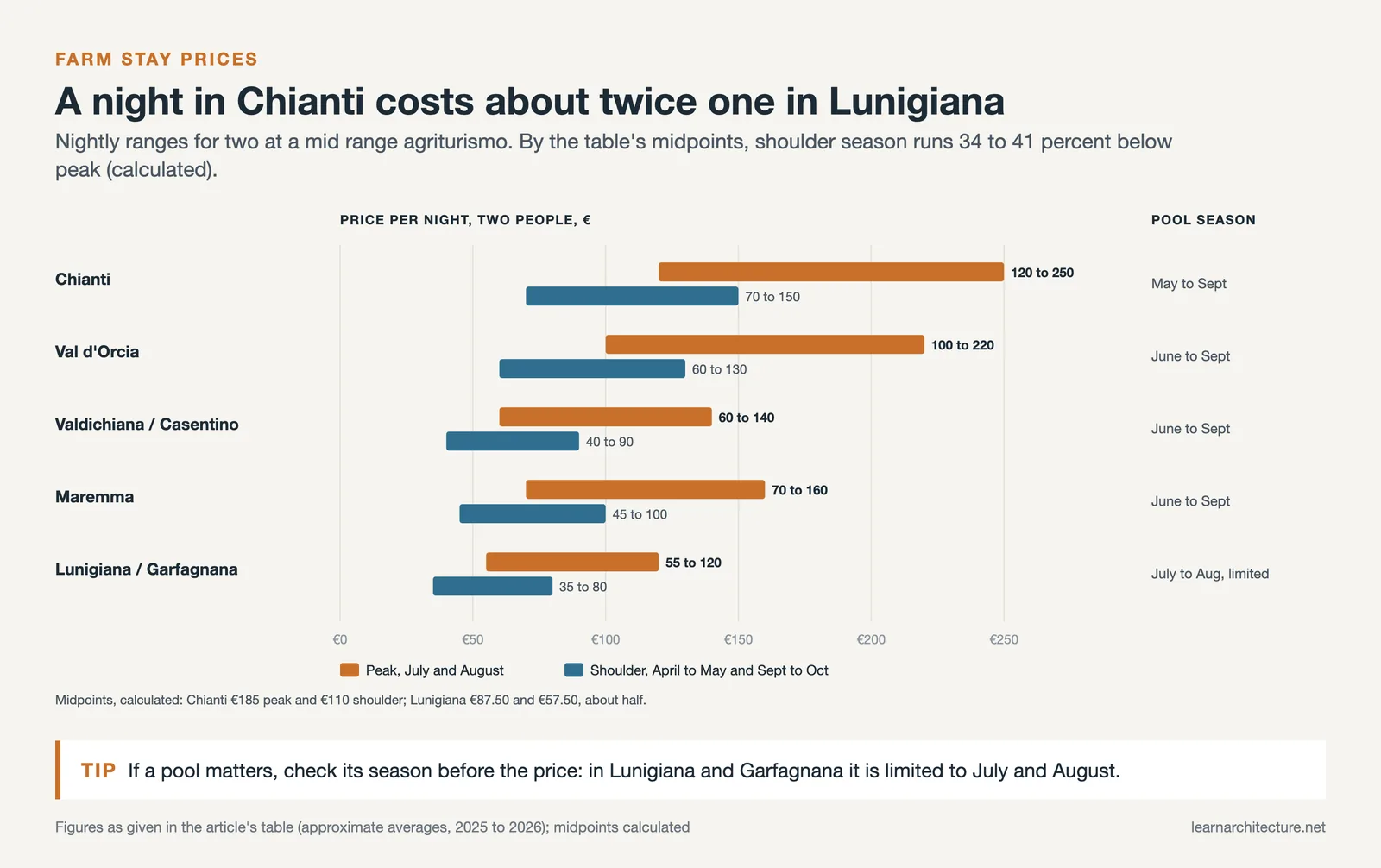
Farmhouse Stay Cost Comparison by Region
The table below compares average nightly rates for farmhouse accommodation in Tuscany across the most popular regions. Prices reflect a two-person apartment or room at a mid-range agriturismo during peak (July-August) and shoulder (April-May, September-October) seasons.
| Region | Peak Season (per night) | Shoulder Season (per night) | Pool Availability |
|---|---|---|---|
| Chianti | €120 to €250 | €70 to €150 | May to September |
| Val d’Orcia | €100 to €220 | €60 to €130 | June to September |
| Maremma | €70 to €160 | €45 to €100 | June to September |
| Lunigiana / Garfagnana | €55 to €120 | €35 to €80 | July to August (limited) |
| Valdichiana / Casentino | €60 to €140 | €40 to €90 | June to September |
Prices are approximate averages for 2025-2026 and vary by specific property, amenities, and group size.
The biggest single cost saver is visiting during shoulder season. You avoid summer heat, enjoy smaller crowds, and pay roughly 35 to 40 percent less per night. Spring visits coincide with wildflower season and fresh fava beans, while autumn brings grape harvest, truffle hunting, and warm golden light that photographers prize. For more on how building design responds to seasonal conditions, see our article on green architecture and sustainable design.
Turning a Farmhouse into an Agriturismo Business
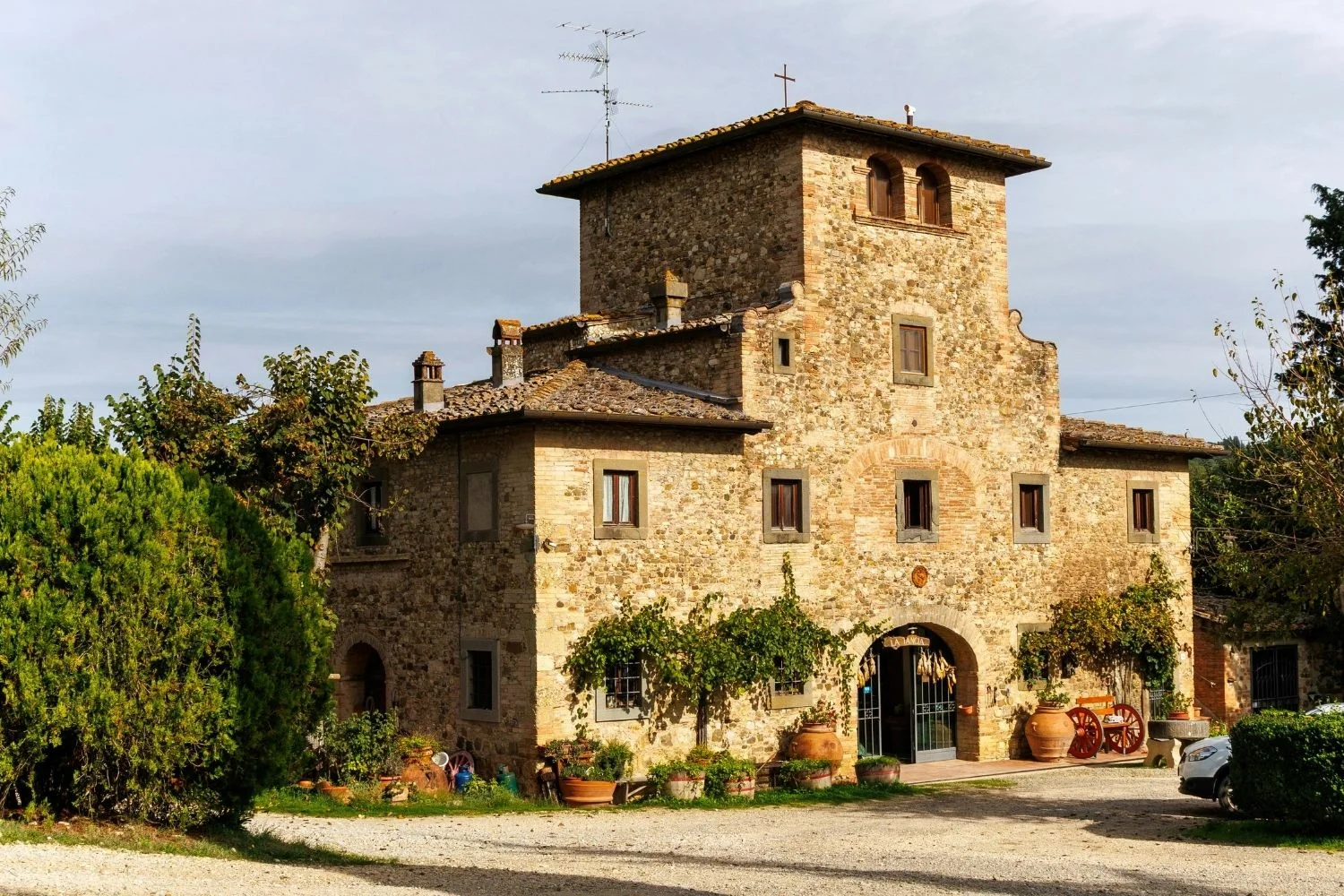
Some buyers purchase a farmhouse in Tuscany not just as a home but as a hospitality investment. Italian agriturismo regulations allow property owners to rent rooms and serve meals, provided that agricultural activity (wine production, olive oil, crops, or livestock) remains the primary business of the estate. This model creates a revenue stream that can offset renovation costs over time.
Successful agriturismo conversions share certain architectural traits: a clear separation between guest areas and the owner’s private quarters, outdoor spaces designed for communal dining, and kitchens large enough for meal preparation at scale. Properties with existing outbuildings, such as former barns, granaries, or limonaie (lemon houses), are especially valuable because they provide additional rentable space without altering the main farmhouse footprint.
🎓 Expert Insight
“Knowing typical rural materials and architecture is a prerequisite for the success of a farmhouse restoration project.”
Biemme Restauri, Florence-based restoration firm
This point is critical for anyone planning a farmhouse renovation in Tuscany. Hiring contractors who specialize in rural stone buildings, rather than general residential construction firms, dramatically reduces the risk of costly errors in material selection and structural detailing.
Final Thoughts
✅ Key Takeaways
- The best farmhouse in Tuscany does not have to be the most expensive. Regions like Maremma, Lunigiana, and Valdichiana offer authentic stone properties at significantly lower prices than Chianti or Val d’Orcia.
- Shoulder-season travel (March to May, September to November) cuts accommodation costs by 40 to 50 percent while offering better weather for exploring.
- A farmhouse in Tuscany with pool is widely available at mid-range agriturismo properties, with nightly rates starting around €70 to €100 outside peak summer.
- Farmhouse renovation budgets should account for approximately €1,500 per square meter for full restoration, plus purchase price and permit costs.
- Authentic architectural features like stone walls, timber beams, terracotta floors, and loggias define the Tuscan farmhouse and are often legally protected during renovations.
A Tuscan farmhouse, whether you visit for a week or commit to a multi-year renovation, offers something rare in modern life: architecture that grew directly from its landscape. The stone underfoot was cut from the hillside behind the property. The timber overhead was felled from nearby forests. The proportions were shaped by the same sun, wind, and rain patterns you experience when you step outside. That grounded quality, more than any specific design detail, is what makes the best farmhouses in Tuscany worth seeking out.
For a broader look at how regional building traditions inform modern design, our guide on sustainable architecture projects covers ten buildings around the world that draw on local materials and climate-responsive strategies, much like the Tuscan farmhouses that inspired them.







Leave a comment