


Table of Contents Show
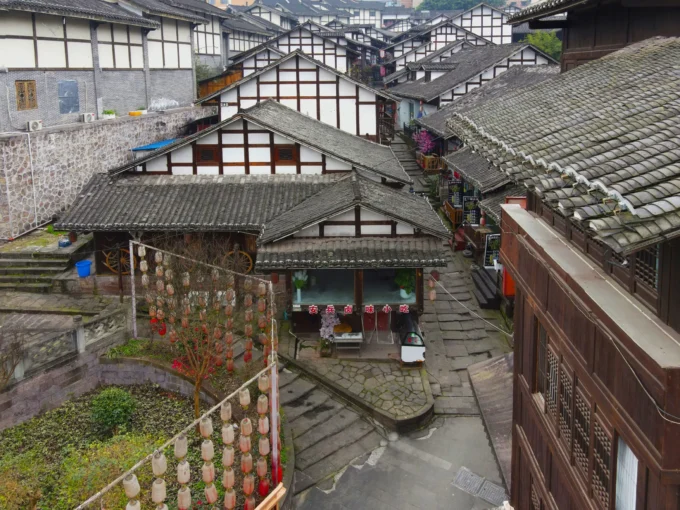
Designed by Itm Yooehwa Architects, FEZH is a compact yet richly layered architectural project located within the intimate alleyways of Hannam-dong, Seoul. Drawing conceptual inspiration from the dense, organic structure of Fes El Bali, the historic medina of Fez, the project translates the logic of clustered dwellings and shared civic life into a contemporary urban condition. FEZH proposes a new architectural archetype: a “minimal urban unit” that brings together culture, healing, and daily rituals within a single, interconnected structure.
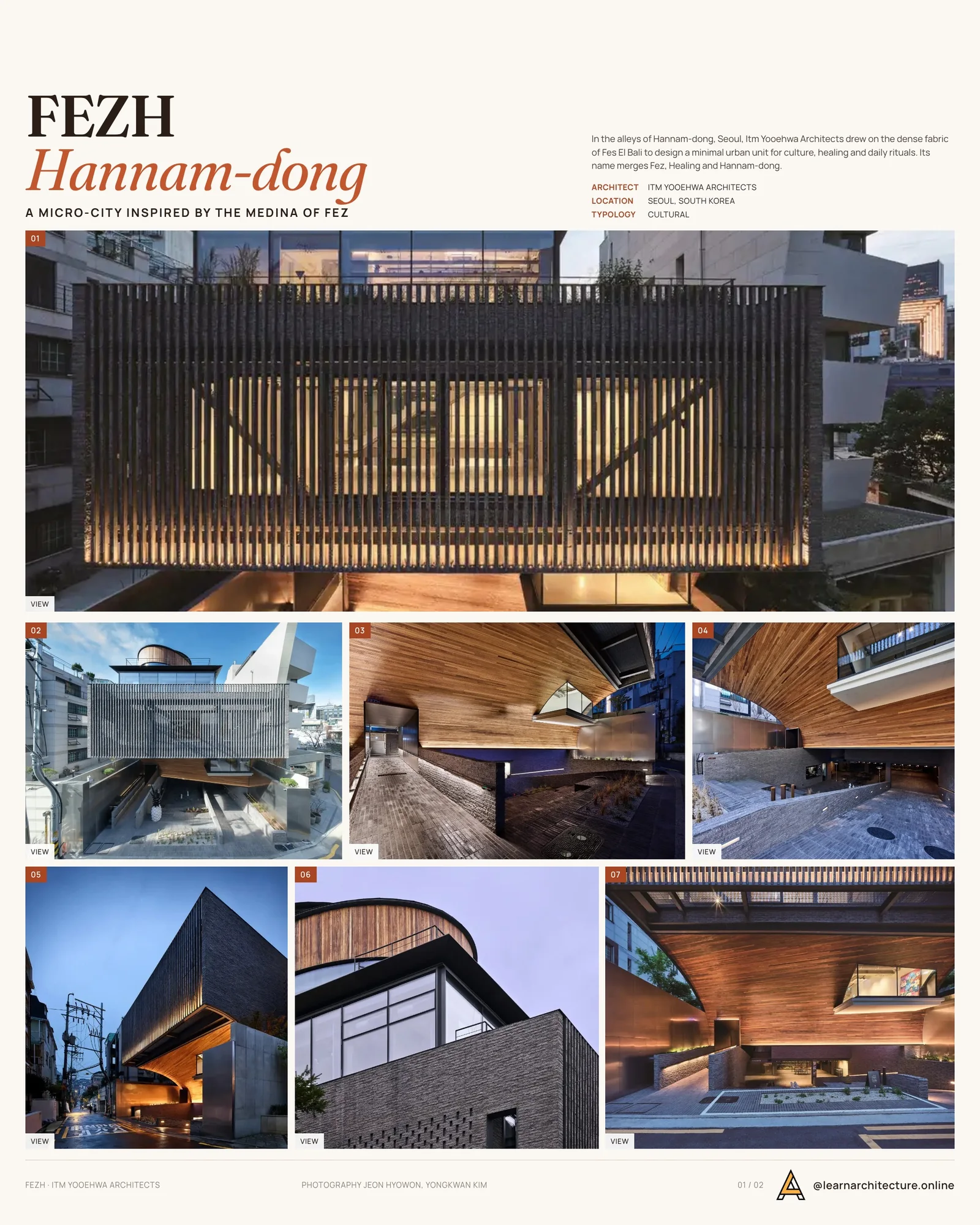
The name FEZH itself reflects this ambition, merging Fez, Healing, and Hannam-dong into one identity. Rather than functioning as a singular programmatic object, the building positions itself as a micro-city, where architecture, nature, and human experience intersect in a continuous spatial narrative.

Reinterpreting Urban Density Through Void and Light
At the heart of FEZH lies its most defining architectural element: the Voided Space. This vertically carved void connects the basement to the ground level, acting as both a climatic and social core. Sunlight and natural airflow penetrate deep into the building, transforming what could have been an introverted volume into an urban sanctuary.
More than a passive environmental device, the void behaves like a historic public square. It is a place of pause, encounter, and informal gathering, an internal civic space that anchors the project socially. This central openness allows the building to remain porous and welcoming, reinforcing FEZH’s ambition to be an open, community-centered environment rather than a closed private facility.

Circulation as Urban Exploration
Movement throughout FEZH is intentionally non-linear. A network of interwoven vertical and horizontal pathways encourages wandering rather than direct passage, echoing the spatial experience of navigating an old city. As visitors move through ramps, stairs, and layered platforms, the building reveals itself gradually, offering moments of surprise and discovery.
This circulation strategy supports a flexible, user-defined experience. Each route allows for independent yet interconnected journeys, enabling visitors to engage with the building at their own pace. Architecture here becomes narrative-driven, shaped by human movement rather than rigid programming.

D-SQUARE and the Social Ground of the Building
Aligned with both the street and the vertical void, D-SQUARE functions as FEZH’s primary communal plaza. This open, adaptable space hosts concerts, small gatherings, and everyday social activity, extending the public realm into the building itself. Its position reinforces FEZH’s role as an accessible civic platform, blurring the boundary between neighborhood and architecture.
Adjacent to this public intensity is BLUE CAT, a more intimate cultural space inspired by the literary and musical sensibilities of Haruki Murakami. Through curated soundscapes, books, and weekly performances, BLUE CAT offers a quiet counterpoint, demonstrating how contrasting atmospheres can coexist within a compact urban framework.

Cultural Platforms and Vertical Programming
As the building rises, FEZH unfolds as a sequence of distinct yet connected environments. The Vortex Gallery employs layered circulation, filtered light, and shifting perspectives to create a flexible exhibition space for pop-ups, performances, and cultural events. Its spatial ambiguity allows for constant reinterpretation, reinforcing the building’s identity as a living cultural organism.
Above, Pocket Garden Heaven and its accompanying teahouse form a rare ecological retreat within the dense city. This elevated garden introduces greenery, air, and stillness, offering space for yoga, tea ceremonies, and quiet reflection. The journey continues into Casa del Agua, where water, hinoki cypress, and immersive audiovisual systems combine to create a deeply restorative interior landscape focused on sensory healing.

Material Language Rooted in Context
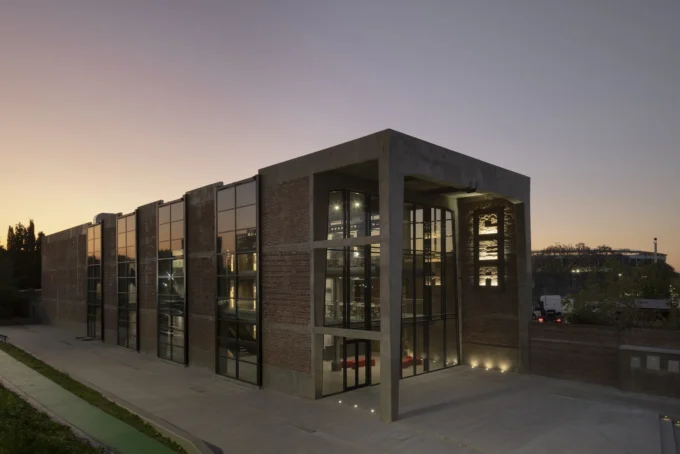
Material choices were guided by a desire to reflect the tactile, familiar character of Hannam-dong’s historic alleys. Brick and charred wood form the primary palette, grounding the building within its neighborhood while softening the boundary between architecture and nature. Their textures and tones offer warmth and continuity, allowing FEZH to feel both contemporary and deeply rooted in place.
Rather than polished perfection, the materials emphasize human scale and imperfection, reinforcing the project’s ethos of intimacy and everyday use.

Architecture as a Living Urban Organism
FEZH is conceived not as a static building, but as an organism shaped by people, culture, and time. Its layered spaces nurture relationships, stimulate creativity, and encourage shared experience. By compressing multiple civic, cultural, and healing functions into a compact footprint, the project proposes an alternative urban model, one based on closeness, discovery, and connection.

In a city increasingly defined by speed and scale, FEZH offers a quieter vision of urbanism. It suggests that the future of cities may lie not in larger gestures, but in carefully crafted, human-centered micro-environments that restore meaning to daily life.
Photography: Jeon Hyowon, Yongkwan Kim


- Adaptive cultural spaces
- Architecture inspired by medina
- Brick and wood architecture
- community-centered design
- Contemporary Korean architecture
- Cultural architecture Seoul
- Experimental urban architecture
- FEZH architecture
- Future city architecture
- Hannam-dong architecture
- healing architecture
- human-centered architecture
- Itm Yooehwa Architects
- Minimal urban unit
- Mixed-use cultural buildings
- public space architecture
- sensory architecture
- Small-scale urbanism
- Urban sanctuary design
- Urban void architecture








Leave a comment