





Table of Contents Show
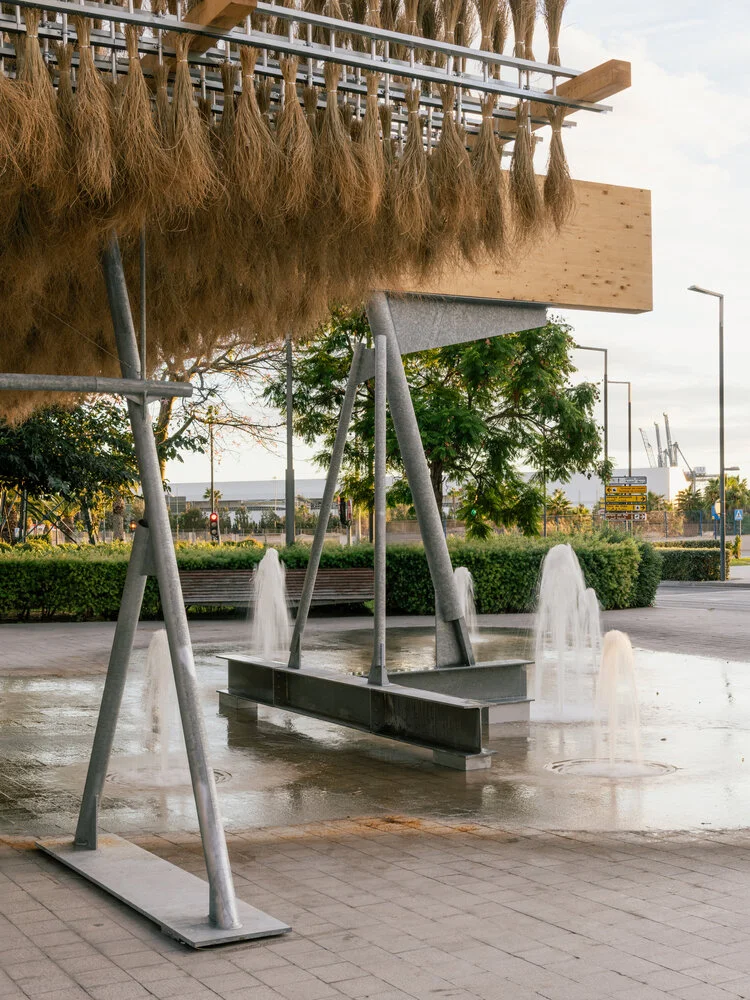
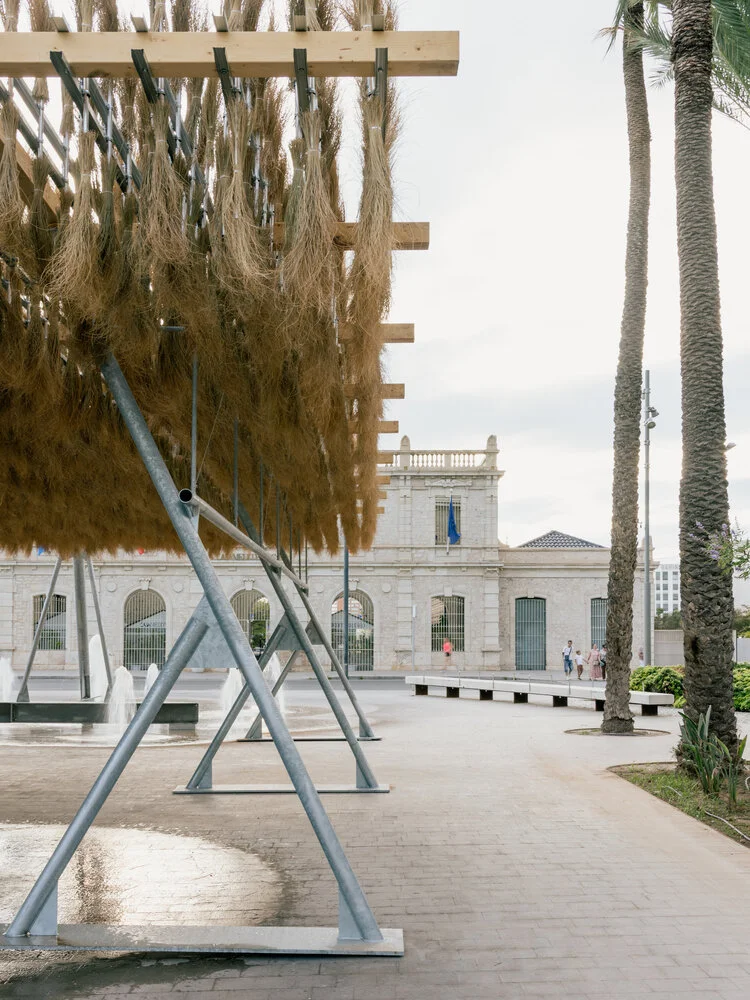
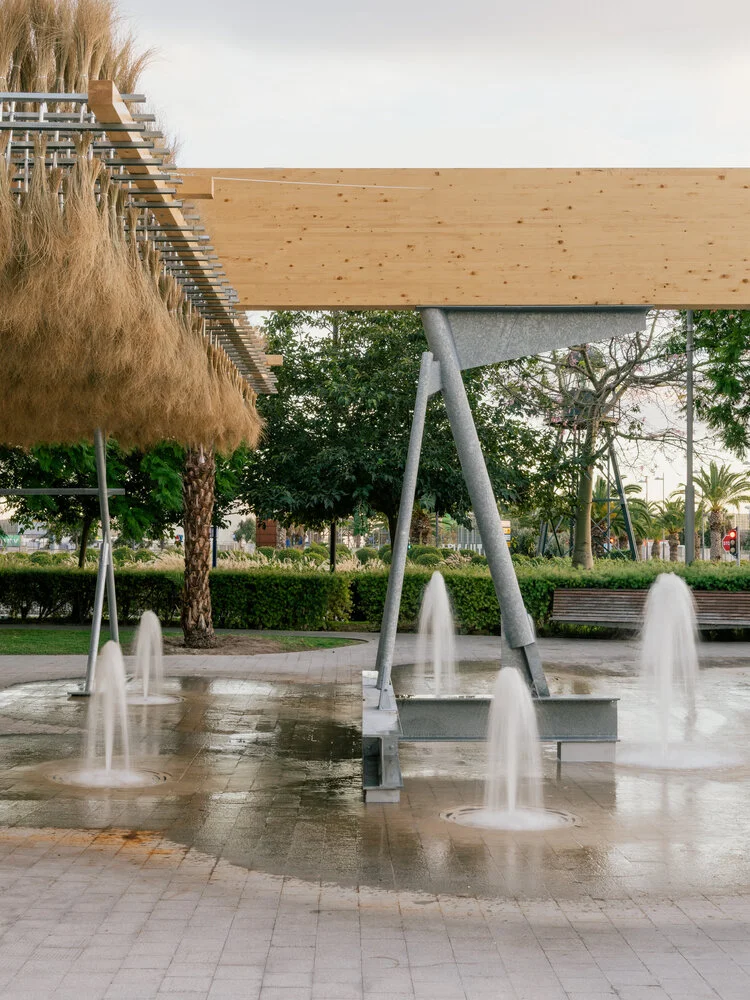
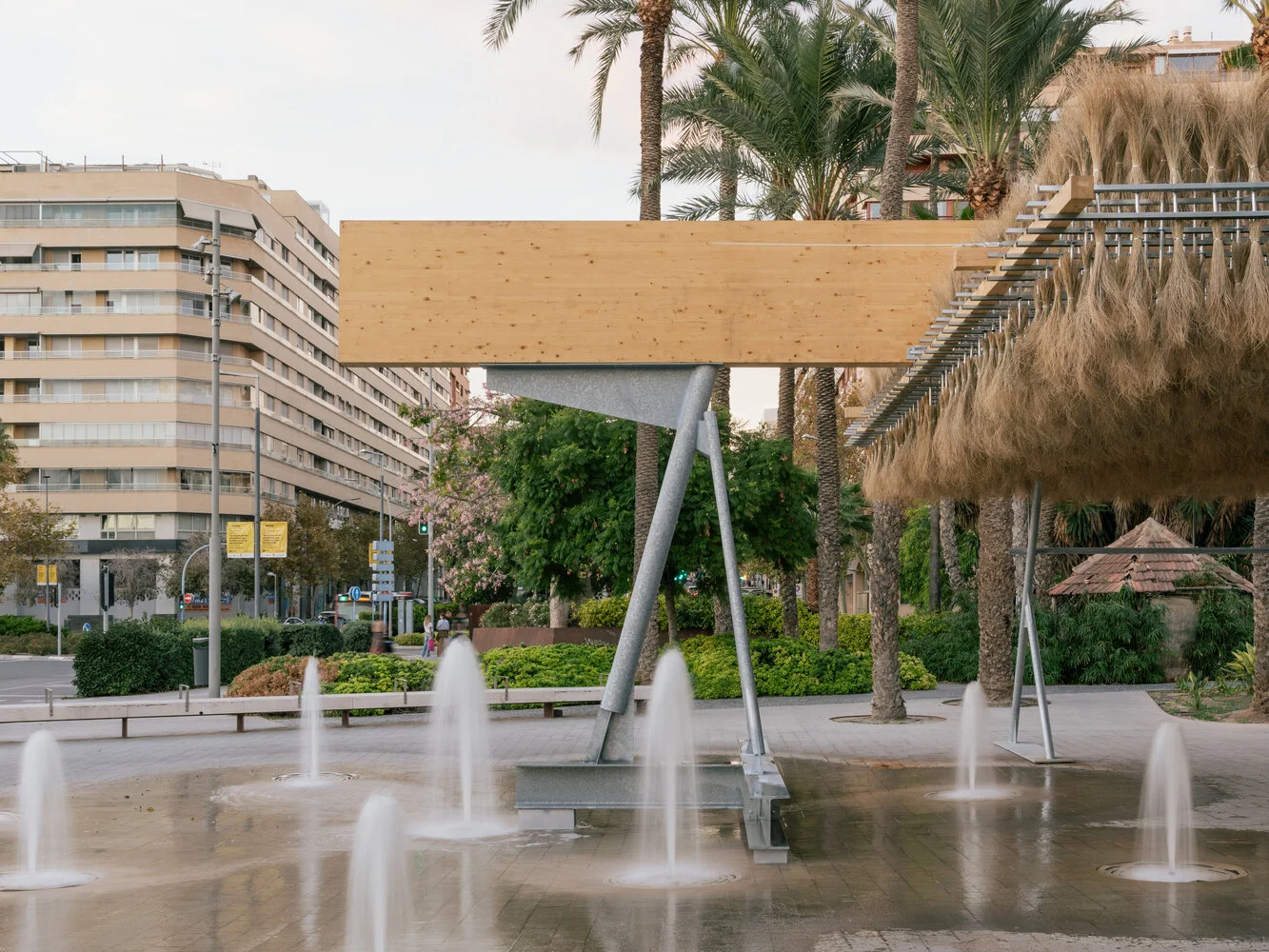
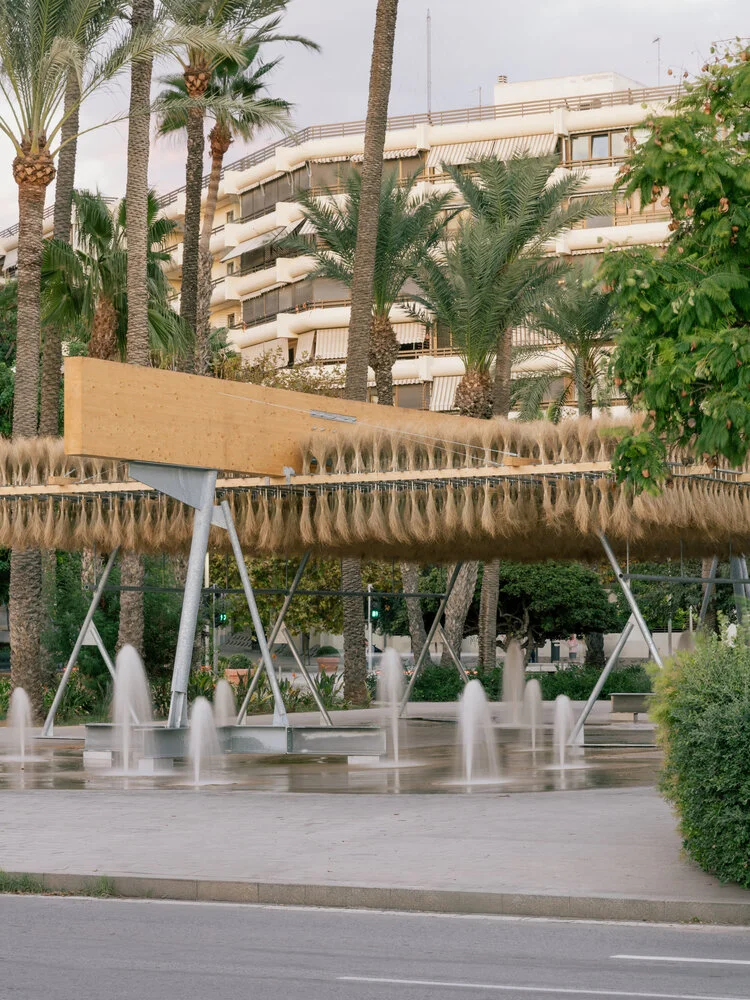
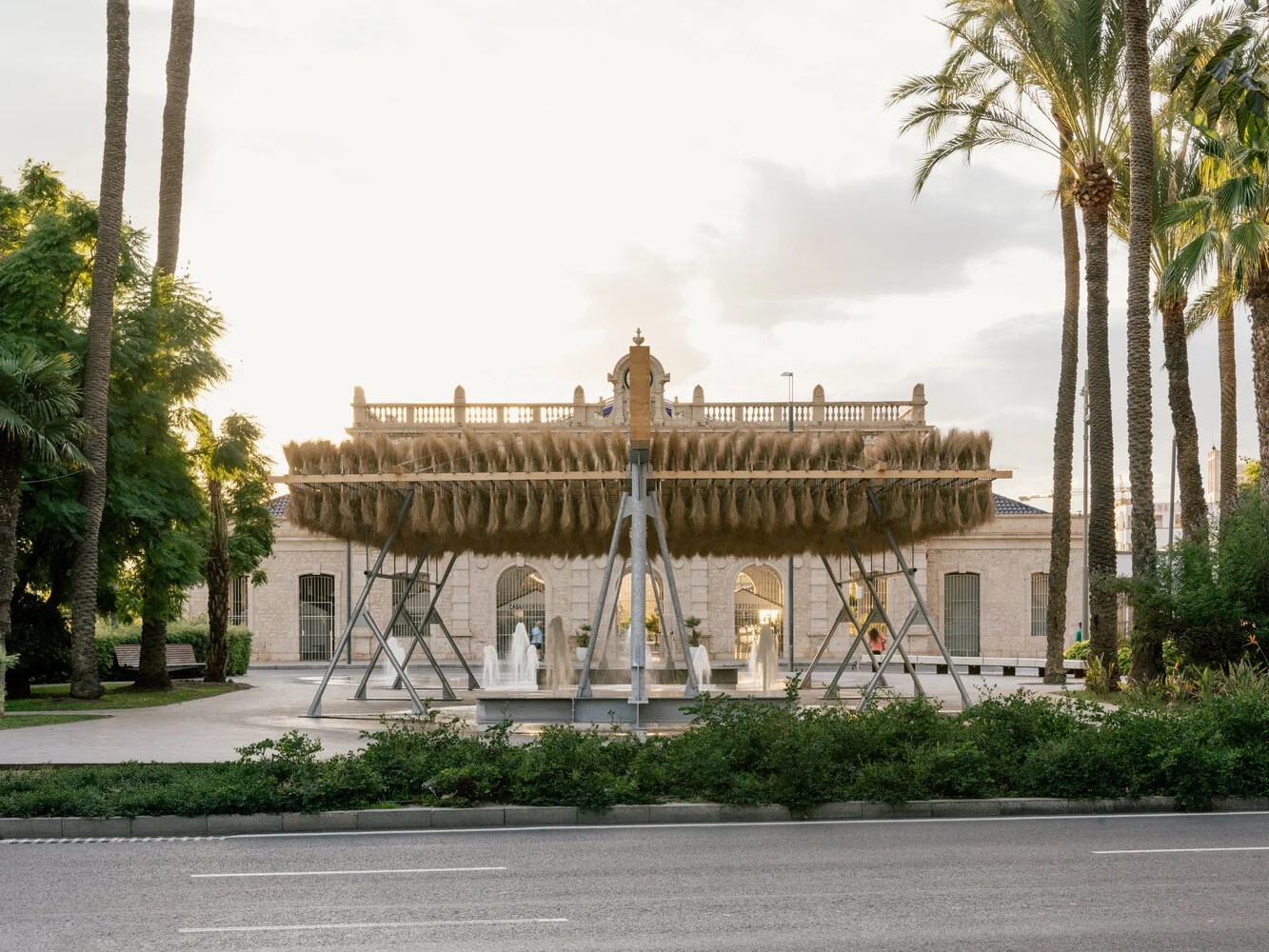
The Espartal Pavilion, designed by GA estudio in collaboration with Florencia Galecio, Juan Gubbins, and ELE Arkitektura, proposes a subtle yet powerful architectural intervention in the heart of the city. Installed in Arquitecto Miguel López Square, the pavilion transforms a space of passage into a place of pause, encounter, and shared experience through the use of a single, deeply rooted material: esparto.
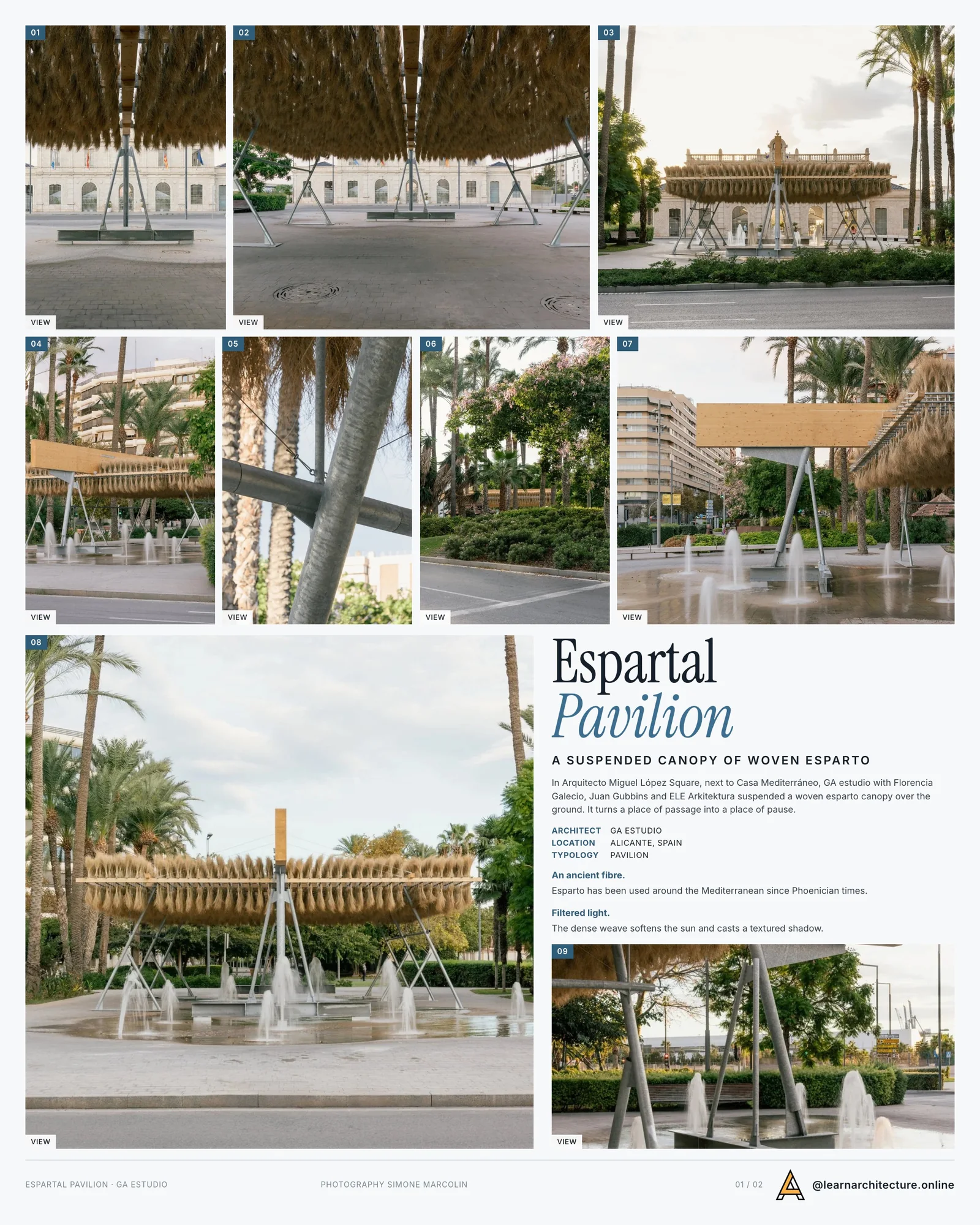
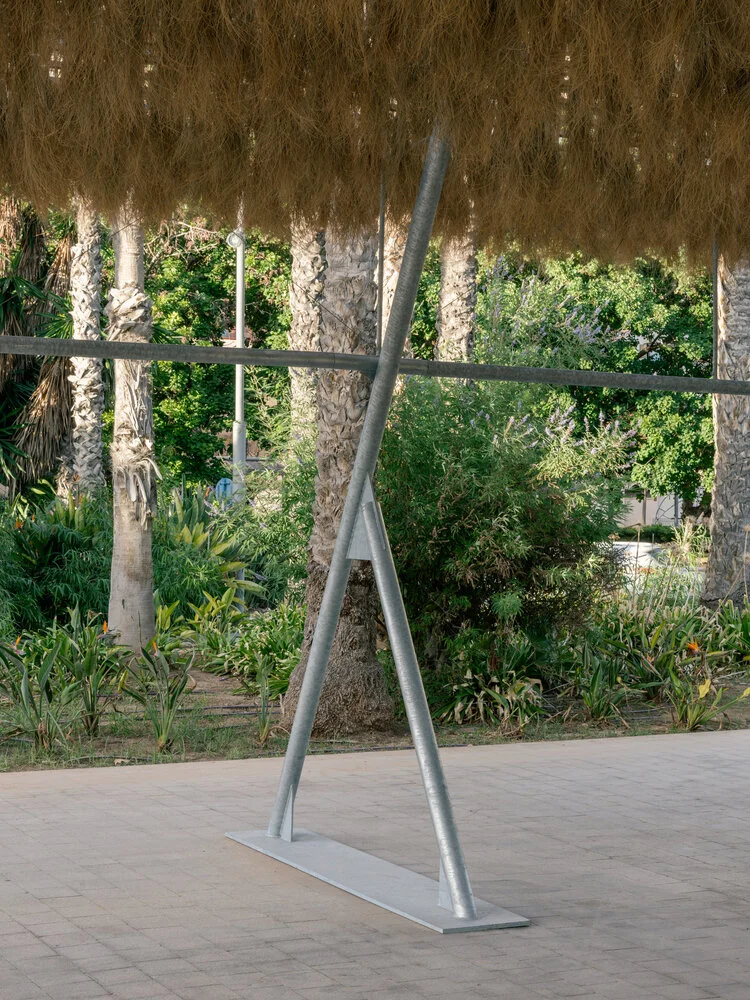
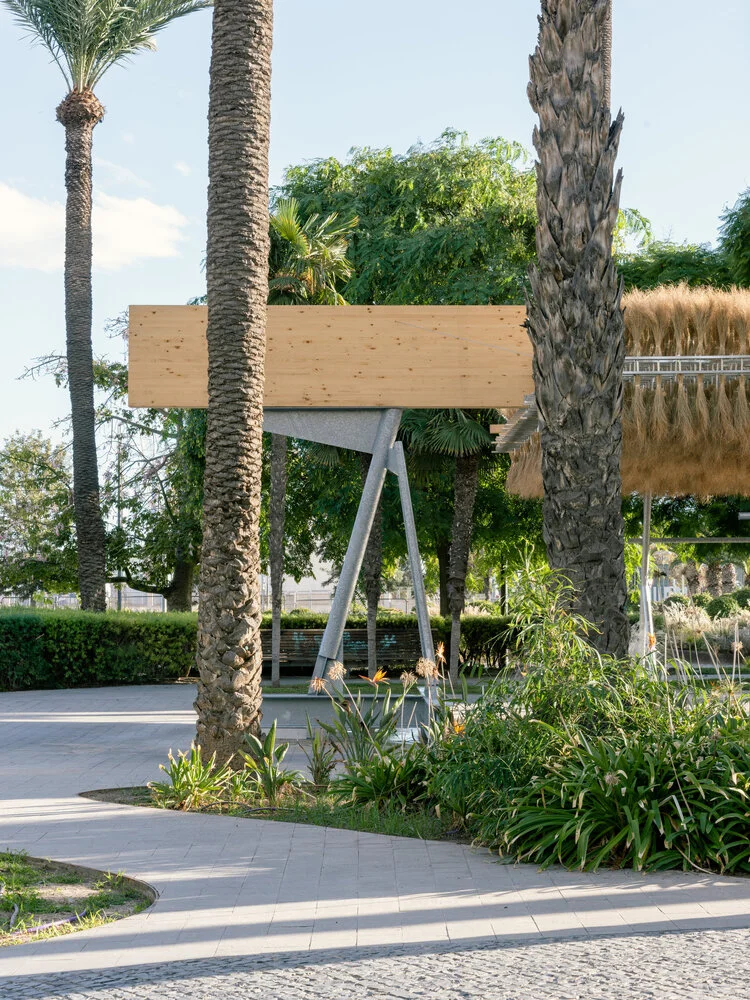
Suspended above the ground, the structure operates simultaneously as shelter, filter, and symbolic device. Its woven surface softens the harshness of direct sunlight, casts a dense and textured shadow, and generates a cooler microclimate beneath, redefining the environmental and social conditions of the square without enclosing it.

Material Memory and Contemporary Reinterpretation
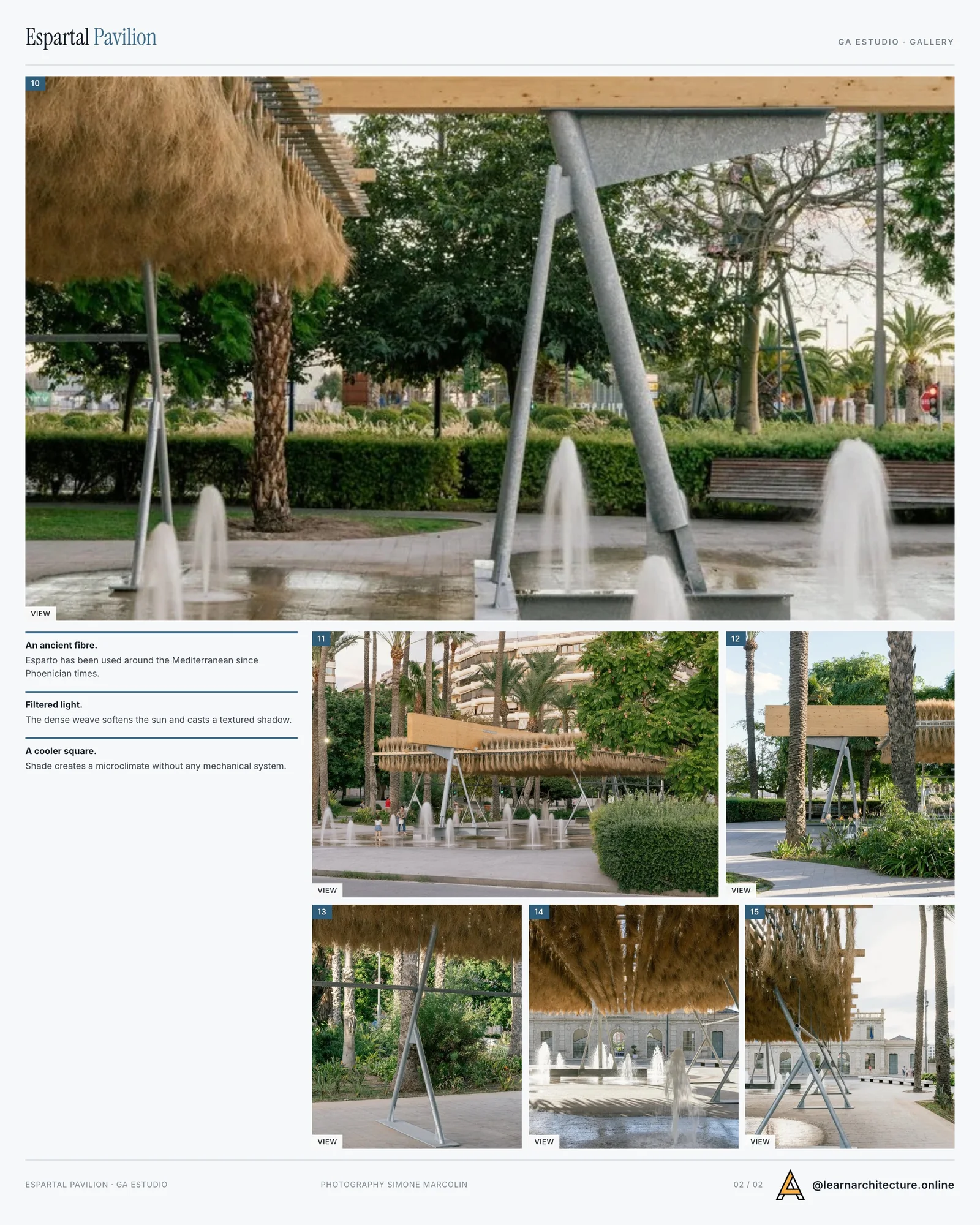
Esparto grass has been present in the Mediterranean basin since Phoenician times, traditionally used for ropes, baskets, mats, and agricultural tools. Closely tied to rural life and manual craftsmanship, it carries with it a strong cultural and territorial memory. The Espartal Pavilion deliberately recovers this historic material, repositioning it within a contemporary architectural language that speaks equally to tradition and innovation.
Rather than treating esparto as a nostalgic reference, the project elevates it into a structural and environmental agent. Woven into a suspended canopy, the material demonstrates its enduring capacity to regulate light, heat, and air, qualities long understood in vernacular cultures and now reactivated in an urban context. In doing so, the pavilion bridges countryside and city, reminding visitors that architectural intelligence is often embedded in ancestral practices.
Light, Shadow, and Microclimate
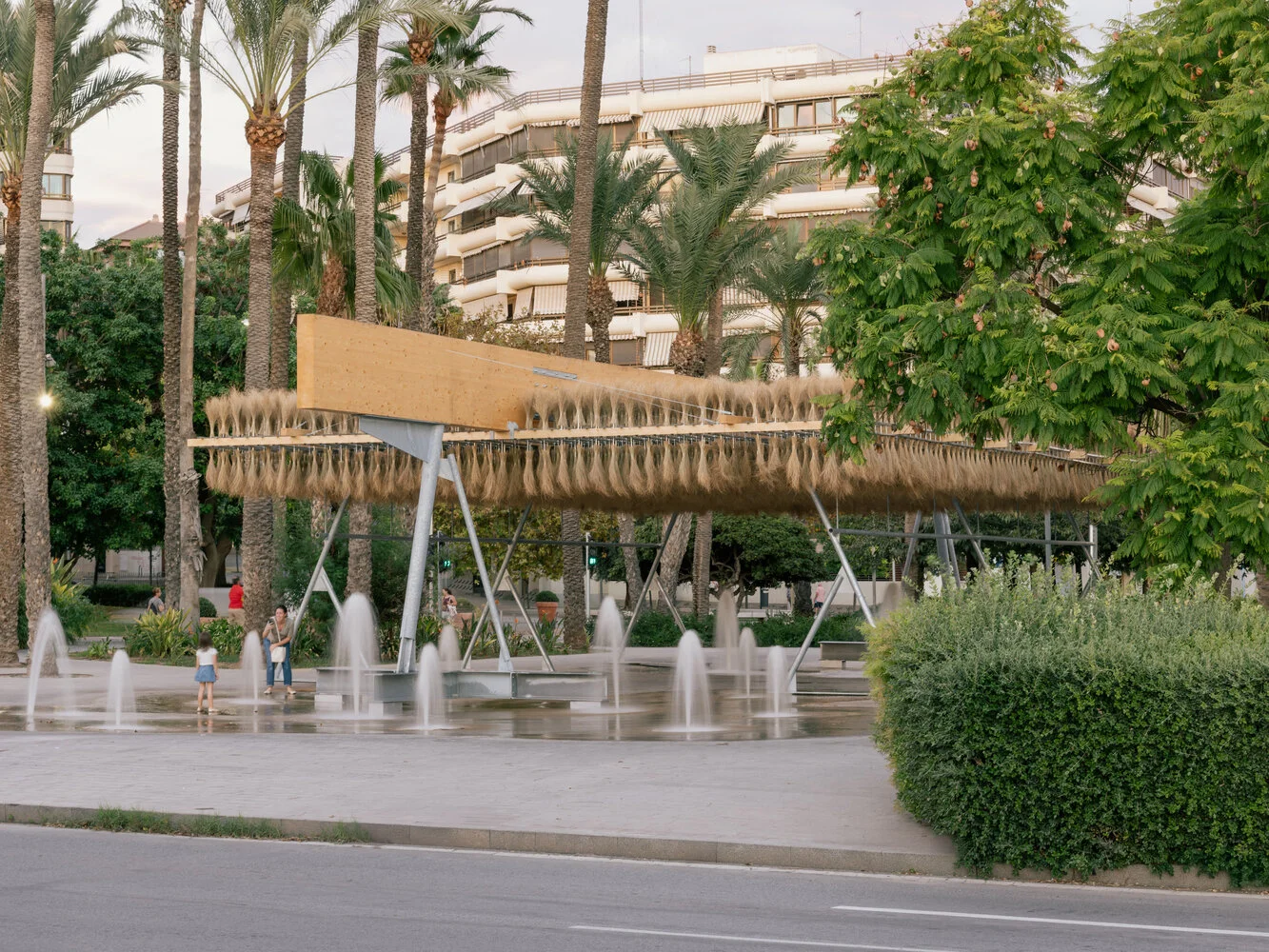
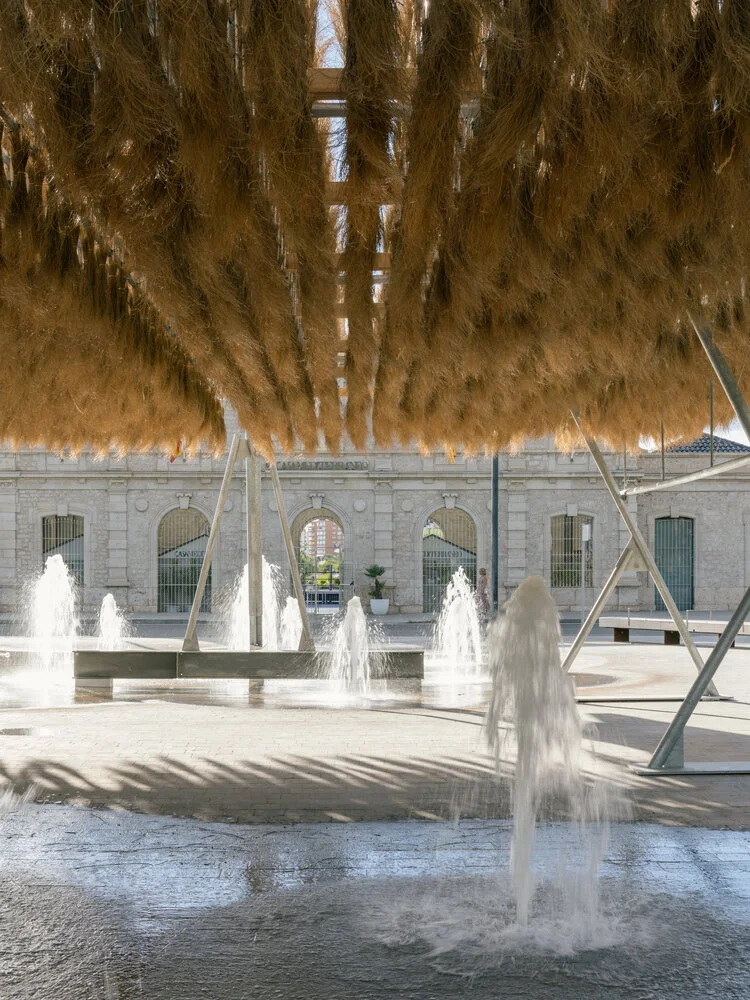
The spatial experience of Espartal is defined by its relationship with light. Sunlight passing through the dense esparto weave is fragmented and softened, producing a shifting pattern of shadows that changes throughout the day. This filtered light reduces glare and heat, creating a thermally comfortable zone that invites people to stop, sit, and gather.
By modifying the microclimate of the square, the pavilion demonstrates how lightweight, low-tech strategies can have a tangible environmental impact. Without mechanical systems or heavy construction, Espartal offers passive climate control rooted entirely in material choice and spatial configuration. The result is an architecture that feels breathable, tactile, and deeply responsive to its surroundings.
Urban Catalyst and Social Space
More than a temporary installation, Espartal is conceived as an urban catalyst. Its presence alters the behavior of the square, encouraging informal meetings, conversations, and moments of rest. The pavilion’s open and permeable nature allows it to host multiple interpretations and uses, adapting to daily urban life rather than prescribing a fixed program.
Its proximity to Casa Mediterráneo, an institution dedicated to strengthening cultural ties among Mediterranean peoples, reinforces the pavilion’s symbolic dimension. Espartal becomes not only a climatic device but also a cultural statement: an architectural gesture that speaks of shared histories, material cultures, and collective identities across the Mediterranean landscape.
Sustainability Through Local Material Culture
At the core of the project lies a clear ecological and ethical stance. Espartal advocates for a reconsideration of construction materials from a functional, symbolic, and environmental perspective. By relying on a local, biodegradable, and renewable resource, the pavilion challenges the dominance of industrialized systems and highlights the potential of material culture as a driver of sustainability.
The project suggests that sustainability is not only a question of technology, but also of memory, proximity, and knowledge. Esparto, harvested and worked through traditional processes, embodies a low-impact lifecycle while offering high environmental performance. In this sense, Espartal positions architecture as a mediator between natural cycles and urban life.
Architecture as Connection
Espartal Pavilion ultimately proposes a renewed way of thinking about public space. Through a minimal yet expressive intervention, it restores connections: between past and present, rural and urban, nature and artifice. The pavilion does not dominate the square; instead, it listens to it, amplifies its social potential, and reframes it as a place of shared experience.
By transforming a transient urban void into a shaded, inhabitable landscape, Espartal demonstrates how architecture can operate gently yet effectively. It stands as a reminder that even temporary structures can leave lasting impressions (environmental, cultural, and social) when they are grounded in place, material intelligence, and collective meaning.
Photography: Simone Marcolin
- climate-responsive architecture
- Contemporary Mediterranean architecture
- Ecological architecture
- ELE Arkitektura
- Espartal Pavilion
- Esparto architecture
- experimental architecture
- Florencia Galecio
- GA estudio
- Juan Gubbins
- light and shadow architecture
- Material culture architecture
- Mediterranean materials
- Natural materials in architecture
- Pavilion design
- Public square intervention
- Sustainable public space
- temporary pavilion architecture
- Urban installation
- Urban microclimate design









Leave a comment