


Table of Contents Show
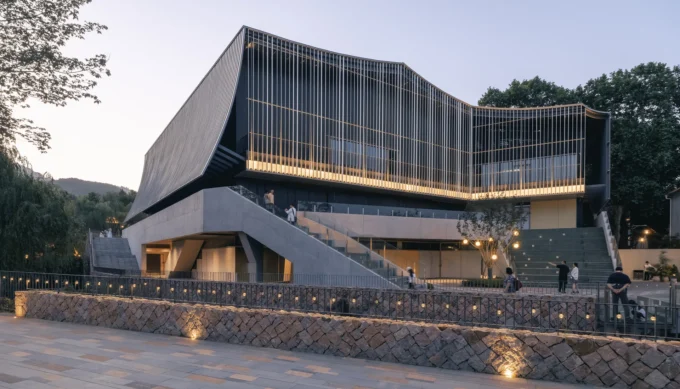
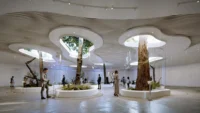
In Colombia’s capital, an ambitious initiative challenges conventional approaches to cultural infrastructure. Rather than constructing permanent venues, a collaborative team led by Alsar Atelier, alongside SCRD, El Lider S.A.S, and INGEACERO, has developed a mobile architectural solution that brings arts programming directly to neighborhoods throughout the city. Spanning 900 square meters, this transitory structure represents a fresh perspective on how cultural infrastructure can serve diverse communities while addressing both economic and environmental concerns.
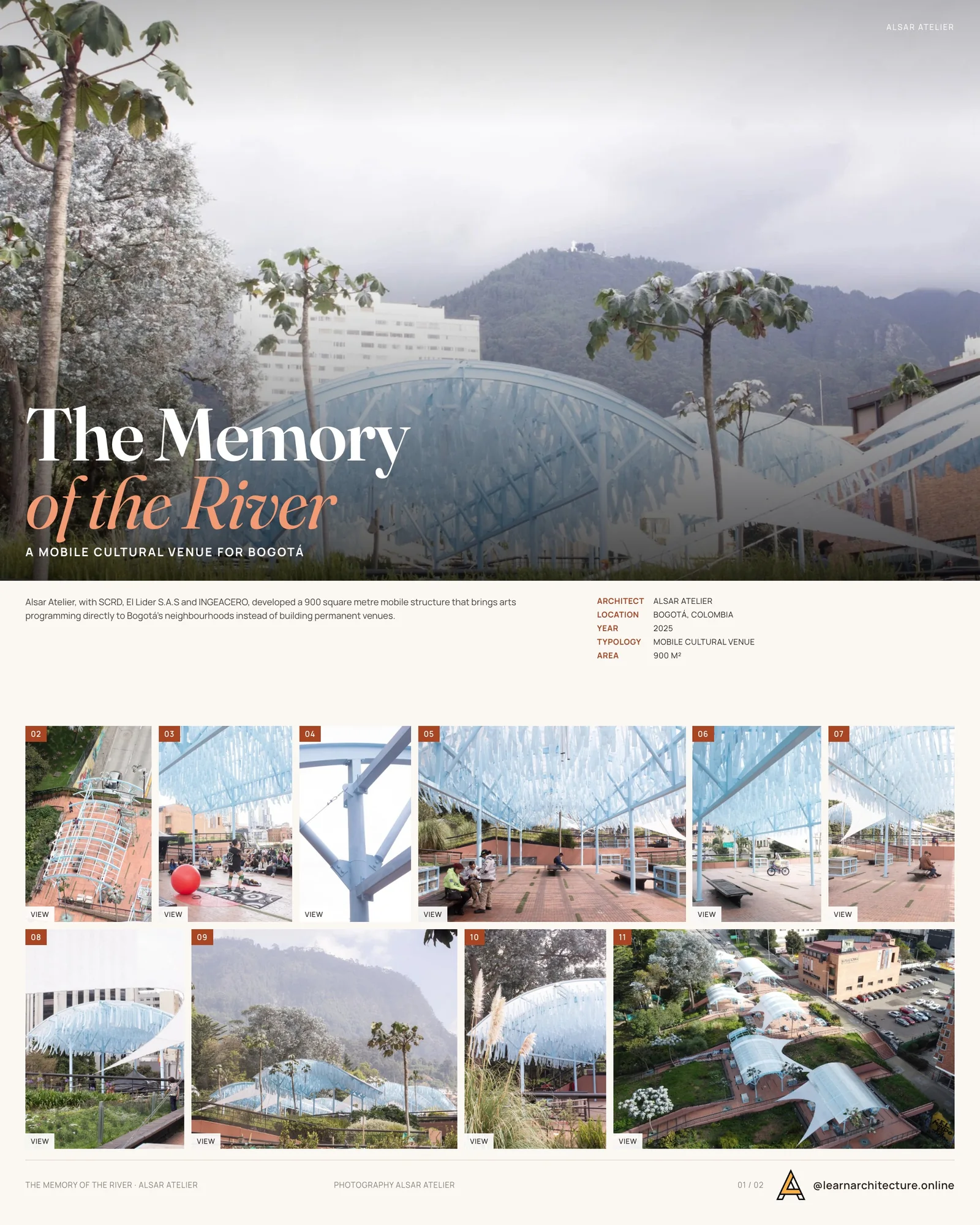
The project emerged from Bogotá’s Secretariat of Culture, Recreation and Sports under the leadership of Secretary Santiago Trujillo and Director of Art, Culture, and Heritage Diego Parra. Structured by the Subdirectorate of Infrastructure and Cultural Heritage, the team, including Edgar Figueroa, Edgar Bernal, Emmanuel Guerra, Juliana Mendoza, Diego Rodríguez, and Juan Sebastián Robayo, deliberately chose impermanence as a strategic advantage. This methodology enables different barrios to host cultural activities without requiring substantial permanent investments, fundamentally democratizing access to arts spaces.

Strategic Approach to Ephemeral Design
The architectural strategy embraces temporality as its defining characteristic. Unlike fixed facilities that remain anchored to single locations, this intervention operates as itinerant infrastructure. The decision to prioritize mobility over permanence reflects contemporary thinking about resource allocation and community engagement in urban contexts. By deploying a structure that can be assembled, utilized, and relocated, the initiative maximizes cultural programming reach while maintaining fiscal responsibility.
This approach aligns with broader conversations in temporary architectural installation globally, where practitioners increasingly recognize the value of adaptable interventions. The ability to test cultural programming in various neighborhoods before committing to permanent construction provides invaluable data about community needs and preferences. Such flexibility proves particularly relevant in rapidly evolving urban landscapes where demographic shifts and cultural dynamics continuously reshape neighborhood identities.

Material Expression and Structural Innovation
Steel forms the primary material vocabulary for this installation, selected for its structural efficiency and transportability characteristics. The metal framework enables relatively rapid assembly and disassembly cycles essential for the project’s nomadic character. Beyond pragmatic considerations, steel’s visual properties contribute to the installation’s contemporary aesthetic, creating dialogue with Bogotá’s diverse architectural fabric.
The construction methodology developed by INGEACERO and Terra demonstrates sophisticated engineering adapted to temporary applications. Rather than simplifying structural systems for short-term use, the team maintained architectural ambition while ensuring practical functionality. This balance between aesthetic aspiration and logistical feasibility distinguishes the project from purely utilitarian temporary structures. The 900-square-meter footprint provides sufficient space for diverse cultural programs while remaining manageable for relocation efforts.

Cultural Decentralization Through Architecture
At its core, this initiative addresses equity in cultural access, a persistent challenge in many Latin American metropolises. Traditional models concentrate arts facilities in central or affluent districts, requiring residents from peripheral neighborhoods to travel considerable distances for cultural participation. By inverting this paradigm, bringing programming to various localities, the project reduces barriers to engagement while validating diverse communities as legitimate centers of cultural activity.
The intervention’s mobility supports what urbanists term “cultural justice,” ensuring that geography and socioeconomic status don’t predetermine access to arts experiences. Each deployment in a new neighborhood transforms not just the physical site but also local perceptions about cultural belonging. This methodology recognizes that public space design intersects profoundly with questions of social inclusion and urban equity.
According to ArchDaily, similar temporary cultural interventions worldwide have demonstrated significant community impact. The publication notes that ephemeral architecture can activate underutilized urban zones while testing programming concepts before permanent investment. Research from Dezeen confirms that mobile cultural infrastructure increasingly appears in forward-thinking cities as an alternative to costly fixed facilities.

Architectural Adaptability and Urban Context
The installation’s design philosophy emphasizes contextual responsiveness rather than rigid formal consistency. Each site deployment requires calibrating the structure to specific urban conditions: topography, existing infrastructure, circulation patterns, and neighborhood character. This adaptive capacity represents sophisticated architectural thinking that values place-specificity over universal solutions.
Modularity enables configuration adjustments accommodating different programs and audiences. Whether hosting exhibitions, performances, workshops, or community gatherings, the spatial framework flexibly supports varied activities. This programmatic versatility ensures the structure remains relevant across diverse neighborhoods with distinct cultural traditions and contemporary interests. The integration of contemporary architectural technology allows for efficient reconfiguration between deployments.

Sustainability Considerations in Temporary Architecture
While temporary structures might appear contradictory to sustainability principles, this project demonstrates how ephemeral interventions can embody environmental responsibility. The reusable nature of components reduces material consumption compared to multiple permanent buildings. Transportation and assembly energy expenditures remain relatively modest, particularly when weighed against avoided construction waste from conventional approaches.
Additionally, the temporary model allows cultural programming to evolve without requiring demolition and rebuilding, a significant waste generator in permanent architecture. As community needs shift or new priorities emerge, programming adapts within the existing structural framework. This organizational flexibility paired with physical reusability represents a nuanced approach to sustainable cultural architecture that considers lifecycle impacts beyond single-building metrics.
The project draws inspiration from international precedents documented by Designboom, which has extensively covered temporary pavilions and mobile cultural spaces. Their coverage emphasizes how such interventions challenge assumptions about architectural permanence while delivering meaningful community benefits.

Implications for Future Cultural Infrastructure
This Bogotá initiative offers a compelling model for other cities grappling with limited cultural infrastructure budgets and equitable access challenges. The success of temporary deployment strategies could reshape municipal approaches to arts facility planning, particularly in regions where rapid urban growth outpaces infrastructure development. Rather than viewing temporality as compromise, this project frames it as deliberate strategy with distinct advantages.
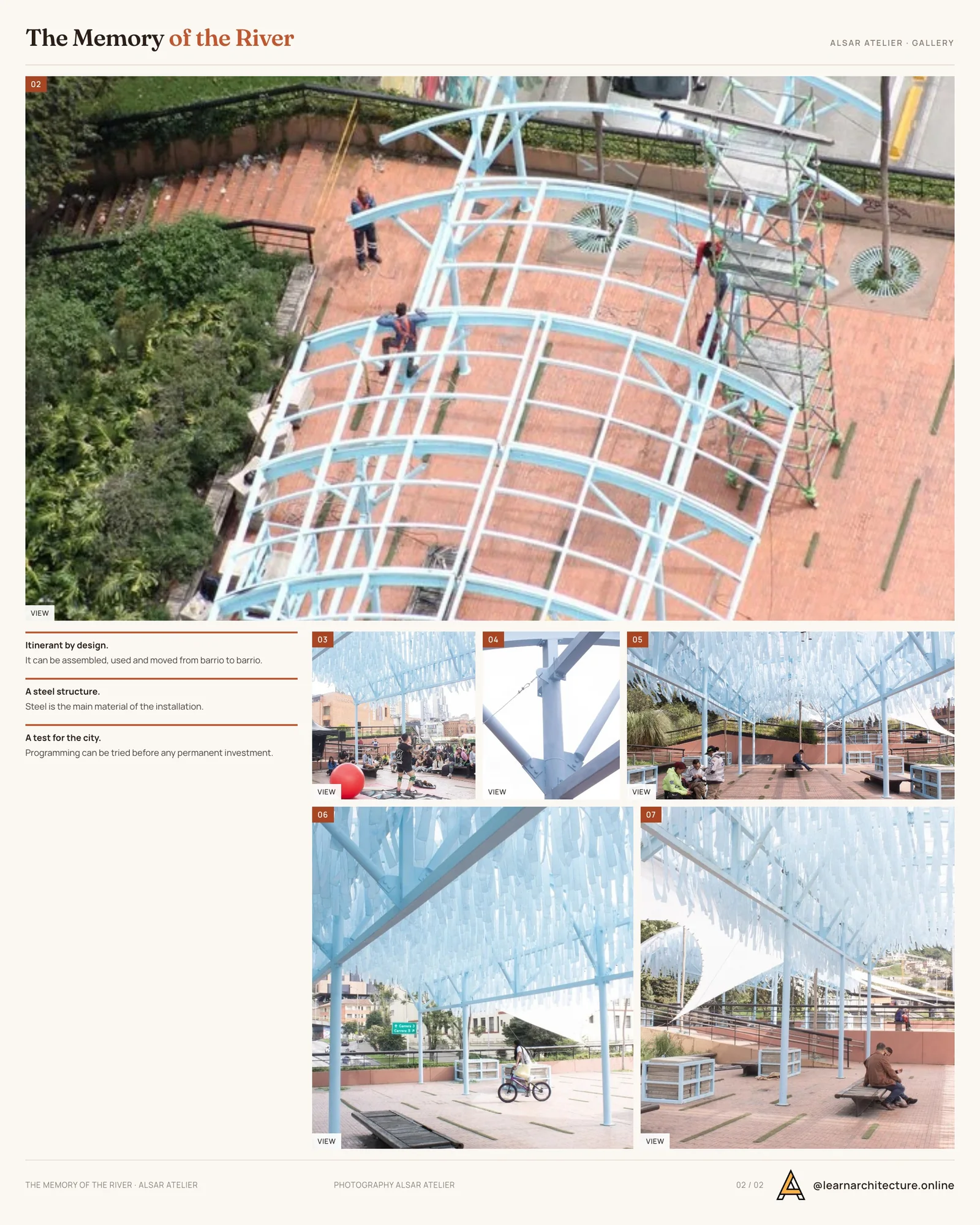
The methodology also suggests possibilities for hybrid systems combining permanent anchors with mobile satellites, maximizing coverage while maintaining some fixed presence. Such networks could dramatically expand cultural programming reach without proportionally increasing capital expenditure. As municipalities worldwide seek innovative approaches to public service delivery amid fiscal constraints, models prioritizing flexibility and reusability gain relevance.
Completed in 2025, The Memory of the River represents collaborative achievement between governmental cultural agencies and specialized design and construction firms. The partnership structure, uniting design vision from Alsar Atelier with technical execution by INGEACERO and El Lider S.A.S, demonstrates how public-private collaboration can deliver innovative architectural solutions serving broad public benefit. This organizational framework itself offers lessons for other jurisdictions pursuing experimental cultural infrastructure approaches.
Photography: Alsar-Atelier
- Alsar Atelier
- cultural decentralization
- cultural infrastructure Bogotá
- ephemeral architecture
- mobile cultural spaces
- Modular architecture
- public art installation
- SCRD Bogotá
- steel structure design
- sustainable architecture design
- temporary architecture
- temporary installations Colombia
- transitory infrastructure
- urban cultural programming
- urban reactivation









Leave a comment