


Table of Contents Show
Whether you’re redesigning your home, planning a new apartment, or studying architecture, knowing how to draw a floor plan is one of the most essential skills you can develop. A well-crafted floor plan communicates spatial relationships, circulation paths, and functional zones, all on a single sheet of paper. In this guide, we’ll walk you through every step, from initial measurements to polished layouts for apartments, studios, and living rooms.

Why You Need to Know How to Draw a Floor Plan
Floor plans are the backbone of every architectural project. They help homeowners visualize renovations, assist architects in communicating design intent, and allow renters to evaluate apartment floor plans before signing a lease. Understanding floor plans also makes it easier to coordinate with contractors, interior designers, and engineers throughout a building project.
According to the American Institute of Architects (AIA), clear floor plans reduce miscommunication during construction and can save significant time and money. Even if you’re not a licensed professional, being able to sketch a basic plan empowers you to take control of your living space.

Essential Tools for Drawing Floor Plans
Before you start, gather the right tools. For hand-drawing, you’ll need graph paper, a scale ruler, a pencil set (H and HB grades), an eraser, and a T-square or straight edge. If you prefer digital methods, software like AutoCAD, SketchUp, or free options like Floorplanner can speed up the process considerably.
For beginners, starting with pencil and paper is highly recommended. It builds spatial intuition that even experienced architects rely on. Once you’re comfortable with proportions and scale, transitioning to digital drafting tools becomes much smoother.

How to Find Floor Plans for a House
If you’re renovating rather than building from scratch, the first step is learning how to find floor plans for a house. Start by checking with your local building department or county records office; most municipalities keep original building permits and plans on file. Your real estate agent or property management company may also have copies.
Online databases such as local GIS portals and property record sites can be useful as well. For historic homes, architectural drawing archives and university libraries sometimes house original blueprints. If no plans exist, you’ll need to measure and draw the existing layout yourself, which brings us to the next step.
Step-by-Step: Drawing Your Floor Plan
Step 1: Measure the Space
Using a laser measure or a long tape measure, record the dimensions of every room, hallway, and opening. Note wall thicknesses, window positions, and door swing directions. Accuracy here is critical; even small errors compound over a full layout. Write measurements directly on a rough sketch as you go.

Step 2: Choose Your Scale
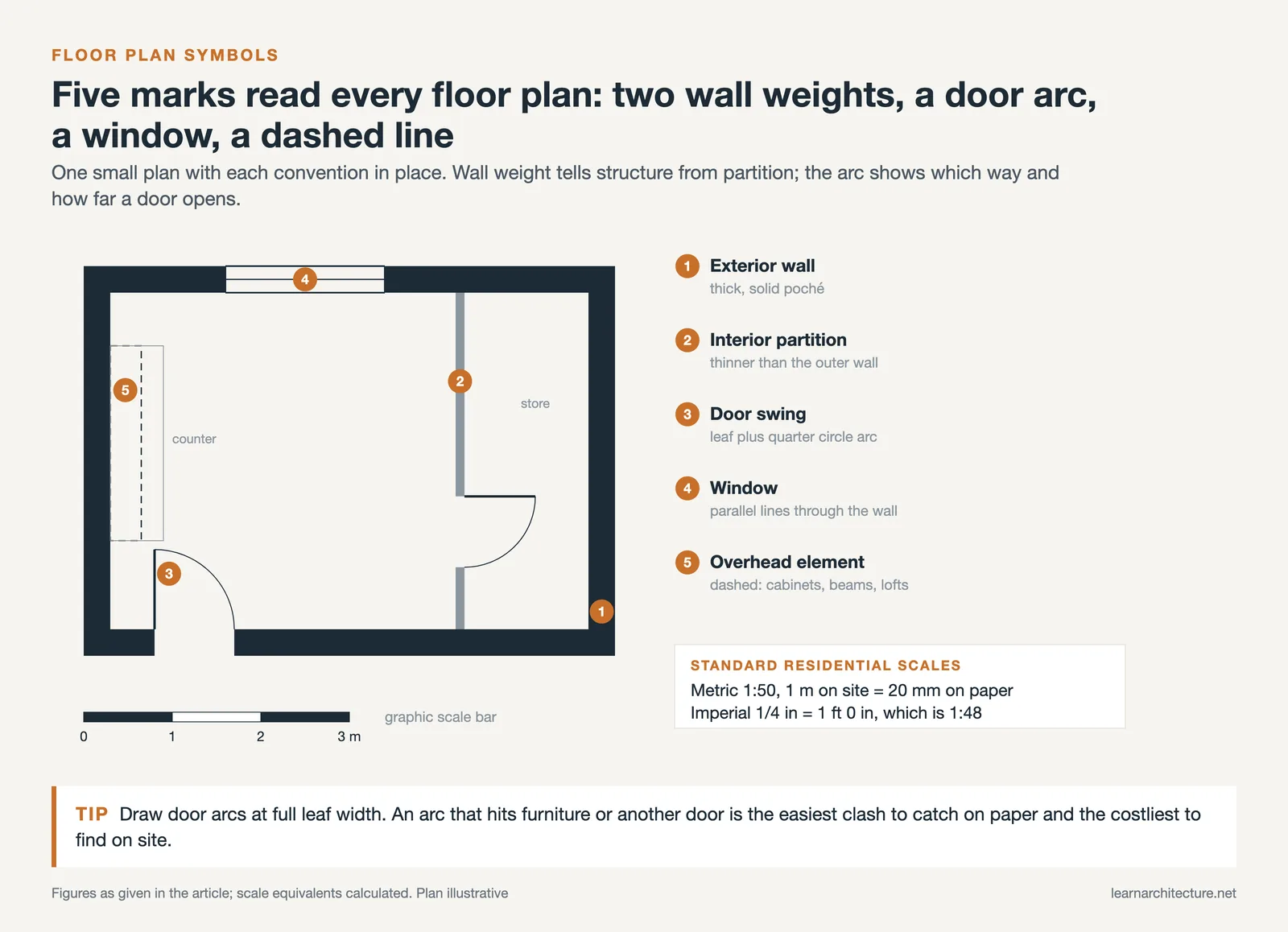
Standard architectural scales include 1:50 (metric) or ¼” = 1′-0″ (imperial). Pick a scale that fits your paper size while leaving room for annotations. If you’re working digitally, set the scale in your software before you begin drawing.
Step 3: Draw the Exterior Walls
Start with the outer boundary of the building. Draw the perimeter walls first, using your measurements to ensure proportional accuracy. This frame anchors every interior element that follows. Pay attention to wall thickness: exterior walls are typically thicker than interior partition walls.
Step 4: Add Interior Walls, Doors, and Windows
Subdivide the interior according to your measurements or design intent. Use standard architectural symbols: a quarter-circle arc for door swings, parallel lines for windows, and dashed lines for overhead elements. ArchDaily’s floor plan collection is an excellent reference for symbol conventions and layout inspiration.
Step 5: Label and Annotate
Add room names, dimensions, and material notes. Include furniture layouts if the plan is for interior design purposes. Clear labeling transforms a technical drawing into a communication tool that anyone can read.
Apartment Floor Plans: Layouts That Work
Designing apartment floor plans requires maximizing limited square footage. Successful apartment layouts prioritize efficient circulation, adequate storage, and clear separation between public and private zones. When working on apartment building floor plans, architects must also consider corridor access, fire egress, and structural grid alignment across multiple units.
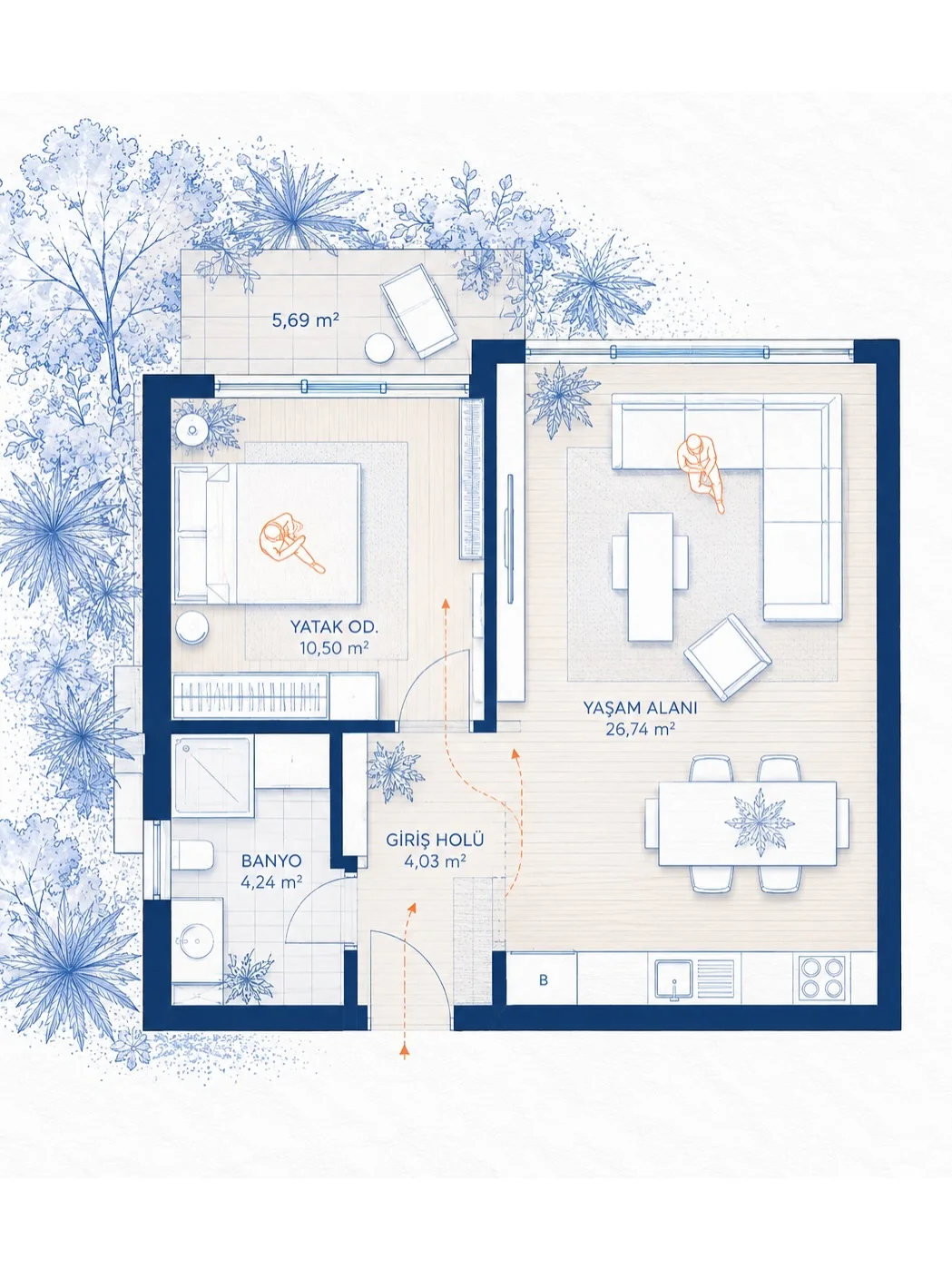
Good apartment design balances communal and private space. Kitchens often open into living areas to create a sense of spaciousness, while bedrooms are placed away from shared walls for acoustic privacy. For deeper insight into multi-unit planning, Dezeen’s apartment projects showcase innovative approaches from around the world.

Studio Apartment Floor Plan Ideas
A studio apartment floor plan consolidates living, sleeping, and cooking into a single open space, making layout decisions especially impactful. The key to a functional floor plan for studio apartment living is zoning without walls. Use furniture placement, area rugs, and changes in lighting to define distinct areas within the open plan.
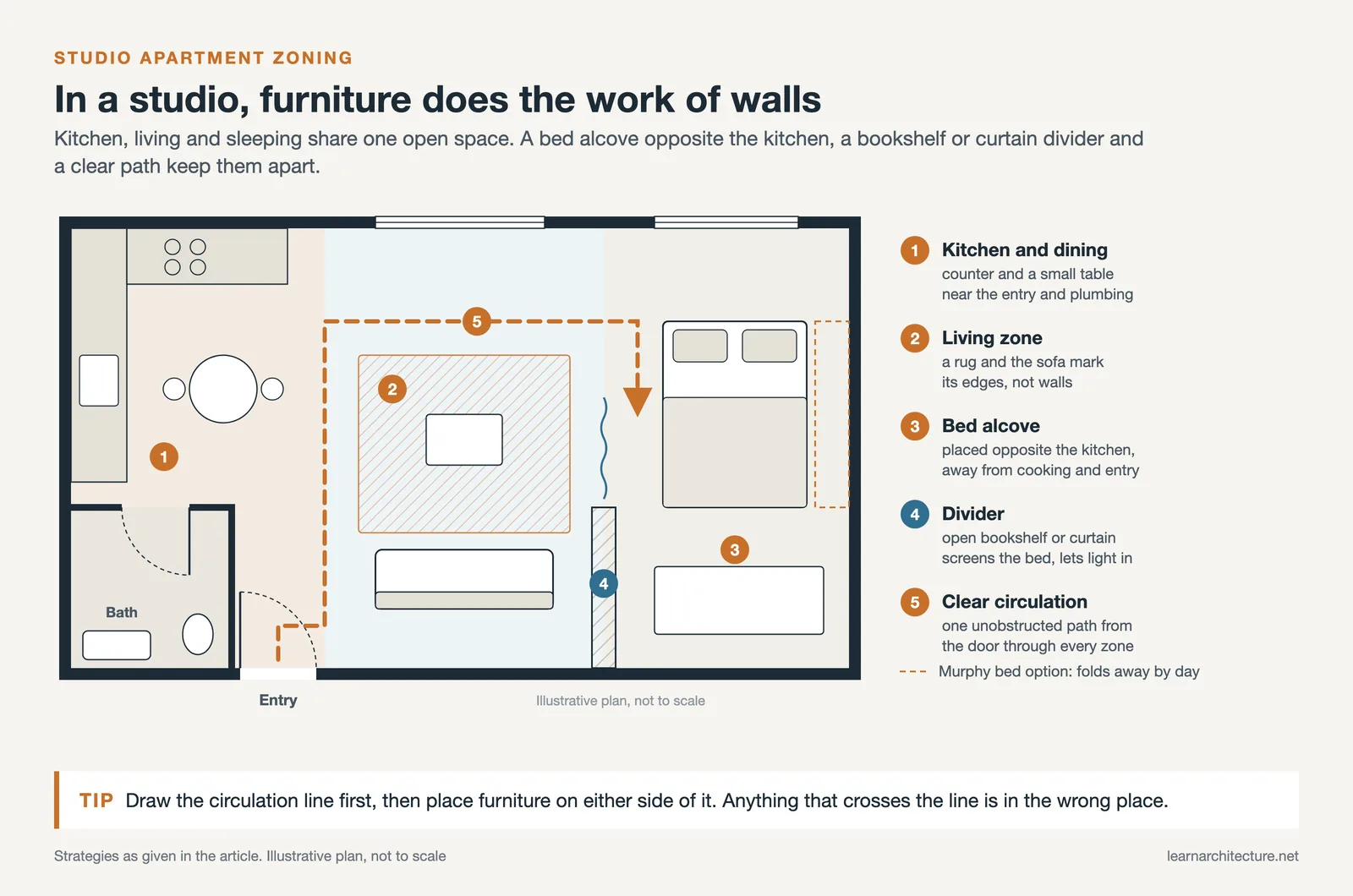
Common strategies for efficiency apartment floor plans include placing the bed alcove opposite the kitchen, using a bookshelf or curtain as a room divider, and keeping circulation paths unobstructed. Murphy beds and convertible furniture can double your usable area during the day. Even in small spaces, thoughtful space planning makes all the difference.
Living Room Floor Plans and Furniture Layouts
When developing living room floor plans, start by identifying the focal point: a fireplace, a large window, or an entertainment center. Arrange seating to face this focal point while maintaining comfortable conversation distances (typically 2.5 to 3 meters between facing sofas). Leave at least 90 cm of clearance for walkways around furniture groupings.

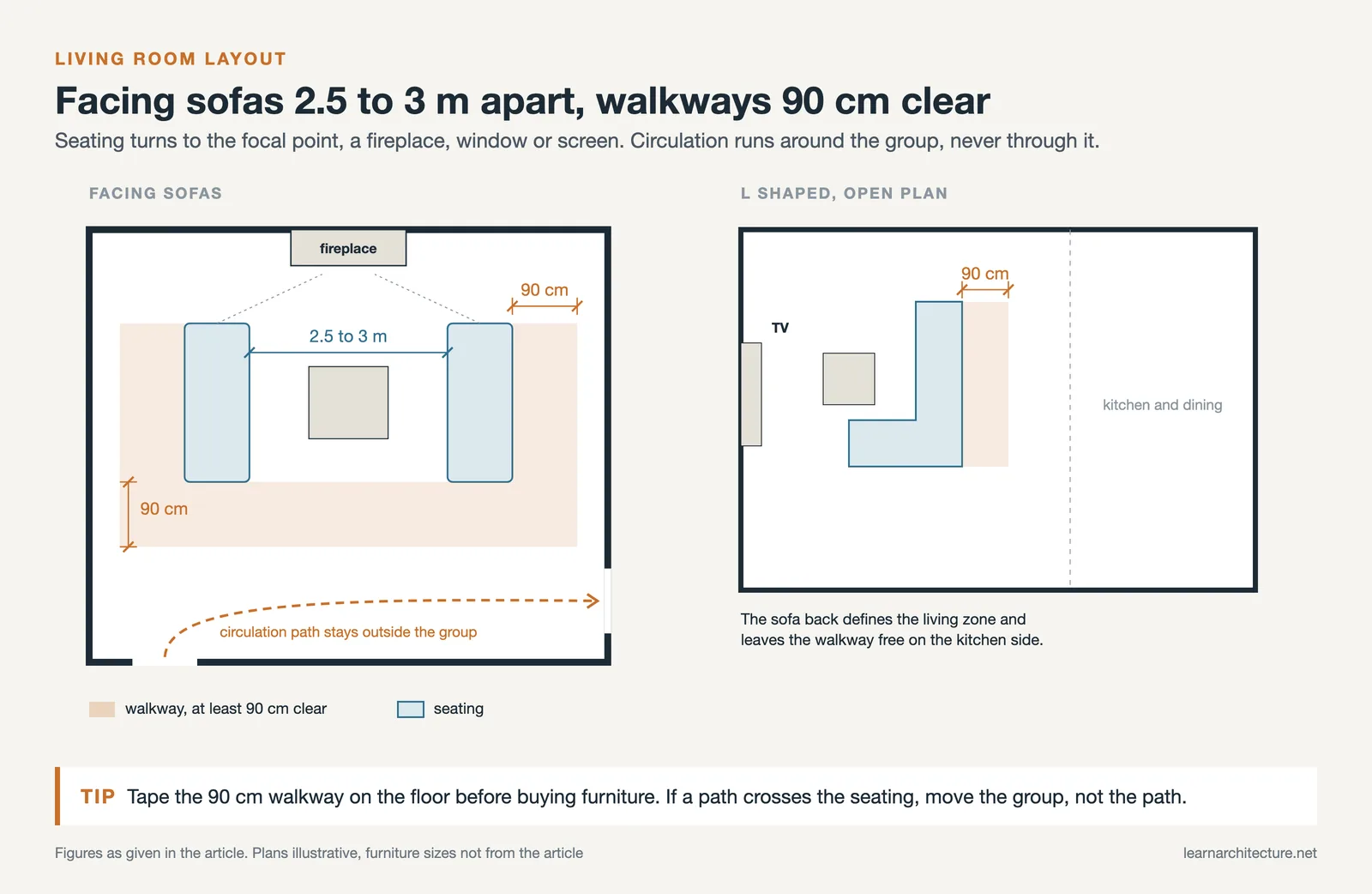
Consider traffic flow through the room. Living rooms often serve as transitional spaces between an entry hall and other rooms, so avoid placing furniture directly in circulation paths. L-shaped sofa arrangements work well in open-plan apartments, while symmetrical layouts suit more formal, enclosed rooms.

Common Mistakes to Avoid
Even experienced designers make floor plan errors. Watch out for these pitfalls: ignoring door swing clearances, underestimating storage needs, placing plumbing fixtures far from existing supply lines, and forgetting to account for wall thickness in room dimensions. Always double-check your measurements and, when possible, have a second person verify critical dimensions.
Another frequent mistake is neglecting natural light. The orientation of windows affects energy efficiency, mood, and furniture placement. The Royal Institute of British Architects (RIBA) offers resources on daylight planning that are worth consulting during the design process.
Frequently Asked Questions
What is the easiest way to draw a floor plan for beginners?
The easiest approach is to start with graph paper and a pencil. Measure each room carefully, choose a simple scale like one square equals one foot, and draw the outer walls first. Free online tools such as Floorplanner or RoomSketcher are also beginner-friendly options if you prefer working digitally.

Can I draw my own floor plan without an architect?
Yes, for personal projects like furniture planning or small renovations, you can absolutely draw your own floor plan. However, for structural changes, building permit submissions, or new construction, a licensed architect or drafter should review or prepare the plans to ensure code compliance.
How do I find the original floor plans for my house?
Check with your local building or planning department, as they typically keep copies of permitted construction drawings on file. You can also contact the original builder, your homeowner’s association, or search county property records online for archived plans.
What scale should I use for a residential floor plan?
For residential projects, a scale of 1:50 (metric) or ¼ inch = 1 foot (imperial) is standard. This scale provides enough detail for room layouts, door swings, and furniture placement while fitting most rooms on a single sheet of paper.
What is the difference between a floor plan and a blueprint?
A floor plan is a specific type of architectural drawing showing the horizontal layout of a building from above. A blueprint historically refers to a reproduction method using cyanotype paper. Today, “blueprint” is used informally to mean any set of construction drawings, which includes floor plans along with sections, elevations, and detail drawings.









Leave a comment