


Table of Contents Show
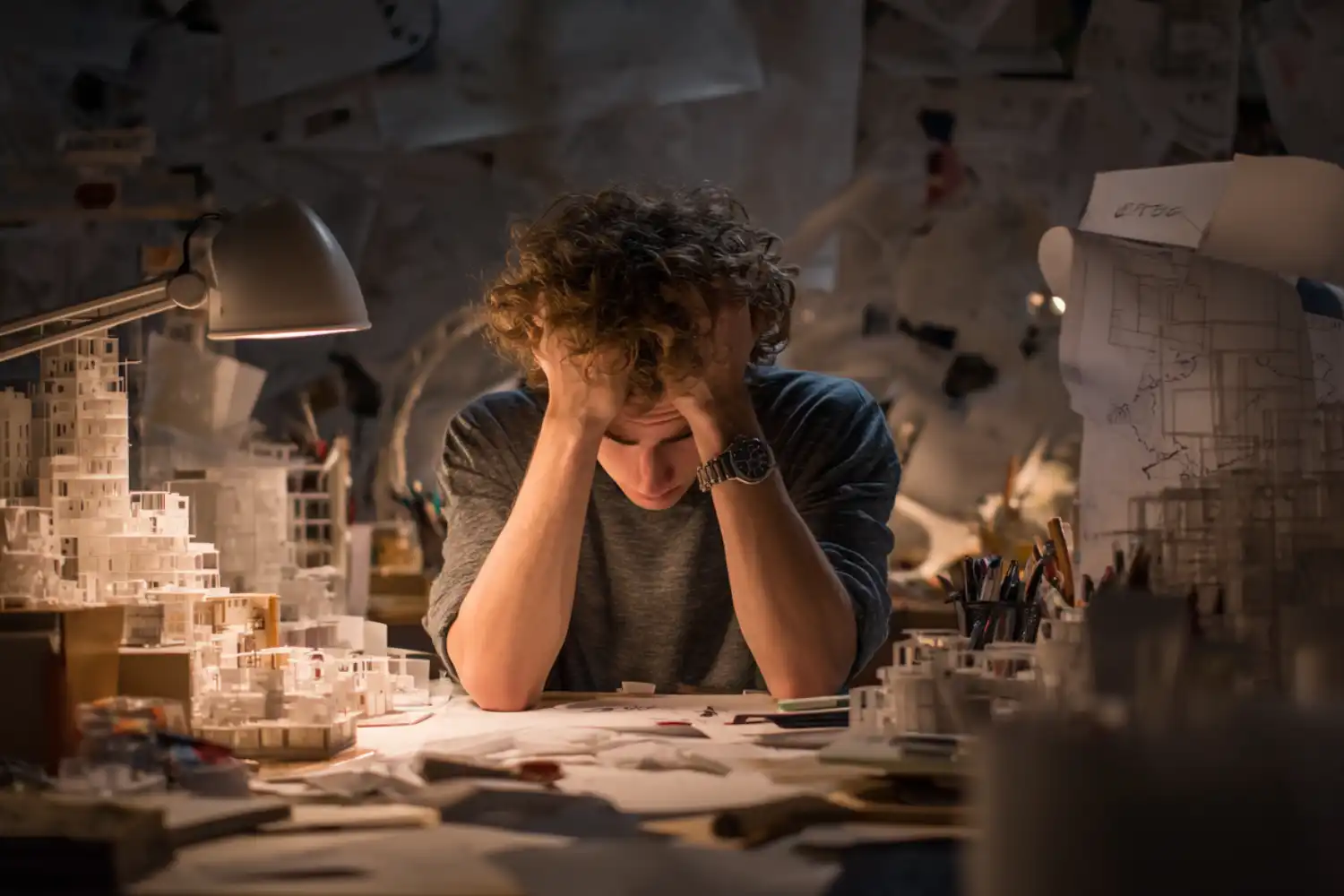
Architectural education sits at a crossroads where creative ambition meets a long-standing culture of overwork, and the cost is showing up in the wellbeing of students. Research now confirms that depression, anxiety, and burnout rates in architecture programs far exceed those of the general college population, and the patterns are structural, not personal. A genuine mental health revolution in architectural education means rethinking studio culture, workload norms, and how we define a successful student.
What Is the State of Mental Health in Architectural Education Today?
The honest answer is that the numbers are alarming and consistent across countries. A 2024 study published in the Building Healthy Academic Communities Journal found that 33% of architecture and landscape architecture students screened positive for moderate to extremely severe depression, 46% for anxiety, and 33% for stress. These figures align with earlier work from the American Institute of Architecture Students (AIAS) and a 2025 systematic review in TPM: Testing, Psychometrics, Methodology in Applied Psychology, which traced burnout directly back to studio culture norms.
The picture becomes harder to ignore when you look at how it sits next to the wider student population. Architecture students report panic attacks at rates roughly 43% higher than the average university student, and a 2016 Architects’ Journal survey of architecture students in England found that 52% were concerned about their mental wellbeing. The challenge for educational architecture today is not whether a problem exists, but whether programs are willing to redesign the conditions that produce it.
🔢 Quick Numbers
- 33% of architecture students screen positive for moderate to severe depression (Building Healthy Academic Communities Journal, 2024)
- 46% screen positive for anxiety in the same study (Building Healthy Academic Communities Journal, 2024)
- Architecture students are 43% more likely to experience panic attacks than the average student (Kirkpatrick, 2018, cited in TPM 2025)
- 86% of architecture students report sometimes or always going without sleep to complete a project (SONA survey, 2018)

How Did Architecture Education Get Here?
Architecture education built its identity around a model that treats long hours and personal sacrifice as proof of dedication. The roots run deep. The Beaux-Arts atelier system, which heavily influenced modern design schools, normalized the idea that a serious student lives in studio. That mythology survived the shift to research universities and still shapes the architecture of education today, from how studio time is scheduled to how final reviews are run.
The pattern is well documented inside the profession. The 2002 AIAS Redesign of Studio Culture report flagged the harm of all-nighters, hyper-competitiveness, and unclear faculty expectations. The 2004 Studio Culture Summit confirmed those concerns. The 2020 AIAS Learning and Teaching Culture Policy Project found that, despite two decades of conversation, the same conditions persisted. A 1991 article by Thomas Fisher, Patterns of Exploitation, even described a student who died in a car crash on the way home to change for a review, an event Fisher attributed to studio-induced sleep deprivation.
⚠️ Common Mistake to Avoid
Treating the all-nighter as a badge of commitment is one of the most damaging habits in architecture education. The research consistently shows that chronic sleep loss reduces working memory, creativity, and decision-making, the exact cognitive skills design depends on. Students working through the night are not producing better design, they are producing more design under worse conditions.
Why Studio Culture Sits at the Center of the Problem
Studio is the heart of architectural education, and that is also why the culture around it carries so much weight. A studio runs 12 to 18 hours of class time per week and absorbs nearly all of a student’s remaining hours through project work. When that schedule is layered on top of structures, history, environmental systems, and electives, the available time for sleep, exercise, friendships, and rest narrows to almost nothing. Burnout grows from this structural squeeze, not from individual weakness.
Workload, Critique, and Comparison
Three pressures stand out in the research. The first is workload itself, often calibrated to what the most extreme students can produce rather than what is sustainable. The second is critique, which can be invaluable when constructive but can also become a public performance where shame and self-doubt are normalized. The third is constant comparison. Studio is a fishbowl. Students see every drawing, every model, every late-night effort their peers produce, which fuels perfectionism and a fear of falling behind that the TPM 2025 review specifically links to elevated burnout risk.
💡 Pro Tip
If you are a student, treat your weekly schedule like a project brief. Block sleep, meals, and one full off-day before you start filling in studio hours. Faculty members who have studied burnout consistently note that students who protect a fixed sleep window perform better at final reviews than those who collapse into all-nighters during crit week.
The Hidden Curriculum
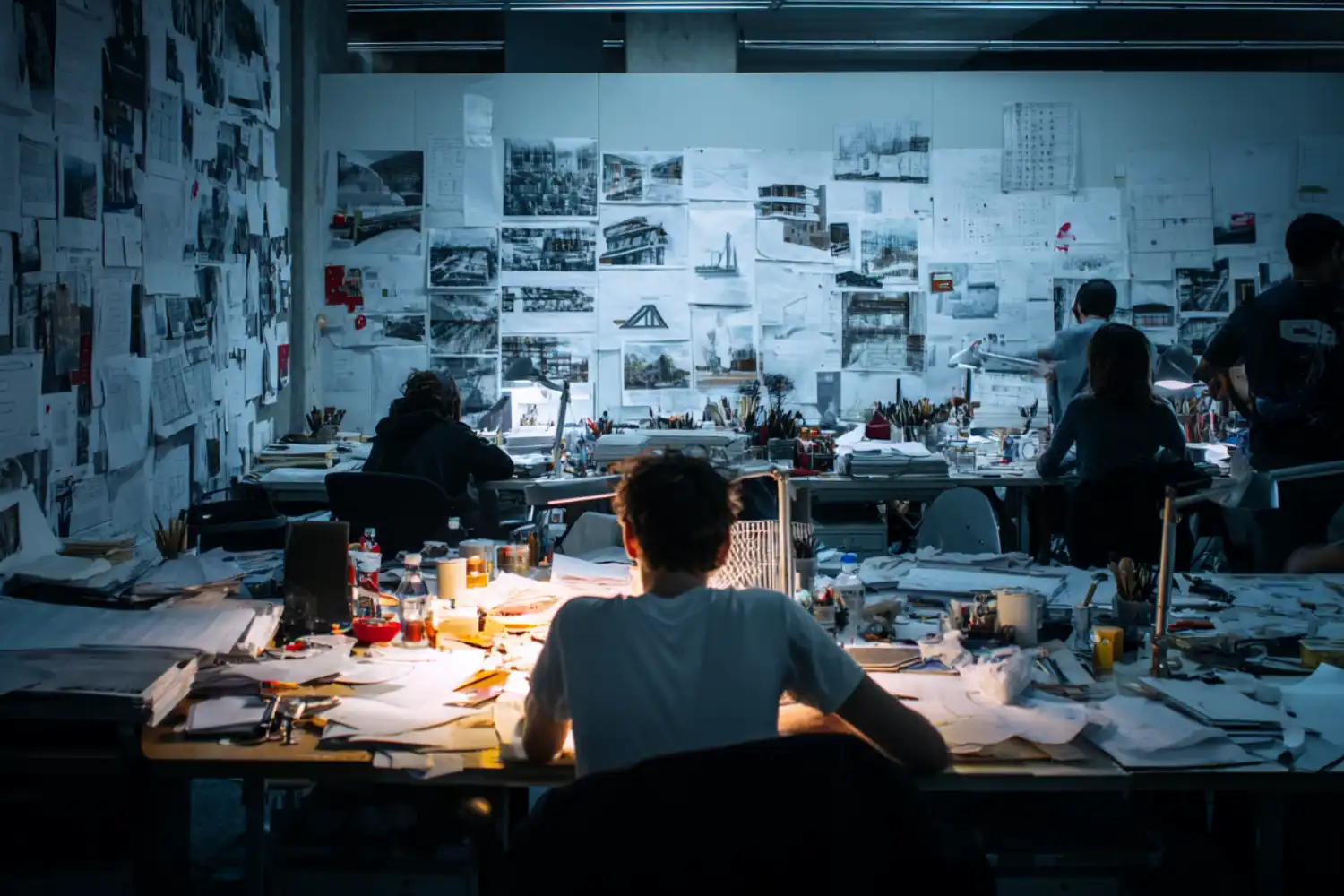
Most of what shapes student behavior in architecture school is not in the syllabus. It is the off-hand comment from a studio critic that pulling all-nighters is a rite of passage, the visible exhaustion of advanced students that newer students learn to imitate, the silent assumption that asking for an extension signals weakness. This hidden curriculum is what makes mental health concerns so persistent. You can rewrite a course outline in a semester. You cannot rewrite an inherited culture that quickly.
What Does the Architecture of Education Look Like When It Goes Wrong?
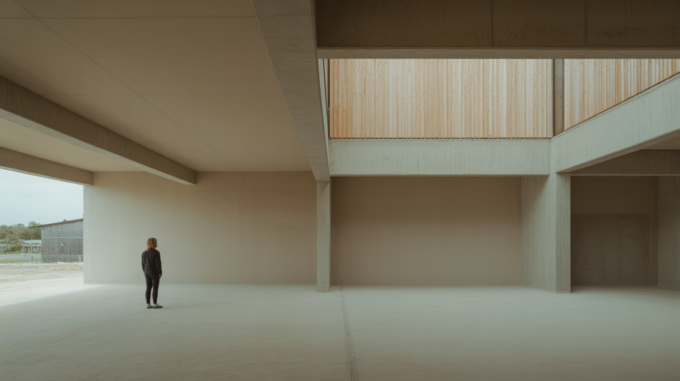
Architecture for education has a physical dimension as well. Studios are often poorly ventilated, harshly lit, isolated from daylight, and arranged so that students sit at the same desk for 12 hours at a stretch. The irony is not subtle. Programs that teach the importance of how architecture affects our wellbeing often house their own students in spaces that ignore those very principles. Daylight, acoustic comfort, and access to outdoor space are not luxuries for design students, they are protective factors for mental health.
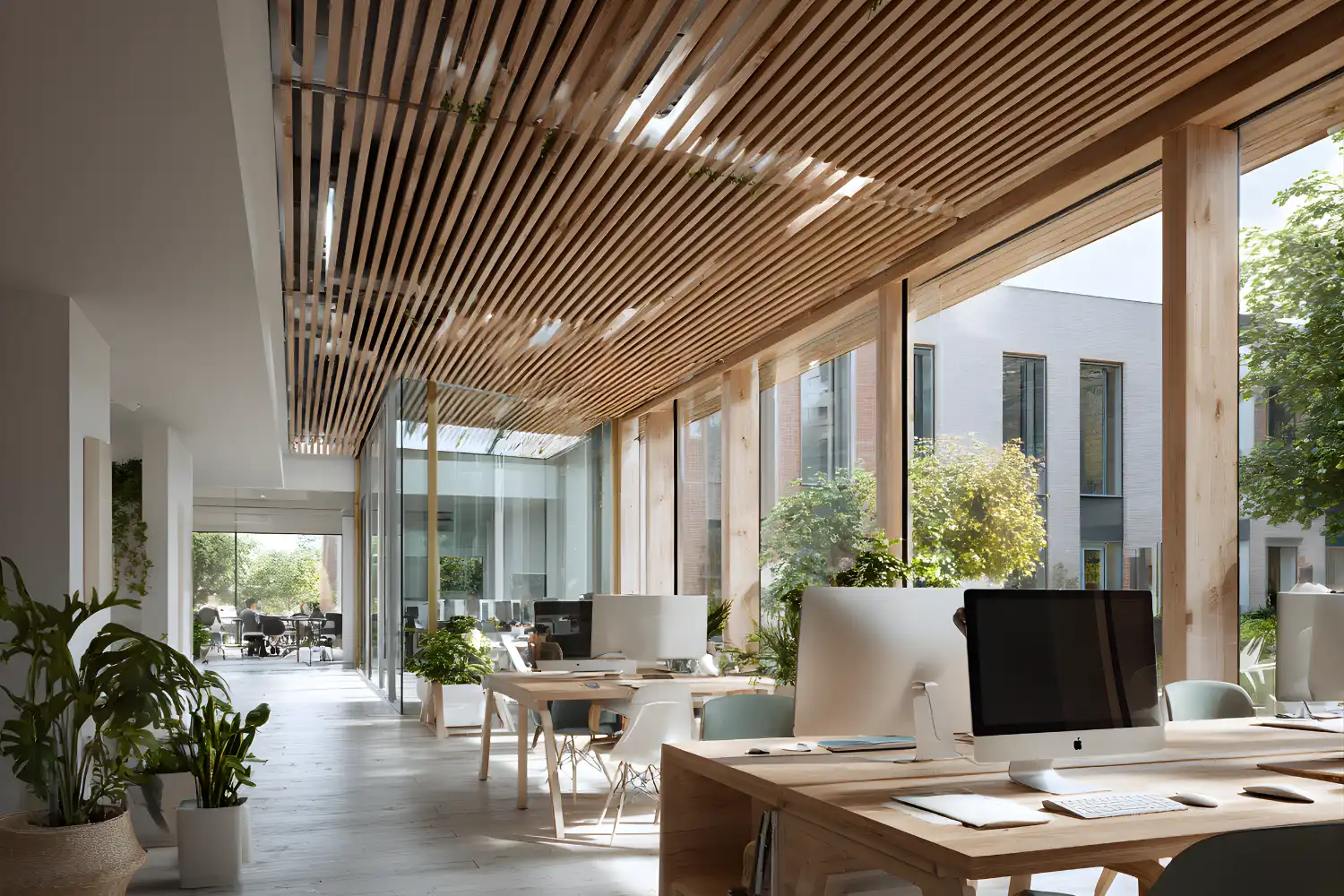
Programs that have begun rethinking studio space report measurable changes in how students experience long workdays. Generous daylighting, quiet zones, places to nap, and access to courtyards or rooftops all reduce the physiological wear of long hours. The research on architectural spaces that promote mental health applies as much to a third-year studio as it does to a hospital wing.
🏗️ Real-World Example
The Bartlett School of Architecture, UCL (London): After a 2021 review prompted by widespread student complaints, the school introduced changes to studio culture, critique formats, and pastoral support, including clearer hand-in policies and a wellbeing tutor system. The case became one of the most public examples in the UK of a top-tier program restructuring around student welfare rather than dismissing the concerns as part of the discipline.
What Would a Mental Health Revolution Look Like?
A real revolution in education for architecture would not be a wellness app or a single workshop on stress management. It would be a structural shift across pedagogy, scheduling, evaluation, and physical space. The TPM 2025 review and the AIAS reports converge on a similar set of changes, all of which can be implemented at the program level.
Rebalance the Workload
Programs need explicit workload policies that match credit hours to realistic time commitments. If a studio is worth six credits, the expected weekly time should be defined and audited, not left to expand into the entire week. Some schools now publish maximum-hours guidance for studio assignments, and faculty are asked to align deliverables to those limits.
Redesign the Critique
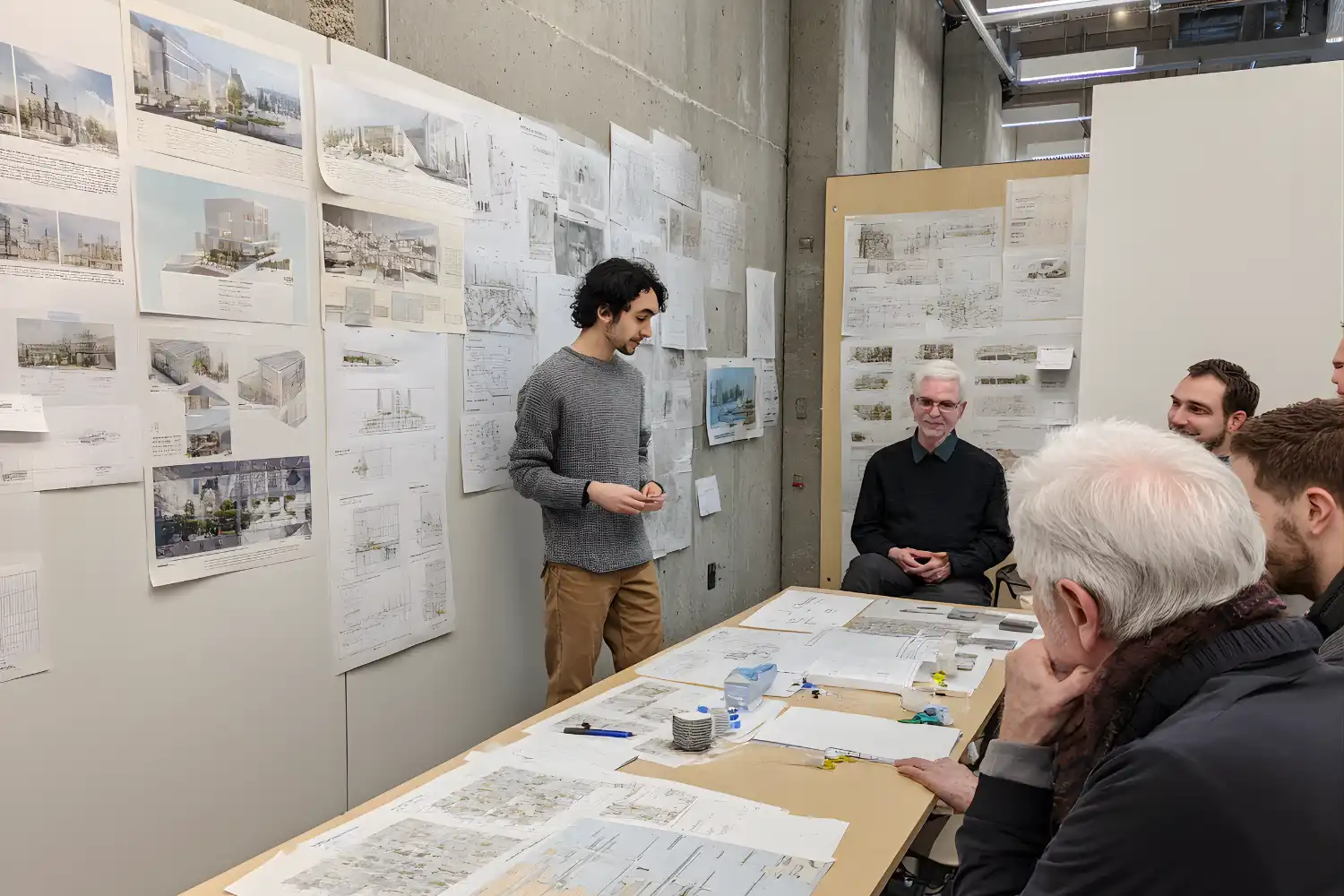
Critique is the engine of design learning, but its format can be improved without losing rigor. Smaller review panels, written feedback alongside verbal comments, and ground rules that focus on the work rather than the student all reduce the public-shame dynamic. Critics, including guest critics, benefit from a brief orientation on constructive critique practices before they enter the room.
Build Sleep and Rest Into the System
Hard policies matter more than soft encouragement. Some programs now lock studio buildings overnight, ban all-nighters before reviews, and schedule recovery days after major hand-ins. These policies signal that rest is part of the curriculum, not a private indulgence. The 2018 RIBA Education Statistics linked overnight work directly to mental distress, which makes overnight access policy one of the simplest, highest-impact changes a school can make.
Make Mental Health Support Visible and Easy to Use
Counseling services exist at most universities, but architecture students often do not use them because of the time cost and the stigma. Embedded wellbeing tutors, drop-in hours inside studio buildings, and faculty trained to refer students appropriately all reduce the friction. Resources from the American Institute of Architecture Students and the AIA provide a starting point for programs designing these support systems.
🎓 Expert Insight
“Burnout is the absence of growth. It robs us of our ability to thrive.”
Dr. Akua Boateng, Licensed Psychotherapist
Boateng made this point during an AIA webinar on mental health in architecture. The framing matters because it reframes burnout as a productivity problem as well as a wellbeing problem, which is often what gets a school’s leadership to act.
How Can Students Protect Themselves While the System Changes?
Cultural change is slow, and students cannot afford to wait for it. There are a number of habits that the literature consistently identifies as protective. None of them require a school-wide policy change.
Set a Sleep Floor and Defend It
A consistent six-to-seven-hour sleep window is the single best return on time. Cognitive performance, creativity, and mood all degrade sharply below that, which means the work produced after midnight is usually worse than work that would have been produced after a full sleep cycle.
Plan Backwards From Hand-In Dates
Most studio crises are scheduling crises, not skill crises. Working backwards from each hand-in date, blocking print and assembly time, and treating the final 24 hours as buffer rather than production time prevents the all-nighter spiral that the TPM 2025 review identifies as a primary burnout driver.
Build a Life Outside the Studio
Friendships, exercise, and unstructured time are not breaks from architecture school, they are inputs into it. Students who maintain those connections perform better in long-term measures of wellbeing and creativity, and they are more likely to stay in the profession after graduation.
💡 Pro Tip
When a project starts to spiral, list every deliverable on one page, mark each with a realistic time estimate, and cut the bottom 20% of the list before you do anything else. Experienced studio coordinators consistently observe that the students who finish reviews with the strongest work are the ones who scope down early, not the ones who try to produce everything.
What Should Educators and Schools Do Next?
The shift from awareness to action is where most programs stall. Awareness is widespread, the data is published, and the AIAS, AIA, and RIBA have all issued statements. Translating that into a different daily experience for students requires program-level commitments. Faculty workload models, hiring criteria that include teaching practice rather than studio output alone, and clear escalation paths for students in distress all sit firmly within a school’s control.
Architectural education has been remarkably effective at shaping the design culture of an entire profession. That same capacity can be turned toward shaping a healthier culture. The question is not whether reform is possible but whether enough programs will move at once to make the change feel like a baseline rather than an exception.
✅ Key Takeaways
- Mental health concerns in architectural education are structural, not individual, and the data shows depression, anxiety, and burnout rates far above the general student population.
- Studio culture norms, especially the all-nighter, perfectionist comparison, and high-stakes critique, are the central drivers of burnout identified in peer-reviewed research.
- The architecture of education itself, including studio space, lighting, and access to rest areas, contributes to or eases student wellbeing.
- Reforms that work include explicit workload policies, redesigned critique formats, overnight access limits, and embedded wellbeing support.
- Students benefit from defending a sleep floor, planning backwards from deadlines, and protecting time outside the studio while wider cultural change continues.
Final Thoughts
Architectural education shapes how a profession thinks, works, and treats its own people. A program that produces excellent designers but exhausted, anxious graduates is not delivering on its real responsibility. A mental health revolution in architecture education is less about new buildings or new technology and more about new defaults, the assumption that rest is part of design, that critique can be sharp without being cruel, and that the wellbeing of the next generation of architects is itself a design problem worth solving.








Leave a comment