


Table of Contents Show
An architecture thesis portfolio is a focused collection of your thesis research, design process, and final output, structured to show reviewers exactly how you think, design, and solve problems. It differs from a general student portfolio because every page serves a single, sustained argument.
Your thesis is likely the most complex project you will complete during your architecture education. It represents months (sometimes years) of research, iteration, and critical thinking condensed into a single body of work. But the project itself is only half the story. How you present that work in your thesis portfolio architecture document determines whether reviewers see a scattered collection of drawings or a clear, compelling design narrative. This guide breaks down the process into practical steps you can follow right now, whether you are weeks from your final review or just starting to think about how your thesis will live beyond the studio.
Why Your Thesis Deserves Its Own Portfolio Section
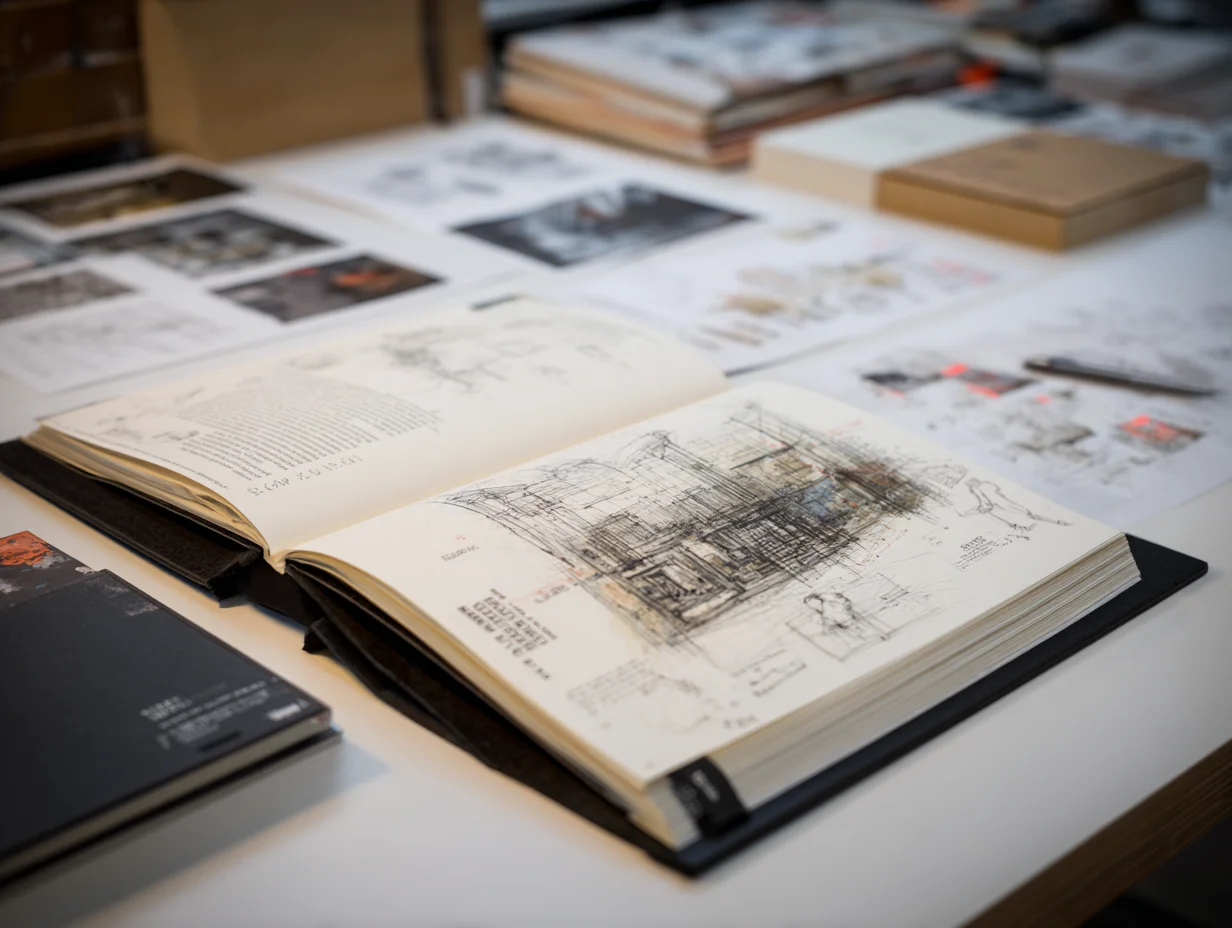

A thesis project is different from a studio assignment. Studio projects often respond to a brief handed down by a professor. A thesis, by contrast, starts with a question you chose, a site you selected, and a methodology you developed on your own. That independence is exactly what hiring managers and admissions panels want to see. Reviewers often spend the most time on thesis or capstone projects because they reveal a candidate’s ability to work independently and sustain a complex argument over time.
Placing your thesis as a standalone section (rather than burying it among other projects) signals confidence. It tells the reviewer: this is my best thinking, and I want you to spend time with it. If your architecture portfolio contains four to six projects, your thesis should occupy the most pages and appear first or second in the sequence.
💡 Pro Tip
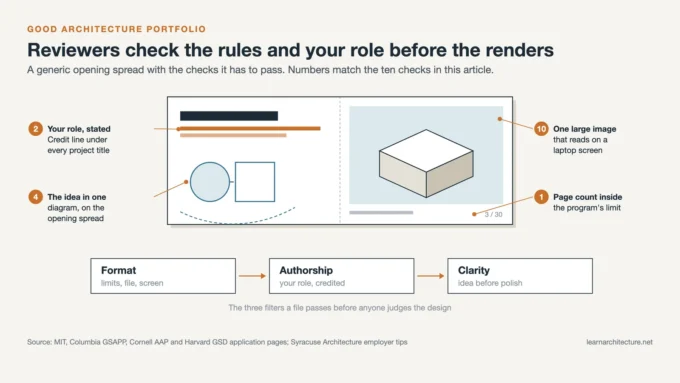
Dedicate roughly five or six spreads (10 to 12 pages) to your thesis in a 30-page portfolio, in line with the 30 to 40 percent rule. An underdeveloped thesis section tends to raise more red flags than a missing studio project. If a project took you a year to complete, it should feel substantial on the page.
What to Include in an Architecture Thesis Portfolio
The content of your architectural thesis portfolio should mirror the actual design process you followed, not just the final product. Reviewers want to understand how you arrived at your conclusions, not only what those conclusions look like as rendered images. Here is a practical breakdown of the essential components.


Thesis Statement and Research Framework
Open your thesis section with a concise written statement (two to four sentences) that defines the question your project addresses. Follow it with a visual summary of your research: precedent studies, site analysis maps, data you collected, or theoretical frameworks you referenced. This opening sequence sets the intellectual tone for everything that follows. A clear thesis statement separates a design exercise from a genuine thesis for architecture, and reviewers notice the difference immediately.
Site Analysis and Context
Show your site through multiple lenses. A location map alone is not enough. Include climate data, circulation patterns, demographic information, figure-ground studies, or any other analysis that directly informed your design decisions. The key word is “directly.” If a piece of analysis did not change your design, consider cutting it. For guidance on producing strong analytical drawings, the guide on architectural concept diagrams covers useful techniques.
Design Development and Iteration
This is where many architecture student thesis portfolio documents fall short. Students often jump from early sketches to final renders, skipping the messy middle. Include at least two to three iterations that show how your design changed and why. Annotate these pages briefly: “Moved the main entry to the south facade after wind analysis showed prevailing gusts from the north” is far more informative than a caption that simply says “Design Development.”
Technical Drawings and Details
Plans, sections, elevations, and construction details prove that your project is more than a concept. Even if your thesis leans toward the theoretical, including at least one wall section or structural detail shows you understand how buildings get built. This is especially important if you are applying to firms that value technical rigor.
Final Renders and Physical Models
High-quality renders and model photographs form the visual anchor of your thesis architecture portfolio. Limit yourself to three to five strong images rather than fifteen mediocre ones. If you built physical models, photograph them against a clean background with even, directional lighting. For more on selecting and presenting project images, see the guide on best projects for an architecture student portfolio.
⚠️ Common Mistake to Avoid
Many students fill their thesis portfolio with every drawing they produced during the project. This creates visual noise and buries your strongest work. A portfolio is an edited argument, not a project archive. If a drawing does not advance the story you are telling, leave it out. Reviewers at most firms spend 10 to 15 minutes on an entire portfolio, so every page needs to earn its place.
How to Structure the Layout of Your Thesis Portfolio
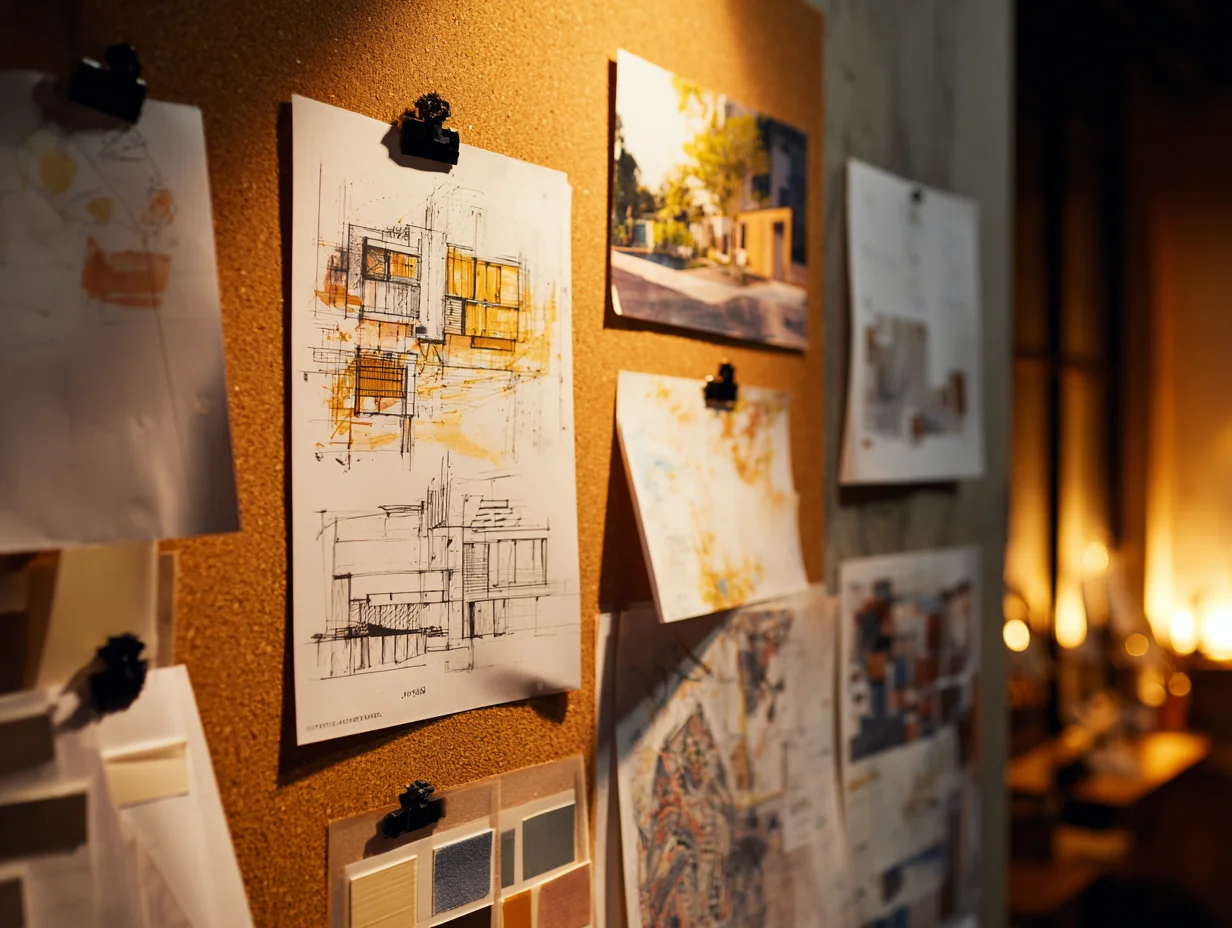

Layout is itself a design project. The structure of your pages should guide a reviewer through your thesis in a logical sequence, from the problem to the process to the resolution. A scattered layout undermines even excellent work.
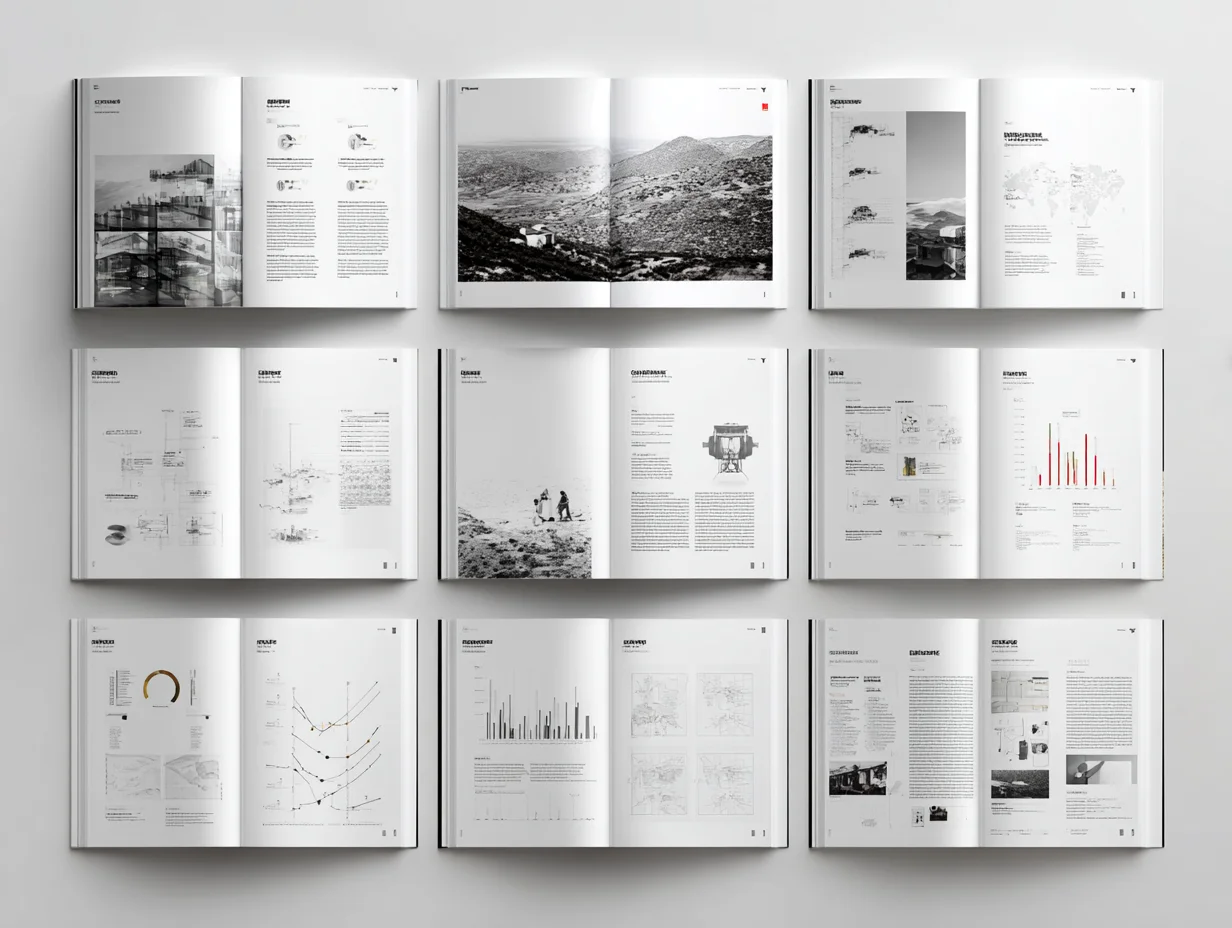
Start with a consistent grid. A 12-column grid in Adobe InDesign or a similar layout tool gives you enough flexibility to handle drawings, text blocks, and full-bleed images without losing visual coherence. Choose two typefaces maximum: one for headings, one for body text. Keep font sizes consistent across all thesis spreads, and carry the same margins and gutters throughout.
Sequence your content like a story. Open with the thesis question and research context, move through site analysis and early concepts, then show design development, and close with final drawings and images. This mirrors the way you actually worked, and it gives the reviewer a narrative to follow rather than a random collection of pages.
White space is not wasted space. Resist the urge to fill every corner of every page. A single, well-placed section drawing with a brief annotation will always communicate more than a page crammed with six small images and overlapping text. For additional layout strategies, the article on architecture portfolio tips covers grid systems and visual hierarchy in detail.
🎓 Expert Insight
A portfolio should read like a well-edited film, not a data dump. Every spread should make the viewer want to turn the page.
This advice applies doubly to thesis sections. Because your thesis is the longest single project in the portfolio, pacing becomes critical. Vary the rhythm between full-bleed images, analytical drawings, and text-heavy pages to keep the reader engaged.
Writing a Strong Thesis Narrative for Your Portfolio
Drawings alone do not tell a complete story. Your thesis portfolio architecture presentation needs concise, well-written text that connects your research question to your design decisions. This does not mean writing an essay on every page. It means using short, purposeful captions and a one-paragraph project statement that frames the entire section.
Your project statement should answer three questions in roughly 80 to 120 words: What problem did you address? What approach did you take? What did you find or propose? Avoid abstract language. Be specific. “This project proposes a modular timber housing system for flood-prone communities in coastal Bangladesh, using elevated platform construction informed by vernacular building traditions” is concrete and clear. Compare that with “This project addresses issues of housing and resilience through an interdisciplinary approach,” which tells the reviewer almost nothing.
Captions on individual pages should be even shorter. One to two sentences per drawing or image is enough. The caption’s job is to tell the viewer what they are looking at and why it matters in the context of your thesis. If you need more context on writing about architecture, the guide to writing architectural essays offers useful frameworks.
Presentation Format: Digital, Print, or Both?
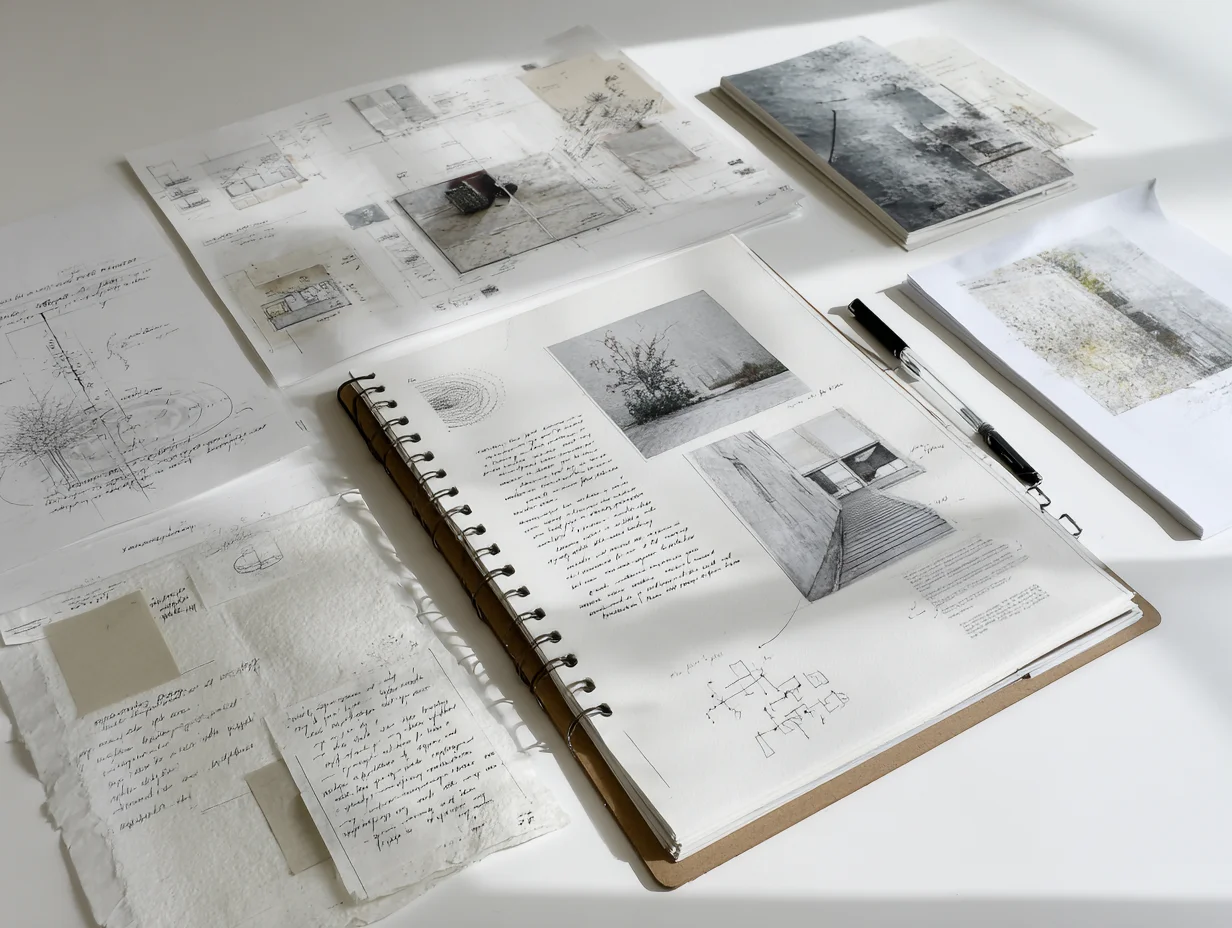
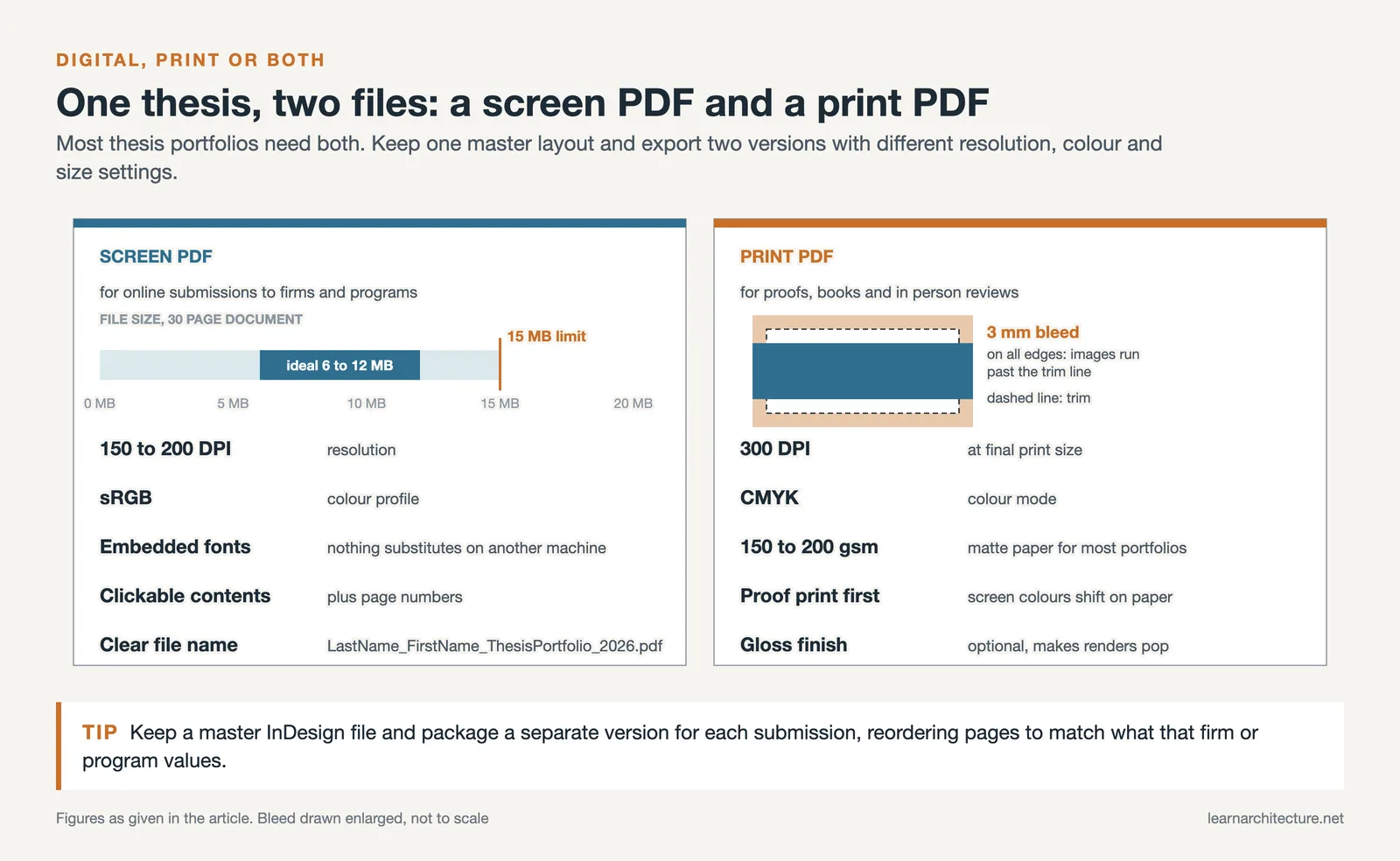
Most thesis about architecture will need to exist in at least two formats: a digital PDF for online submissions and a physical book or board for in-person reviews. Each format has specific requirements.
For digital portfolios, export your PDF at 150 to 200 DPI with sRGB color profile. Keep the file size under 15 MB (ideally 6 to 12 MB for a 30-page document). Use embedded fonts, add a clickable table of contents, and include page numbers. Name the file clearly: LastName_FirstName_ThesisPortfolio_2026.pdf. Firms and programs receive hundreds of submissions, and a clearly named, well-organized file stands out before it is even opened.
For print, switch to CMYK color mode and set your resolution to 300 DPI. Add 3 mm bleed on all edges. Test a proof print before committing to a full run, because colors that look vivid on screen often shift on paper. Matte paper at 150 to 200 gsm works well for most architectural portfolios, though gloss finishes can make renders pop. The architecture portfolio printing guide covers paper selection and binding options in more depth.
💡 Pro Tip
Keep a master InDesign file and create separate “packaged” versions for each submission. Tailoring your thesis presentation to a specific firm or program (reordering pages, adjusting the project statement to match their focus areas) takes 30 minutes and dramatically increases your chances of making it past the initial screening round.
Thesis Ideas for Architecture: Picking a Topic That Photographs Well


Not every thesis topic translates equally well into a portfolio format. Some thesis ideas for architecture produce rich visual material naturally (large-scale urban interventions, adaptive reuse projects with strong before-and-after potential, or material-driven investigations), while others are more text-heavy or data-driven. This does not mean you should choose your topic based on how it will look in a portfolio, but you should think about visual communication from the start.
If your thesis leans toward the theoretical or policy-oriented, plan your visual strategy early. Custom diagrams, infographics, and data visualizations can make abstract research tangible and visually engaging. Firms like BIG (Bjarke Ingels Group) have demonstrated that even complex urban data can be turned into clear, compelling graphics. For students working on sustainability-focused theses, organizations like the U.S. Green Building Council (USGBC) publish data and case studies that can inform both your research and your visual presentations.
📌 Did You Know?
Many reviewers weigh a thesis more heavily than studio work when evaluating entry-level candidates. The reason: a thesis demonstrates the ability to formulate a question, sustain independent research, and resolve a design problem without step-by-step guidance from an instructor.
Video: Architecture Thesis Portfolio Flip-Through and Tips
This video by Surviving Architecture walks through a complete master’s thesis portfolio page by page, covering layout decisions, InDesign file structure, and exhibition panel design.
Common Questions About Architecture Thesis Portfolios
How many pages should a thesis section be in a portfolio?
A thesis section typically runs between 8 and 16 pages within a 24 to 40 page portfolio. If a program or firm specifies a page limit, allocate roughly 30 to 40 percent of your total pages to the thesis. This gives enough room to show research, process, and final output without overwhelming the rest of the portfolio.
Should I include my full thesis document in my portfolio?
No. Your portfolio is not the same as your thesis book. A portfolio version should be a distilled, visually edited selection of the strongest work from your thesis. If a reviewer wants to see the full document, include a link or QR code on the portfolio page that directs them to an online version. The architecture thesis guide covers how to structure the full document separately.
What software is best for laying out a thesis portfolio?
Adobe InDesign remains the industry standard for portfolio layout. It handles typography, image placement, and multi-page documents with precision that other tools cannot match. Figma is a solid alternative for collaborative workflows, and Affinity Publisher offers similar features at a lower cost. For students on a budget, Canva’s free tier works for simple layouts, but it lacks the fine control over bleeds, grids, and CMYK output that professional submissions require. You can find additional layout inspiration in the guide on top architecture portfolio examples.
How do I tailor my thesis portfolio for different audiences?
Create a master file and spin variants. For a firm that values technical production, lead with construction details and annotated plan sets. For a research-focused graduate program, foreground your methodology and analytical diagrams. For a design-forward studio, prioritize concept models and atmospheric renders. Changing the sequence and emphasis takes less time than rebuilding from scratch, and it shows the reviewer that you understand their priorities. The internship portfolio guide explains this tailoring process in more detail.
Can I use my thesis portfolio for graduate school applications and job applications?
Yes, but recognize that the emphasis should shift. Graduate programs look for intellectual curiosity, a clear research question, and evidence that you can sustain independent work. Firms look for design ability, technical skill, and communication clarity. Your thesis content stays the same; the framing, sequence, and supporting text change depending on the audience. Keep two or three versions of your project statement on hand so you can swap them quickly. For more on presentation strategies, review how board layouts can adapt to different contexts.
✅ Key Takeaways
- Your architecture thesis portfolio should function as a standalone narrative, not a project archive. Edit ruthlessly and keep only the work that advances your design argument.
- Structure your layout to mirror the actual design process: research question, site analysis, design development, technical resolution, and final output.
- Write concise, specific text. A strong 80 to 120 word project statement is more valuable than a full page of abstract language.
- Prepare both digital (PDF, 150 to 200 DPI, sRGB) and print (300 DPI, CMYK, 3 mm bleed) versions, and tailor each submission to the specific audience.
- Dedicate 30 to 40 percent of your total portfolio pages to your thesis, and place it first or second in the project sequence to signal confidence in your strongest work.










Leave a comment