


Table of Contents Show
Design for biocompatibility is an approach to architecture that treats the building as an extension of its occupants’ biology, selecting materials, systems, and spatial strategies that actively support human health rather than merely avoiding harm. The concept draws from the broader meaning of biocompatibility in materials science, where a substance must function alongside living tissue without causing adverse reactions, and applies it at the scale of entire structures.
Buildings account for roughly 90% of the time most people spend indoors, according to the U.S. Environmental Protection Agency. That statistic alone makes the relationship between built space and human physiology impossible to ignore. Biocompatible design in modern architecture responds to this reality by prioritizing non-toxic materials, clean indoor air, natural light cycles, and thermal comfort tuned to the body’s needs. The ten projects below show how architects around the world are putting these ideas into practice.
What Is Biocompatibility in Architecture?
The definition of biocompatibility originates in medicine and materials science: a biocompatible substance can exist in contact with living tissue without triggering toxicity, immune rejection, or degradation. When architects borrow this term, they extend it from a single implant to an entire built environment. A biocompatible building is one whose materials, air quality, acoustics, lighting, and spatial proportions work with human biology rather than against it.
This concept overlaps with but is distinct from green building or sustainable design. A highly energy-efficient structure can still off-gas volatile organic compounds (VOCs), lack daylight, or create acoustic stress. Eco-friendly materials and design strategies form one pillar of biocompatibility, but the framework also includes indoor environmental quality, circadian-appropriate lighting, and spatial configurations that reduce psychological strain.
The WELL Building Standard, managed by the International WELL Building Institute (IWBI), formalized much of this thinking into a measurable certification system. WELL v2 evaluates buildings across ten concepts: Air, Water, Nourishment, Light, Movement, Thermal Comfort, Sound, Materials, Mind, and Community. Each concept is backed by peer-reviewed research linking specific building conditions to health outcomes.
⚠️ Common Mistake to Avoid
Many people assume “biocompatible” and “sustainable” mean the same thing in architecture. They do not. A building can achieve high energy efficiency ratings while still containing materials that off-gas formaldehyde or using fluorescent lighting that disrupts circadian rhythms. Biocompatibility focuses specifically on how a building interacts with the human body, while sustainability addresses broader environmental impact. The best projects aim for both.
How Biocompatible Materials Shape Healthier Buildings
Biocompatible materials are products selected or engineered to coexist with human occupants without releasing harmful chemicals, generating static charge, or degrading indoor air quality. Common examples include clay plaster, lime render, untreated solid wood, natural stone, wool insulation, hempcrete, and low-VOC finishes. These materials share a few characteristics: they regulate humidity by absorbing and releasing moisture, they do not off-gas toxic compounds at room temperature, and they age predictably without shedding micro-particles.
The German discipline of Baubiologie (building biology), developed in the 1960s, established many of the earliest testing protocols for evaluating how construction products affect indoor environments. Baubiologie practitioners measure electromagnetic fields, static charge, VOC concentrations, and surface temperature to determine whether a space supports or undermines occupant health. While the field remains niche, its influence can be traced through the materials concepts embedded in modern standards like WELL and the Living Building Challenge’s Red List of prohibited chemicals.
Choosing sustainable materials is a starting point, but biocompatible selection goes further by evaluating each product’s interaction with indoor air chemistry, humidity cycles, and even the electromagnetic environment of the occupied space.
💡 Pro Tip
When specifying interior finishes for a biocompatible project, request Health Product Declarations (HPDs) or Declare labels from manufacturers before approving any product. These third-party disclosures list every chemical ingredient above 100 ppm, making it far easier to screen out hidden hazards like phthalate plasticizers or antimony-based flame retardants that standard spec sheets omit.
10 Examples of Biocompatible Design in Modern Architecture
The following projects demonstrate how architects apply biocompatible principles across different climates, building types, and budgets. Each one treats occupant health as a primary design driver, not a secondary benefit.
1. Bullitt Center (Seattle, USA, 2013)
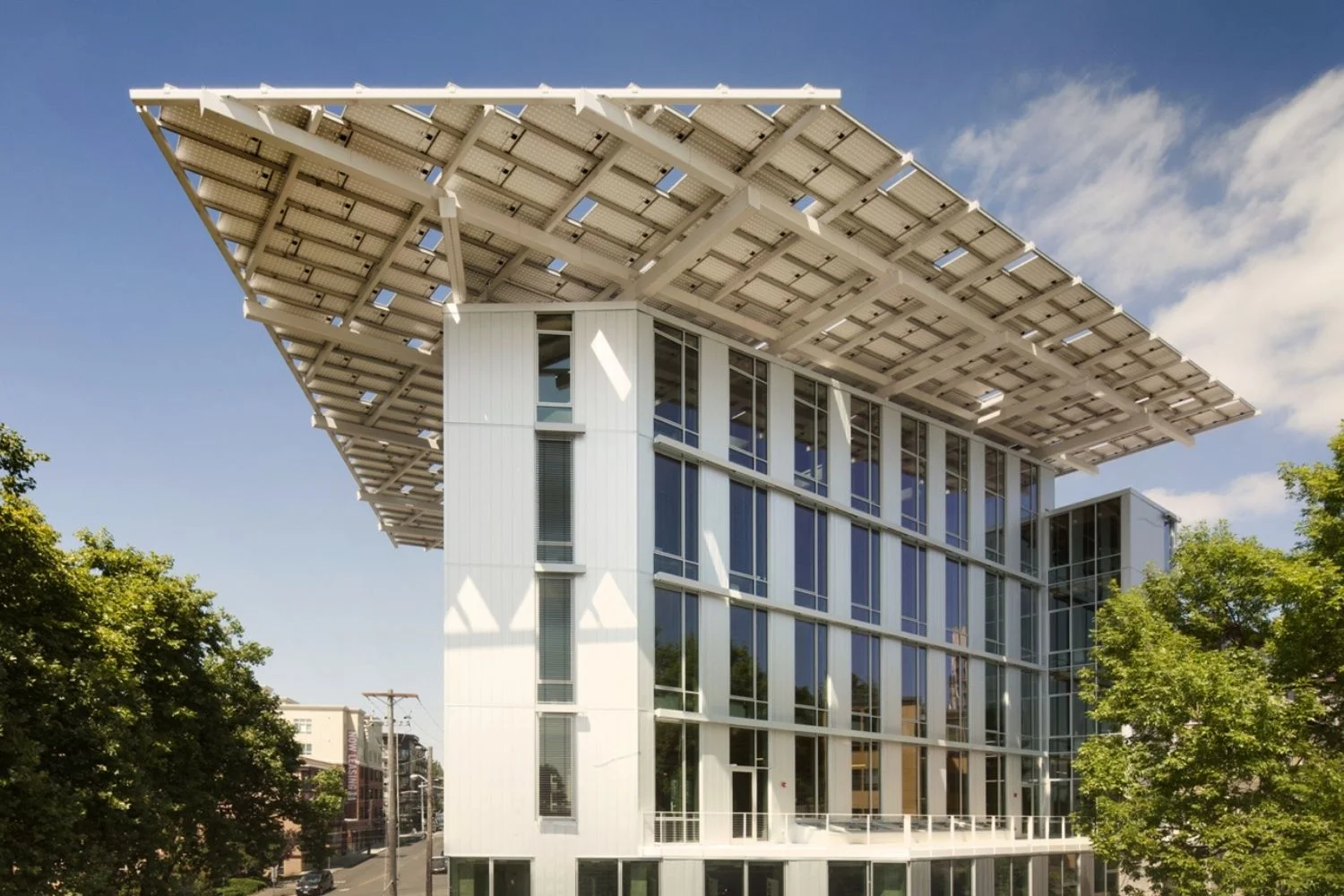
Designed by Miller Hull Partnership, the Bullitt Center is a six-story commercial office building that meets the Living Building Challenge. Its relevance to biocompatibility lies in its strict materials vetting process: every product used in construction was screened against a “Red List” of 362 toxic chemicals commonly found in building products. Items containing PVC, formaldehyde-added wood products, and halogenated flame retardants were rejected outright. The building also uses operable windows, an “irresistible stairway” flooded with daylight to discourage elevator use, and composting toilets that eliminate waterborne chemical treatment. The result is measurably cleaner indoor air and a space that encourages physical movement throughout the day.
2. Bosco Verticale (Milan, Italy, 2014)
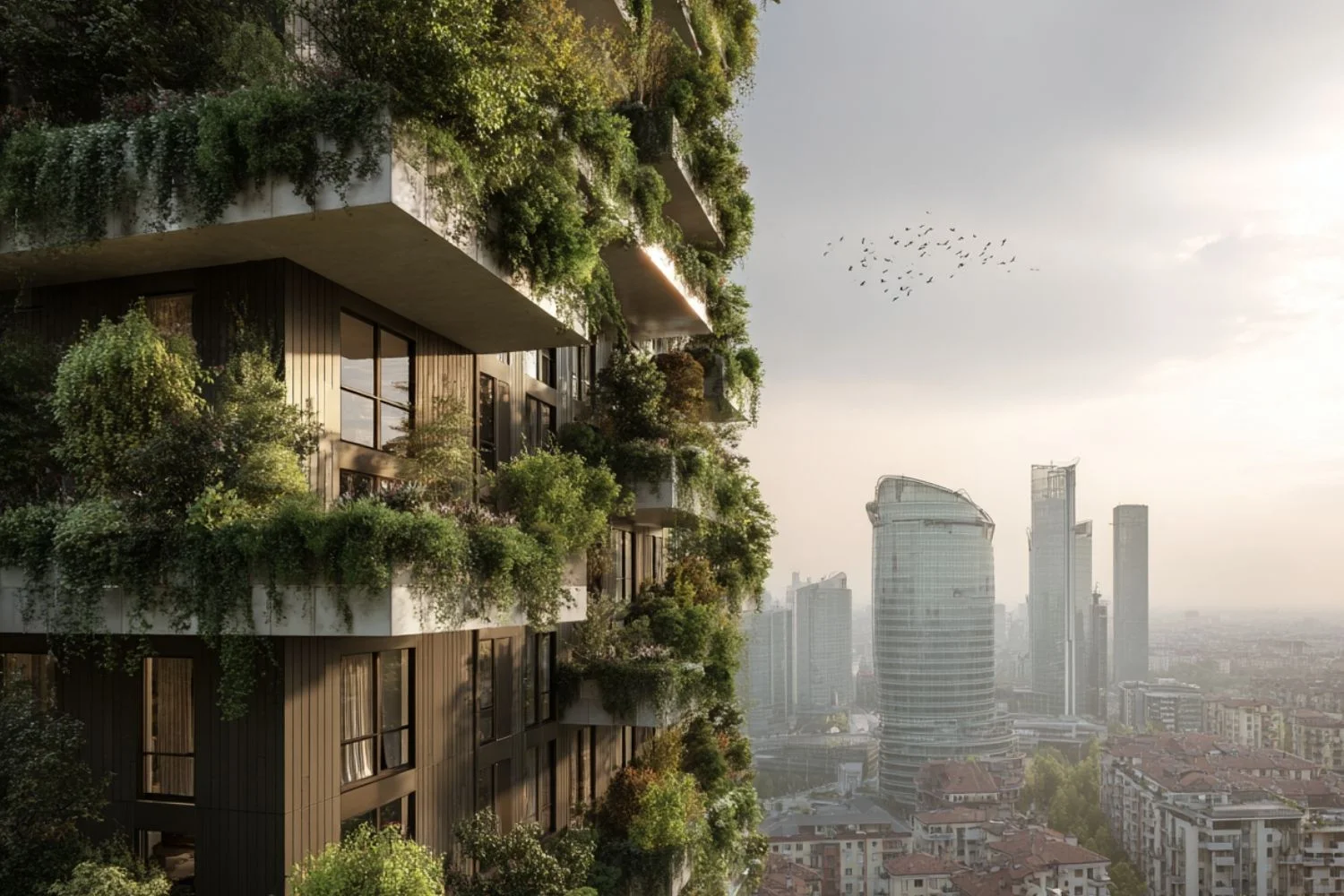
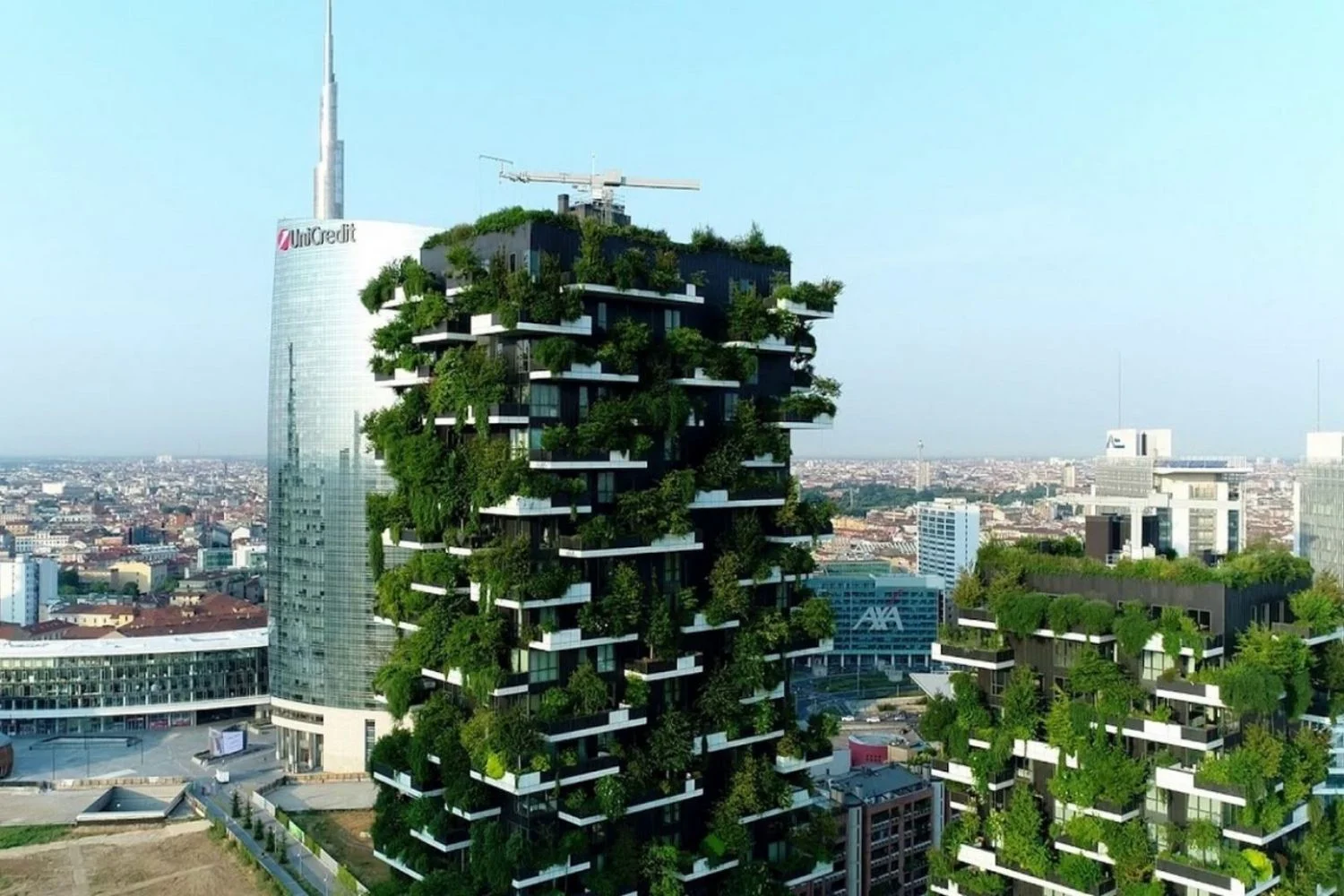
Stefano Boeri Architetti’s twin residential towers host over 900 trees and approximately 20,000 shrubs and ground-cover plants on their balconied facades. The vegetation acts as a biological air filter: leaves absorb particulate matter and CO2 while releasing oxygen directly into the apartments. The planting also provides seasonal thermal regulation, shading interiors in summer and allowing solar gain in winter when deciduous species drop their leaves. Residents live inside what is effectively a vertical woodland, surrounded by natural textures, seasonal color changes, and the sounds of birds attracted to the canopy. The project has become a reference point for green architecture worldwide.
3. Maggie’s Centre Leeds (Leeds, UK, 2020)
Designed by Heatherwick Studio, this cancer care support center was built specifically to promote psychological and physical comfort for patients undergoing treatment. The building is clad in timber planks and organized around planted courtyards that bring daylight and views of greenery into every room. Interior materials are warm, tactile, and free of institutional finishes: solid wood, plaster, and natural fabrics replace the vinyl, fluorescent-lit surfaces typical of healthcare settings. Research consistently links such architecture and well-being strategies to measurable reductions in patient stress hormones and improved recovery outcomes.
4. EDGE Olympic (Amsterdam, Netherlands, 2023)
This office building by EDGE Technologies earned both BREEAM Outstanding and WELL Platinum certifications. Sensors throughout the structure monitor CO2, temperature, humidity, and light levels in real time, adjusting HVAC and lighting systems to maintain conditions within ranges optimized for human cognitive performance. The fit-out avoids Red List chemicals, uses low-VOC paints and adhesives, and incorporates biophilic elements including living walls and natural timber. Circadian lighting systems shift color temperature throughout the day, mimicking natural light cycles to support occupants’ sleep-wake rhythms.
5. Fjordenhus (Vejle, Denmark, 2018)
Olafur Eliasson’s Studio Other Spaces designed this headquarters building using hand-laid brick with rounded, organic forms that break away from the rectilinear grid of conventional office design. The curving walls create varied spatial experiences, with sight lines that open to the surrounding fjord. Natural light enters through elliptical openings, and water from the harbor flows through the ground floor, keeping the building thermally connected to its environment. The material palette is deliberately simple: brick, glass, and steel with minimal synthetic finishes. The building demonstrates that biocompatible design does not require high-tech interventions; sometimes it means stripping away the industrial layers that separate occupants from natural phenomena.
🎓 Expert Insight
“We shape our buildings, and afterwards our buildings shape us.” — Winston Churchill, Address to the House of Lords, 1943
While Churchill was speaking about Parliament’s chamber, his observation captures a foundational premise of biocompatible design: the physical characteristics of a space actively influence the behavior, health, and mood of everyone inside it. Architects working on biocompatible projects treat this relationship as a measurable design parameter, not a metaphor.
6. Kendeda Building for Innovative Sustainable Design (Atlanta, USA, 2019)
Located at Georgia Institute of Technology and designed by The Miller Hull Partnership and Lord Aeck Sargent, this project achieved Living Building Challenge certification. Like the Bullitt Center, every material was vetted against the Red List, but the Kendeda Building also introduced mass timber construction using cross-laminated timber (CLT) sourced from responsibly managed forests. CLT provides a warm, natural interior surface that regulates humidity, absorbs sound, and reduces the concrete-and-steel aesthetic that dominates institutional buildings. The structure also includes a rooftop apiary, edible gardens, and a rainwater-to-potable-water system. For readers interested in how biomimicry in architecture intersects with health-focused design, the Kendeda Building is a practical case study.
7. The Alnatura Campus (Darmstadt, Germany, 2019)
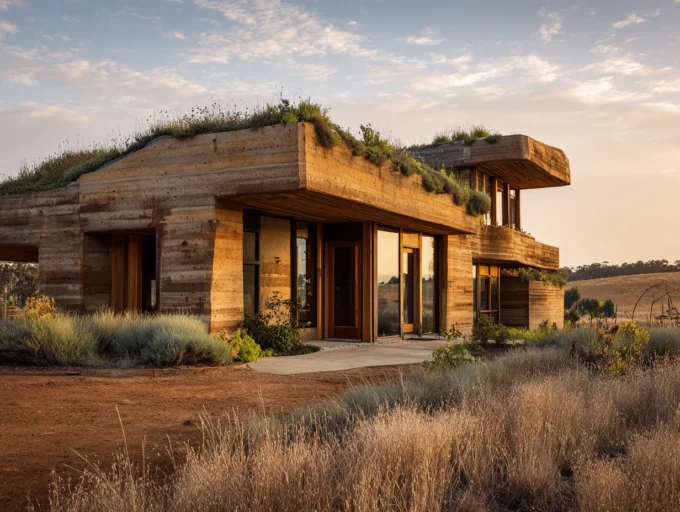
Haas Cook Zemmrich Studio 2050 designed this organic food company headquarters using rammed earth walls that stretch over 130 meters long and stand as the largest rammed earth facade in Europe. The earthen walls regulate indoor humidity within a narrow comfort range without mechanical systems, absorbing moisture when the air is humid and releasing it when the air is dry. No synthetic paints, coatings, or sealants were applied to the earth surfaces. The campus also uses natural ventilation, timber structural elements, and photovoltaic shading canopies. The Alnatura project shows that rammed earth construction can serve both sustainability and biocompatibility goals simultaneously at commercial scale.
8. Khoo Teck Puat Hospital (Singapore, 2010)
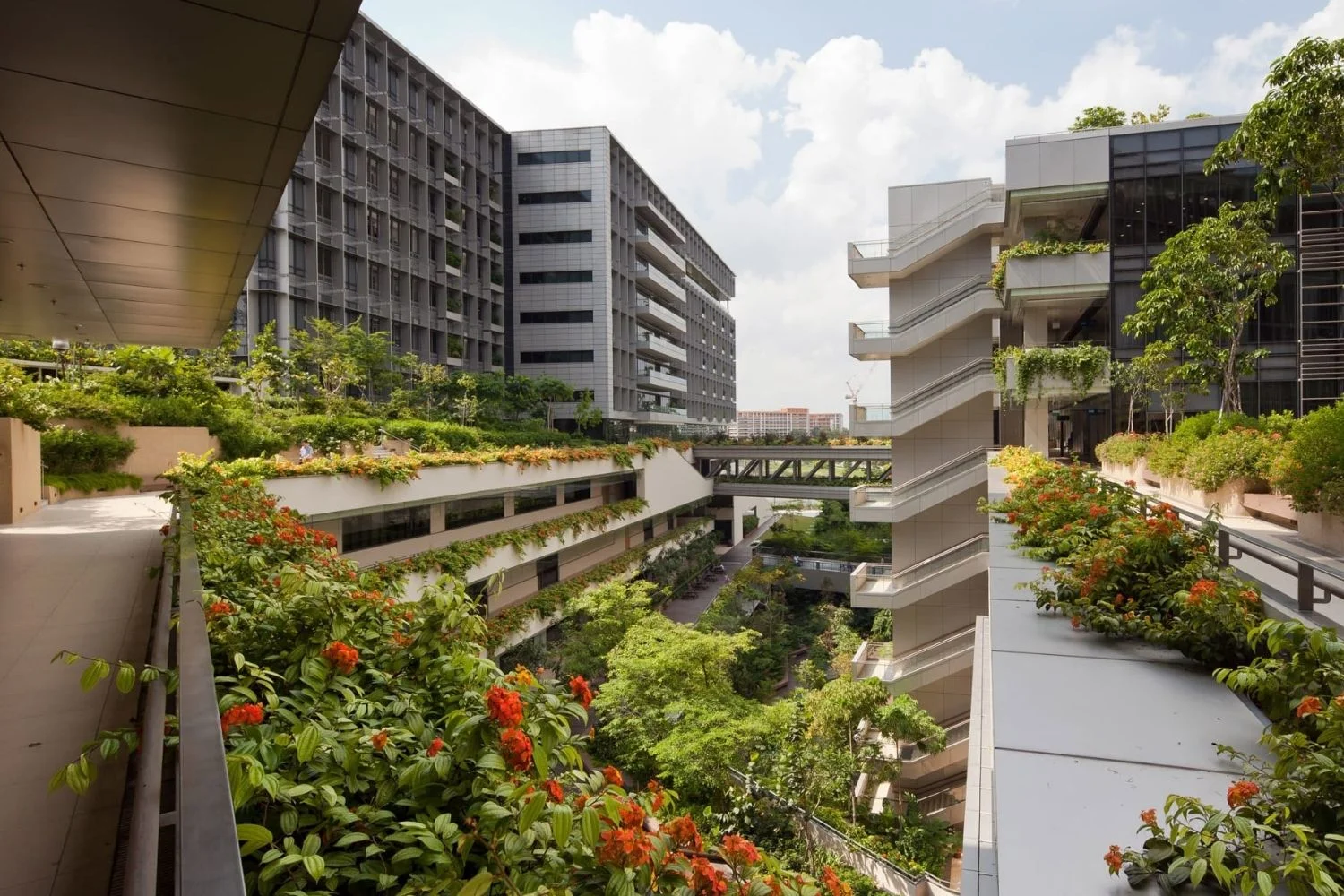
CPG Consultants designed this 590-bed hospital as a living garden, with every surface and setback planted to create a continuous landscape visible from patient rooms, corridors, and waiting areas. Over 70% of the site area is green cover. Studies published by the hospital’s research team found that patients in rooms facing the gardens reported lower anxiety levels and requested fewer pain medications compared with those in rooms facing adjacent buildings. The ventilation system draws outdoor air through planted buffer zones before it enters occupied spaces. This project applies biophilic principles directly to clinical outcomes, making it one of the clearest demonstrations of incorporating nature into architectural design for measurable health benefit.
📌 Did You Know?
According to a 2015 study published in the journal Environmental Health Perspectives by researchers at Harvard and Syracuse universities, workers in offices with enhanced ventilation and low VOC levels scored 101% higher on cognitive function tests than workers in conventional office environments. The study, known as the COGfx Study, has become a foundational reference for architects designing biocompatible workspaces.
9. Nk’Mip Desert Cultural Centre (Osoyoos, Canada, 2006)
DIALOG (formerly Hotson Bakker Boniface Haden) designed this cultural center for the Osoyoos Indian Band using a 80-meter-long rammed earth wall made from locally excavated soil. The wall acts as a thermal battery, absorbing solar heat during the day and releasing it into the building at night, reducing reliance on mechanical heating systems. The earth surface introduces no off-gassing or synthetic chemical exposure. The surrounding landscape was restored with native desert plants, reconnecting the building to the arid ecosystem it sits within. It is a clear example of how local, minimally processed materials can create a building that is simultaneously culturally meaningful and biologically supportive.
10. Residential Passive House (Vorarlberg, Austria, ongoing regional practice)
The Vorarlberg region of Austria has developed an internationally recognized tradition of timber-based passive house construction. Firms like Hermann Kaufmann Architektur and Baumschlager Eberle have built hundreds of residential and institutional buildings using solid wood wall systems, triple-glazed timber windows, and mechanical ventilation with heat recovery. These structures maintain stable indoor temperatures between 20 and 25°C year-round with near-zero heating demand. Interior surfaces are typically exposed timber finished with natural oils, and insulation relies on wood fiber or cellulose rather than polystyrene or mineral wool. The Vorarlberg model shows that biocompatible design can become a regional standard, not just a one-off showcase.
💡 Pro Tip
If you are starting a biocompatible residential project, begin with an indoor air quality (IAQ) baseline test of the site before construction. Measure radon, particulate matter (PM2.5), and existing VOC levels. Having this data lets you set measurable targets for post-occupancy air quality rather than relying on assumptions about how the finished space will perform.
Why Does Biocompatible Design Matter Now?
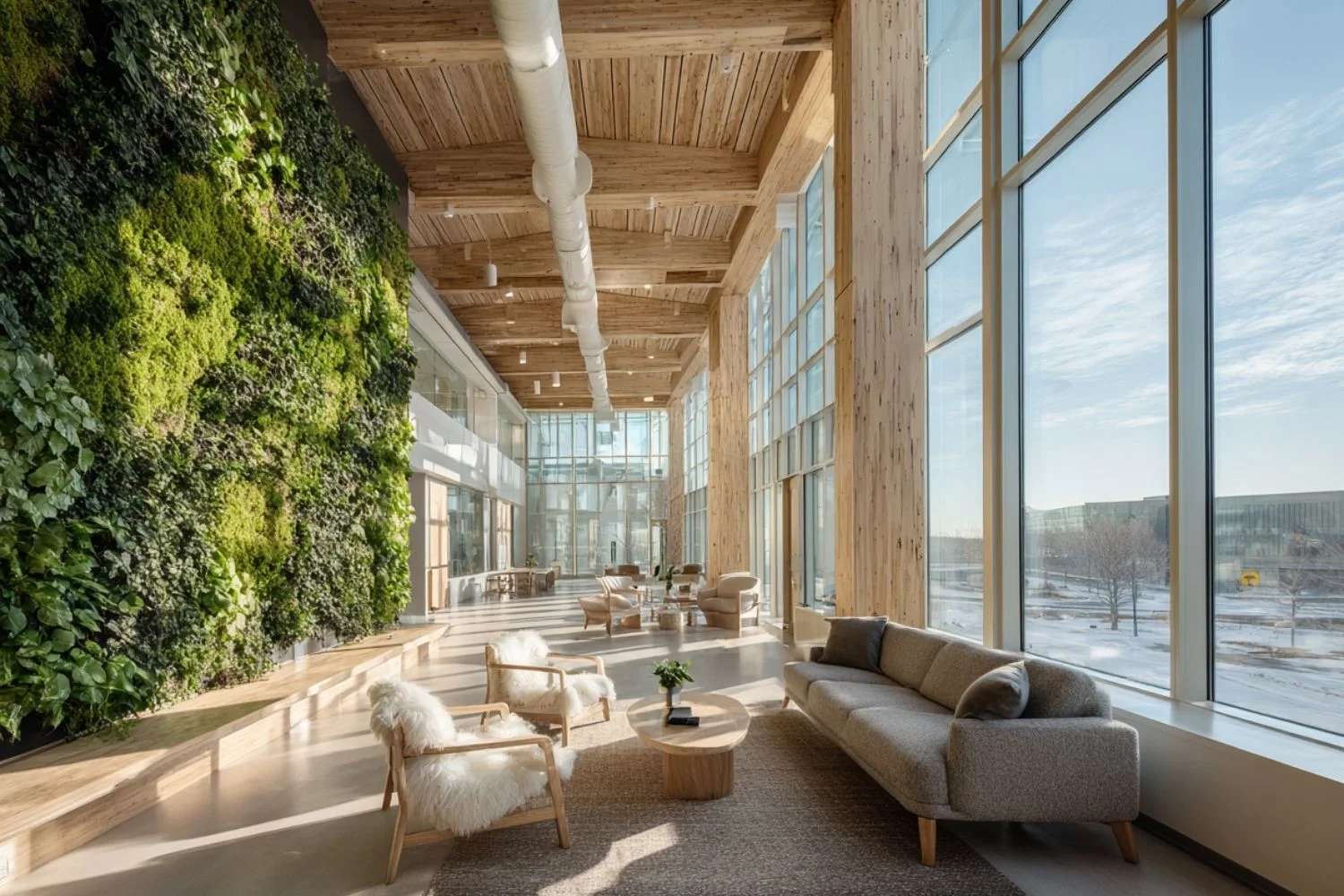
Two converging trends are pushing biocompatible design from a niche concern to a mainstream architectural priority. First, the post-pandemic awareness of indoor air quality has made clients, developers, and regulators far more attentive to ventilation rates, filtration standards, and material emissions. Second, the growth of certification frameworks like WELL and Fitwel has created market-level incentives: WELL-certified office spaces command higher rents and lower vacancy rates, according to data from commercial real estate analysts at JLL and CBRE.
At the same time, the cost of biocompatible materials has dropped. Products like hempcrete, mycelium-based insulation, and mass timber panels are now manufactured at scale in multiple countries. A decade ago, specifying these materials meant long lead times and premium pricing. Today, they are competitive with conventional alternatives in many markets, particularly when life-cycle cost analysis accounts for reduced maintenance, lower energy use, and improved occupant productivity.
For architects and designers working in sustainable architecture, integrating biocompatibility into the design process does not require a separate workflow. It means extending the performance criteria already used for energy and carbon to include occupant health outcomes, and selecting materials based on their full environmental and biological profile rather than just their thermal or structural properties.
🏗️ Real-World Example
The Living Building at Georgia Tech (Atlanta, 2019): Beyond Red List materials compliance, the Kendeda Building’s post-occupancy evaluation found indoor PM2.5 levels were consistently 60-80% lower than Atlanta’s outdoor ambient air. The building’s combination of high-efficiency filtration, operable windows with weather-responsive controls, and zero-VOC interior finishes created an indoor environment measurably healthier than the city around it.
Principles for Applying Biocompatibility in Your Projects
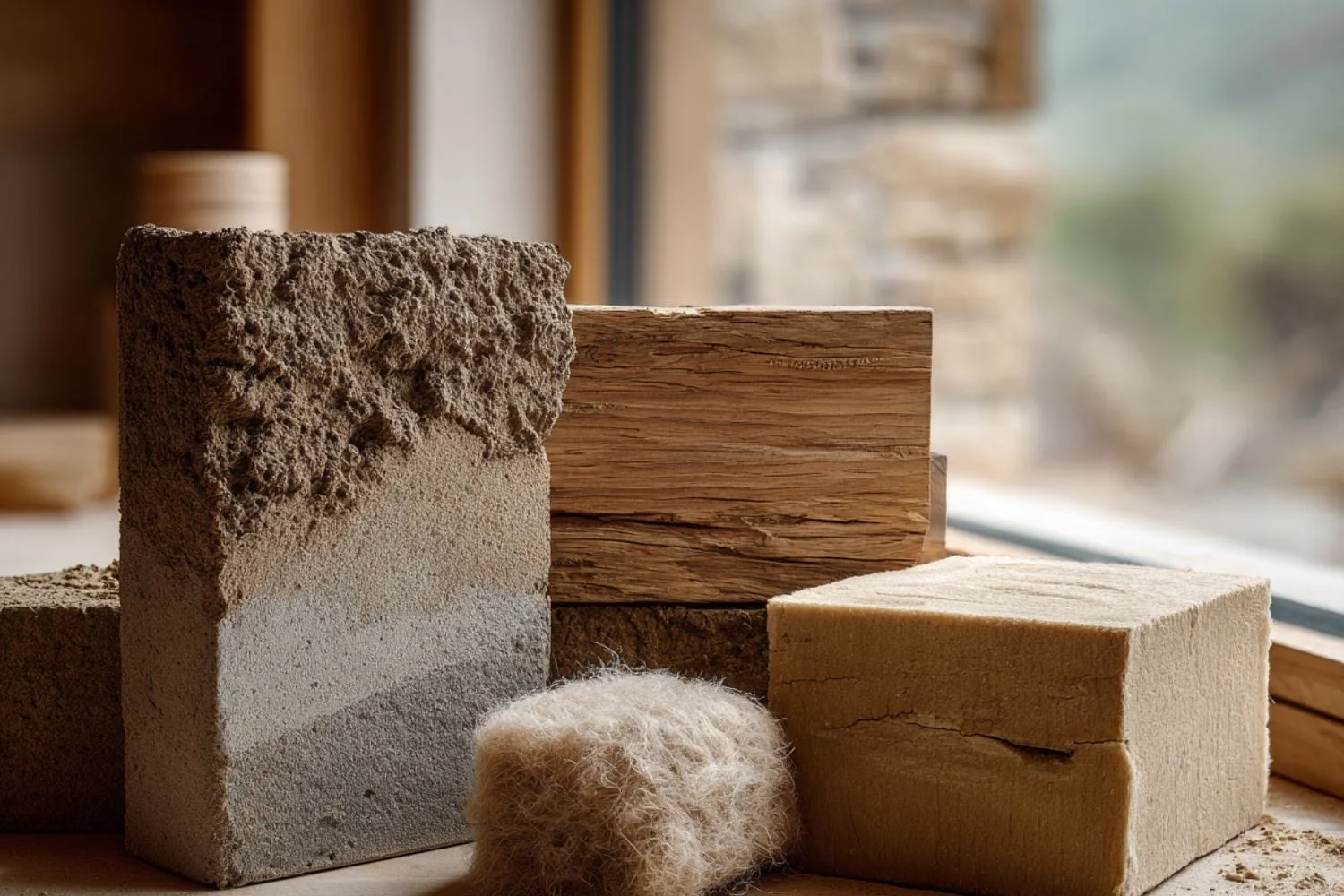
If the ten examples above share a common lesson, it is that biocompatible design works best when treated as a set of measurable performance targets rather than an aesthetic style. Here are the core principles distilled from these projects:
Screen every material for health impact. Use third-party disclosure programs like HPDs, Declare labels, or Cradle to Cradle certification to evaluate chemical content. Reject products containing Red List chemicals whenever an alternative exists.
Prioritize passive indoor climate control. Thermal mass from rammed earth, mass timber, or exposed concrete (low-VOC sealed) can stabilize temperature swings. Natural ventilation, when the climate allows, reduces reliance on recirculated air. Where mechanical ventilation is necessary, specify systems with high-efficiency particulate filtration (MERV 13 or higher).
Design for daylight and circadian rhythm. Provide access to natural light in all regularly occupied spaces. Supplement with tunable LED systems that shift from cool (5000K) during the day to warm (2700K) in the evening, supporting the body’s melatonin production cycle.
Integrate living systems. Biophilic facade design, interior planting, and accessible green spaces are not decoration. They improve air quality, reduce stress hormones, and provide the visual complexity that the human brain is wired to find restorative.
Measure post-occupancy performance. Install sensors for CO2, PM2.5, temperature, humidity, and light levels. Compare results against targets from WELL, ASHRAE 62.1, or EN 16798. Treat indoor environmental quality the same way you would treat energy performance: as a continuous feedback loop, not a design-phase assumption.
📐 Technical Note
ASHRAE Standard 62.1-2022 recommends a minimum outdoor air ventilation rate of 8.5 L/s per person for office spaces. However, the COGfx Study (2015) found that cognitive function scores improved significantly when ventilation was increased to 40 L/s per person. Biocompatible designs targeting high-performance workplaces often specify ventilation rates 2-3x above the ASHRAE minimum, particularly in meeting rooms and focused work areas.
✅ Key Takeaways
- Biocompatibility in architecture means designing buildings that actively support human health through non-toxic materials, clean air, natural light, and thermal comfort.
- The concept is distinct from sustainability: a green building is not automatically biocompatible, and vice versa. The strongest projects pursue both.
- Certification frameworks like the WELL Building Standard and the Living Building Challenge provide measurable benchmarks for biocompatible performance.
- Projects like the Bullitt Center, Bosco Verticale, and the Alnatura Campus prove that biocompatible design works across commercial, residential, healthcare, and institutional building types.
- Post-occupancy monitoring of indoor air quality, light, and thermal conditions is essential to verify that a biocompatible design delivers on its promises.
Final Thoughts
Design for biocompatibility does not demand exotic technology or unlimited budgets. The projects in this article range from a rammed earth cultural center in the Canadian desert to a sensor-equipped office tower in Amsterdam. What they share is a commitment to treating the human body as the primary client, not just the person who signs the contract but the biological organism that will breathe, sleep, work, and heal inside the finished space. As indoor air quality research, material transparency tools, and occupant wellness data continue to mature, sustainable architecture projects that ignore biocompatibility will increasingly look incomplete. Buildings that work with human biology are not a trend. They are a correction.
Environmental impact data and building performance figures referenced in this article are based on published research and project-specific reports. Actual performance may vary by climate, building operation, and measurement methodology.










Leave a comment