


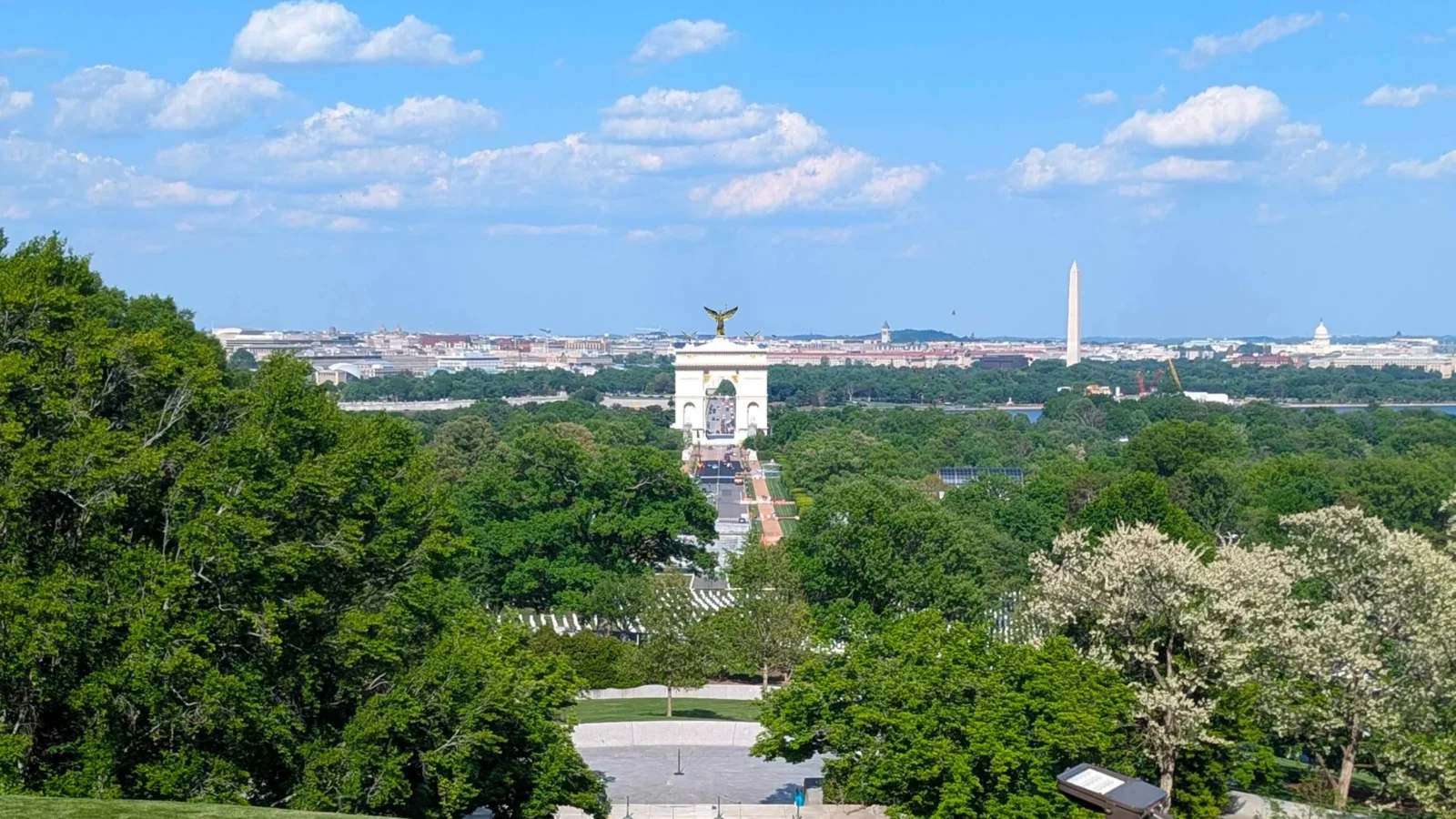
President Donald Trump has announced that the Trump triumphal arch planned for the banks of the Potomac River will no longer be purely ceremonial: it will also function as an active military facility capable of launching drones and housing sniper teams.
Trump broke the news in a post on Truth Social, framing the change as a response to a direct appeal from the armed forces. “At the strong request of the United States military, and for national security purposes, I have agreed to convert the magnificent triumphal arch… into a top grade military complex/triumphal arch,” he wrote.
What the Trump triumphal arch will now contain
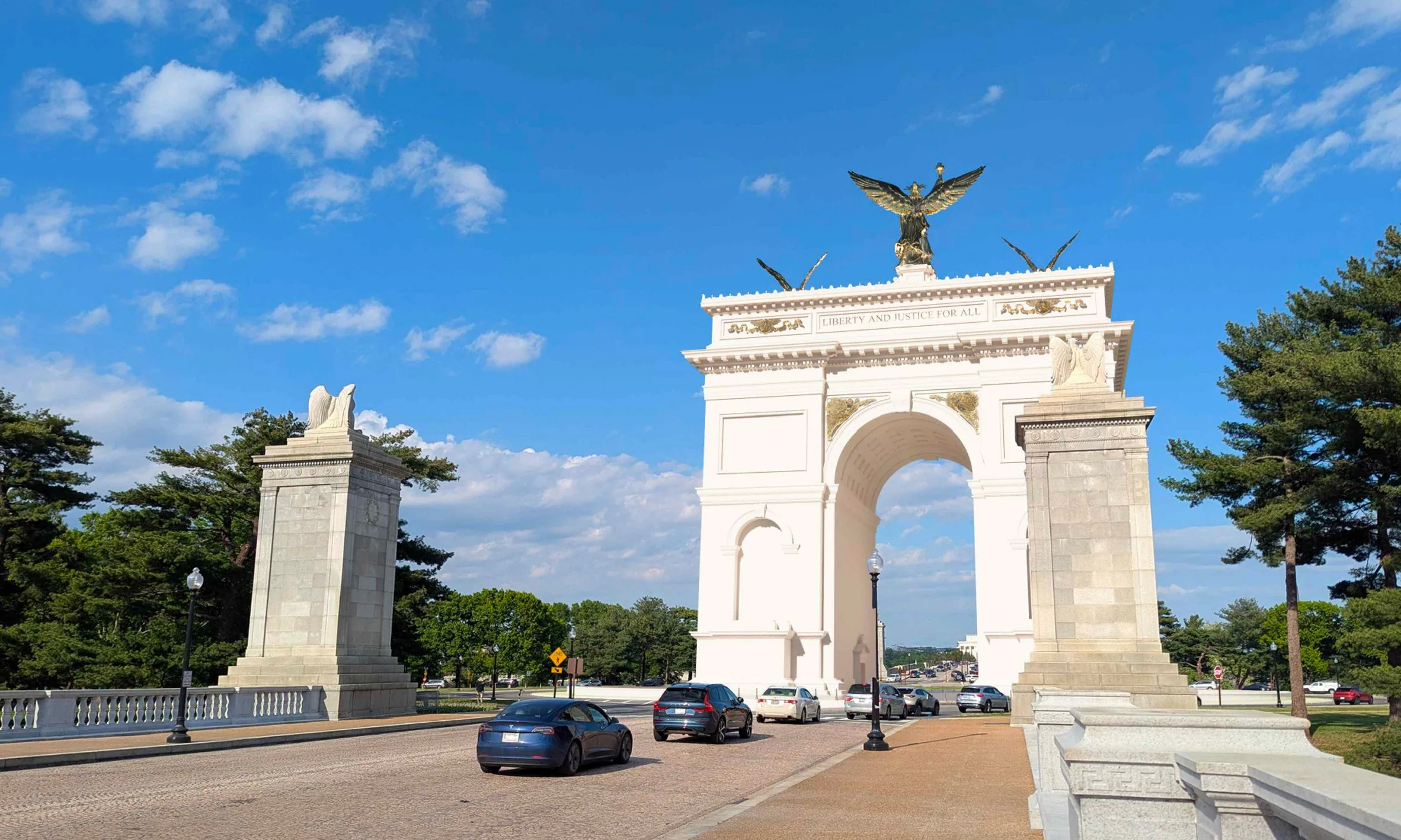
The president said the structure would “house, store, and have the rapid ability to use large numbers of drones, plus snipers, on both the roof and plaza areas, and additionally have and hold large quantities of sniper ammunition in storage.” He gave no further detail on how the military elements would be built into the design.
The arch itself, designed by Atlanta firm Harrison Design, is planned to rise 250 feet (76 metres), which would make it roughly 100 feet taller than the Arc de Triomphe in Paris. It is slated for a site beside the Arlington Memorial Bridge, on a traffic circle near Arlington National Cemetery, on the opposite bank of the river from central Washington DC.
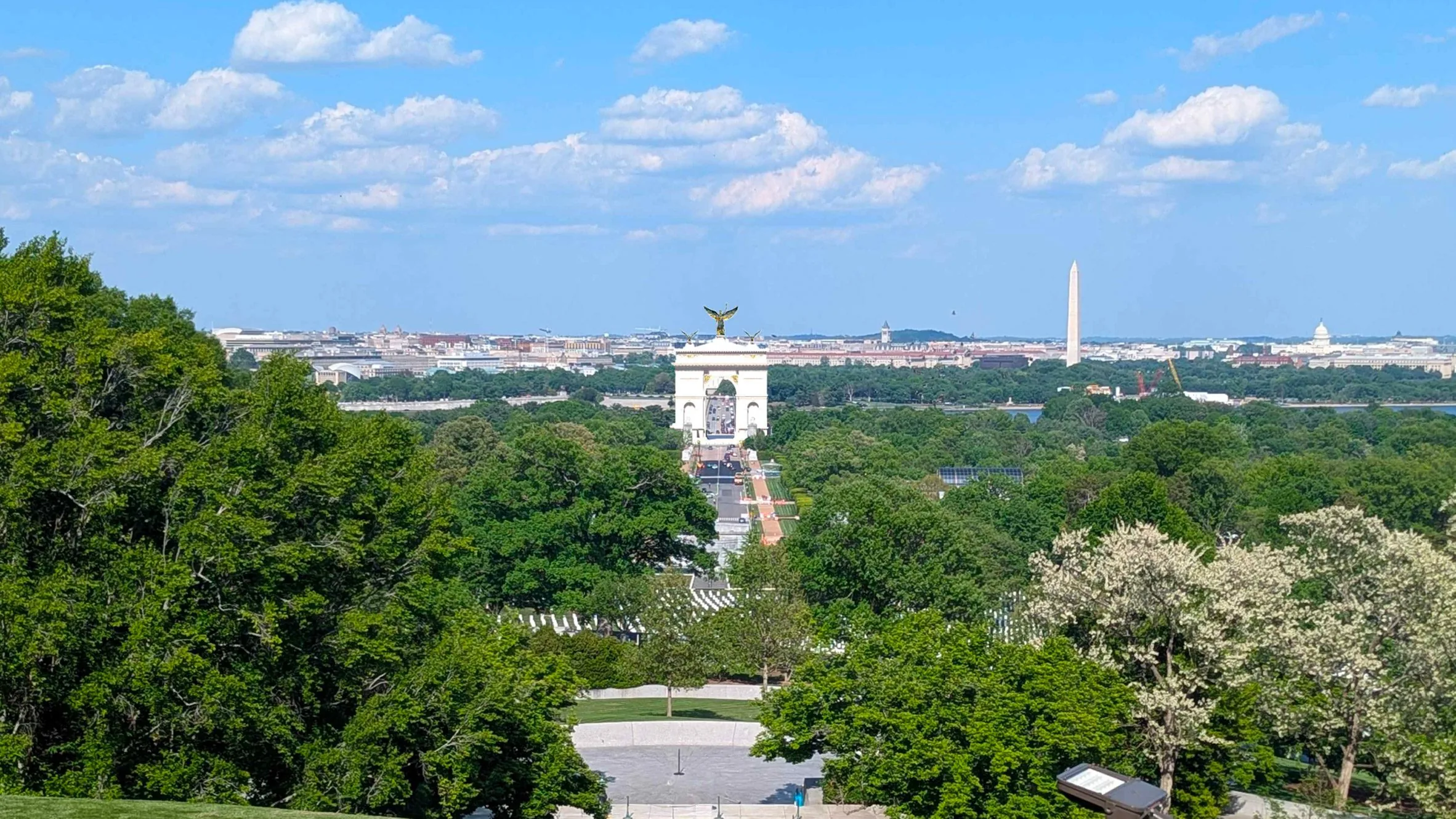
According to earlier reporting on the project, the monument was originally conceived with a publicly accessible viewpoint and interior galleries for exhibitions, tied to celebrations of the 250th anniversary of the Declaration of Independence. Design renderings also showed a gold winged Liberty figure at the summit flanked by eagles, with the phrases “One Nation Under God” and “Liberty and Justice for All” inscribed on the structure. It is not yet known whether those visitor facilities will survive the shift toward a military role.
Approvals and lingering questions
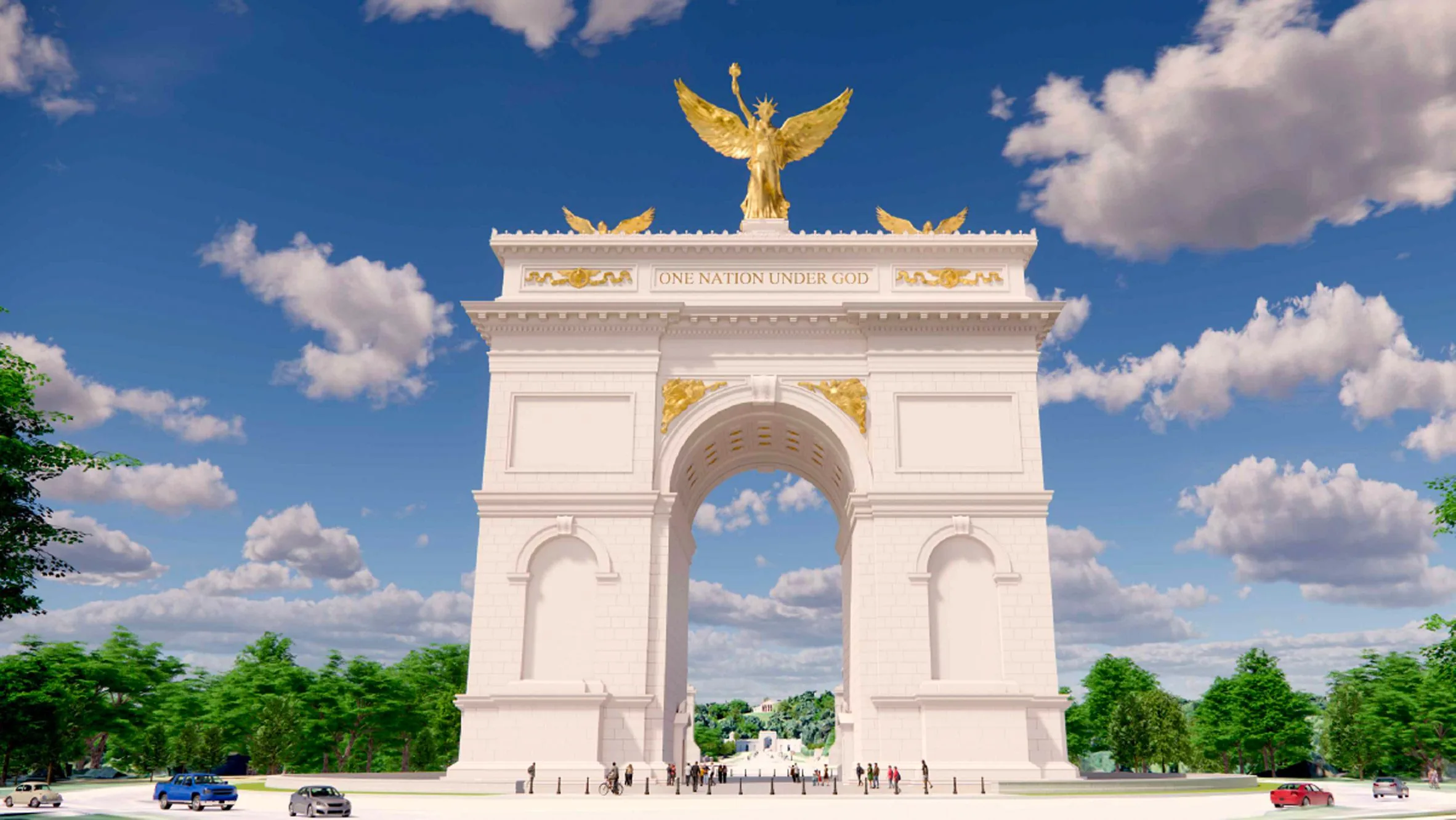
The arch was first unveiled in October 2025. It cleared the Commission of Fine Arts in May 2026 and won sign-off from the National Capital Planning Commission in July 2026, with interior secretary Doug Burgum indicating this month that groundwork was close to starting. Separately, the Federal Aviation Administration had earlier concluded that the tower’s height would not pose a hazard to air traffic using nearby Reagan Washington National Airport, a finding that came after Democratic lawmakers raised concerns about the airspace around the site.
What remains unclear is whether converting part of the arch into a functioning military post will require it to go back through any of those planning approvals, given that the plans reviewed by the commissions did not describe a weapons and surveillance facility.
The move is not the administration’s first attempt to fuse federal monuments with military or political branding. In December 2025, Trump’s name was briefly attached to the Kennedy Center before a court reversed the decision, and the U.S. Institute of Peace was renamed the Donald J. Trump Peace Institute the same month. A construction project at the White House, an underground complex paired with a new ballroom, has also been tied to national security justifications, and the Supreme Court recently allowed that work to proceed despite legal challenges.
No start date for the military-related construction has been confirmed, and neither the Pentagon nor the design team has detailed how drone launch points or sniper positions will be integrated into the arch’s granite cladding and observation deck.
The arch has already divided the profession once, when the firm behind it took on a contested church renovation in Oregon. The wider question of what civic monuments are for runs through neoclassical architecture examples.










Leave a comment