Home Architecture News Washington University Develops Renewable Carbon Fiber from Paper Waste
Architecture NewsSustainability

Washington University Develops Renewable Carbon Fiber from Paper Waste

WashU engineers create renewable carbon fiber using lignin, reducing costs and emissions.

Share
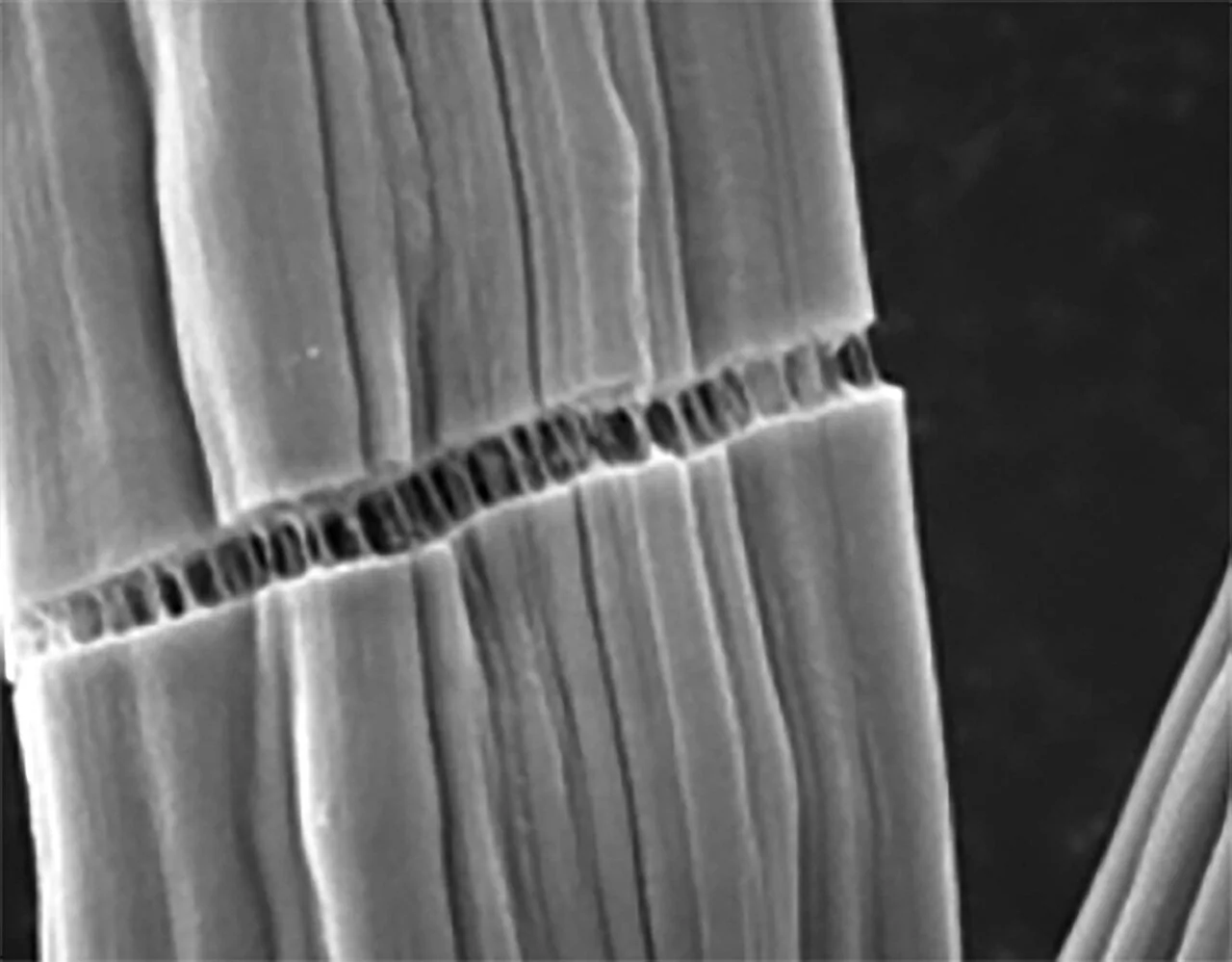
microscopic close-up of carbon fiber strands
A microscopic view of renewable carbon fiber developed from paper waste by WashU engineers. · Image: Yuan lab
Share

Engineers at Washington University in St. Louis have pioneered a method to produce renewable carbon fiber utilizing lignin, a byproduct of the paper pulping industry. This innovation promises to lower production costs and cut carbon emissions significantly, adding to the bio based materials reaching structural use. The research, published in the journal Matter, shows potential for broad application in various industries including automotive, aerospace, and energy.

Transforming Waste into Renewable Carbon Fiber

Traditionally, carbon fiber production relies heavily on polyacrylonitrile (PAN), a petroleum-based material that is both costly and environmentally taxing. PAN typically accounts for up to 50% of carbon fiber manufacturing costs. By substituting lignin, engineers were able to reduce the use of PAN by half, cutting production costs by 25% and significantly lowering carbon emissions.

Joshua Yuan, who leads the work at WashU McKelvey Engineering, highlighted the breakthrough: “For the first time, this allows us to create renewable carbon fiber that reaches the high standard of quality used in automobile manufacturing.”
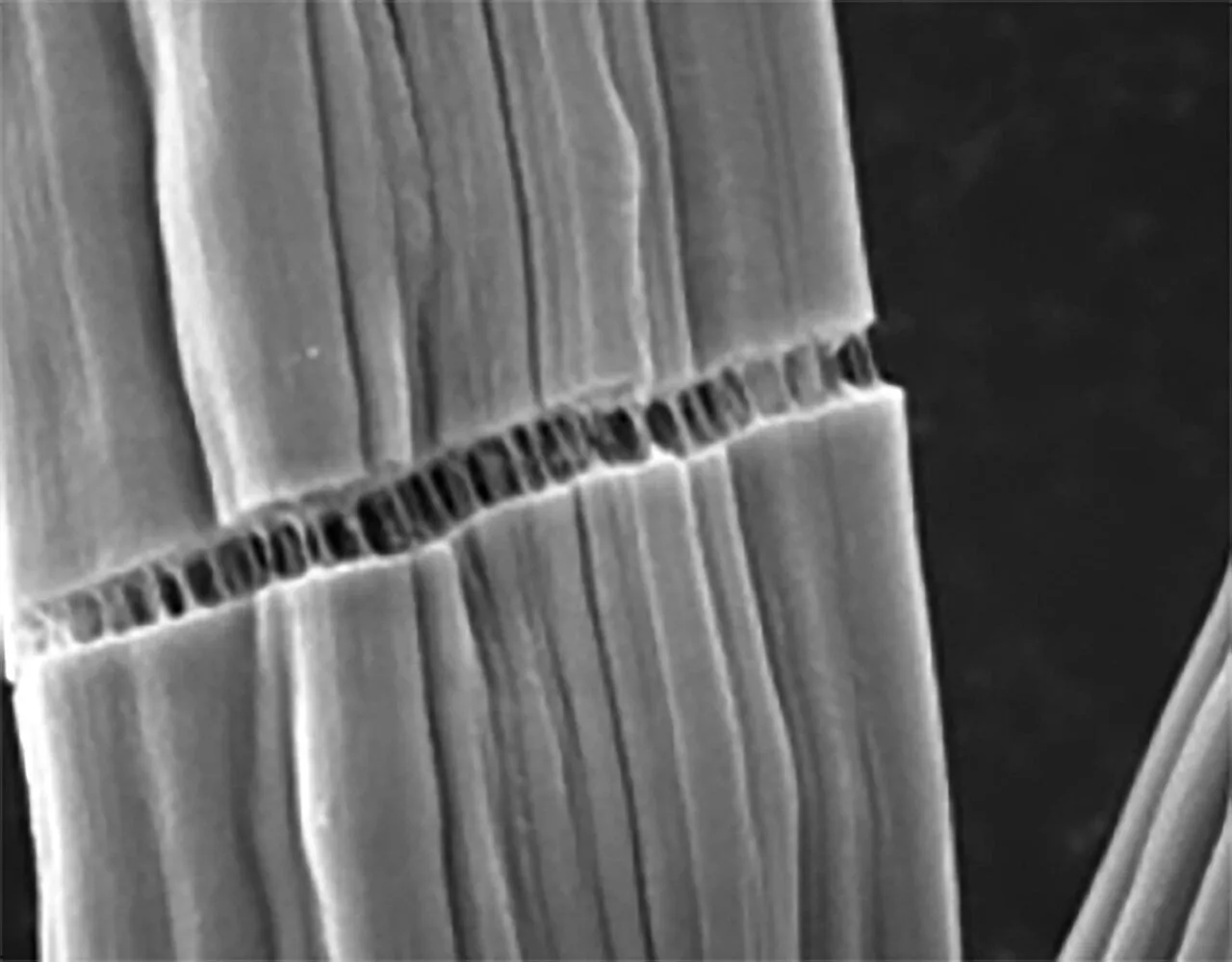
Black and white microscopic view of carbon fiber strands reinforced with carbon nanotubes
Microscopic “rebar” of functionalized single walled carbon nanotubes adds strength to the fiber. · Image: Yuan lab

Innovative Process Enhances Fiber Strength

To ensure the lignin-based carbon fiber meets industry standards for tensile strength and elasticity, the team developed a novel process involving single-walled carbon nanotubes. These nanotubes serve as a template within the polymer matrix, enhancing crystallization alignment—a crucial factor for high-quality carbon fiber.

Weiwei Li, a postdoctoral scholar and first author of the research, explained the three-step innovation process: creating a nanotube template, processing the precursor solution through wet spinning and heat treatment, and finally, optimizing carbonization to strengthen the fiber. This method yields a material with exceptional mechanical properties and a highly aligned crystalline structure.

Yuan holds the Lucy & Stanley Lopata Professorship and chairs energy, environmental and chemical engineering at WashU McKelvey Engineering, and he also directs the National Science Foundation Carbon Utilization Redesign for Biomanufacturing (CURB) Engineering Research Center there. He sees the automobile industry as only the entry point: “Carbon fiber reinforces plastics and has very broad application,” he said, pointing to markets from sports equipment to wind turbines, part of a wider shift toward material ecology.

Share
Written by
LA Editorial Team

The Learn Architecture editorial team is a group of architects, designers, and writers who research, write, and review content on architecture, design, technology, sustainability, and education for students and professionals worldwide.

Leave a comment

Leave a Reply

Your email address will not be published. Required fields are marked *

Related Articles
Holcim cement plant at Portland, Colorado, with its kiln and storage silos under an open sky
Architecture NewsSustainability

Holcim Says Low-Carbon Cement Now 40% of Sales as Deals Expand Reach

Low carbon cement reached 40 percent of Holcim volumes in the first...

Auckland City Rail Link station platform and track seen after opening
Architecture News

Auckland Underground Railway Opens as City Rail Link Starts Service

Auckland's City Rail Link opened on 11 September 2026, giving New Zealand...

A solar-paneled public restroom pod with ramp sits on a path beside a lawn where a person walks a dog
Architecture NewsUrban Design

Mamdani Administration Begins Installing 17 Modular Public Toilets Citywide

NYC has begun installing 17 free, app-accessed modular restrooms in a year-long...

Watercolour illustration of a winding water channel through green fields with pylons in the distance
Architecture NewsConstruction

Graham to Build Oxford Flood Alleviation Scheme Starting 2027

The Environment Agency has appointed Graham to build the Oxford Flood Alleviation...

Subscribe to Our Updates

Enjoy a daily dose of architectural projects, tips, hacks, free downloadble contents and more.

Copyright © Learn Architecture Online. All rights reserved.
Made with ❤️ by learnarchitecture.online

iA Media's Family of Brands

Privacy Overview

This website uses cookies so that we can provide you with the best user experience possible. Cookie information is stored in your browser and performs functions such as recognising you when you return to our website and helping our team to understand which sections of the website you find most interesting and useful.