


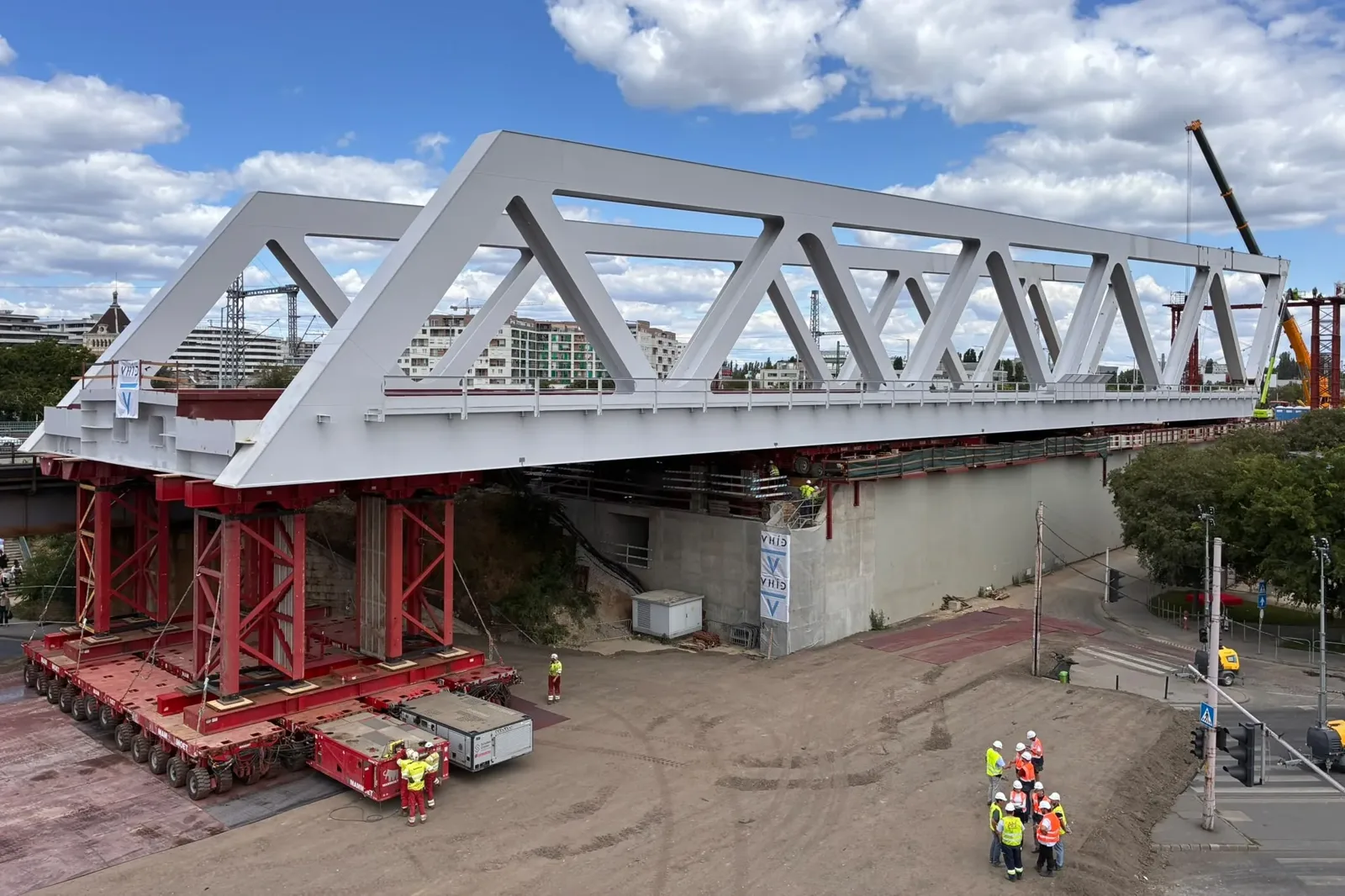
A 2,200-tonne railway bridge has been moved into position over one of Budapest’s main roads in a single weekend. Dutch heavy lifting firm The new Budapest railway bridge at Közvágóhíd was set in place by Mammoet on self-propelled modular transporters (SPMTs), starting with its southern structure, part of the capacity expansion of the Ferencváros to Kelenföld railway line, New Civil Engineer reports.
The bridge consists of two structures, one north and one south, each 108 metres long and 20 metres wide. They cross Soroksári út, a main route into the city near Budapest Park. The northern structure is due to follow about a year later.
Why not skid it?
Hungarian rail and bridge contractor V-HID approached Mammoet in March 2025. Closing Soroksári út for weeks or months was ruled out. The alternative to SPMTs would have been a skidding system, which would have needed temporary support towers in the road, founded on 20 metre piles drilled from the carriageway. Instead, Mammoet proposed mounting support masts on the transporters and driving them under the bridge as it moved forward.
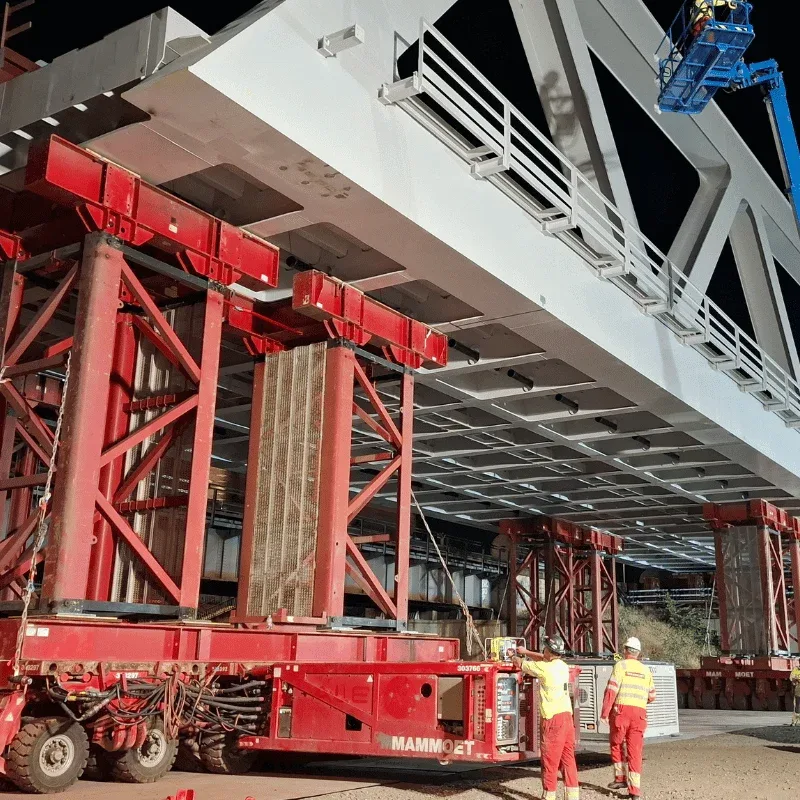
The sections were fabricated off site, delivered by truck and then assembled, coated and welded. Space was tight: separate areas were needed to receive and store the sections, assemble the bridge and prepare the masts, and an old tram station was removed to make room.
176 axle lines
Four sets of SPMTs worked at upper and ground level. The bridge was driven forward from the abutment until it cantilevered, and the first set of transporters then drove beneath it carrying support masts made from MSG crane mast sections with base frames on top. Each transporter set worked two shifts, launching the deck from the upper level and then carrying it across at street level, with a 400 tonne mobile crane lowering them between levels.
In the end three SPMT sets, each with four groups of 12 axle lines, stood under the bridge so that it could reach both abutments. In total 176 axle lines were used. The road closed on Friday morning and reopened before Monday’s rush hour.
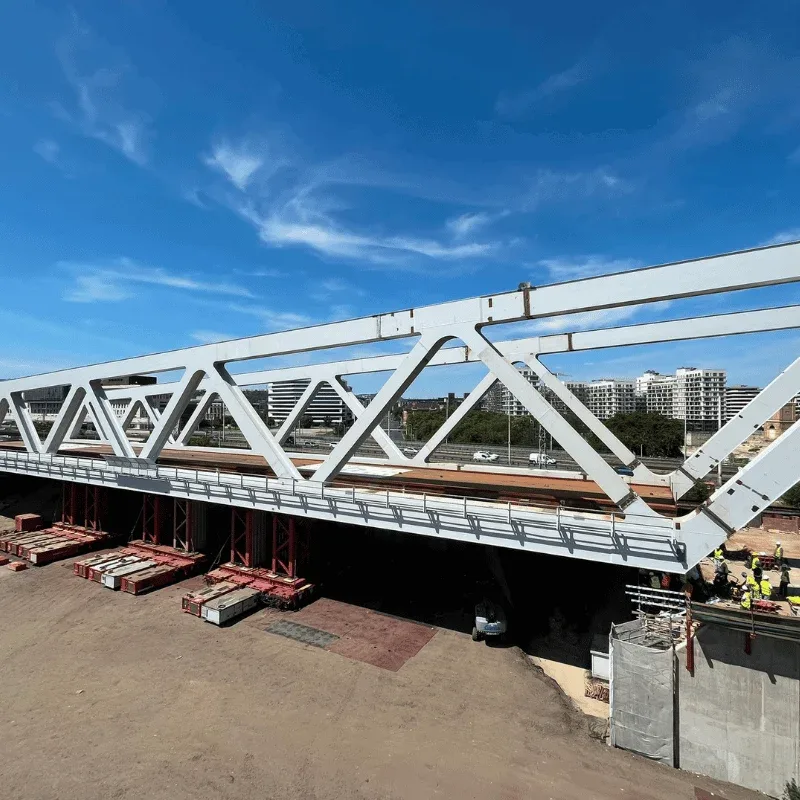
The northern span will be installed the same way, although Mammoet expects it to be harder because the southern bridge will take up some of the space that was available this time.












Leave a comment