


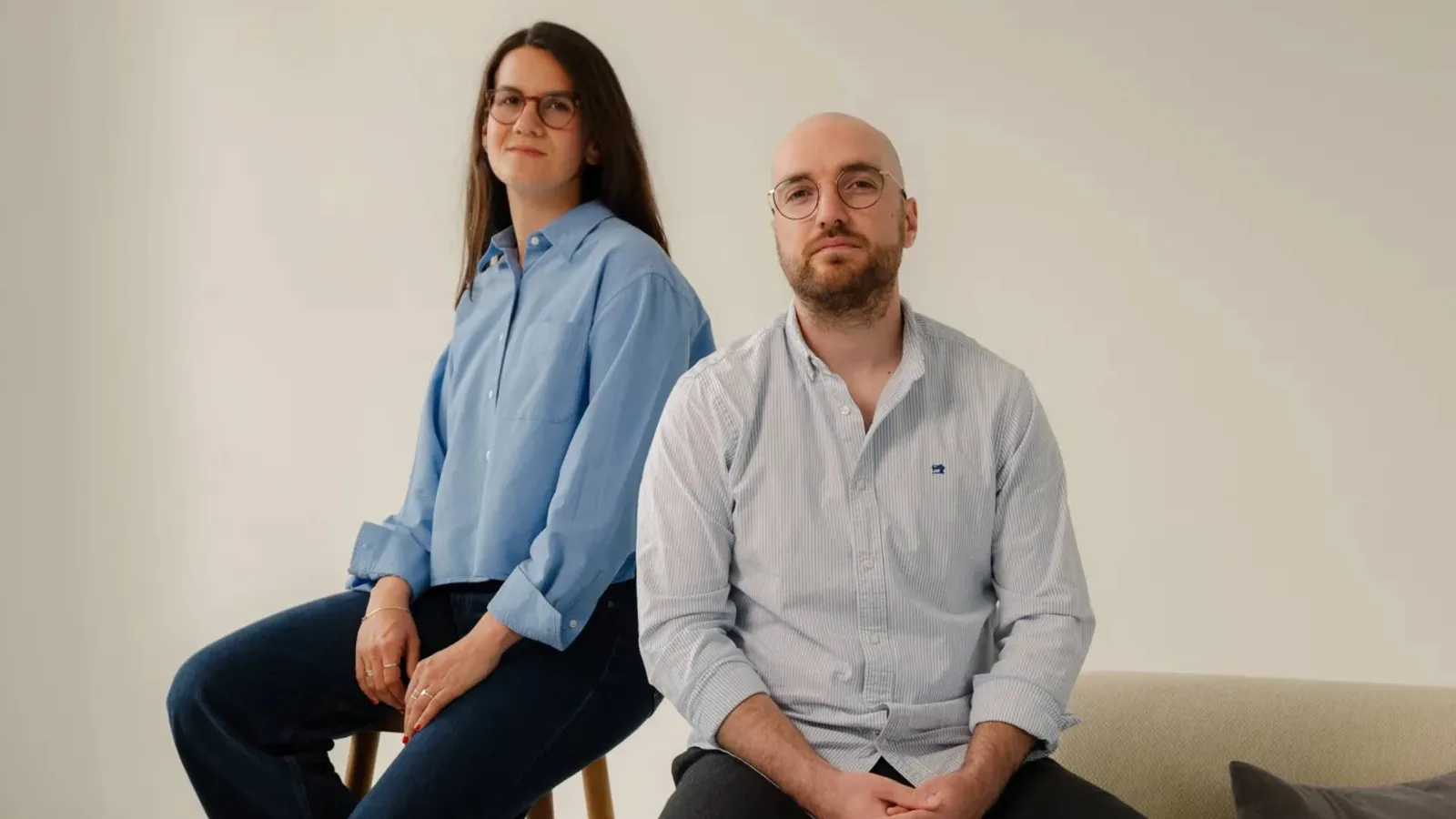
Kuro Technology, a Berlin start-up building AI tools for general contractors, has raised €10 million. The round was led by UVC Partners, with Foundamental, Realyze Ventures and helloworld also taking part. The company says it will use the money to extend its platform beyond estimating into other back-office work.
Lea Scherer and Jonas Minkler set up Kuro in November 2024 after senior roles at the construction tech companies alcemy and Capmo. The firm now employs 16 people. Half of its 12 customers rank among the 20 biggest general contractors in Germany, Austria and Switzerland, including Goldbeck, Köster, Implenia, Geiger and Riedel.
One data model for the whole tender
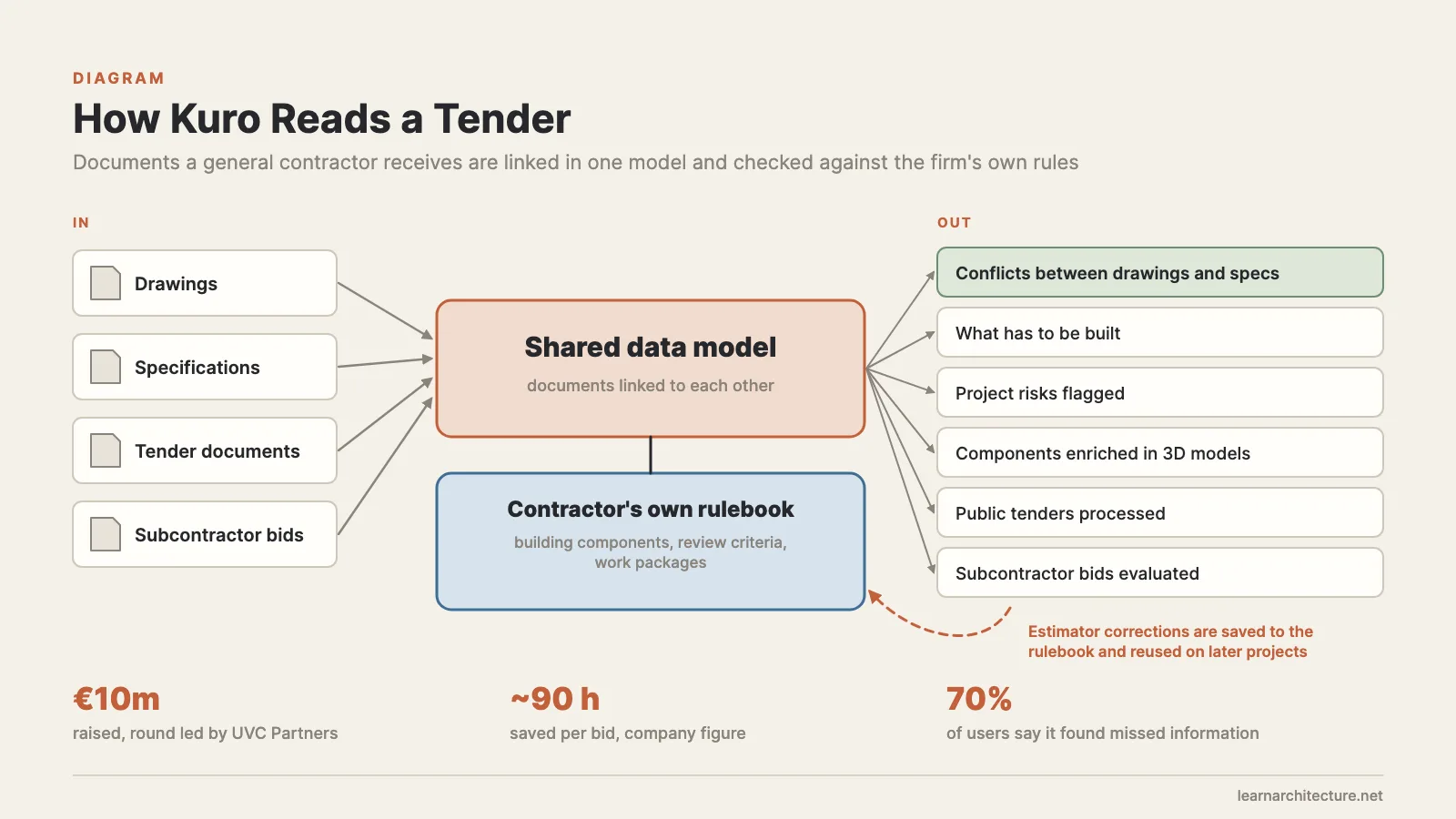
General contractors receive huge volumes of drawings, specifications, tender documents and subcontractor bids, and those documents often contradict each other. Kuro’s platform processes them and links them in a shared data model, on top of which each contractor can add its own rulebook of building components, review criteria and work packages.
The software looks for conflicts between drawings and specifications, works out what has to be built, flags project risks, enriches components in 3D models, processes public tenders and evaluates subcontractor bids. When estimators correct its output, the changes are stored in the company’s rulebook and applied to later projects, so knowledge stays with the firm rather than leaving with individual staff.
90 hours per bid, by the company’s count
Kuro says customers save about 90 hours per bid and that 70 percent of users report it found information they would otherwise have missed. For Nils Köster, chief executive of Köster GmbH, the extra capacity matters less than catching risks in a tender early, before a price goes in.
The company started with estimating because, as co-founder Jonas Minkler put it, that is “where a project is born and decided”. It now plans to add procurement, accounting and compliance. UVC Partners frames the investment against a wave of European spending on roads, housing, data centres, energy and defence, citing about €1.6 trillion of construction investment by EU member states in 2025, and a loss of experience as older workers retire.
For architects, the interesting part is the contractor’s side of the documents they produce. Tools that compare drawings with specifications line by line are likely to surface inconsistencies earlier in the tender, before they turn into claims on site.









Leave a comment