


Table of Contents Show
Your architecture student portfolio is the single most important document in your academic and early professional career. It tells reviewers who you are as a designer, how you think through problems, and where your interests lie. Whether you are applying to graduate programs, chasing your first internship, or pitching yourself to a firm, the projects you choose to feature will shape that first impression.
But with semesters of studio work, electives, and side projects piling up, choosing what goes in (and what stays out) can feel overwhelming. The key is variety. A strong architectural portfolio balances technical ability with creative thinking, and academic rigor with personal expression. Below, you will find the project types that consistently impress reviewers and employers alike.

Design Studio Projects: The Core of Your Architectural Portfolio
Studio projects form the backbone of any undergraduate architecture portfolio. These are the assignments where you spent weeks developing a concept, iterating on floor plans, building models, and refining your final presentation. Reviewers expect to see them, and they carry the most weight in your portfolio.
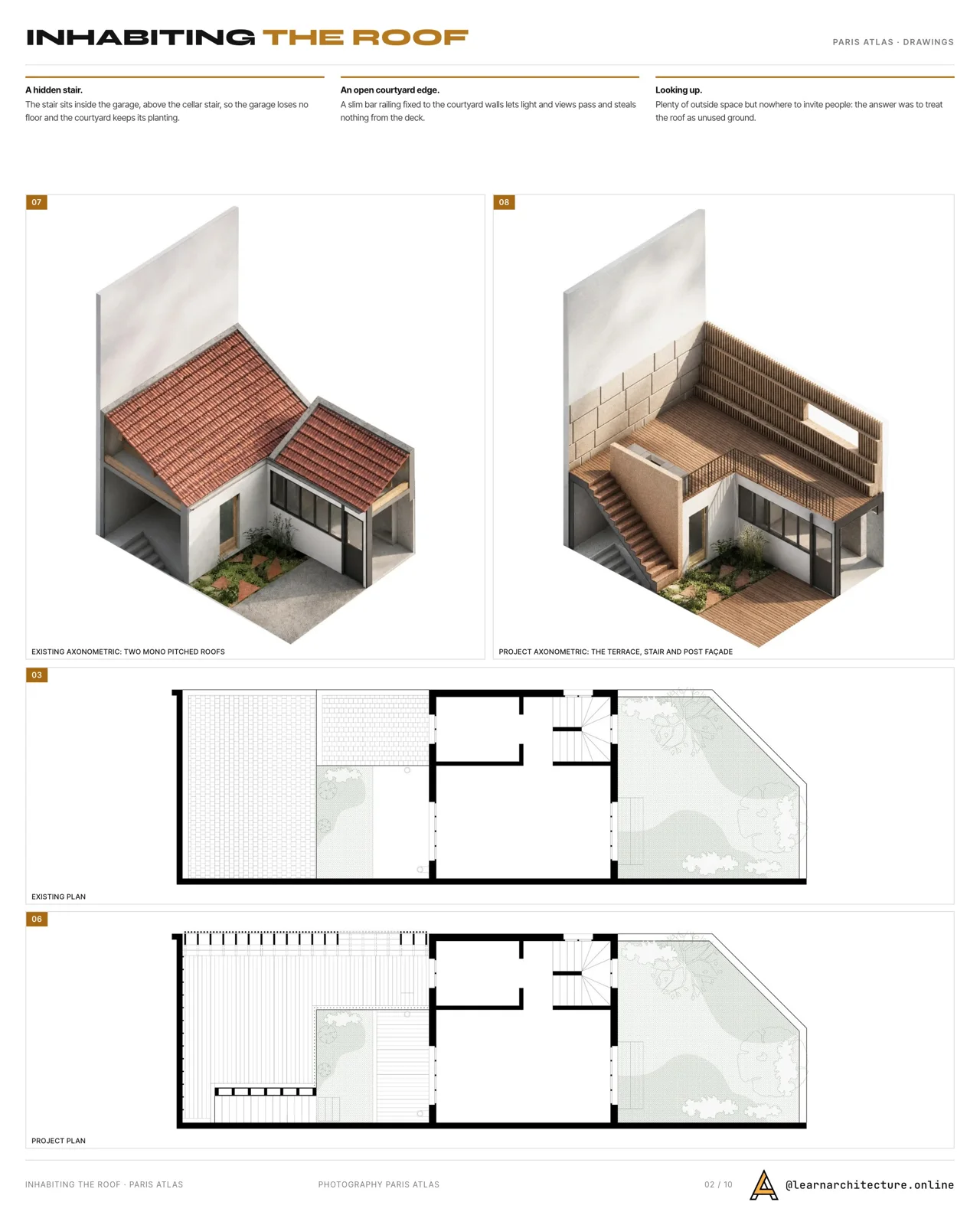
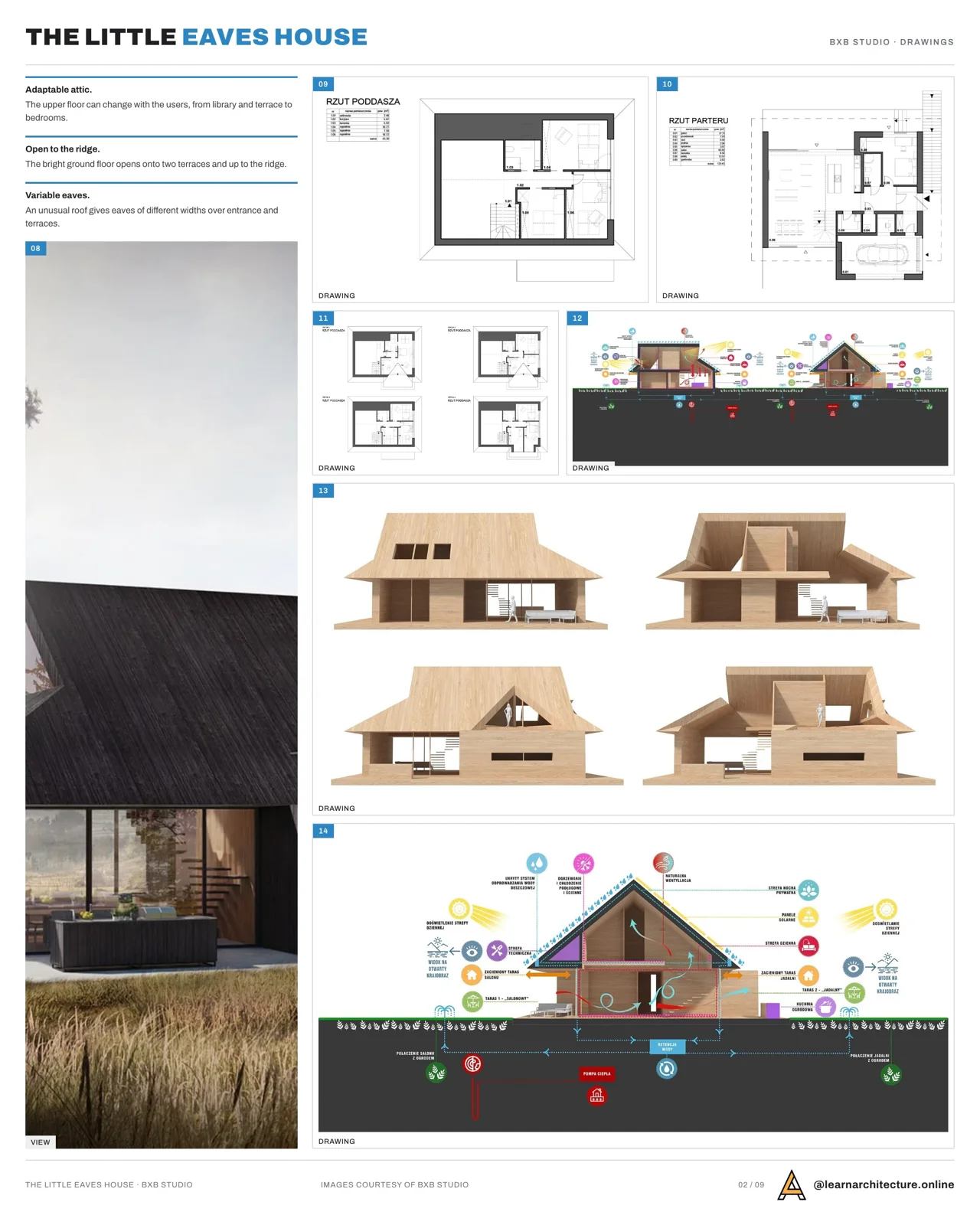
Pick two or three of your strongest studio projects. Ideally, these should represent different scales or programs. A residential project paired with a cultural center or a mixed-use building, for example, signals that you can adapt your thinking across contexts. According to ArchDaily’s portfolio tips, academic and theoretical projects are among the best indicators of an architect’s potential.
For each project, show the full design arc. Include early concept sketches, site analysis diagrams, development drawings, and polished final renders or photographs of physical models. This progression tells the viewer how you move from idea to execution, which matters just as much as the final output.

Thesis or Capstone Work for Architecture Students
If you have completed (or are working on) a thesis or capstone project, it deserves a prominent place in your portfolio. This type of project typically represents your deepest thinking as a student. It combines research, conceptual exploration, and technical execution in a way that regular studio assignments rarely match.
Thesis work also reveals your interests. A project centered on sustainable design, adaptive reuse, or social housing tells employers where your passion lies. Present it with enough depth that the viewer understands your argument, your process, and your conclusions. Include a brief written statement alongside the visuals to anchor the narrative.
Technical Drawings and Construction Details
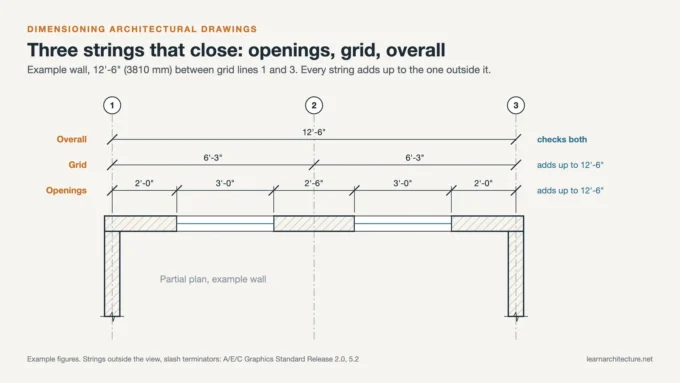
Architecture students sometimes overlook technical work in favor of flashy renders, but firms pay close attention to your ability to produce clear, accurate drawings. Wall sections, construction details, and assembly drawings demonstrate that you understand how buildings actually get built.
You do not need to fill pages with technical sheets. One or two well-chosen details can make the point. A carefully drawn wall section that shows material layers, insulation, and structural connections speaks volumes about your attention to craft. If you have experience with BIM software like Revit or ArchiCAD, this is a natural place to highlight that skill. The American Institute of Architects (AIA) consistently emphasizes technical proficiency as a core competency for emerging professionals.

Architecture Portfolio Design: Layout and Presentation Projects
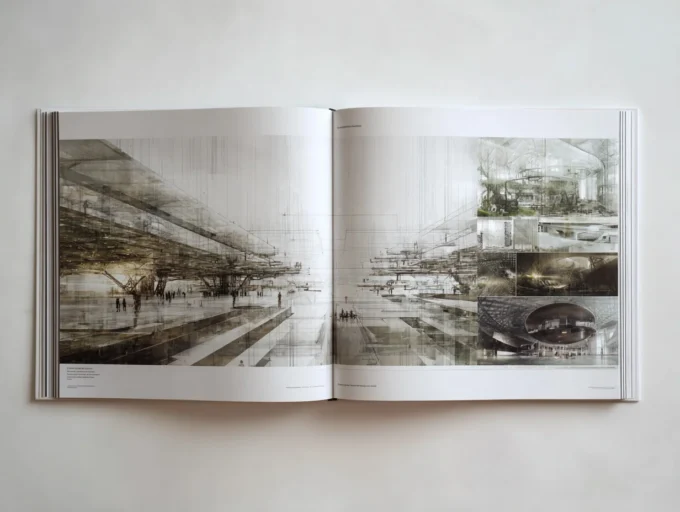
How your portfolio looks is itself a design project. Consistent typography, a clear grid system, and thoughtful use of white space all contribute to a polished architecture portfolio design. Reviewers at firms like OMA and BIG have noted that cluttered layouts can overshadow even excellent work.
Think of the portfolio as one continuous piece of graphic design. Establish a visual language early, with a defined font pairing, color palette, and page structure, then carry it through every spread. Tools like Adobe InDesign, Figma, or even well-structured PowerPoint templates can help you maintain that consistency. For more inspiration on layouts, explore examples of top architecture portfolios.
Diagrams and Analytical Drawings
Strong diagrams can elevate your portfolio from a collection of pretty images to a story about how you think. Site analysis maps, circulation diagrams, structural logic drawings, and environmental studies all fall into this category. They show that your design decisions are grounded in analysis rather than arbitrary choices.
Place these diagrams within the relevant project spreads rather than isolating them on a separate page. When a reviewer sees your concept diagram next to the resulting floor plan, the connection between research and design becomes immediately visible.
Physical Models and Fabrication Work
Photographs of physical models bring a tactile quality to your portfolio that digital renders simply cannot replicate. A well-crafted sectional model or a laser-cut site model shows spatial awareness and hands-on skill. If you have access to CNC routers, 3D printers, or woodworking tools, include fabrication projects that demonstrate material understanding.
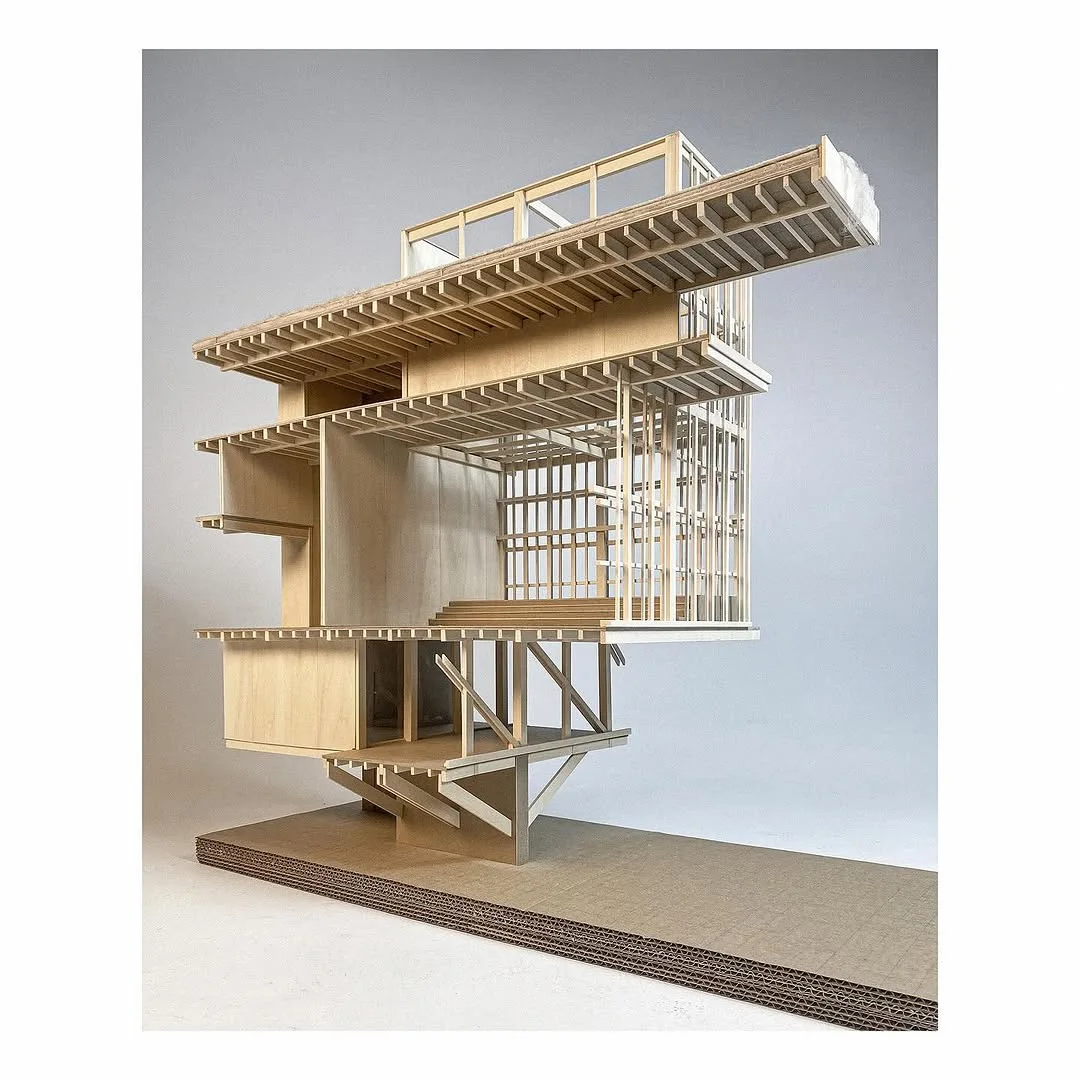
Good model photography matters here. Shoot against a clean background with even lighting, and consider multiple angles. A few high-quality images of a single model will always outperform a dozen blurry snapshots. Architecture students who invest time in photographing their physical work often find it becomes the most memorable part of their portfolio.

Competition Entries and Self-Initiated Projects
Entries from architecture competitions signal initiative. They tell a reviewer that you seek challenges beyond your coursework and that you can work under pressure with tight deadlines. Even if you did not win, a well-developed competition entry shows ambition and independent thinking.
Self-initiated projects carry a similar message. Maybe you redesigned a neglected public space in your neighborhood, explored parametric forms through Grasshopper scripts, or developed a small furniture piece. These personal projects reveal your curiosity and creative identity outside the classroom. Dezeen regularly features student competition work that started as personal explorations, proof that self-directed projects can gain real recognition.
Undergraduate Architecture Portfolio: Balancing Variety and Focus
An effective undergraduate architecture portfolio typically contains five to eight projects. Going beyond that risks diluting your strongest work. The goal is not to show everything you have ever done, but to curate a selection that demonstrates range while maintaining quality.

Project Types to Include in Your Architects Portfolio
The table below outlines the key project categories and what each one communicates to portfolio reviewers.
| Project Type | What It Demonstrates | Recommended Quantity |
|---|---|---|
| Design Studio Projects | Core design ability, process thinking | 2-3 projects |
| Thesis / Capstone | Research depth, intellectual rigor | 1 project |
| Technical Drawings | Construction knowledge, precision | 1-2 sheets |
| Competition Entries | Initiative, independent thinking | 1-2 projects |
| Physical Models / Fabrication | Spatial awareness, material skill | Integrated into projects |
| Personal / Creative Work | Personality, broader interests | 1-2 pieces at the end |
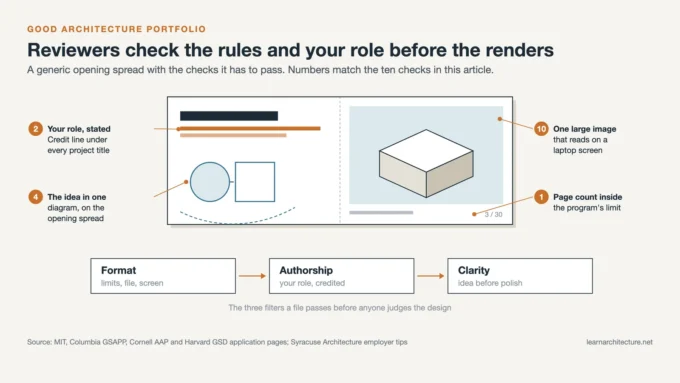
Place your strongest project first. Many reviewers spend only 30 to 60 seconds on an initial scan, so that opening spread needs to capture their attention immediately. Your second-strongest project should go last, creating a memorable closing impression. The projects in between can follow a logical order, either chronological or thematic.
Personal and Interdisciplinary Creative Work
The final section of your portfolio is the place for work that sits outside traditional architectural portfolio projects. Photography, illustration, graphic design, furniture prototypes, or even coding projects can all find a home here. This section humanizes your portfolio and helps reviewers remember you as more than a set of technical skills.
Keep it concise. Two or three pieces are enough. The Royal Institute of British Architects (RIBA) notes that interdisciplinary skills are increasingly valued in practice, so do not hesitate to show off talents that complement your architectural work. If you enjoy freehand sketching, a page of observational drawings can add warmth and personality.
You can also explore platforms like illustrarch’s guide to portfolio YouTube channels for video tutorials on improving your presentation skills and visual communication techniques.

Architectural Portfolio Projects: Common Mistakes to Avoid
Even with the right projects, a few missteps can weaken your portfolio. Including too many projects is one of the most common errors. If a project does not represent your best thinking or skill, leave it out. Quality always beats quantity.
Another frequent issue is inconsistent presentation. Mixing wildly different graphic styles from project to project makes the portfolio feel disjointed. While each project can have its own character, a unifying design thread should run through the entire document. Using consistent fonts, margins, and image treatments across all spreads creates visual cohesion.
Avoid overloading pages with text. Brief captions and concise project descriptions work best. Let your drawings, renders, and photographs do the heavy lifting. If a reviewer needs to read a full paragraph to understand your concept, the visual communication likely needs refinement. For a deeper look at organizing your portfolio’s structure, check out this guide on creating an effective portfolio table of contents.
Digital Tools and Formats for Your Portfolio
Most architecture students today maintain both a digital PDF portfolio and a physical printed version. The PDF is what you will email to firms, upload to application portals, and share via platforms like Behance or Issuu. Keep the file size manageable (under 20 MB is a good target) while preserving image quality.
For printed copies, paper quality matters. A heavier matte stock feels professional and reproduces architectural drawings well. Bind the portfolio in a way that allows pages to lay flat, so reviewers can examine your work comfortably during interviews.
Consider also building a simple online portfolio website. A personal URL gives you a permanent, updatable home for your work that goes beyond the static PDF. Whether you use Squarespace, Cargo, or a custom site, make sure navigation is intuitive and load times are fast.

Updating Your Portfolio Over Time
Your portfolio is not a finished product. Treat it as a living document that evolves alongside your skills. After each semester, revisit your selection and ask whether newer work should replace older entries. As you gain internship or professional experience, those real-world projects will gradually take priority over early academic assignments.
Seek feedback regularly. Show your portfolio to professors, peers, and working architects. Fresh eyes catch issues you might overlook after staring at the same layouts for weeks. Many architecture programs now include formal portfolio reviews as part of the curriculum, and these sessions can be invaluable for refining your presentation.
Building a standout architectural portfolio takes time, intention, and honest self-assessment. By selecting projects that showcase both your technical ability and creative voice, and by presenting them with care and consistency, you will create a portfolio that opens doors. Start curating now, and let your work speak for the architect you are becoming.











This article has some useful tips for putting together a portfolio. It seems like there is a lot to consider, like the types of projects to include and how to present them. I think I will try to follow some of this advice.