


Table of Contents Show
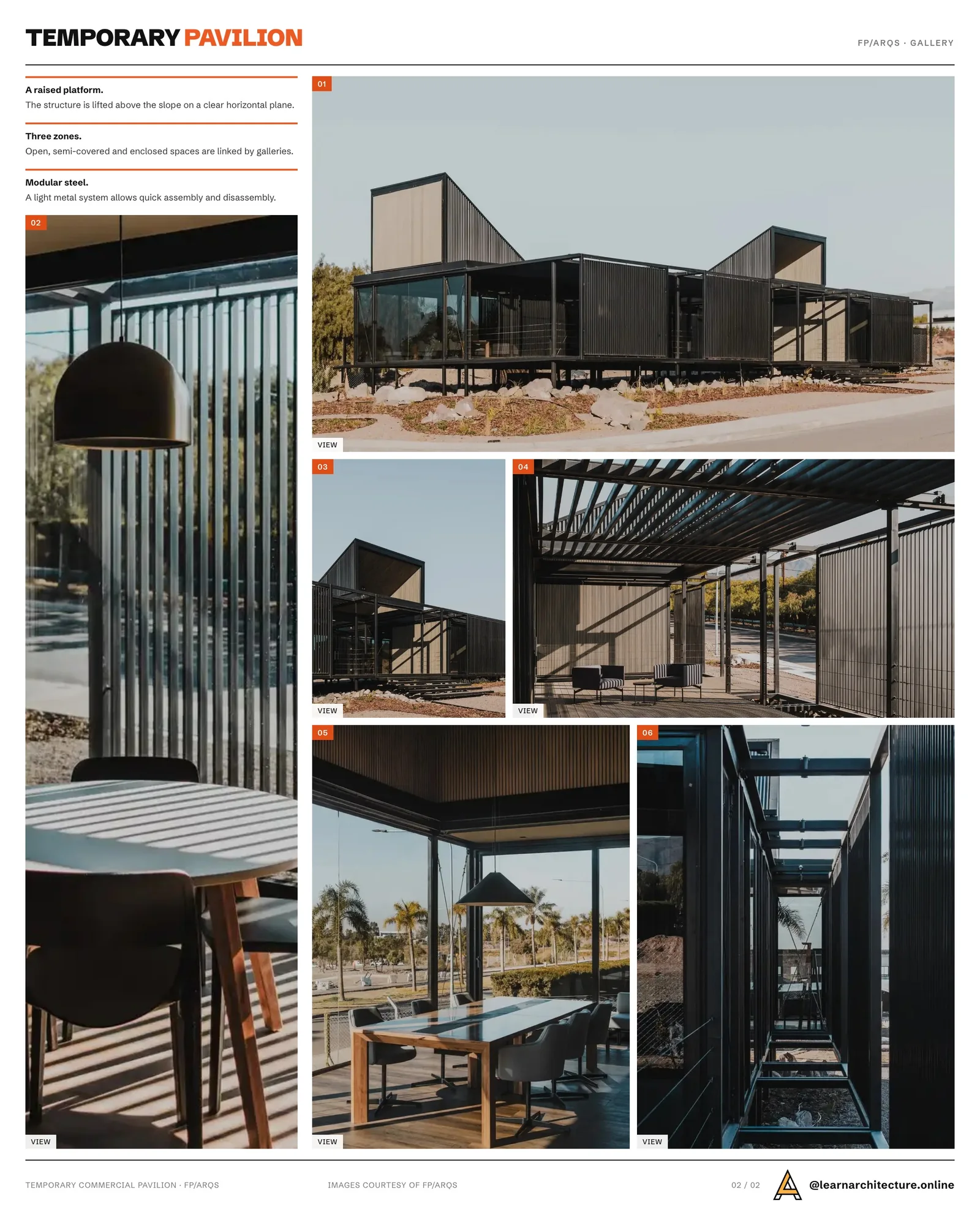
The Temporary Commercial Pavilion by FP/ARQS is conceived as much more than a sales space; it is an experiential threshold into a future suburban development in Mendoza’s foothills. Sitting on a strategic corner of a 10,000 m² site, the pavilion marks the first tangible encounter with a new residential landscape yet to be built. Its purpose is deliberately intangible and aspirational: to create emotional affinity, stimulate curiosity, and cultivate a sense of belonging long before the development takes physical form. Through permeability, openness, and a clear dialogue with its surroundings, the pavilion becomes a device of anticipation: a place where visitors begin to imagine themselves living within the emerging community.
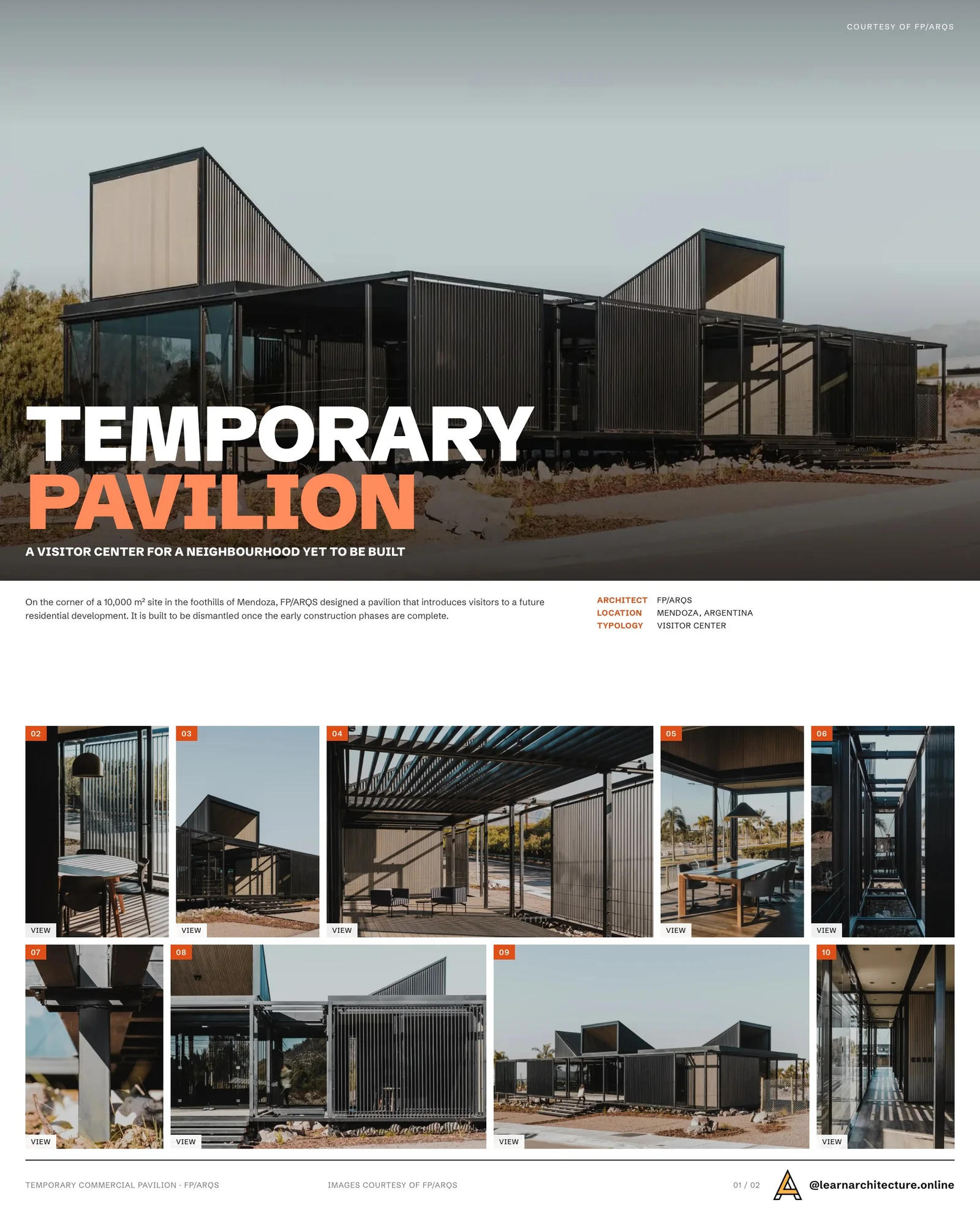
While its appearance suggests a permanent civic structure, the pavilion is intentionally designed as a temporary intervention. It will serve its function only through the early construction phases; once its role is complete, it will be dismantled, leaving behind a site enriched with memory and expectations. This transitional quality is central to its architectural identity. It is a beginning rather than a conclusion, a catalyst rather than a product.

Site Strategy and the Role of Temporality
The chosen corner lot gives the pavilion maximum visibility and accessibility, positioning it as a welcoming beacon for the development. The parcel’s rectangular geometry and gentle slope informed a design that elevates the structure above natural grade, establishing a clearly defined horizontal plane between earth and roof. From this elevation, visitors gain a new perspective on the landscape, and the pavilion signals its presence as a social platform.
A lightweight metal structure and modular construction system were selected to ensure quick assembly and effortless disassembly. This tectonic strategy highlights the building’s ephemeral nature while also reinforcing sustainable principles by reducing waste, minimizing impact on the land, and enabling reusability of components. Despite its temporality, the pavilion is grounded with a strong architectural presence that expresses clarity, openness, and framework-like logic.

A Sequence of Open, Semi-Covered, and Enclosed Spaces
The spatial organization unfolds through three interconnected zones (open, semi-covered, and enclosed), linked by galleries, glazed partitions, and sunshades. This subtle gradation builds a fluid transition between public and private uses, enhancing the visitor’s movement through the pavilion.
The intermediate zone is the project’s social heart. Acting as a hybrid space between outdoors and indoors, it fosters gathering, conversation, and the early formation of community bonds. This area is conceived as a living threshold where encounters naturally unfold, reflecting the project’s goal to cultivate connection rather than simply communicate information.
The roof, far from being a passive plane, adopts folds and vertical gestures that emphasize key program areas. These geometric movements make the pavilion identifiable from a distance, creating a series of architectural signals that guide visitors and establish a rhythm between built form and open sky.

Elevated Public Interface and Flexible Interior Spaces
Access is choreographed through a floating staircase that lifts visitors from street level onto the pavilion’s elevated platform. This elevation establishes a new social plane above the suburban context, symbolically transporting visitors into the imagined future of the development. It creates an experiential pause, suggesting that the story of the new neighborhood begins even before one steps inside.
The interior is organized with minimal partitions, emphasizing flexibility and adaptability. Its simple program (Reception, Sales Room, Meeting Room, and Services) is accommodated within an open plan that can shift as needed during the lifespan of the provisional structure. Glass, metal, and neutral surfaces produce a balance of transparency and reflection, reinforcing the building’s permeable character. Vertical patterns, framed views, and subtle textures ensure that the pavilion feels light yet substantive, temporary yet grounded.

Architecture as Catalyst, Memory, and Meaning
The pavilion embodies a symbiotic relationship between architecture, place, and imagination. It mediates between the natural topography and the new development, offering glimpses of future life while honoring the landscape’s existing qualities. Even after it is dismantled, its impact remains: an emotional imprint carried by those who visited, envisioned, and felt the promise of a new beginning.
In this sense, the building’s ephemeral nature becomes its greatest strength. It does not aim for permanence, but for resonance. As a first gesture in the creation of a community, the Visitor Center transforms the intangible (aspiration, expectation, connection) into the true material foundation of the development.
- Architectural visitor experience
- community-focused architecture
- Contemporary pavilion design
- Development sales pavilion
- Elevated social platform
- Experiential architecture
- FP/ARQS Visitor Center
- Glazed pavilion design
- Lightweight metal structure
- Mendoza architecture
- Modular construction pavilion
- Modular pavilion design
- Open semi-covered spaces
- Pavilion design Argentina
- Real estate marketing architecture
- Real estate visitor center
- temporary architecture
- Temporary building Mendoza
- Temporary commercial pavilion
- Transitional architecture









Leave a comment