


Table of Contents Show
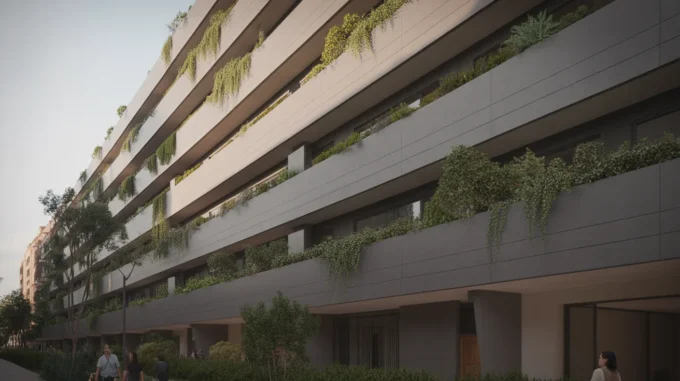
We’re running out of space at ground level, and that’s exactly why vertical gardens are surging as a practical, beautiful piece of sustainable urban living. By turning blank walls into living infrastructure, we cut heat, capture rain, clean air, and boost well-being. In this guide, we break down what vertical gardens are, why they matter for cities, how to design them well, and how to bring them from concept to your block, or your balcony.
What Vertical Gardens Are And Why They Matter
Defining Green Walls Vs. Living Facades
We use “vertical gardens” as an umbrella: green walls are engineered systems attached to a building surface, with growing media, irrigation, and plant modules: living facades guide climbing plants on cables, trellises, or mesh, rooting at grade or in planters. Green walls offer precise control and more plant variety. Living facades are lighter, lower-cost, and often easier to maintain.

Urban Context And Sustainability Goals
Cities are hotter, louder, and more flood-prone than ever. Vertical gardens help us tackle urban heat islands, stormwater spikes, and poor air quality, while contributing points under green building standards. They’re not a silver bullet, but when combined with cool roofs, street trees, and efficient buildings, they become a high-impact layer in the climate adaptation stack.
Where Vertical Gardens Fit In The Urban Fabric
Think transit stations, school courtyards, mid-rise party walls, parking podiums, and tight infill lots with zero yard space. We can use them on sun-exposed facades for cooling or interior atria for biophilic design. The idea is simple: turn neglected vertical real estate into working green infrastructure.
Key Benefits For Urban Environments
Climate Moderation And Air Quality Gains
Plants shade building envelopes and cool air through evapotranspiration: wall-surface temperature drops of 10 to 20°F are common in summer. That reduces cooling loads and peak demand. Foliage also traps particulate matter and absorbs pollutants like NOx and ozone. The combined effect improves local air quality where people actually breathe, at the street edge.

Stormwater Management And Urban Biodiversity
Modular substrates and planters can capture and slow rainfall, shaving the peak off storm events and reducing combined sewer overflows. Even small systems deliver measurable retention during light and moderate rains. Beyond hydrology, vertical gardens create microhabitats, nectar sources for pollinators, shelter for insects and urban birds, linking green roofs and street trees into a more continuous urban ecology.
Human Well-Being, Noise Reduction, And Aesthetics
We feel it the moment we step beside a living wall: lower stress, better mood, and a sense of care in the space. Vegetation dampens high-frequency noise and improves acoustics in courtyards and lobbies. Aesthetically, vertical gardens transform blank facades into landmarks, boosting curb appeal and neighborhood pride, often with measurable impacts on foot traffic and dwell time.
Systems And Design Considerations
Modular, Felt, And Planter-Based Wall Systems
- Modular panels: pre-grown cassettes for quick installation and uniform coverage.
- Felt/pocket systems: lightweight and flexible, excellent for intricate patterns, but require attentive irrigation.
- Planter-based: rows of troughs or boxes: scalable, forgiving, and great for food-producing species.
We choose systems based on structure, budget, maintenance capacity, and visual goals.

Plant Selection By Climate, Aspect, And Purpose
Orientation matters. South- and west-facing walls suit sun-tolerant, drought-resilient species: north-facing facades favor shade lovers and ferns. In cold climates, evergreens and hardy perennials hold structure through winter. For air quality and cooling, dense, small-leaf species perform well: for biodiversity, mix bloom times and native plants. Edible walls, herbs, leafy greens, strawberries, shine on planter systems.
Irrigation, Drainage, And Nutrient Delivery
Closed-loop drip with fertigation is the workhorse: it conserves water and ensures even distribution. Always plan for redundancy (pressure regulation, filtration, leak detection) and safe drainage away from the building envelope. Include access points for flushing lines and seasonal checks. Smart controllers tied to weather data reduce waste and protect plants during heat waves.
Costs, Maintenance, And Measuring Impact
CapEx, OpEx, And Payback Windows
Upfront costs vary widely by system and scale. Modular green walls tend to cost more per square foot than living facades but deliver immediate coverage. Ongoing expenses include water, nutrients, pruning, and replacements. We see payback through energy savings, longer facade life (UV and thermal buffering), stormwater fee reductions, and leasing/branding value.

Performance Metrics: Survival, Cooling, And Water Capture
Track what matters: plant survival rates by zone, wall-surface and indoor temperature deltas, irrigation volumes versus rainfall captured, and maintenance hours. For many projects, even 10 to 30% stormwater retention on-site helps meet permit thresholds, while 5 to 15% cooling energy reductions on exposed walls are achievable with good design.
Policy, Codes, And Incentives
Integrating With Green Building Standards
Vertical gardens can support LEED, BREEAM, and WELL credits tied to heat island reduction, rainwater management, and biophilic design. Document performance, species lists, irrigation efficiency, and monitoring, to lock in those points.

Zoning, Fire, And Structural Considerations
We coordinate early with building officials. Key checks: structural loading, moisture management, wind uplift, fire breaks and non-combustible layers near egress, and safe maintenance access. Some cities offer FAR bonuses, stormwater fee credits, or grants for green infrastructure, worth pursuing.
Implementation Roadmaps And Real-World Examples
Retrofits Vs. New Builds
Retrofits focus on lightweight systems, anchorage, and careful waterproofing: they can turn drab walls into performance assets. New builds can integrate recesses, greywater loops, and maintenance catwalks, lowering lifetime cost and risk.

Pilots, Partnerships, And Community Engagement
We like to start with a pilot: a 200 to 500 sq ft wall tested across seasons. Partner with local nurseries, universities for monitoring, and facility teams for training. Public art collaborations add identity and help secure grants.
Small-Scale Options For Homes And Balconies
Apartments and condos can join the movement with planter rails, pocket systems, or simple trellis kits. In cities embracing vertical living, we’re seeing herb rails on balconies in Seattle, strawberry planters in Singapore high-rises, and climbing jasmine on trellises in Barcelona courtyards. These small moves cool microclimates, soften views, and bring a daily dose of nature home.
Real-world inspirations include Milan’s Bosco Verticale, Sydney’s One Central Park, and school courtyard walls in Toronto, each adapted to climate, structure, and community goals.
Conclusion
Vertical gardens aren’t just lush decor: they’re multi-benefit infrastructure that helps cities breathe easier, stay cooler, and manage water smarter. If we treat facades as living surfaces, planned, monitored, and cared for, we unlock durable value: healthier streets, resilient buildings, and proud communities. The next step is simple: pick a wall, start small if needed, measure, iterate, and grow. That’s how we make the future of sustainable urban living climb faster than the vines themselves.
- city green spaces
- eco-friendly urban design
- Environmentally-friendly urban design
- green wall installations
- indoor vertical gardens
- living walls
- modern urban gardens
- outdoor vertical gardens
- Sustainable Architecture
- sustainable urban living
- urban garden design
- urban gardening solutions
- urban greening solutions
- urban sustainability
- urban vertical farming
- vertical garden systems
- vertical gardening ideas
- vertical gardens
- vertical planters
- vertical planting systems











Leave a comment