


Table of Contents Show
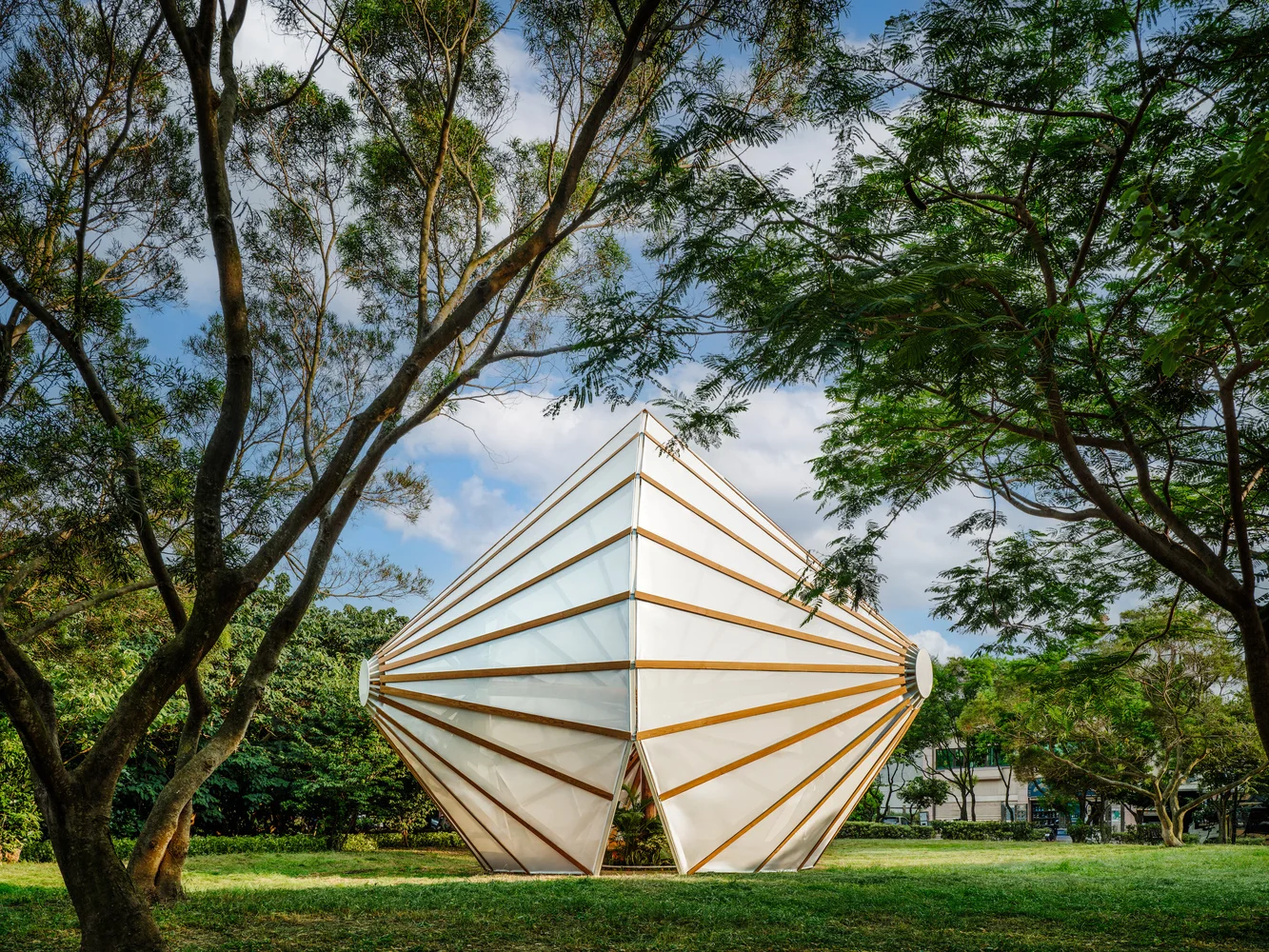
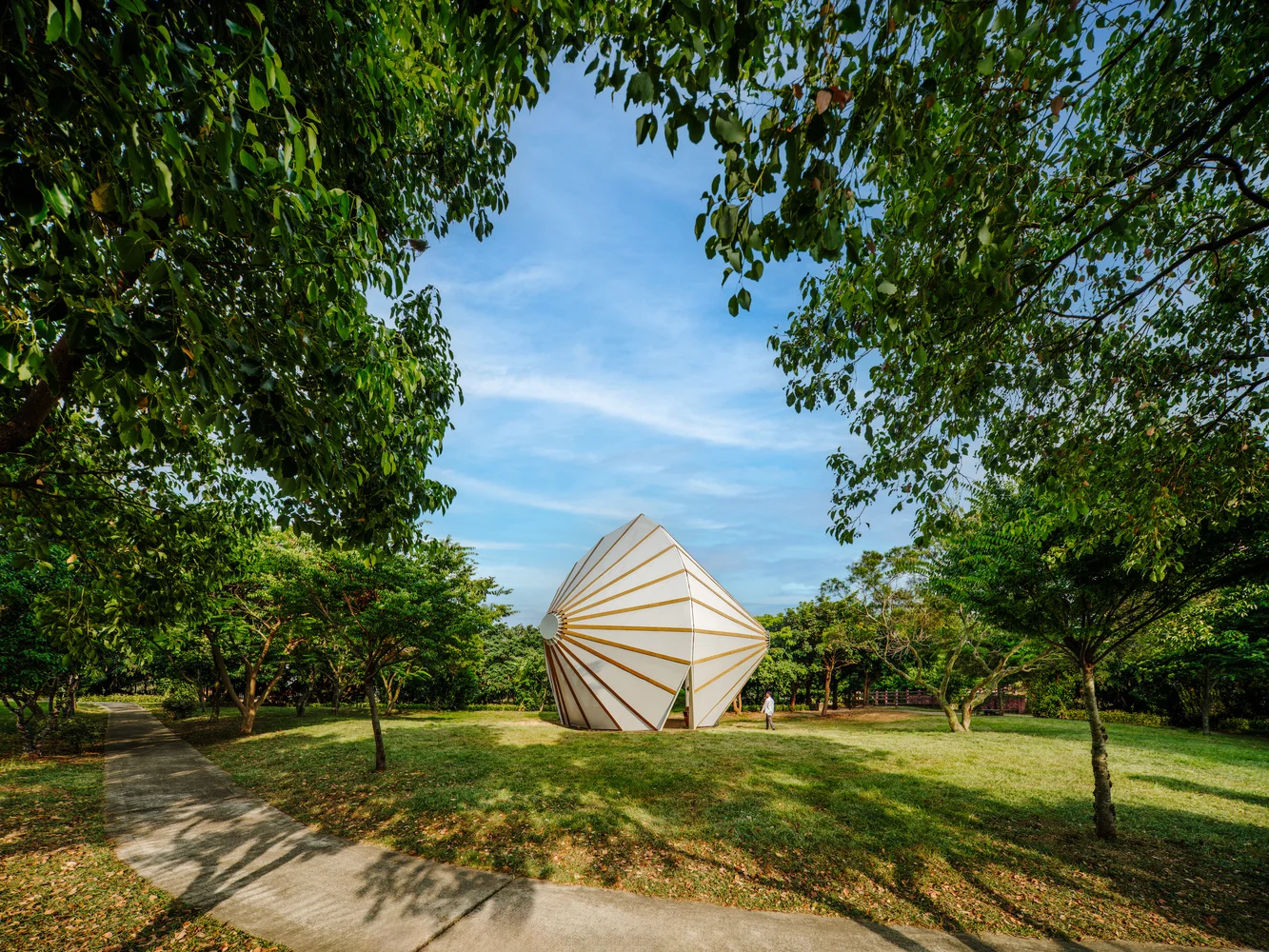
Rooted in cultural symbolism yet expressed through contemporary spatial language, All Together Under the Umbrella is an architectural installation that transforms the traditional Hakka oil-paper umbrella into a shared place of gathering. Designed by Cheng Tsung Feng Design Studio, the project explores themes of connection, protection, and collective presence, inviting visitors to step beneath an abstracted canopy where heritage, craftsmanship, and imagination converge. More than an object to observe, the installation becomes an inhabitable space—one that encourages pause, encounter, and reflection within a poetic architectural framework.
Cultural Meaning as Architectural Foundation
For the Hakka people, the oil-paper umbrella holds deep symbolic weight. It represents unity, reunion, and destiny, and its cultural resonance is embedded even within the Chinese character for umbrella (傘), where multiple figures of “person” (人) appear, suggesting gathering and mutual dependence. Rather than referencing this symbolism superficially, Cheng Tsung Feng uses it as the conceptual core of the project.
The installation becomes a spatial interpretation of these values. It proposes architecture not as enclosure but as gesture—a structure that shelters without confining, that brings people together without imposing hierarchy. Through this lens, tradition is not preserved as artifact but reactivated as living experience.
Translating Craft into Spatial Structure
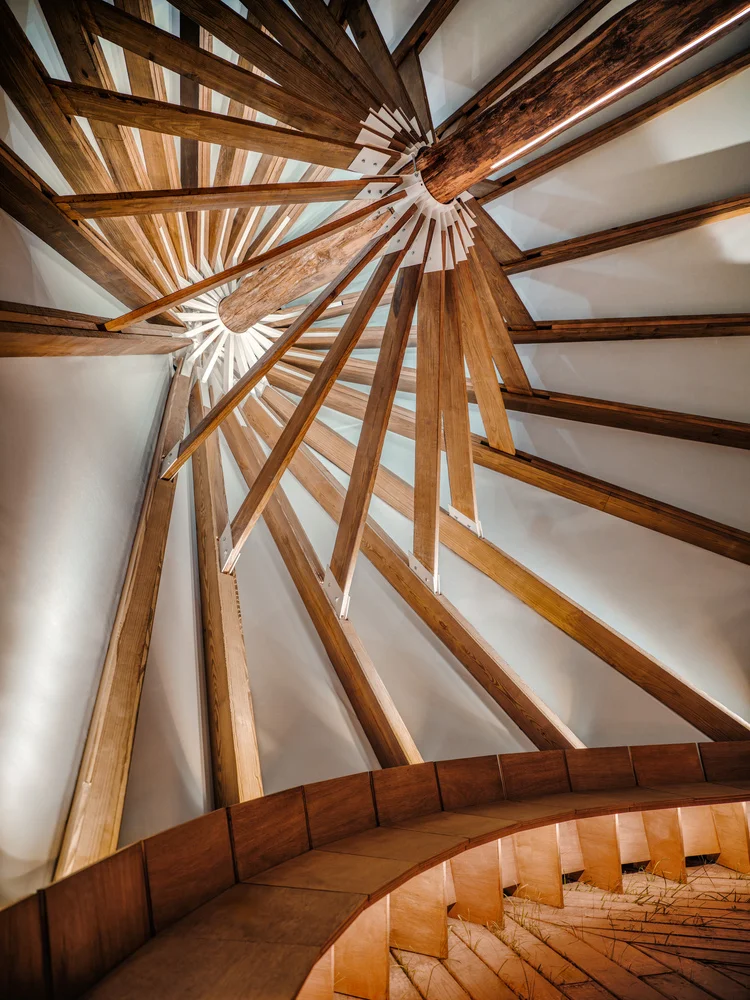
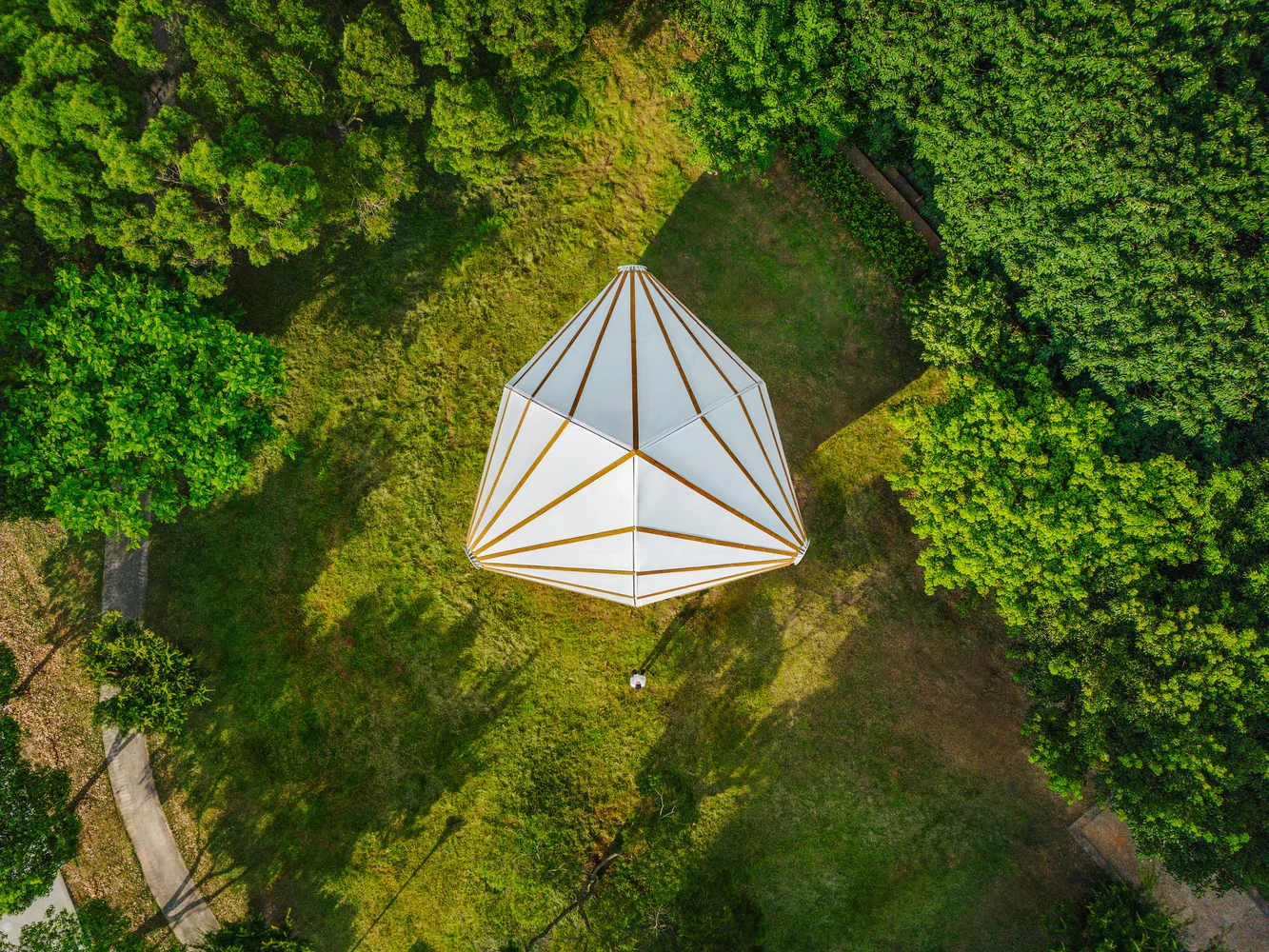
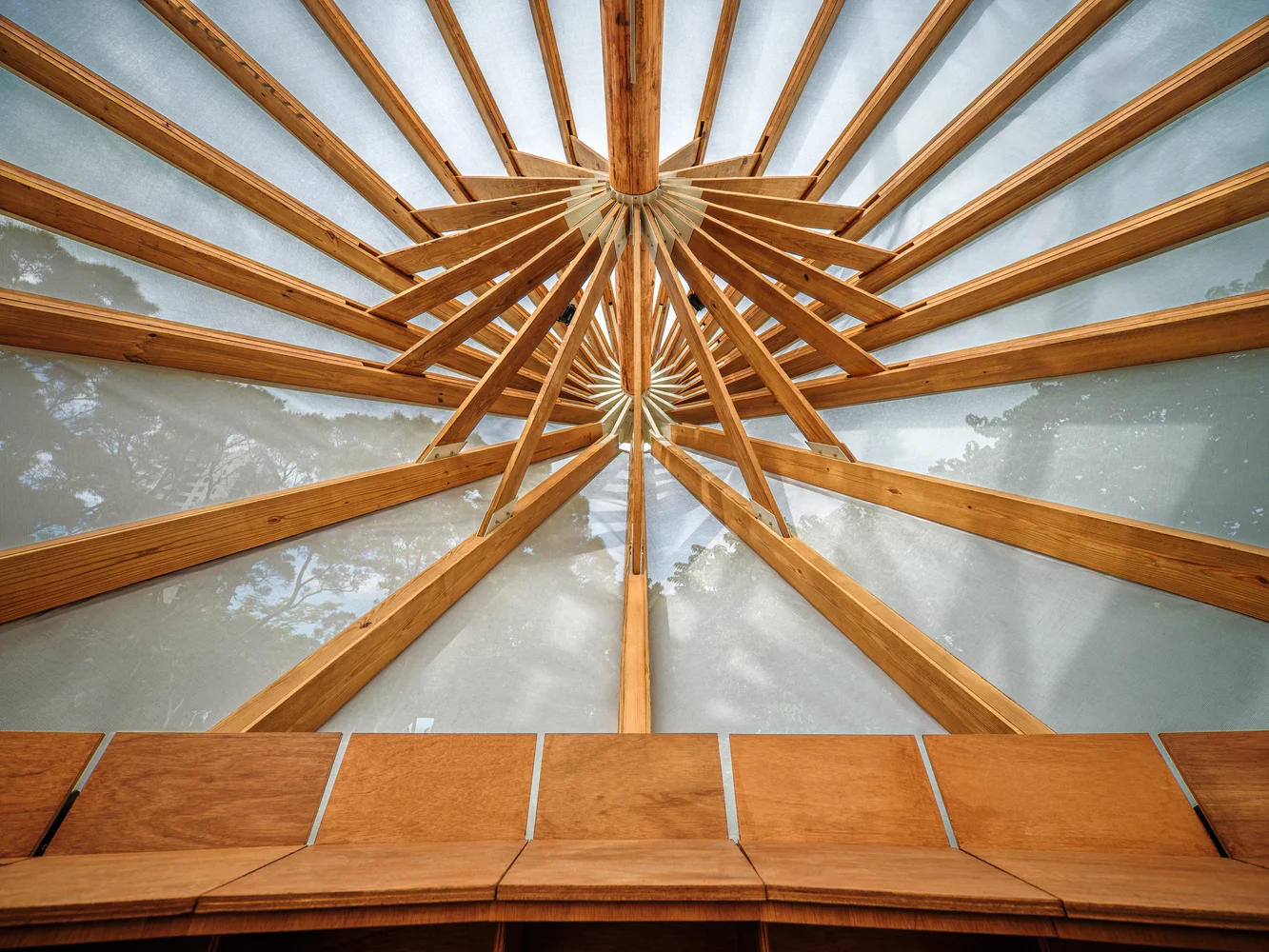
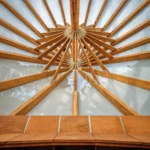
The design process begins with careful observation of the traditional oil-paper umbrella itself. Its delicate ribs, refined proportions, and intelligent joinery are studied as both craft object and structural system. Rather than copying its form, Feng disassembles its logic and reconstructs it at architectural scale.
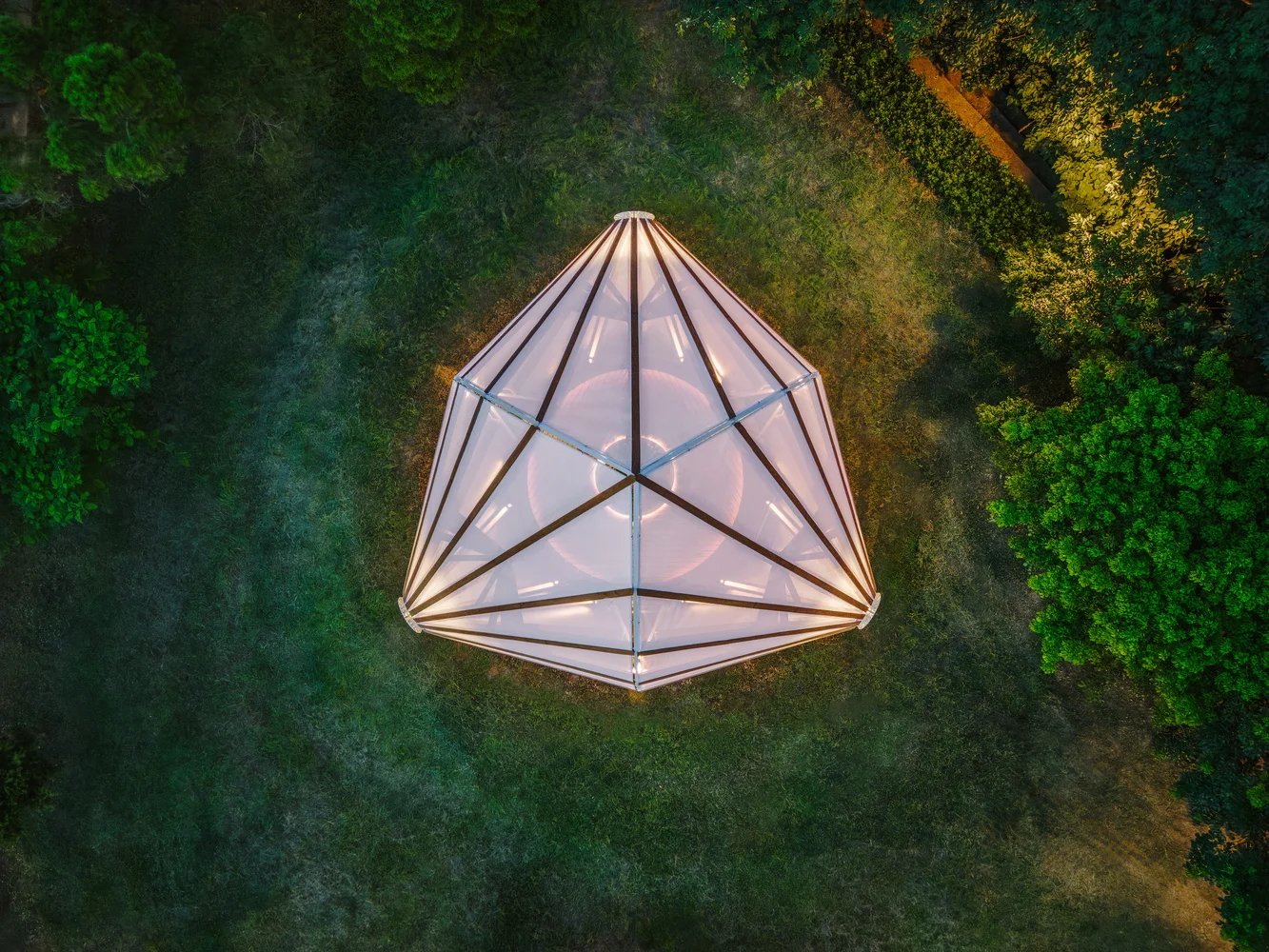
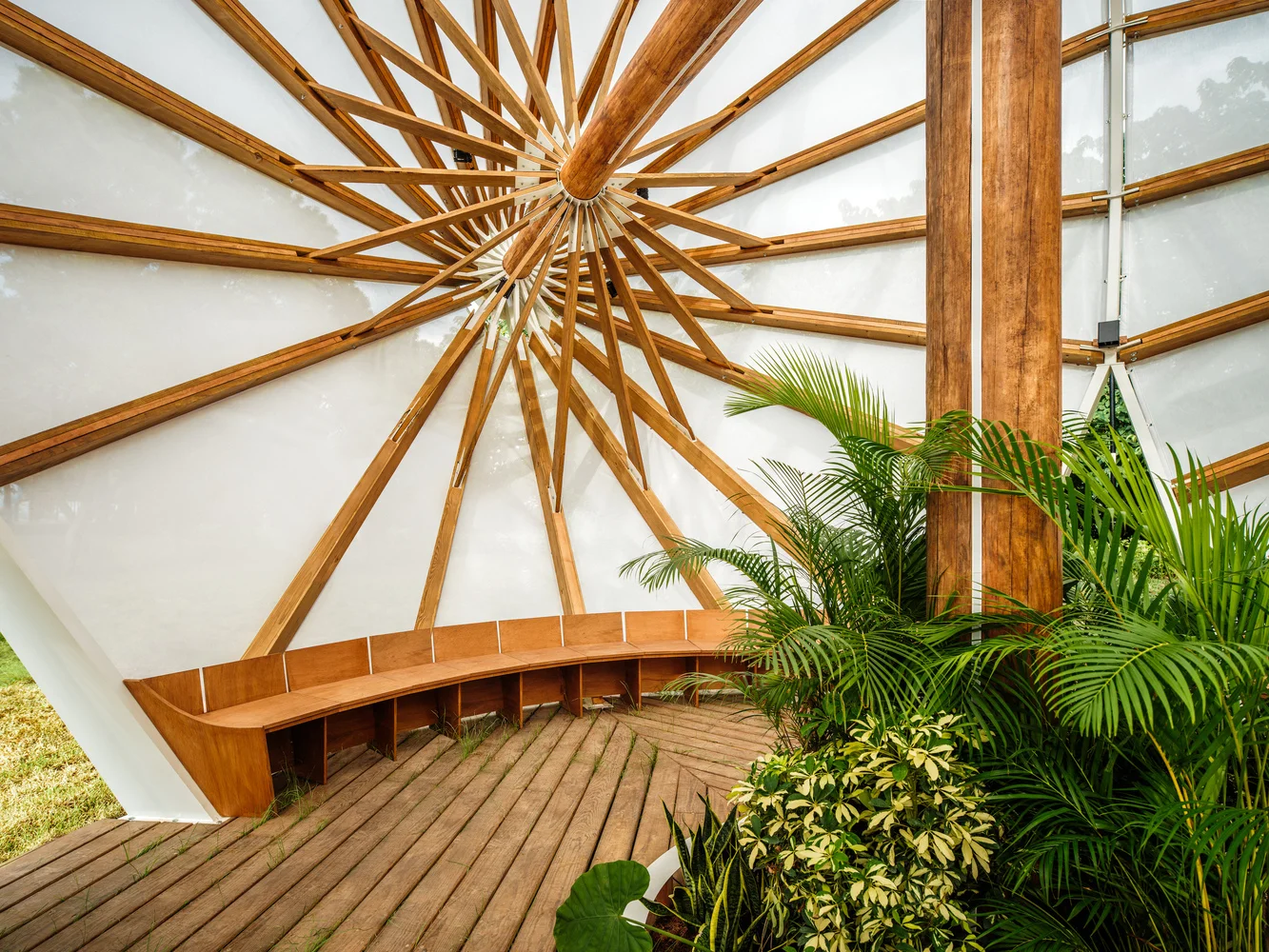
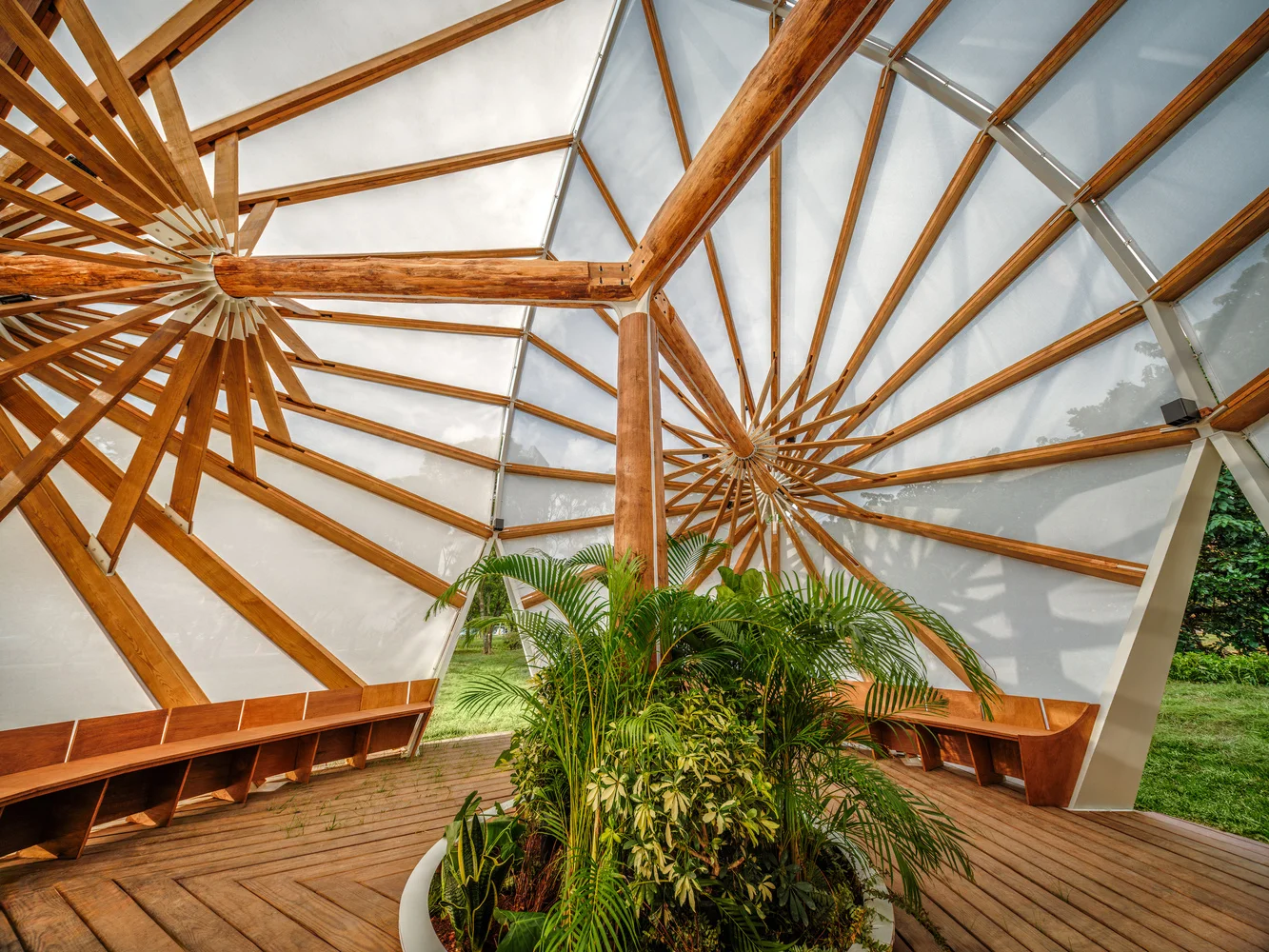
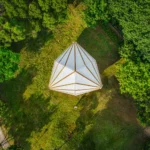
Three oversized umbrella structures are developed, their skeletal frameworks interwoven to create a continuous canopy. The result is neither sculpture nor building, but a hybrid condition where structure, ornament, and meaning become inseparable. This approach reflects the studio’s broader philosophy: transforming traditional techniques into contemporary tectonic language without stripping them of cultural depth.

A Space for Gathering and Pause
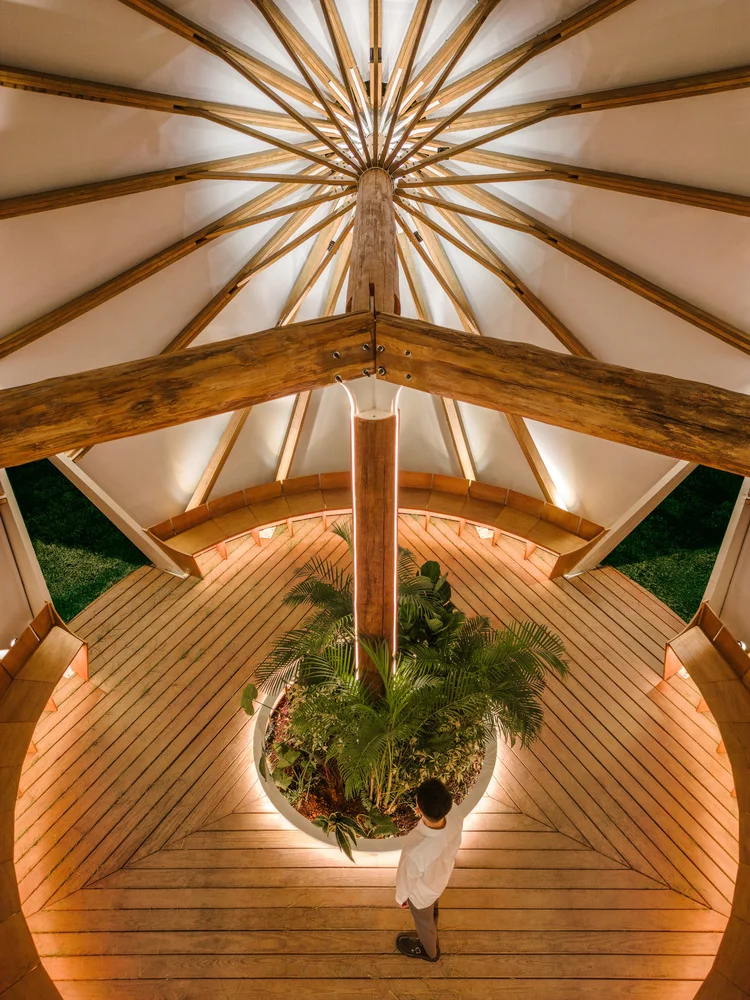
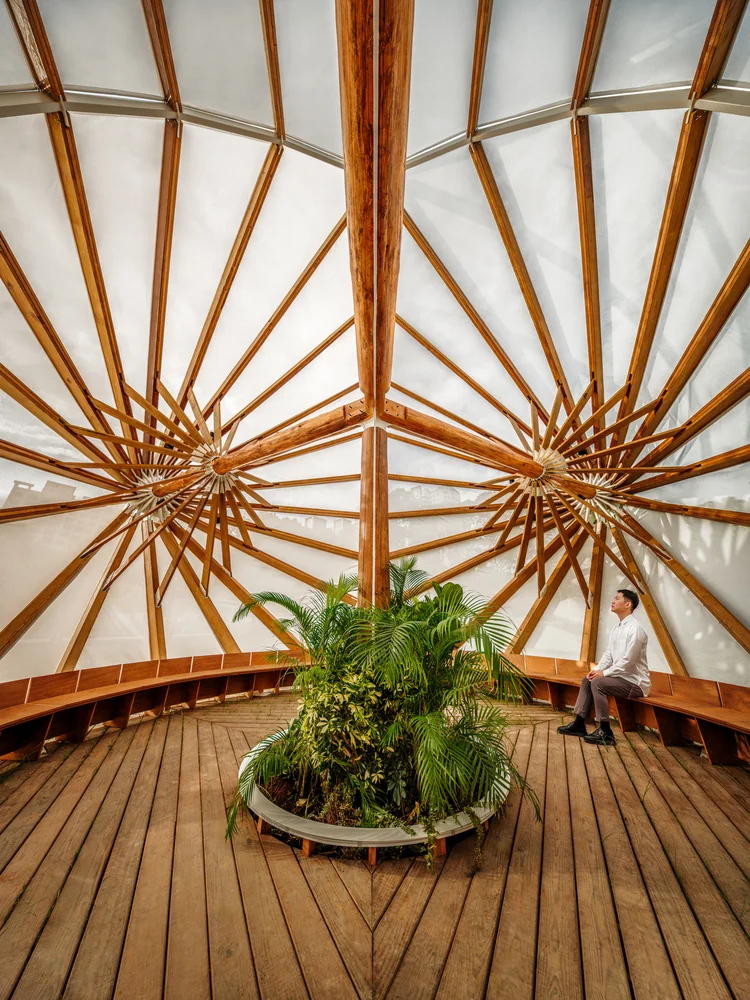
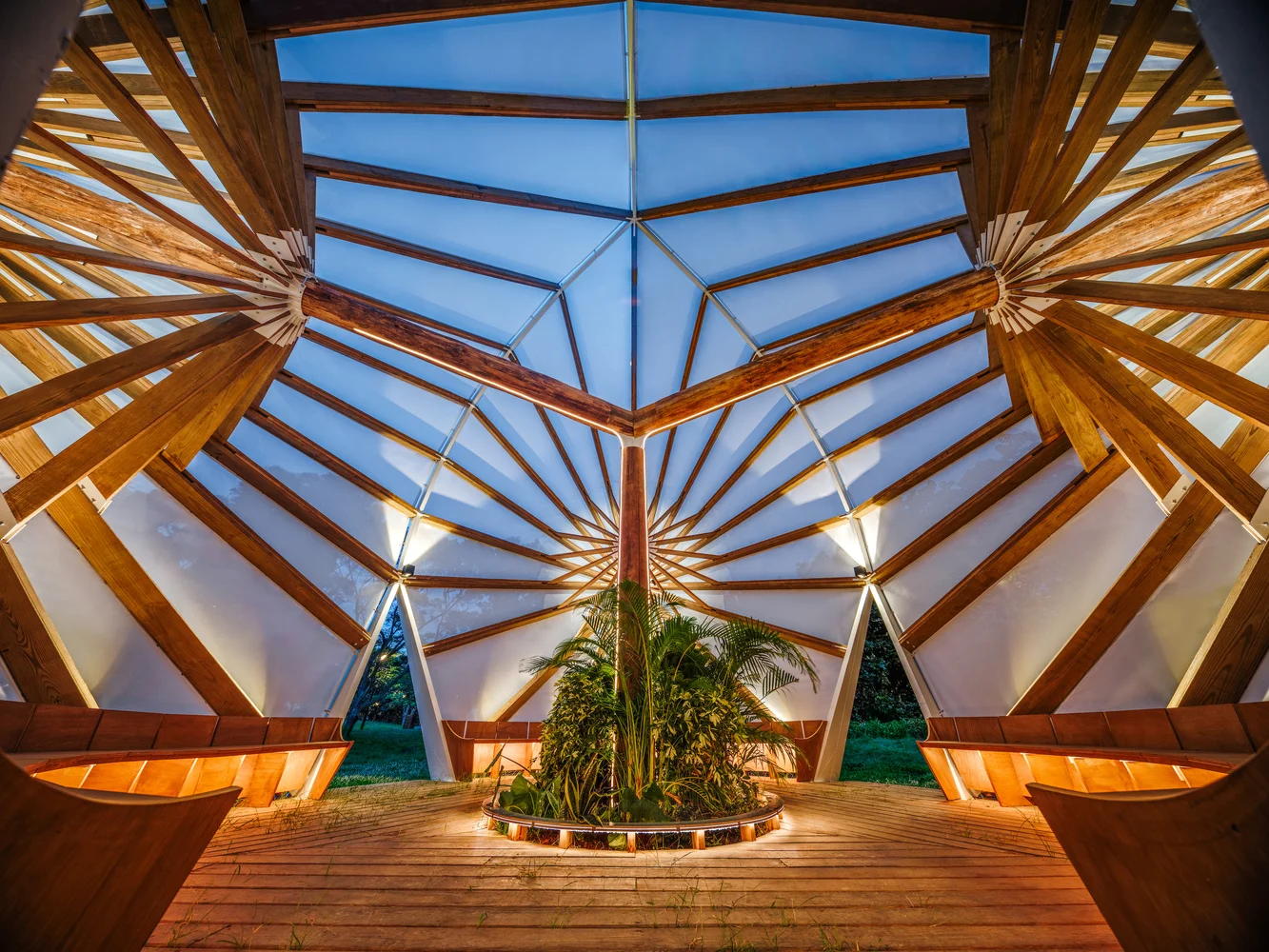
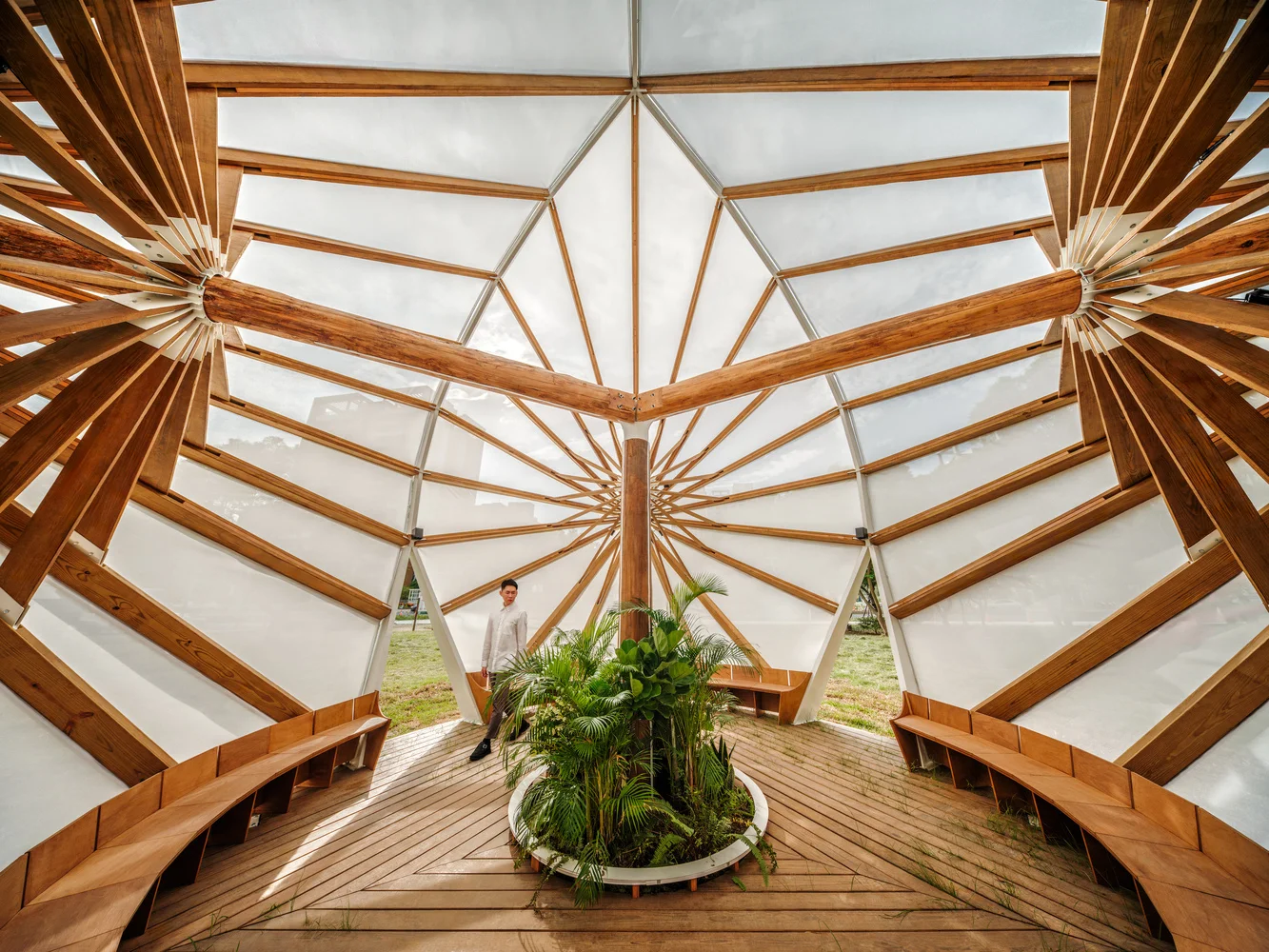
At ground level, the installation organizes itself around a central pocket garden. This small planted void acts as an anchor, introducing nature into the heart of the structure and reinforcing the relationship between people and environment. Around this garden, circular wooden benches offer places to sit, wait, observe, and interact.
These elements turn the project into a functional public space rather than a purely symbolic object. Visitors are encouraged to occupy the structure casually—resting beneath its canopy, meeting others, or simply passing time. Architecture here becomes a medium for social intimacy, scaled to the body and attentive to everyday behaviors.
Light, Material, and Atmosphere
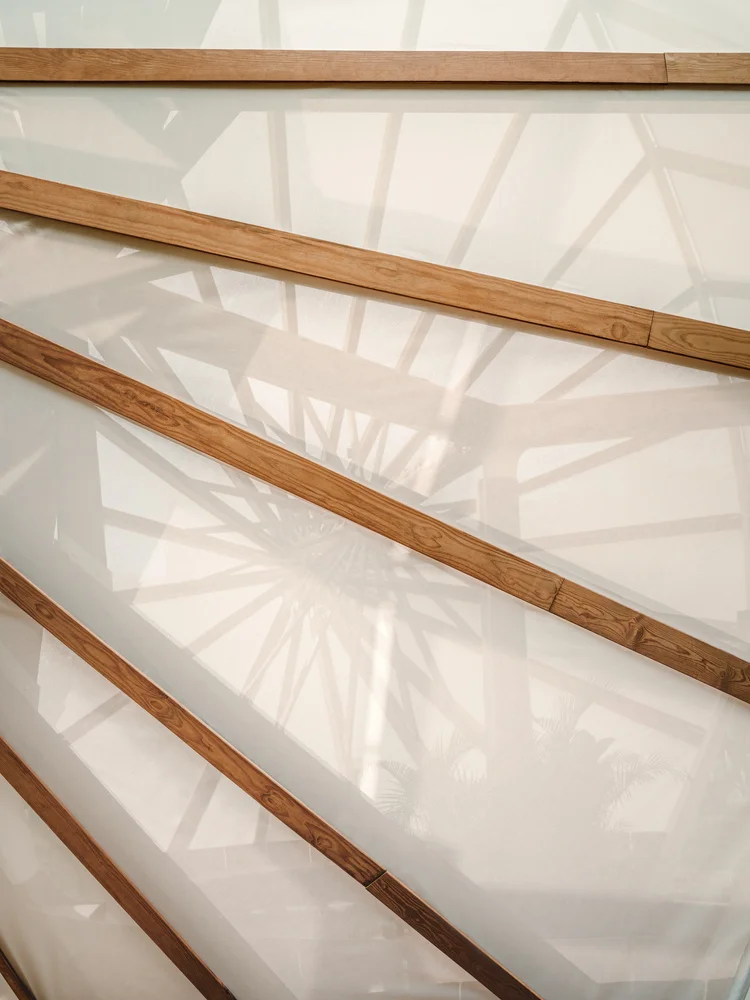
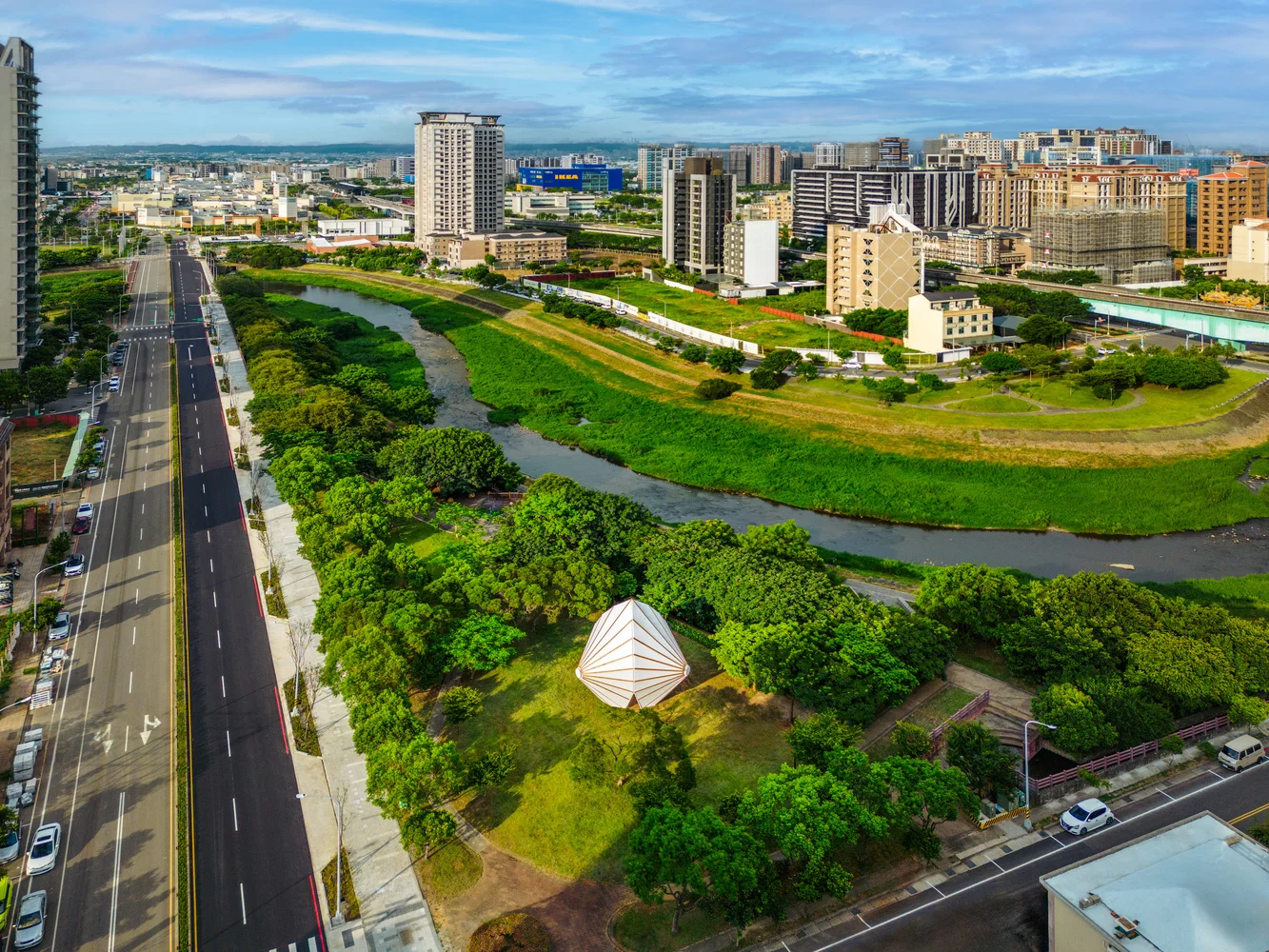
The canopy is formed from perforated canvas, a material choice that enhances both environmental performance and sensory experience. During the day, light filters through the surface, creating soft shadows that animate the interior. Air flows naturally through the perforations, preventing the space from feeling enclosed.
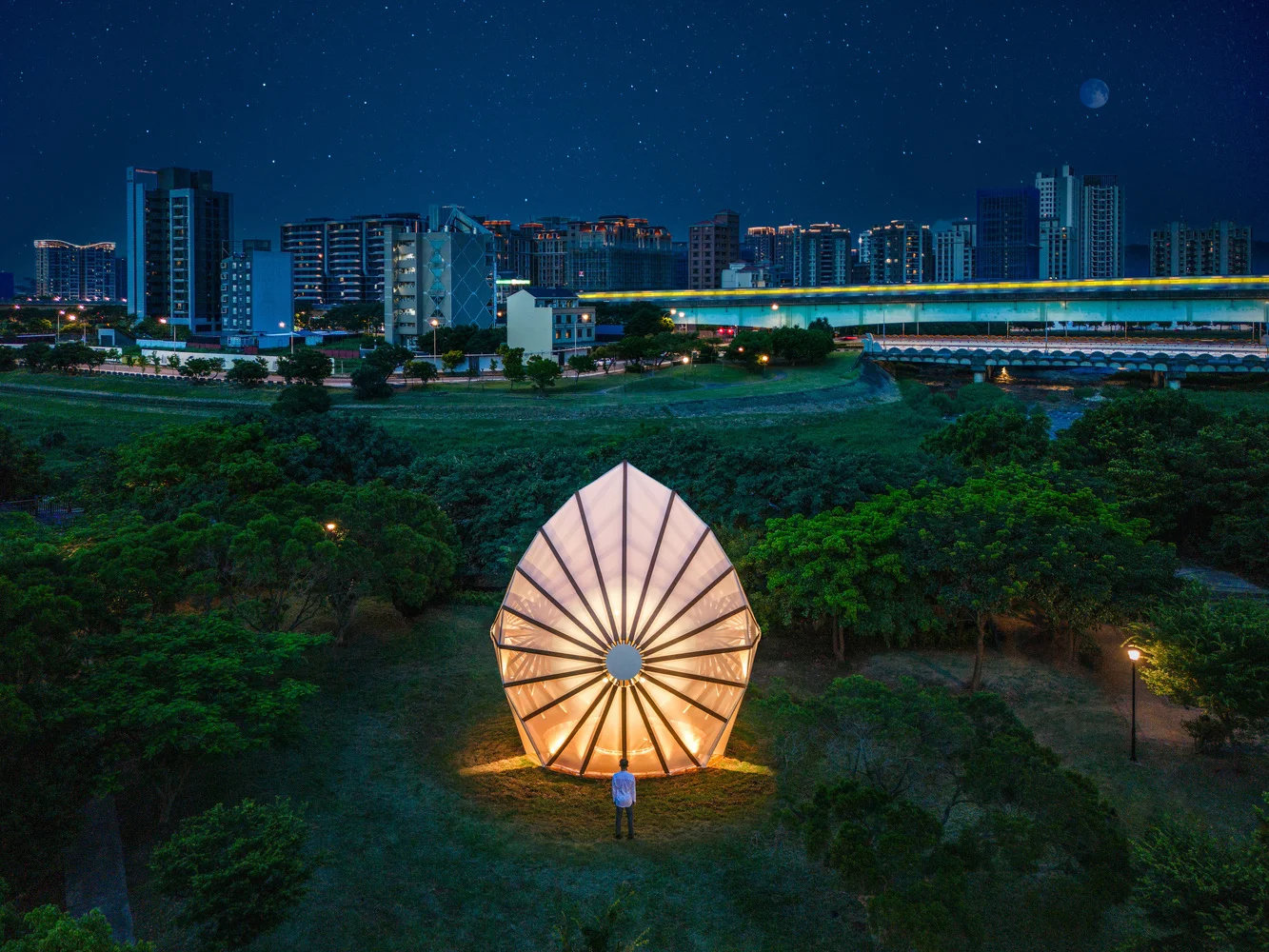
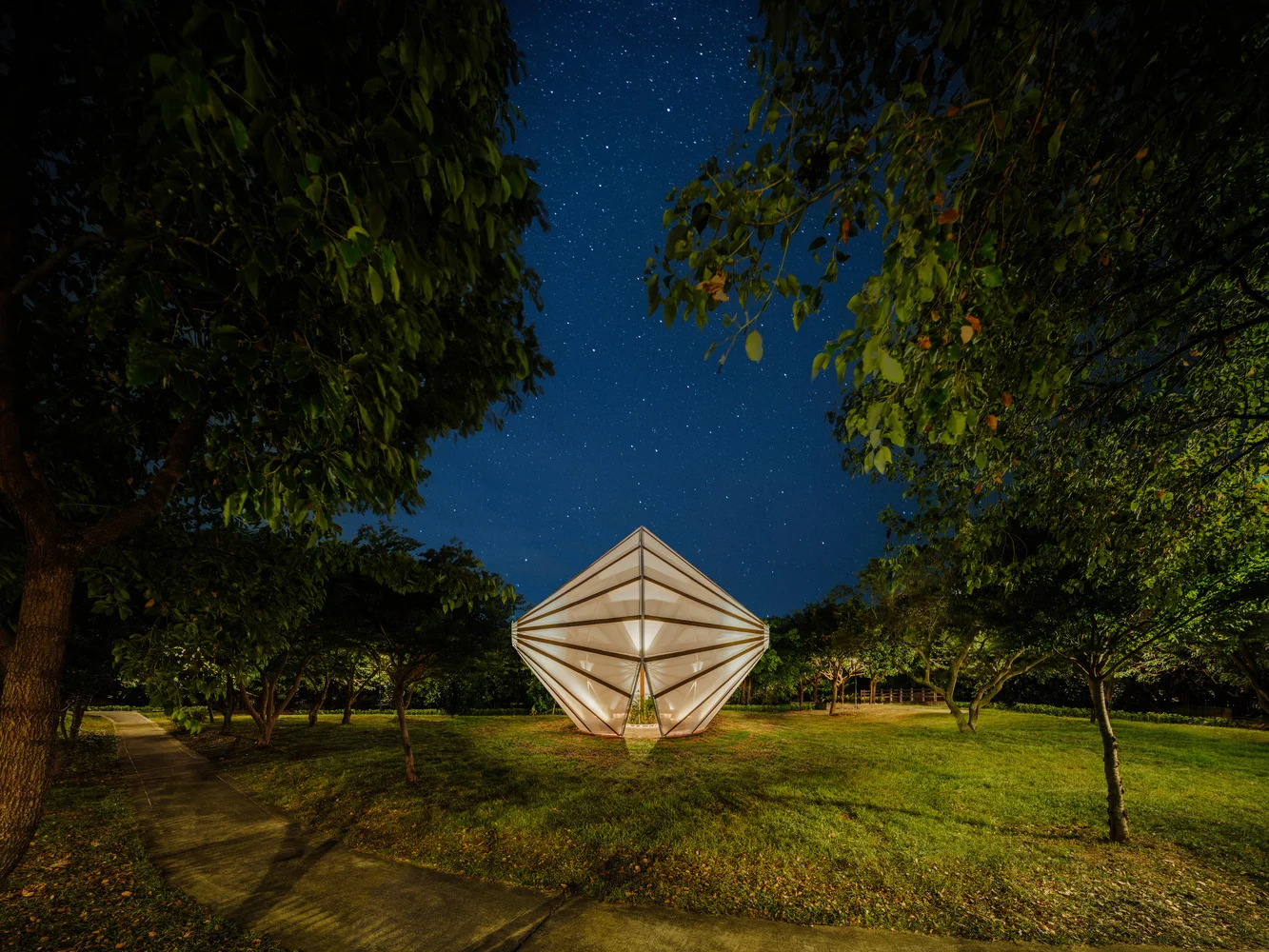
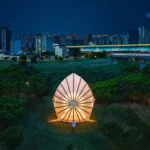
At night, the structure glows gently like a lantern, transforming into a luminous presence within its surroundings. During rain, the angled surfaces channel water away, preserving the functional logic of the umbrella while amplifying it architecturally. These subtle environmental responses reinforce the project’s climatic intelligence and deepen its poetic quality.
Geometry, Perception, and Imagination
From the central axis, the three umbrella forms radiate outward, generating a kaleidoscopic spatial geometry. Movement through the installation continuously alters perception: patterns overlap, perspectives shift, and the structure reveals new relationships from each angle. The experience becomes immersive rather than static.
Standing beneath the canopy, visitors often describe the sensation of inhabiting a surreal, almost cosmic environment—as though inside a floating structure or imagined spacecraft. This ambiguity between familiarity and fantasy is intentional. By abstracting cultural form into spatial experience, Feng allows the work to operate on multiple levels: emotional, symbolic, and experiential.

Architecture as Cultural Continuity
Rather than treating tradition as something to be preserved unchanged, All Together Under the Umbrella demonstrates how cultural memory can evolve through design. The project does not replicate the oil-paper umbrella; it reinterprets its essence. It preserves its values of gathering, protection, and belonging while allowing new meanings to emerge.
In doing so, the installation positions architecture as a bridge between generations—between craft and contemporary practice, between ritual and everyday life, between individual experience and collective space.
Conclusion
All Together Under the Umbrella succeeds because it is neither purely symbolic nor purely functional. It is an architectural atmosphere—crafted from structure, light, material, and memory—that invites people to inhabit a shared moment. By expanding a humble cultural object into a spatial experience, Cheng Tsung Feng demonstrates how architecture can nurture connection, celebrate heritage, and offer gentle refuge within the public realm.
Photography: Fixer Photographic Studio






- All Together Under the Umbrella
- Architectural Installation
- architecture and culture
- Cheng Tsung Feng Design Studio
- Community Space Design
- conceptual architecture
- Contemporary Craft
- cultural architecture
- experimental architecture
- Hakka Culture
- Installation Architecture
- light and shadow architecture
- Pavilion design
- Poetic architecture
- Public Pavilion
- Small-scale architecture
- Spatial Art
- temporary architecture
- Timber Structure
- Umbrella Pavilion







Leave a comment