


Table of Contents Show
Floor levels drive how we design, coordinate, and build. Get them wrong, and doors don’t align, stairs miss by inches, and site crews lose precious time. In this guide, we unpack floor levels in architecture: what the jargon means, how levels appear on plans and sections, and the coordination tricks we use in BIM to keep every consultant (and every millimeter) in sync.
Levels, datums and finished floor levels are the frame that every other dimension is measured against. Our building standards and dimensions reference shows how the rest of those figures are written.

Why Floor Levels Matter
Levels are the backbone of spatial coordination. They define vertical relationships: how a lobby steps down to a plaza, how ramps meet thresholds, how drains actually, well, drain. They affect structural spans, MEP clearances, fire compartments, and accessibility. Even small discrepancies compound, an FFL set 20 mm too high can force door undercuts, misalign cladding datums, or create trip hazards at transitions. Getting levels right early reduces RFIs, minimizes rework, and shortens schedules. We treat levels as contract-critical information: documented clearly, referenced consistently, and checked against a single project datum everyone trusts.
Core Terminology And Abbreviations
Floor vs. Level
We use floor for the physical, occupiable plane (the surface people walk on) and level for the vertical reference used to control heights across the project. A building may have one “First Floor” but multiple levels controlling soffits, platforms, or podium decks.

Story/Storey
Same concept, different spelling. In the US, story; in the UK/EU, storey. It’s the vertical slice of a building between one finished floor and the next. Code calculations (egress, elevators) often count stories differently than marketing names; note both.
Finished Floor Level (FFL)
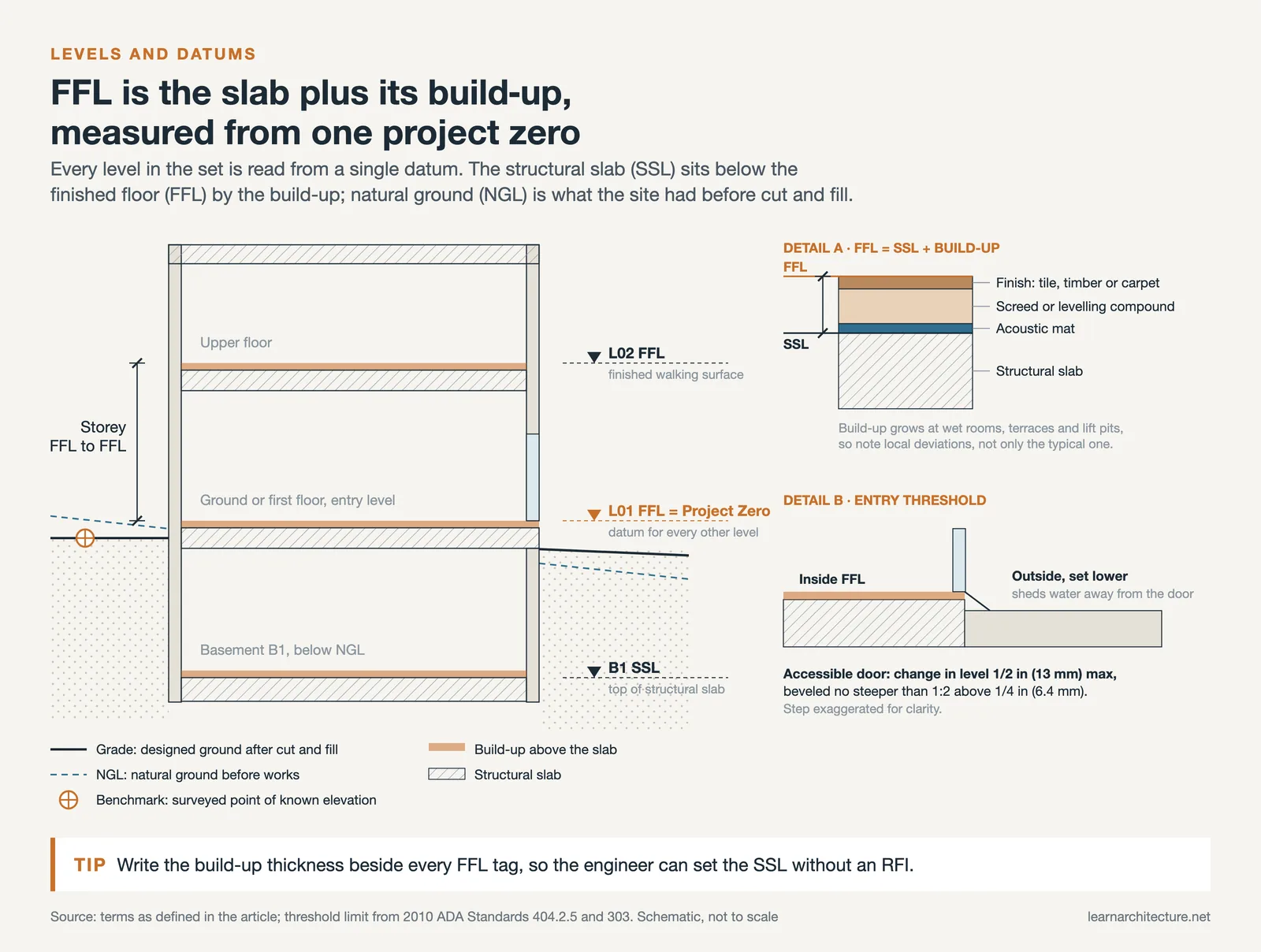
FFL is the finished walking surface elevation, after screed, toppings, tile, carpet, or wood. It’s what governs door thresholds, accessibility slopes, and interior clearances. Always confirm whether FFLs are inside or outside, as exterior levels are often set slightly lower at doors to manage water; at accessible entrances the 2010 ADA Standards limit that change in level to 1/2 in (13 mm), beveled above 1/4 in (6.4 mm).
Structural Slab Level (SSL/SFL)
SSL (or SFL) is the structural concrete or steel deck elevation before finishes. The FFL equals SSL plus build-ups (screed, leveling compounds, acoustic mats, finish thickness). Document typical build-up thicknesses and local deviations at wet rooms, terraces, and elevators.
Natural Ground Level (NGL) And Grade
NGL is the existing site elevation before construction. Grade is the designed ground surface after cut/fill. We design entrances, ramps, and drainage off grade, not just NGL, so civil and architectural drawings must reconcile these values.
Datum And Benchmark (Project Zero)
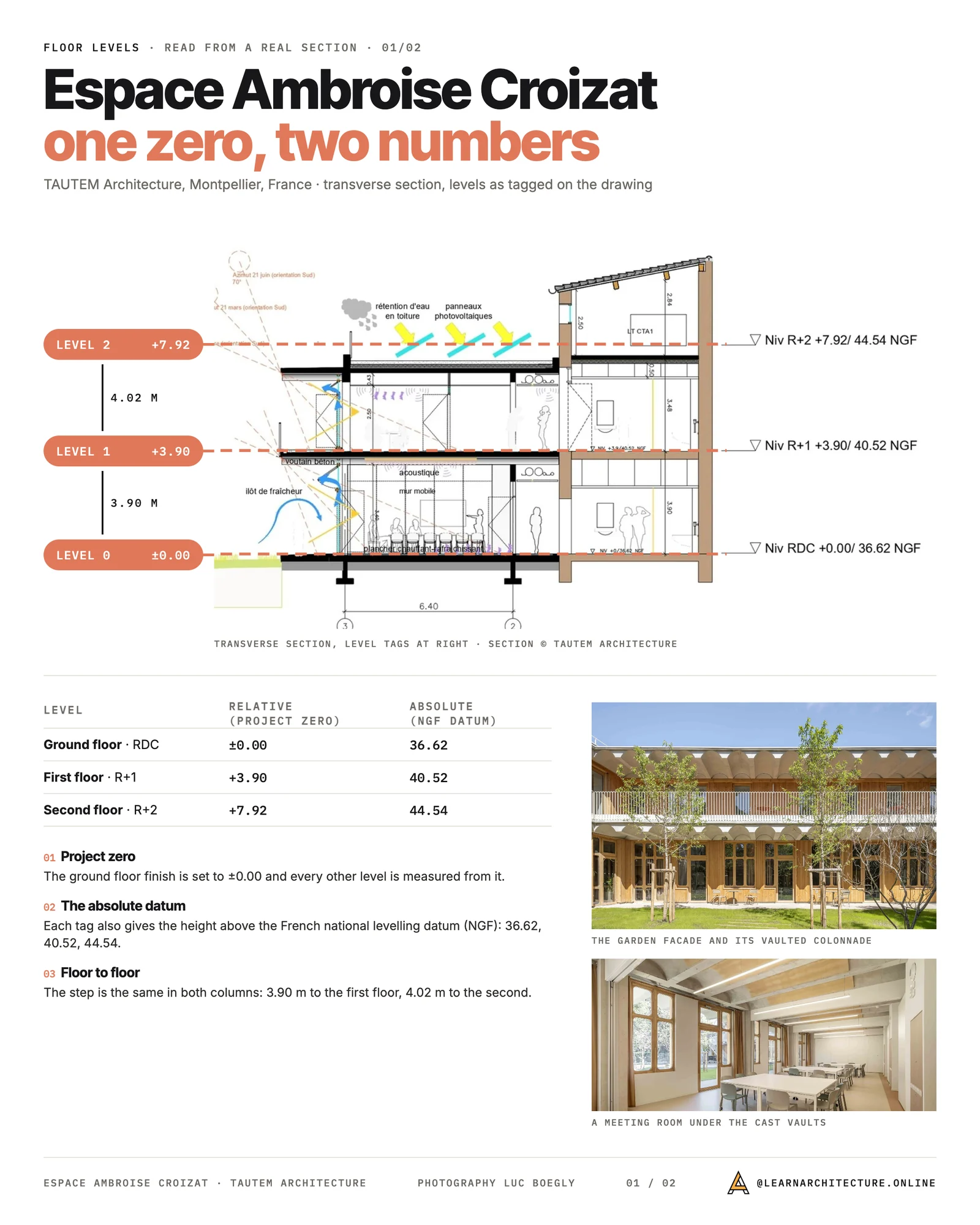
A datum (Project Zero) is the reference elevation we use for the entire project. A benchmark is a physical point (often set by surveyors) with a known elevation relative to national or site coordinates. Set both early, publish them, and never shift them casually; downstream models and shop drawings depend on that stability.
Typical Level Types In A Building
Basement And Subgrade Levels
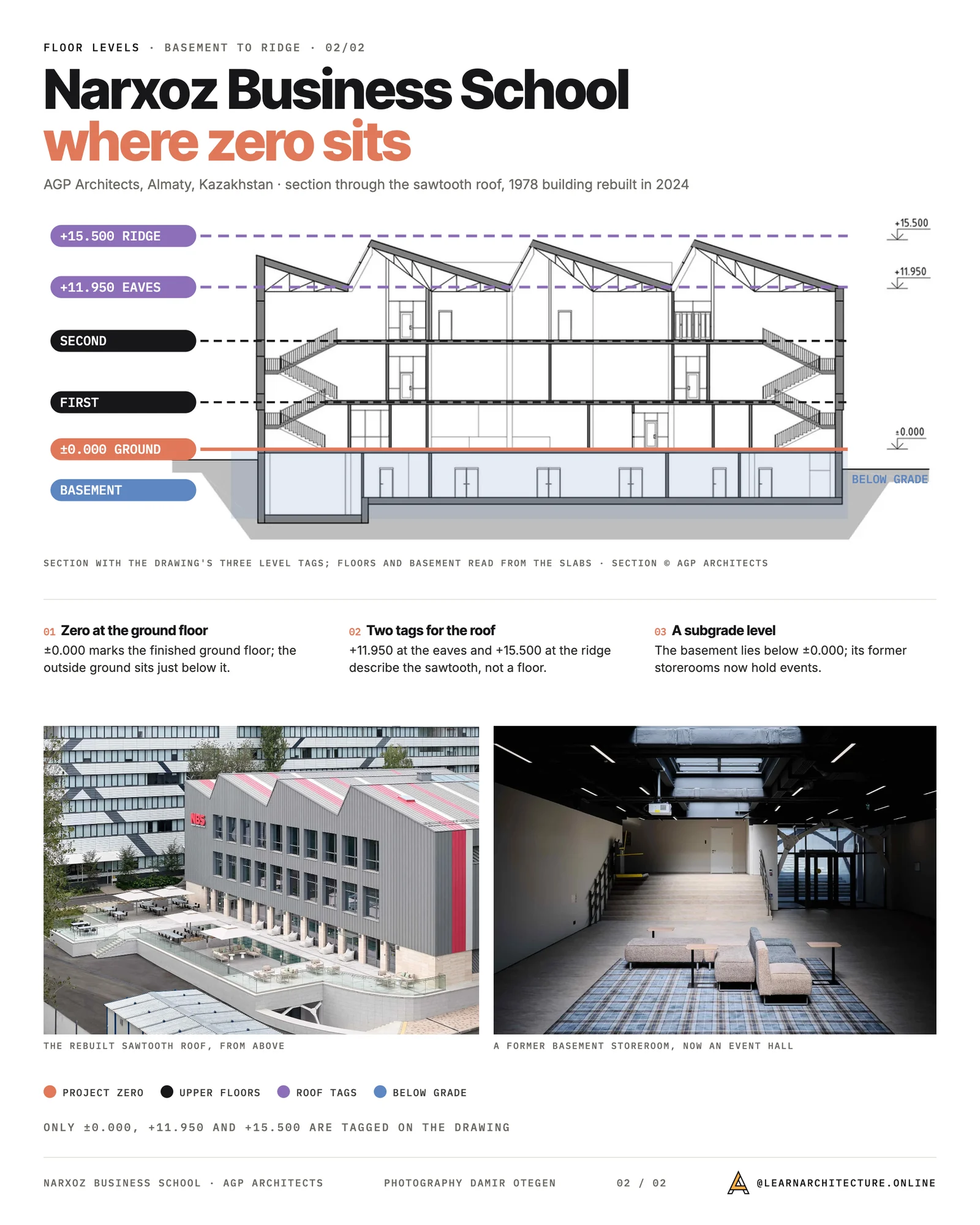
Basements often sit below NGL with stepped slabs, sump pits, and ramped driveways. Waterproofing strategies hinge on precise SSLs at walls and lift pits. We call them B1, B2, etc., and coordinate with parking clearances and mechanical rooms.

Ground, First, And Upper Floors
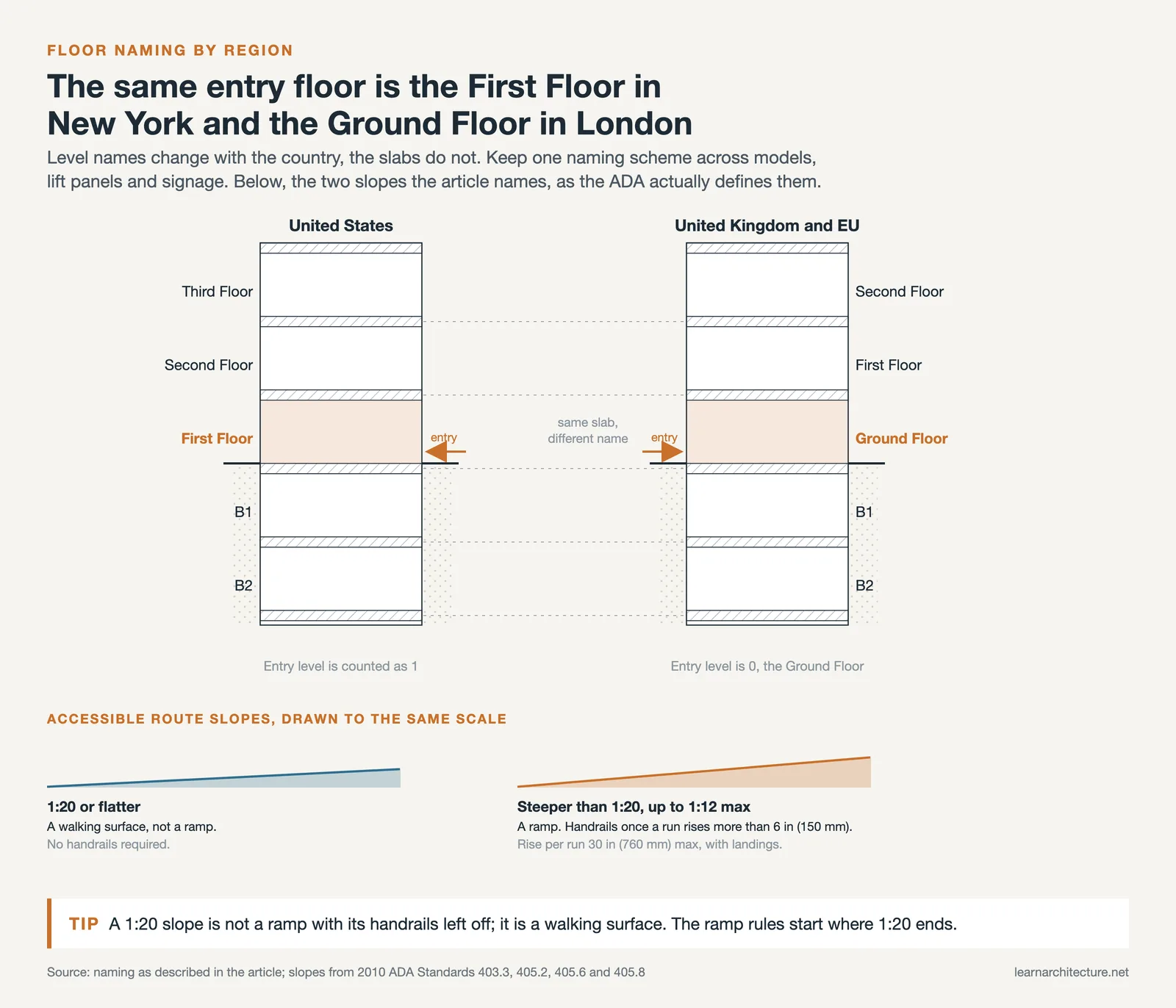
Terminology varies by region, but the logic is similar: the primary entrance plane plus the vertical stack above. We align public thresholds, lobby FFLs, and exterior grade to eliminate awkward steps while maintaining positive drainage away from the envelope.
Mezzanines And Intermediate Levels
Mezzanines carve space out of double-height areas. They’re partial floors with limited area, often governed by code. Watch headroom under and over the mezzanine, particularly around sprinkler mains, ducts, and lighting.
Podium, Plinth, And Transfer Levels
Podiums and plinths act as urban stages, retail, amenities, or parking, with towers above. Transfer levels shift column grids or carry transfer girders: tolerances here are tight because misalignment cascades up the stack.
Roof, Parapet, And Penthouse Levels
Roofs rarely sit flat. We set primary roof SSLs, insulation tapers, and FFLs at terraces with step-ups at door thresholds to keep interiors dry. Parapet caps, screen walls, and penthouse floors all get distinct levels for clarity.
Service, Catwalk, And Equipment Platforms
Industrial and back-of-house areas rely on stable, accessible platforms. Coordinate platform elevations with maintenance clearances, fall protection, and equipment base heights to avoid field-built shims and unsafe reaches.
Representing Levels On Drawings
Plans, Sections, And Elevations
We show levels most clearly in sections and elevations using consistent tags and callouts. Plans reference key FFLs at thresholds, stair landings, and ramps. A good rule: any vertical transition that affects movement or water should be called out on the plan.

Level Symbols, Tags, And Notation Standards
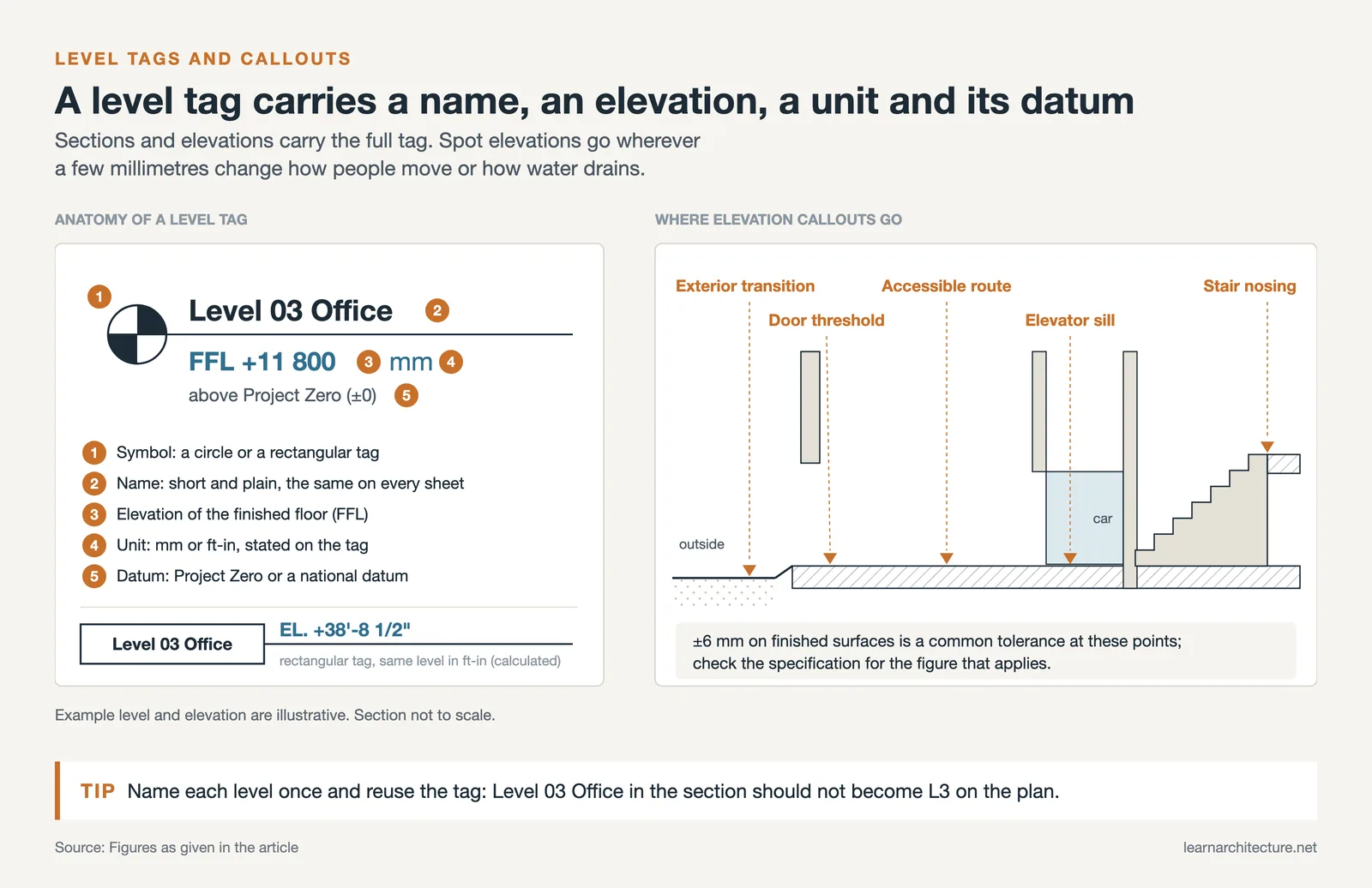
Use a standard symbol for level markers (circle or rectangular tag) with the level name and elevation. Indicate units (ft-in or mm) and whether elevations are relative to Project Zero or a national datum. Keep naming concise: “Level 03: Office” beats vague labels.
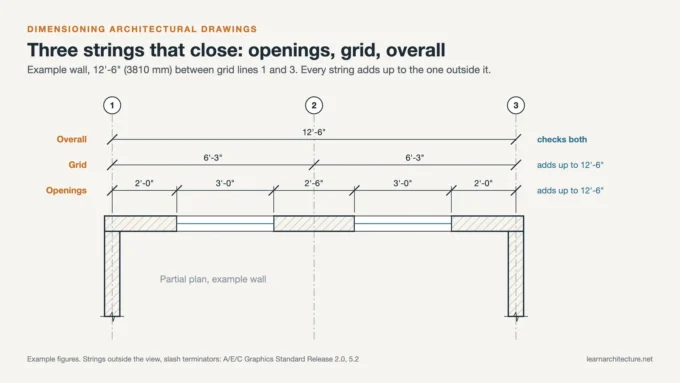
Dimensioning, Tolerances, And Elevation Callouts
Dimension floor build-ups in assemblies: note critical tolerances (±6 mm for finished surfaces is common, but check spec). Elevation callouts belong at door thresholds, stair nosings, elevator sills, accessible routes, and exterior transitions, places where a few millimeters matter.
Coordinating Levels With Grids And Control Lines
Tie level notes to grid intersections so trades can locate them in the field. Control lines from survey establish real-world references: we mirror those lines in our drawings and models to keep structure, facade, and interiors aligned.
BIM And Coordination Of Levels
Setting Project Zero And Shared Coordinates
In BIM, we lock Project Zero and share coordinates with civil and survey teams. Once published, changes trigger a formal coordination review to avoid model drift and broken references.

Level Management In Revit/IFC Workflows
Create levels early and name them consistently. In Revit, levels drive views, scope boxes, and schedules: in IFC, they export as building storeys. Check that FFL vs. SSL naming is explicit so consultants place ducts and beams at the correct heights.
Linking Consultant Models And Clash Prevention
When linking structural and MEP models, audit their level definitions and base points. Run clash tests on stair landings, elevator stops, and ceiling plenum depths, classic spots where 25 mm conflicts hide until late. Weekly coordination keeps everyone synced.
Regional And Regulatory Considerations
US vs. UK/EU Naming And Numbering Conventions
In the US, the entry level is often “First Floor,” with “Second Floor” above. In the UK/EU, the entry level is “Ground Floor,” then “First Floor” above. Numbering in models and signage should reflect local norms to avoid confusion.

Accessibility, Egress, And Elevator Numbering
FFLs must respect maximum slopes (per the 2010 ADA Standards, a walking surface up to 1:20 needs no handrails, while a ramp is limited to 1:12 and needs handrails once its rise exceeds 6 in (150 mm); check local codes) and flush thresholds for accessible entries. Elevator car panels and floor directories must match the approved numbering scheme.
Life Safety, Signage, And Emergency Wayfinding
Fire service plans rely on clear level names and consistent elevations for hose connections, refuge areas, and roof access. We coordinate signage packages so what’s on the drawing matches what people see in an emergency.
Conclusion
Floor level terms and drawings aren’t just semantics; they dictate constructability, comfort, and safety. If we define a stable datum, publish clear FFL/SSL/NGL relationships, and coordinate relentlessly in BIM, the building goes up cleaner and faster. Our rule of thumb: name levels plainly, tag them everywhere they matter, and verify them against a single benchmark before anyone pours concrete.
- architectural design floor levels
- architectural drafting floor levels
- architectural elevation terms
- architectural floor levels
- architecture floor level guide
- architecture floor level terms
- building floor levels
- different floor levels
- floor height in architecture
- floor level classification
- floor level definitions
- floor level drawings
- floor level illustrations
- floor level terminology
- floor level types
- floor plan levels
- floor plan terminology
- reading architectural floor plans
- terms for floor levels
- understanding floor levels










Leave a comment