



Table of Contents Show
Architecture resources for students include free design software, open university courses, digital project libraries, affordable reference books, and YouTube channels focused on representation and rendering. These tools help you build technical skills and design thinking without expensive subscriptions or tuition fees.
Architecture school is expensive enough without paying premium prices for every tool and reference you need. Between studio fees, printing costs, model-making supplies, and software licenses, the bills add up fast. The good news is that dozens of high-quality resources for architecture students are available for free or at very low cost. You just need to know where to look.
The fifteen picks below are numbered so you can work through them in order or jump to the category you need. Each one was chosen because it fills a real gap in a typical architecture curriculum and costs little to nothing. Portfolio tools, scholarships and student memberships follow at the end as supporting resources.
Free Design Software Every Architecture Student Needs

Software is one of the biggest expenses in architecture education, but several professional-grade tools are available at no cost to students. Knowing which ones to prioritize saves both money and time.
1. SketchUp Free. SketchUp Free runs directly in your browser and handles 3D modeling without any installation. It works well for quick massing studies, early-stage design, and spatial exploration. The 3D Warehouse gives you access to thousands of pre-built components, which speeds up your workflow during tight studio deadlines. For more advanced modeling, the educational version of SketchUp Pro is available to verified students at no charge.
2. Blender. Blender is a fully open-source 3D modeling and rendering tool used by architects, game designers, and filmmakers. Its real-time viewport rendering and advanced shading features make it a strong alternative to paid rendering engines. The learning curve is steeper than SketchUp, but the payoff is significant once you get comfortable with the interface.
💡 Pro Tip
Start with SketchUp for quick concept models during early design phases, then move to Blender for final renderings and presentation images. This two-tool workflow gives you speed when you need it and visual quality when it counts, without paying for a single license.
3. Autodesk Education Plan. Autodesk’s Education Plan gives verified students free access to AutoCAD, Revit, and the entire Autodesk suite for one year at a time, renewable while they remain eligible (as of September 2026). Revit is essential if you plan to work in firms that rely on BIM, and AutoCAD remains a standard for 2D drafting across the industry. If you need help getting started with these tools, our guide to Autodesk applications for architects covers the key differences between AutoCAD and Revit for different project types.
4. QGIS. Free and open source, QGIS handles site analysis, terrain and mapping work that neither SketchUp nor Revit does well, and it reads the public GIS datasets most city planning departments publish. TinkerCAD is worth a mention alongside it for absolute beginners learning 3D concepts. Our roundup of free architectural digital tools covers additional platforms for collaboration, rendering, and project management.
Best Online Courses and Open Courseware for Architecture

University-level architecture education used to require enrollment and tuition. That changed when institutions like MIT, Harvard, and TU Delft started publishing course materials online.
5. MIT OpenCourseWare. MIT OpenCourseWare offers complete lecture notes, assignments, and reading lists from MIT’s architecture department. Courses cover everything from design fundamentals and building technology to urban planning theory. You will not receive a degree or certificate, but the content itself matches what paying students see in class.
6. edX and Coursera (audit mode). edX and Coursera host architecture-related courses from schools like Harvard, Delft, and the University of Tokyo. Most can be audited for free if you skip the certificate. Courses on sustainable design, building science, and architectural history are particularly strong on these platforms. A 10-week Harvard course on architecture and cultural identity through edX draws thousands of students each semester.
🎓 Expert Insight
“Education is not the filling of a pail, but the lighting of a fire.”
Plutarch (a paraphrase of his essay On Listening, often misattributed to W.B. Yeats)
This idea drives the open courseware movement. The best resources for architecture students do not just dump information. They teach you how to think about space, structure, and human experience so you can apply that thinking to any project.
7. ArchitectureCourses.org. For structured, architecture-specific learning, ArchitectureCourses.org offers free educational modules built specifically for students, covering drafting, sustainable design, and project guides without paywalls or sign-ups.
Architecture Websites and Digital Libraries Worth Bookmarking
Some of the best educational resources for architects are not courses at all. They are websites that document real projects, publish case studies, and maintain searchable archives of architectural work.
8. ArchDaily. ArchDaily is one of the most visited architecture websites worldwide. Its project database is searchable by building type, location, material, and architect. Each entry includes plans, sections, photographs, and project descriptions. For studio research, precedent studies, and design inspiration, it is hard to beat.
9. Dezeen. Dezeen covers architecture, design, and interiors with a focus on contemporary work. Its strength is editorial depth: articles go beyond project descriptions to discuss context, criticism, and broader trends. Both ArchDaily and Dezeen maintain active YouTube channels that supplement their written content with video tours and architect interviews.
10. Google Scholar. For academic research, Google Scholar provides free access to abstracts and, in many cases, full papers on topics ranging from building performance to architectural theory. Pair it with your university library’s database access, and you can pull peer-reviewed journal articles at no additional cost. Publications like the Journal of Architecture, Building and Environment, and Architectural Research Quarterly are especially useful for thesis work and design studio briefs.
11. Library of Congress. If you are looking for historical documents and archival material, the Library of Congress holds thousands of architectural records, plans, photographs, and surveys. These are fully digitized and free to browse, making them a strong resource for anyone studying American architectural history or working on adaptive reuse projects.
How to Find Affordable Architecture Books

Architecture books are notoriously expensive, but there are several ways to build a solid reading list without draining your bank account.
Start with your university library. Most architecture schools maintain physical and digital collections that include key texts. If your library does not carry a specific title, interlibrary loan systems can usually get it within a week or two.
12. Internet Archive. For digital access, the Internet Archive lets you borrow scanned copies of out-of-print and older architecture books for free.
For purchases, look at second-hand options first. Sites like AbeBooks, ThriftBooks, and even Amazon’s used section often have architecture textbooks at a fraction of their retail price. Older editions of standard references, like Francis Ching’s “Architecture: Form, Space, and Order,” still cover the same core principles and cost significantly less than new copies.
⚠️ Common Mistake to Avoid
Many architecture students buy every book on their course reading list before the semester starts. In practice, you will only reference a few of them heavily. Wait until the second or third week of class to see which texts your professors actually assign from, then buy only those. Borrow the rest from the library as needed.
A few affordable titles that consistently appear on recommended reading lists include “101 Things I Learned in Architecture School” by Matthew Frederick, “Experiencing Architecture” by Steen Eiler Rasmussen, and “The Eyes of the Skin” by Juhani Pallasmaa. Each costs under $20 and covers fundamental concepts that remain relevant throughout your career. For a deeper reading list, see our guide to the best architecture books for beginners and experts.
YouTube Channels That Teach Real Architecture Skills
YouTube has become one of the strongest free resources for architects, especially for learning software, representation techniques, and design thinking. Several channels stand out for the quality and consistency of their content.
13. 30×40 Design Workshop. Run by architect Eric Reinholdt, the channel covers everything from site analysis and sketching to the daily realities of running a small practice. His videos are especially useful for students who want to understand the full design process, not just the software side.
14. Show It Better. The channel focuses on architectural representation, including digital collage, presentation boards, and rendering post-production. With over 100 videos, it is one of the most thorough resources available for improving your visual communication skills.
15. The B1M. It produces documentary-style videos on major construction and architecture projects around the world. It is less tutorial-based and more about understanding how buildings get designed, funded, and built at scale. Watching a few B1M videos before a design studio review can help you contextualize your own work within the broader industry.
Other channels worth following include Upstairs for design critiques and competition breakdowns, Balkan Architect for deep Revit tutorials, and the Harvard GSD channel for recorded lectures from visiting architects and critics.
What About Landscape Architecture Resources for Beginners?
Landscape architecture students share many of the same resource needs as building architecture students, but a few platform-specific tools deserve mention. Land8.com hosts articles, job listings, and project case studies focused specifically on landscape practice. The American Society of Landscape Architects (ASLA) website provides access to award-winning project case studies, professional development resources, and a student membership option at reduced rates. On YouTube, channels like Land Space Architecture offer free tutorials focused specifically on landscape rendering and Photoshop techniques for site plans.
Free Portfolio Tools and Templates
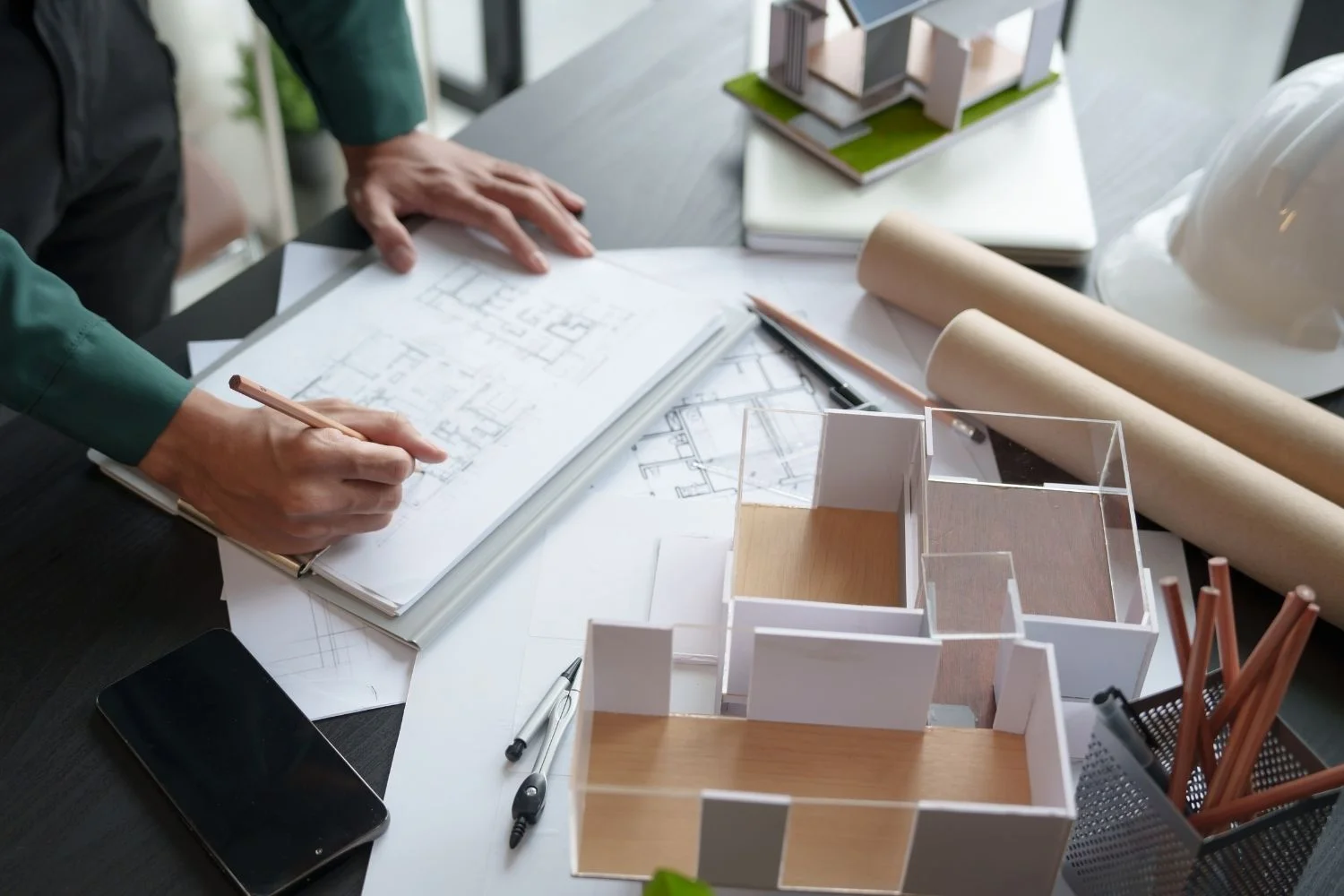
Your portfolio is arguably the most important document you will produce as a student, and you do not need expensive software to build a good one.
Adobe InDesign is the industry standard for portfolio layout, and it is available free to students through the Adobe Education plan at many universities. If your school does not offer this, Canva provides a free tier with portfolio templates that work well for basic layouts, and Figma offers powerful design tools at no cost for education accounts.
For online portfolios, platforms like Behance (free), Cargo (free tier available), and Notion can all host your work and make it discoverable to firms and schools. A simple, well-organized online presence is often more effective than an expensive custom website.
For guidance on what to include and how to structure your layout, our step-by-step portfolio building guide walks through project selection, page design, and presentation strategies. If you are unsure which projects to feature, our article on best projects for an architecture student portfolio covers the project types that consistently impress reviewers.
💡 Pro Tip
Experienced hiring managers at architecture firms typically spend 10 to 15 minutes on a portfolio during initial screening. Put your single strongest project first, keep your total to four to eight projects, and make sure every spread earns its place. A tight, well-edited portfolio outperforms a thick one every time.
Scholarships and Financial Aid for Architecture Students
Resources for architecture students extend beyond tools and courses. Financial support can make the difference between staying in school and dropping out.
The American Institute of Architects (AIA) and the Architects Foundation administer tuition grants reaching up to $20,000 for students in NAAB-accredited programs. The American Institute of Architecture Students (AIAS) maintains a searchable database of national, regional, and international scholarships organized by category and updated regularly.
In Europe, the Royal Institute of British Architects (RIBA) offers bursaries and scholarships at both Part 1 and Part 2 levels. Several diversity-focused programs, including the Gensler Rising Black Designers Scholarship ($10,000 per recipient) and the Hip Hop Architecture Scholarship Fund, specifically target underrepresented students entering architecture programs.
For a full breakdown of available funding, our 2026 architecture scholarships guide covers application strategies, eligibility criteria, and deadlines across the US, Europe, and international programs.
Professional Organizations with Student Memberships

Joining a professional organization while still in school gives you access to resources, networking opportunities, and career support at discounted rates.
The AIA offers student memberships that include access to continuing education resources, career guidance, and local chapter events. RIBA’s student membership includes portfolio review opportunities and access to the RIBA Library. The International Union of Architects (UIA) runs global student competitions and workshops that expose you to international practice and design culture.
For sustainability-focused students, the U.S. Green Building Council (USGBC) offers student membership with access to LEED study materials and green building research. Understanding LEED and sustainable design principles early in your education gives you a competitive edge, since firms increasingly prioritize candidates with sustainability knowledge.
How to Make the Most of Architecture Resources on a Budget
Having access to resources is only half the challenge. The other half is using them effectively. A few strategies help you get the most value without spending unnecessary time or money.
First, match the resource to the task. If you need to learn Revit basics, a structured YouTube playlist will serve you better than a full Coursera course. If you are researching precedent projects for a studio brief, ArchDaily’s database is faster and more targeted than a general web search.
Second, build a personal reference library over time. Bookmark the ArchDaily projects, JSTOR papers, and YouTube tutorials that prove useful, organized by topic. A well-maintained bookmark folder saves hours of repeated searching across semesters.
Third, take advantage of student discounts before graduation. Software like Autodesk and Adobe, memberships to AIA or RIBA, and conference registrations all cost more once you lose student status. Lock in as many of these as possible while your student email is still active.
📌 Did You Know?
MIT OpenCourseWare has published materials from over 2,500 courses since its launch in 2003, and architecture is one of its most visited departments. Every course is available worldwide at no cost, and the content is identical to what enrolled MIT students receive in the classroom.
Comparison of Top Free Architecture Resources
Free Architecture Resources at a Glance
The table below compares the most useful free resources for architecture students by category, cost, and what they are best suited for.
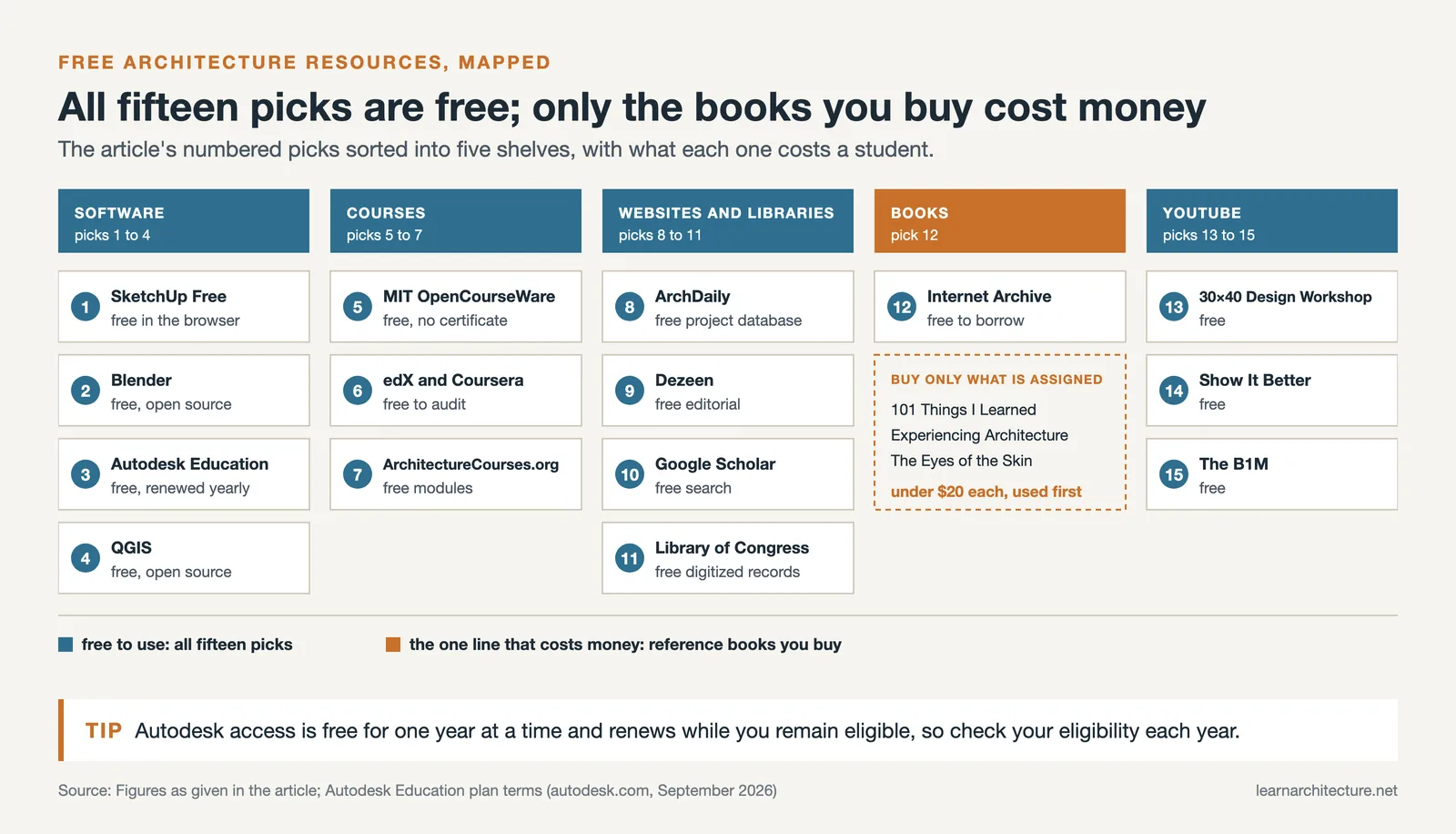
| Resource | Category | Cost | Best For |
|---|---|---|---|
| SketchUp Free | 3D Modeling | Free (browser) | Quick concept models and massing studies |
| Blender | 3D Modeling / Rendering | Free (open source) | High-quality renders and animations |
| Autodesk Education | CAD / BIM | Free (student license) | AutoCAD drafting and Revit BIM modeling |
| MIT OpenCourseWare | Courses | Free | Theory, building tech, and design fundamentals |
| ArchDaily | Project Database | Free | Precedent studies and design inspiration |
| Coursera / edX | Courses | Free to audit | Sustainability, history, and building science |
| Google Scholar | Research | Free | Academic papers and thesis research |
| Figma | Portfolio / Design | Free (education) | Portfolio layout and presentation design |
✅ Key Takeaways
- Free software like SketchUp, Blender, and the Autodesk Education suite covers most technical needs through your entire degree.
- MIT OpenCourseWare, Coursera, and edX provide university-level architecture education at no cost when audited.
- ArchDaily and Dezeen are the two strongest free platforms for project research, precedent studies, and staying current with industry trends.
- Buy architecture books secondhand or borrow from your library first. Wait until you know which texts your courses actually require.
- Build your portfolio with free tools like Figma, Canva, or Behance, and apply to scholarships through AIA, RIBA, and AIAS before deadlines pass.
Final Thoughts
The best architecture resources for students are the ones that fit your current stage of learning, your budget, and the specific skills you need to develop right now. You do not need to spend thousands on software, books, or courses to build a strong foundation. Free tools, open courseware, and community-driven platforms cover a remarkable amount of what architecture school demands.
Start with the resources that address your most immediate needs, whether that is learning Revit for a studio project, finding precedent studies for a design brief, or building a portfolio for your first internship application. As your skills grow, layer in more specialized tools and references. The investment that matters most is your time and attention, not your wallet.
For more guidance on making the most of your architecture education, check out our architecture education tips and our detailed portfolio tips guide.













Leave a comment