


Table of Contents Show
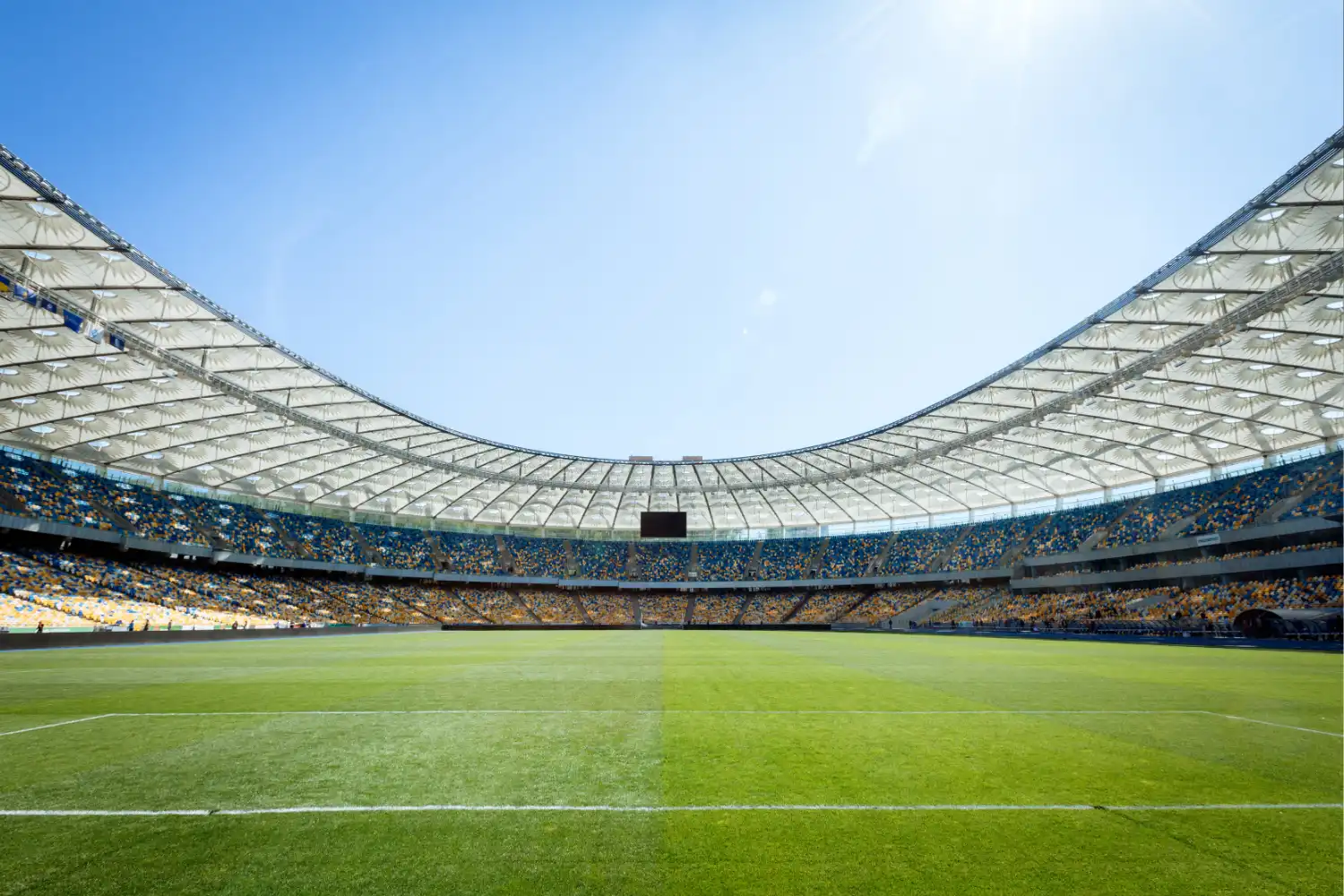
Sustainable stadiums are large-scale sports venues designed and operated to reduce energy use, water consumption, and waste while supporting renewable energy and community well-being. In the United States, projects such as Mercedes-Benz Stadium, Climate Pledge Arena, and Allegiant Stadium have set new benchmarks through LEED Platinum design, on-site solar arrays, rainwater capture, and zero-waste programs.
Few building types carry as much cultural weight as the American sports venue, yet for decades these structures were also among the most resource-hungry. A single NFL game day can demand up to 10 megawatts of power for five hours, roughly the consumption of 46,000 American homes during that window. That scale is now being turned into an opportunity. Across the country, owners, architects, and engineers are using stadium projects as testing grounds for sustainable construction, water conservation, and clean energy at a size most office buildings will never reach.
What Defines a Sustainable Stadium?
Sustainable stadium design is a specific approach to sports venue architecture that minimizes a building’s environmental impact across its full life cycle: site selection, construction, daily operations, event days, and eventual renovation or reuse. It treats the stadium not as an isolated trophy structure but as a system connected to the surrounding city, its watershed, and its electrical grid.
The U.S. Green Building Council, which administers the LEED rating system, evaluates stadiums against six core criteria: location, site management, water use, energy use, materials, and indoor environmental quality. As USGBC notes in its venues guidance, on average, green buildings use roughly 26% less energy and 30% less indoor water than conventional ones, with significant reductions in solid waste sent to landfill.
For stadiums, the equation is more demanding than for offices because of three structural realities. They are very large, they host enormous crowds for short and intense periods, and they sit empty for most of the year. That usage profile rewards strategies focused on peak-demand efficiency, on-site renewables, water capture, and operational flexibility.
💡 Pro Tip
When designing or retrofitting a sports venue for LEED, prioritize the water and energy categories early in schematic design. Stormwater systems, cisterns, and on-site renewables are far cheaper to integrate when the foundation and roof structure are still being engineered, and these categories often deliver the highest LEED point yield per dollar spent on stadium projects.
The Architectural Strategies Behind Eco-Conscious Sports Venues
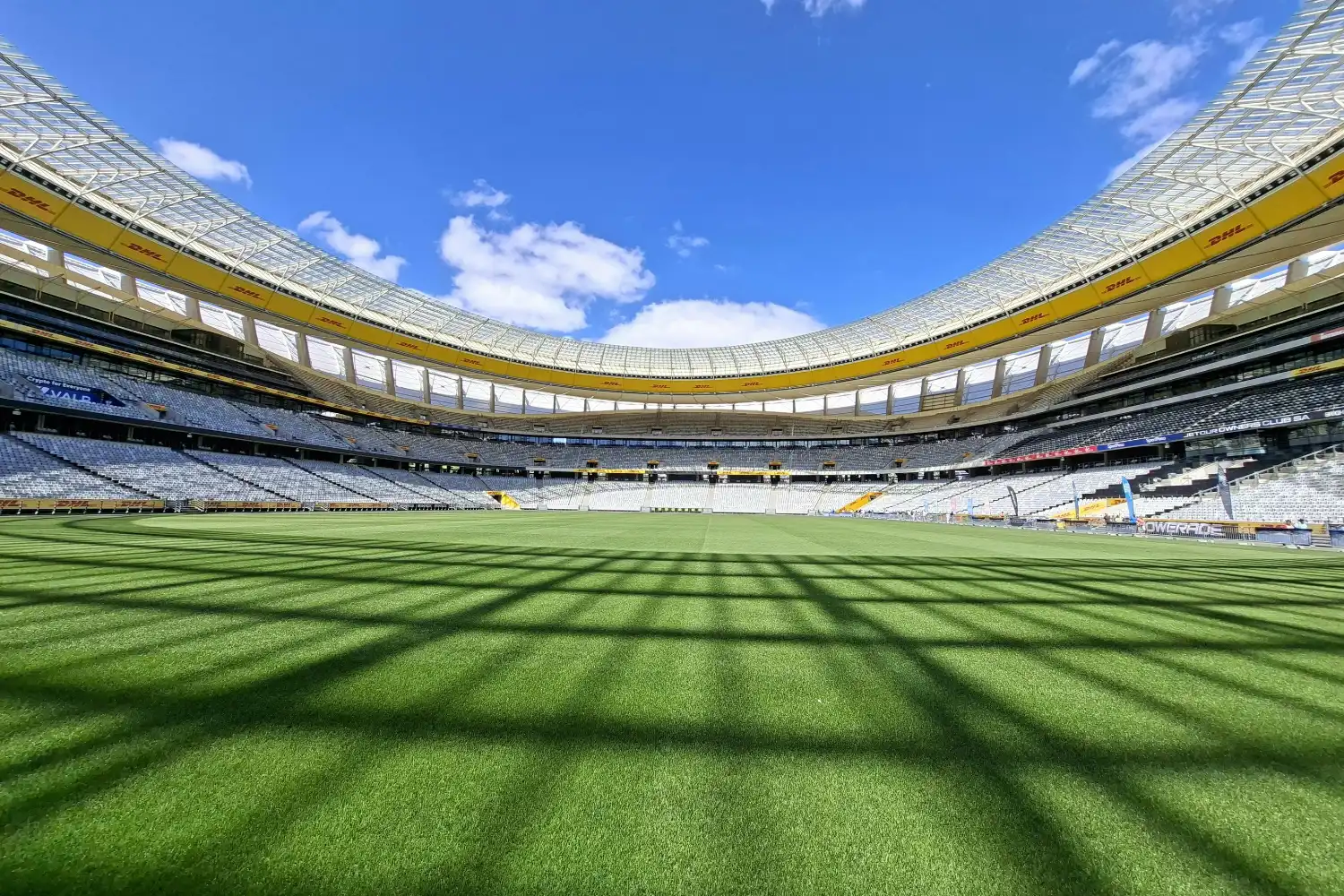
Behind every certified sustainable stadium is a stack of design decisions that begin long before the first concrete pour. The most successful American projects combine several strategies rather than relying on a single signature feature.
Site Reuse and On-Site Renewable Energy
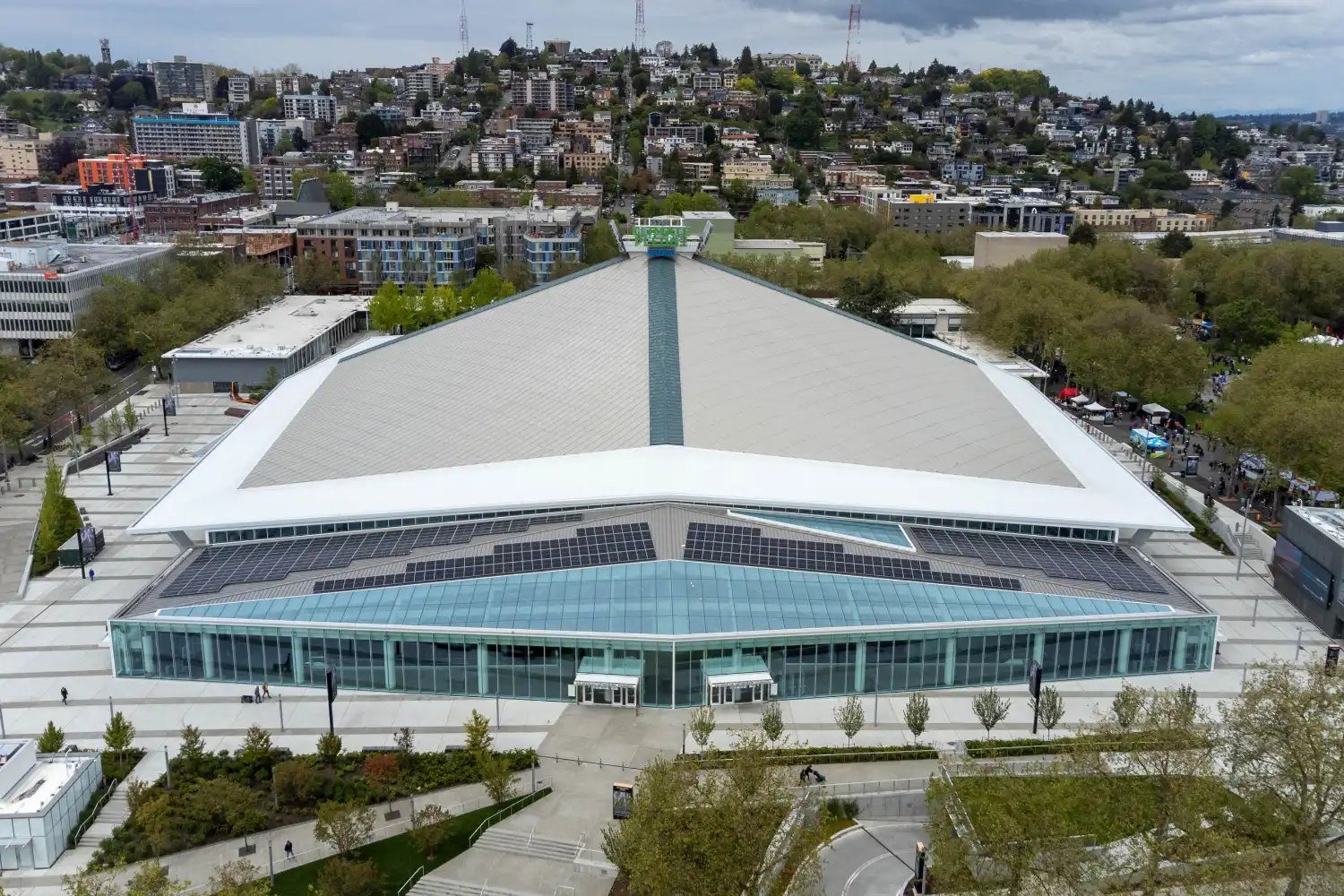
The greenest stadium is often one that does not start from scratch. Mercedes-Benz Stadium in Atlanta was built on a previously developed urban site rather than greenfield land. Climate Pledge Arena in Seattle preserved the original 1962 World’s Fair roof, a 44-million-pound landmark structure, and built an entirely new arena beneath it, significantly reducing the embodied carbon associated with new construction.
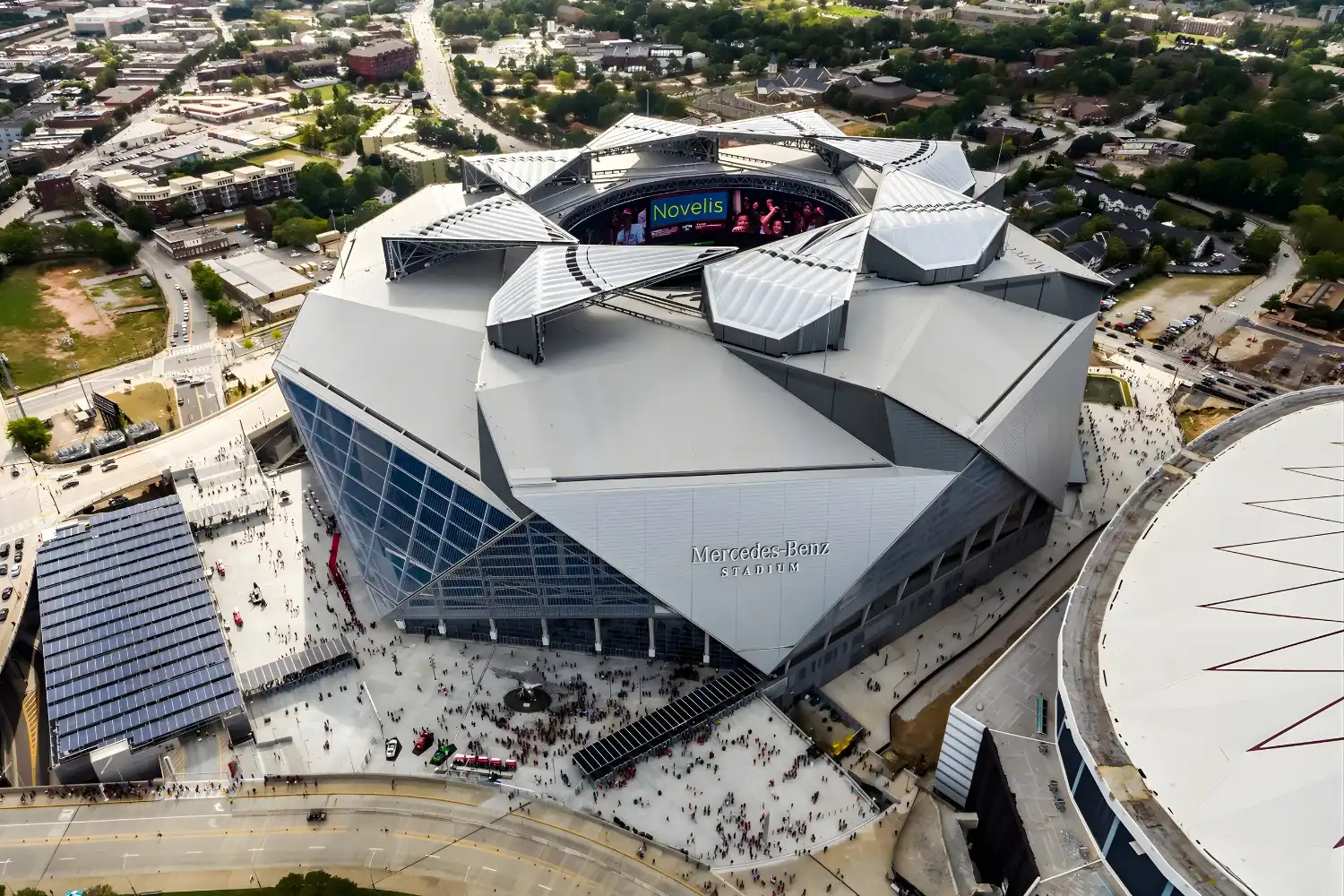
Solar photovoltaics have become the most visible feature of the new American stadium archetype. Mercedes-Benz Stadium, designed by HOK, integrated 4,000 solar PV panels generating roughly 1.6 million kilowatt-hours per year, enough to power nine Atlanta Falcons home games or 13 Atlanta United matches. The panels are placed on ticket canopies and parking shade structures rather than hidden on the roof, making renewable energy part of the fan experience. This evolution in venue planning is part of the broader story we cover in our overview of the evolution of stadium designs.
Water Conservation and Energy-Efficient Systems
Water is where many stadium projects earn their highest scores. Mercedes-Benz Stadium achieved every available water credit in LEED, in part through a 2.1 million-gallon stormwater management system that combines a 680,000-gallon cistern, an underground vault, and bioswales. Captured rainwater is reused for cooling towers, irrigation, and shared with Trees Atlanta for community tree planting. According to HOK, the venue uses 47% less water than EPA baseline standards.
Across the new generation of American venues, LED replaces nearly all conventional lighting. According to HOK, LED systems at Mercedes-Benz Stadium last roughly ten times longer than the standard alternatives and reduce lighting energy use by as much as 60%. U.S. Bank Stadium in Minneapolis pairs LED lighting with an ETFE roof system that admits natural daylight, reducing artificial illumination during day events.
🎓 Expert Insight
“We set out to build a venue that would not only exceed expectations, but also push the limits of what was possible in terms of stadium design, fan experience and sustainability.”, Arthur Blank, Owner and Chairman, Atlanta Falcons and Atlanta United
Blank’s commitment came from a personal track record: in 2004 he completed the first LEED Gold building in Georgia for his family foundation. That early experience shaped how Mercedes-Benz Stadium approached every category of certification, especially water and energy.
Real American Stadiums Leading the Way
The clearest way to understand sustainable stadium design is to look at the venues actually operating today. The table below summarizes how five of the most prominent U.S. examples compare across LEED status, energy strategy, and signature sustainability features.
Comparison of Leading Sustainable Stadiums in the USA
| Stadium | Location | LEED Status | Signature Sustainability Feature |
|---|---|---|---|
| Mercedes-Benz Stadium | Atlanta, GA | Platinum (88 points) | 4,000 solar panels and 2.1M-gallon stormwater system |
| Climate Pledge Arena | Seattle, WA | First ILFI Zero Carbon Certified arena | 100% renewable, all-electric, “Rain to Rink” system |
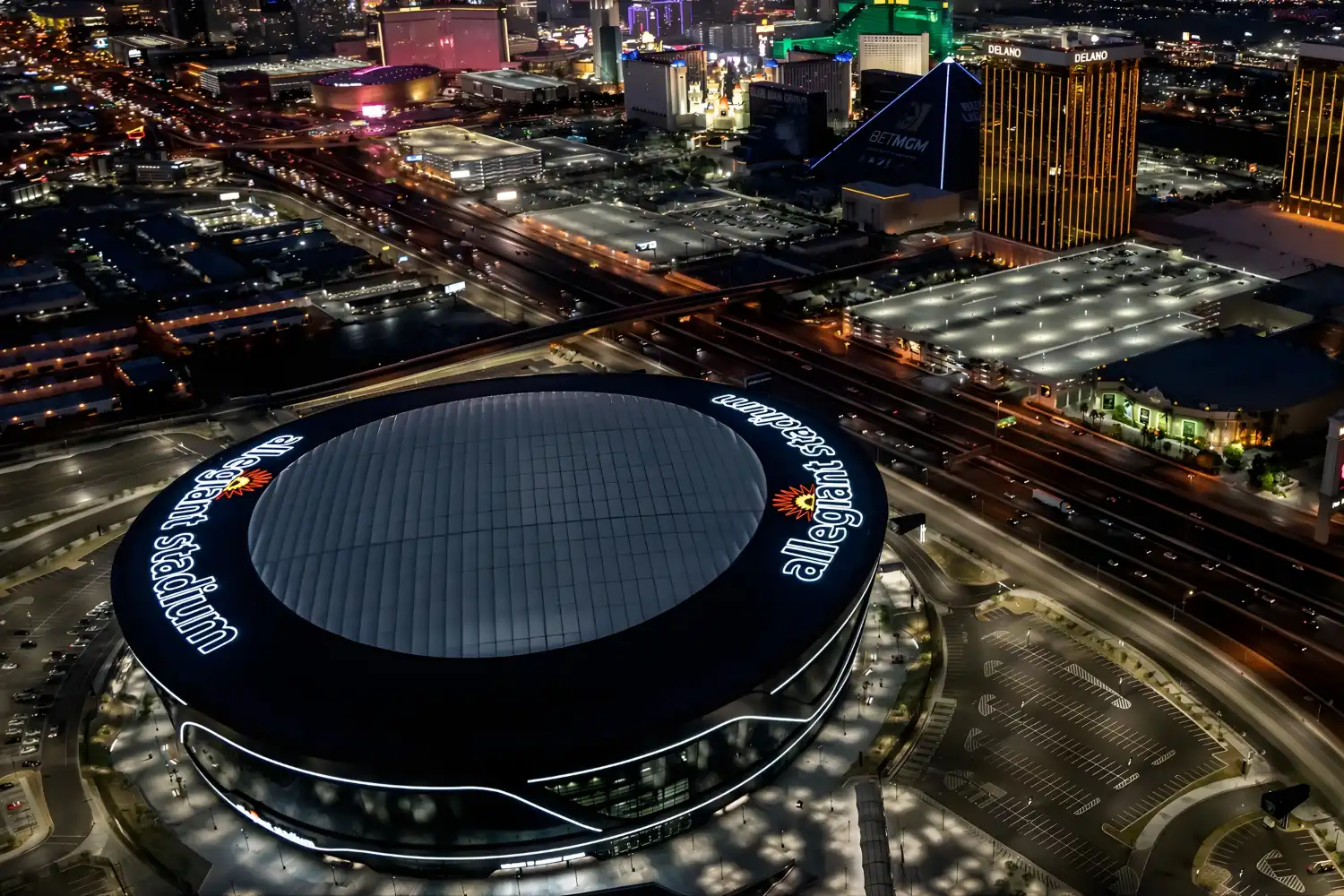
| Allegiant Stadium | Las Vegas, NV | Gold | 100% renewable energy via 25-year solar PPA |
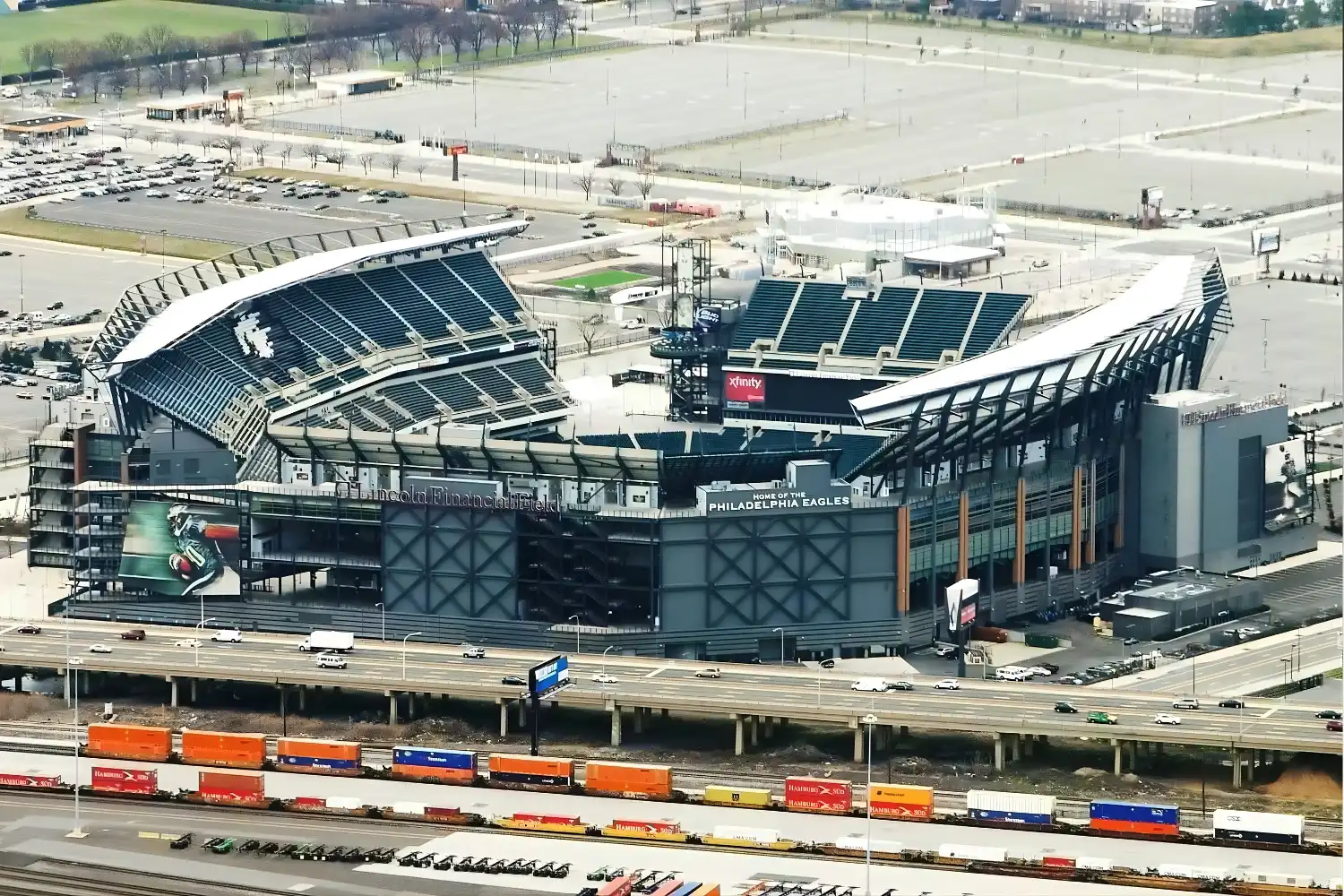
| Lincoln Financial Field | Philadelphia, PA | Platinum (O+M) | 10,456 solar panels and 99% landfill diversion |
| U.S. Bank Stadium | Minneapolis, MN | Platinum (O+M) | ETFE roof, wind-powered RECs, Bike Friendly certified |
Mercedes-Benz Stadium, opened in 2017, became the first professional sports stadium in the world to achieve LEED Platinum certification, earning 88 of 110 possible points. Climate Pledge Arena, designed by Populous and opened in 2021, is the first arena in the world to achieve Zero Carbon Certification from the International Living Future Institute. The venue is 100% electric with no on-site fossil fuel use and harvests rainwater into a 15,000-gallon underground cistern that is filtered and used to make NHL ice for the Seattle Kraken.
Allegiant Stadium, home of the Las Vegas Raiders, entered a 25-year power purchase agreement with NV Energy in 2023, sourcing power from EDF Renewables’ Arrow Canyon solar-plus-storage project. Super Bowl LVIII in 2024 became the first Super Bowl powered entirely by renewable solar electricity.
🏗️ Real-World Example
Levi’s Stadium (Santa Clara, 2014): Home to the San Francisco 49ers, Levi’s Stadium was the first NFL stadium to receive LEED Gold certification for new construction. Designed by HNTB, it features 1,162 photovoltaic panels and three solar-covered NRG Energy Bridges, with a system designed so that the renewable energy generated annually offsets the energy consumption of all ten regular-season home games combined.
How To Improve Sustainability at Stadiums That Already Exist
One of the most overlooked strategies in this conversation is retrofit. Most American stadiums in use today were not built with sustainability briefs, yet many can still reach LEED Operations + Maintenance certification through targeted upgrades.
Lighting upgrades typically come first. Replacing legacy metal halide and fluorescent fixtures with LED can cut lighting-related energy use by 50 to 60%. Soldier Field in Chicago, which renovated in 2003, became the first NFL stadium to earn a LEED certification largely through measures like rooftop solar and converting parking land into 17 acres of green space. Hard Rock Stadium, originally built in 1987, achieved LEED Gold for Operations and Maintenance in 2024 after a multi-year retrofit that addressed plastics, food waste, and lighting at a venue more than 35 years old.
Operational changes are often the cheapest and fastest. Switching to compostable serviceware, contracting waste haulers with composting and recycling streams, partnering with food rescue nonprofits, and offering free transit passes with event tickets can move a venue from a 30% to a 90% diversion rate without touching a single beam.
⚠️ Common Mistake to Avoid
Many retrofit teams treat sustainability as a single capital project rather than a continuous operations program. A venue can install solar panels and LED lighting and still miss its targets if game-day waste is mishandled or HVAC schedules are not optimized. The highest-performing stadiums in LEED O+M treat sustainability as part of daily operations, not a one-time renovation milestone.
The Future of Sustainable Stadium Design in the United States
Three shifts are reshaping the next generation of American venues. The first is the move from net-zero claims to verified net-zero performance. Climate Pledge Arena’s ILFI Zero Carbon Certification requires 12 consecutive months of measured operational data, not just a design intent statement.
The second is the rise of long-term renewable energy contracts. Allegiant Stadium’s 25-year solar PPA with NV Energy is becoming a template, locking in clean electricity prices for decades while supporting new utility-scale solar capacity. The third is embodied carbon. Climate Pledge Arena’s preservation of the original 1962 roof was the first widely publicized U.S. stadium decision driven explicitly by embodied carbon math. These approaches connect closely to the broader shift we discuss in the future of sustainable architecture and the role of sustainable materials in low-carbon construction.
✅ Key Takeaways
- Sustainable stadiums combine site reuse, on-site renewables, water capture, LED systems, and zero-waste operations across the venue’s full life cycle.
- Mercedes-Benz Stadium (Atlanta) holds the highest LEED score of any sports venue at 88 points and was the first professional sports stadium to reach Platinum.
- Climate Pledge Arena (Seattle) is the first arena to receive ILFI Zero Carbon Certification, supported by 100% renewable power and rainwater-based ice making.
- Allegiant Stadium (Las Vegas) is the first NFL venue to operate on 100% renewable energy and hosted the first solar-powered Super Bowl in 2024.
- Existing stadiums can reach LEED Operations + Maintenance certification through lighting retrofits, water fixture upgrades, and disciplined waste-diversion programs.
Final Thoughts
American stadiums have spent the last decade moving from being among the country’s most resource-intensive buildings to being some of its most public laboratories for sustainable design. Each new project, from Atlanta’s Mercedes-Benz Stadium to Seattle’s Climate Pledge Arena to Las Vegas’s Allegiant Stadium, raises the bar for what a major venue can do across energy, water, materials, and waste. For architects, engineers, and team owners working on the next generation of sports venues, the question is no longer whether sustainability belongs in the brief, but how aggressively to pursue it.
Sustainability data, certification scores, and operational metrics referenced in this article are based on publicly available information from LEED rating bodies, individual stadium operators, and industry sources. Specific figures may be updated as venues continue to retrofit and recertify.


















Leave a comment