



Table of Contents Show
Structural grid systems are organized frameworks of intersecting lines that define where columns, beams, and load-bearing walls are placed within a building. They translate the structural engineer’s load path logic into a spatial pattern that architects use to plan rooms, corridors, and facades. Every grid decision, from spacing to orientation, directly affects construction cost, flexibility of the floor plan, and the building’s ability to resist gravity and lateral forces.
What Is a Structural Grid System?
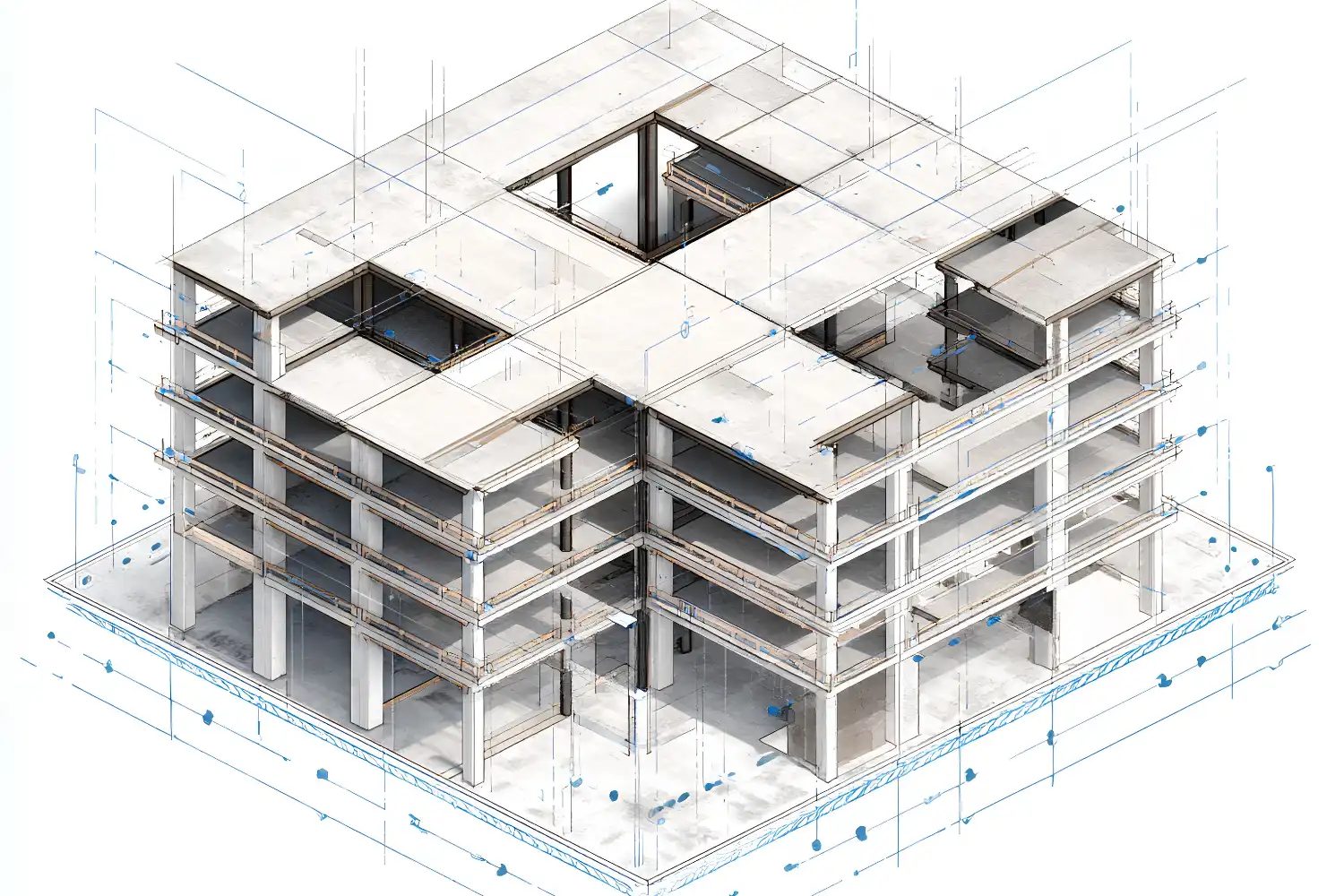
A structural grid system is a two-dimensional pattern of reference lines, typically labeled with numbers on one axis and letters on the other, that marks the positions of primary structural elements. Columns sit at grid intersections. Beams span between columns along grid lines. Slabs rest on those beams or span between them. The grid acts as the skeleton around which everything else is organized: partitions, mechanical shafts, stairwells, and elevator cores all relate back to it.
On construction documents, structural grids appear as dashed or chain-dot lines running across plan drawings. Each intersection is called a grid node, and those nodes represent load collection points where vertical forces travel down through the structure to the foundations. If you have ever opened a set of architectural drawings and noticed the alphanumeric labels along the edges of a floor plan, you were looking at the grid system. For a deeper look at how floor plans translate spatial relationships onto paper, see this step-by-step floor plan guide.

How Structural Grids Affect Building Layout
The grid determines what room sizes are practical. A 7.2 m by 7.2 m grid, for example, yields column-free office bays large enough for open-plan workstations but compact enough to keep beam depths reasonable. Change that to 12 m by 12 m and you gain more open floor area, but beam and slab depths increase, which raises floor-to-floor height and total building volume. The trade-off between span length and structural depth sits at the center of every grid decision.
Grids also control where partition walls can land without conflicting with columns. In residential buildings, grid spacing often aligns with room widths so that columns disappear inside walls. In commercial buildings, the priority flips: columns are exposed or contained within a service core, and the grid is wide enough to allow tenants to subdivide the floor freely. Understanding how grid spacing shapes usable area is closely tied to building layout principles that govern efficient space design.
📐 Technical Note
Standard structural grid spacing in reinforced concrete frames typically ranges from 6 m to 9 m for commercial buildings and 4 m to 6 m for residential projects, according to the Concrete Centre’s publication “How to Design Concrete Structures Using Eurocode 2.” Steel-framed structures can economically span up to 12 m to 15 m between columns, though this increases beam weight and connection complexity.
Types of Structural Grids in Architecture
Not every building fits neatly into a rectangular framework. Grid geometry responds to the building’s shape, program, and site constraints. Here are the main types used in practice.
Rectangular (Orthogonal) Grid
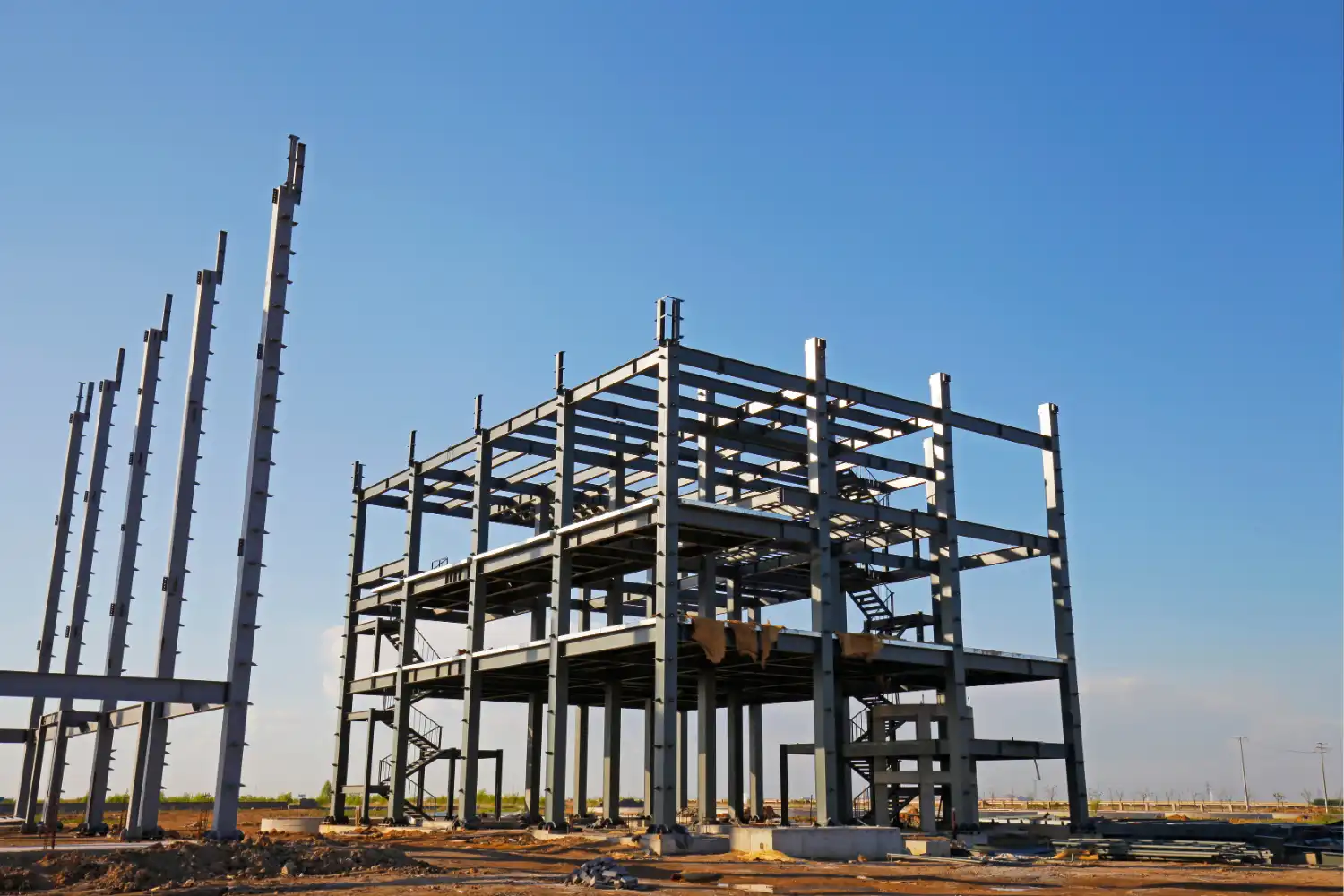
The rectangular grid is the most common type. Two sets of parallel lines cross at right angles, creating a regular matrix of bays. It works well for offices, apartment blocks, hospitals, and most commercial buildings. Construction is straightforward because formwork, reinforcement, and cladding panels repeat across identical bays. Cost savings from repetition are significant: a regular grid can reduce structural framing cost by 10 to 15 percent compared to an irregular layout, according to estimates published by the Steel Construction Institute.
Radial Grid
A radial grid organizes columns along concentric rings and radiating spokes from a central point. Circular or curved-plan buildings, arenas, airport terminals, and exhibition halls often use radial grids. The Shanghai Tower, for instance, uses a radial core arrangement that responds to its twisting envelope. Radial grids produce non-rectangular bays, which means beams and slabs vary in size from ring to ring. This increases both design complexity and construction cost.
Triangular and Diagonal Grids
Triangular grids use three sets of lines at 60-degree angles to create a network of triangular bays. This geometry is inherently stiffer against lateral forces than a rectangular grid of similar weight, which is why it appears in structures like the diagrid facades of 30 St Mary Axe (the Gherkin) in London, designed by Foster + Partners. Diagonal grids, a variation, set two axes at angles other than 90 degrees to align with a site boundary or urban geometry.

Irregular and Hybrid Grids
Some projects require grids that shift, rotate, or vary spacing across the plan. A museum with galleries of different proportions might use a modular structural grid architecture approach where grid spacing changes at a transition zone. Hybrid grids combine two or more types: a radial core with an orthogonal perimeter, for instance. Parametric design tools like Grasshopper and Rhino make it easier to model and analyze these complex frameworks before committing to construction documents.
Comparison of Grid Types
The table below summarizes how each grid type performs across key criteria:
| Grid Type | Best For | Typical Span | Relative Cost |
|---|---|---|---|
| Rectangular | Offices, apartments, hospitals | 6 m to 12 m | Low (high repetition) |
| Radial | Arenas, terminals, curved plans | Varies by ring | Medium to high |
| Triangular / Diagonal | Diagrid towers, long-span roofs | 3 m to 9 m per member | High (complex connections) |
| Irregular / Hybrid | Museums, mixed-use, complex sites | Project-specific | Highest (unique elements) |
How Column Placement Works Within the Grid
Columns are the vertical members that carry loads from the grid nodes down to the foundations. Their placement follows a simple rule: every grid intersection is a potential column location, but not every intersection needs one. Designers remove columns where large open spaces are required and add transfer beams or trusses above to redirect loads to the remaining columns.
In practice, column placement starts during schematic design. The architect proposes a floor plan, and the structural engineer tests whether the proposed room layout can work within a regular grid. If a column falls in the middle of a hotel lobby or a lecture hall, the grid is adjusted, or a long-span solution is introduced at that location. This back-and-forth between architectural intent and structural logic is one of the most collaborative aspects of building design. For more on how these spatial decisions are documented, the architectural site plan guide covers how structural information feeds into plan documentation.
💡 Pro Tip
When setting up your structural grid in BIM software like Revit or ArchiCAD, lock the grid lines before placing any structural elements. Moving a grid line after columns and beams are already modeled forces every connected element to update, often creating conflicts with MEP routing and architectural partitions that were coordinated to the original positions.
Grid Spacing and Its Effect on Structural Depth
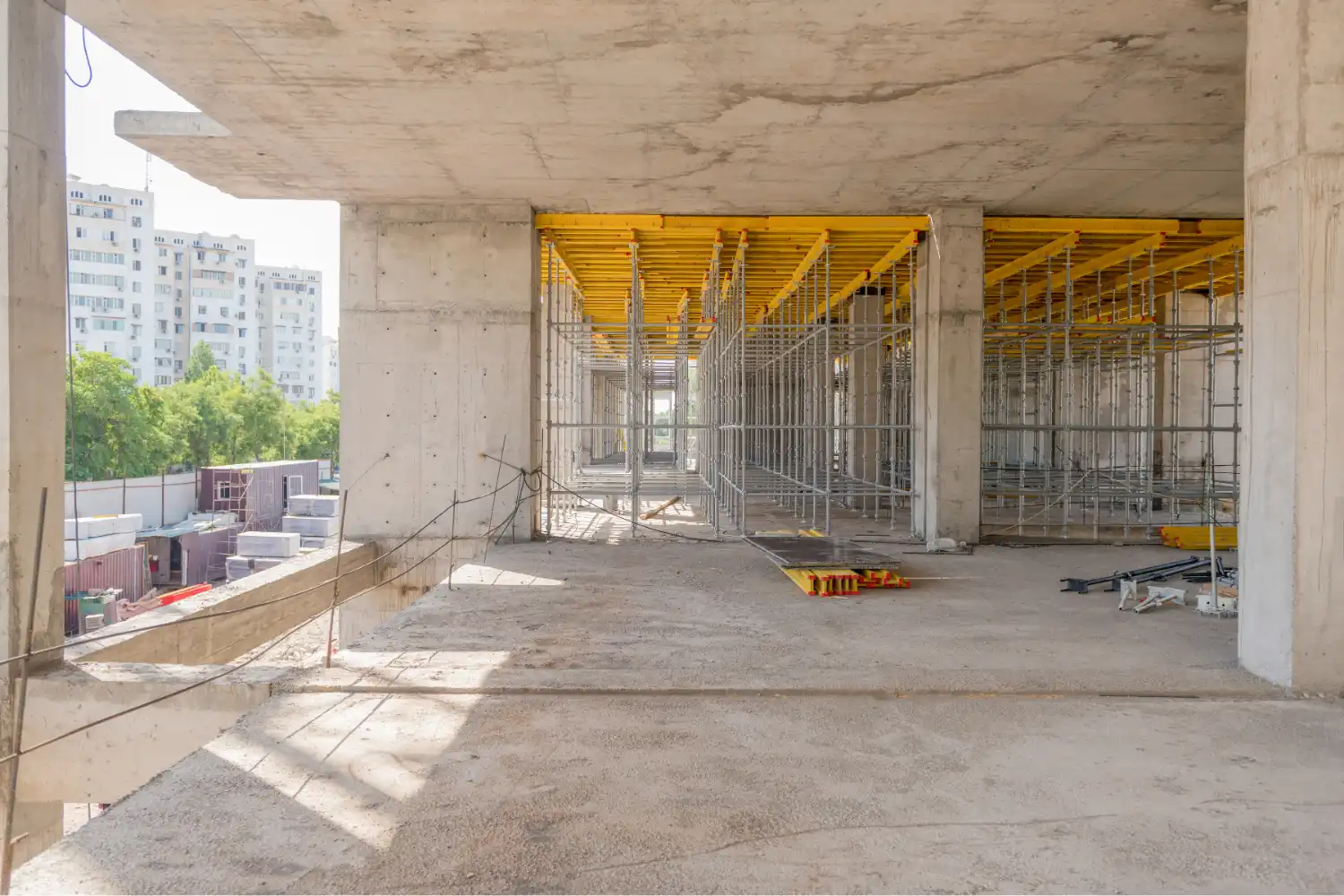
Longer spans require deeper beams. A reinforced concrete beam spanning 6 m might have a depth of around 400 mm, while the same beam spanning 10 m could need 650 mm or more. This depth increase has a cascading effect: deeper beams raise the floor-to-floor height, which adds cladding area, increases the length of mechanical risers, and ultimately grows the building’s total volume. In a 20-story building, adding just 100 mm per floor means an extra 2 meters of total height.
Steel structures handle longer spans more efficiently because steel has a higher strength-to-weight ratio than concrete. Cellular or castellated steel beams can span 12 to 15 m with relatively shallow depths by allowing mechanical ducts to pass through openings in the web. Post-tensioned concrete slabs offer another option, reducing slab thickness and enabling column-free spans of 10 to 12 m without deep beams at all. The choice depends on budget, local material availability, and the building’s fire-resistance requirements.
Grid spacing also influences foundation design. Wider grids concentrate more load per column, which means larger pad footings, deeper piles, or more robust pile caps below ground. On sites with poor soil conditions, the structural engineer may recommend tighter grid spacing to distribute loads more evenly, even if the architect would prefer wider bays above.
⚠️ Common Mistake to Avoid
A frequent error in early design stages is setting grid dimensions based only on room layout without checking structural feasibility. A 14 m column-free span sounds ideal for an open-plan office, but if the project uses flat-slab reinforced concrete, that span will demand a slab thickness of 350 mm or more, pushing floor-to-floor heights beyond what the building envelope and zoning allow. Always verify span limits with your structural engineer before finalizing the grid.
Modular Structural Grids and Prefabrication
Modular structural grid architecture aligns the grid with standard manufactured component sizes. If a precast concrete panel is 3.6 m wide, the grid module is set to 3.6 m or a simple multiple of it. This alignment eliminates the need for custom-cut panels and speeds up both factory production and on-site assembly.
Prefabricated construction depends heavily on grid discipline. A grid structure architecture model that uses a consistent 1.2 m planning module, for example, coordinates with standard door widths (900 mm or 1,200 mm), standard ceiling tile sizes (600 mm x 600 mm), and common cladding panel dimensions. The AIA Modular and Off-Site Construction Guide highlights how tight coordination between the structural grid and manufacturing tolerances reduces waste and rework on modular projects.
This kind of dimensional coordination is not new. The ISO 1006 standard on modular coordination in building dates back decades and establishes the 100 mm basic module (M) as the reference unit for sizing building components. When a structural grid follows this principle, walls, windows, and finishes lock into place without constant trimming and adaptation.
Where to Go From Here
Your Next Step: Before your next project reaches schematic design, sit down with the structural engineer and test three grid spacing options, such as 6 m, 7.5 m, and 9 m, against the program requirements. Compare the resulting beam depths, slab thicknesses, and column sizes side by side. That 30-minute exercise will save weeks of coordination conflicts later and give you a clear picture of what the structure actually costs at each spacing.


















Leave a comment