


Table of Contents Show
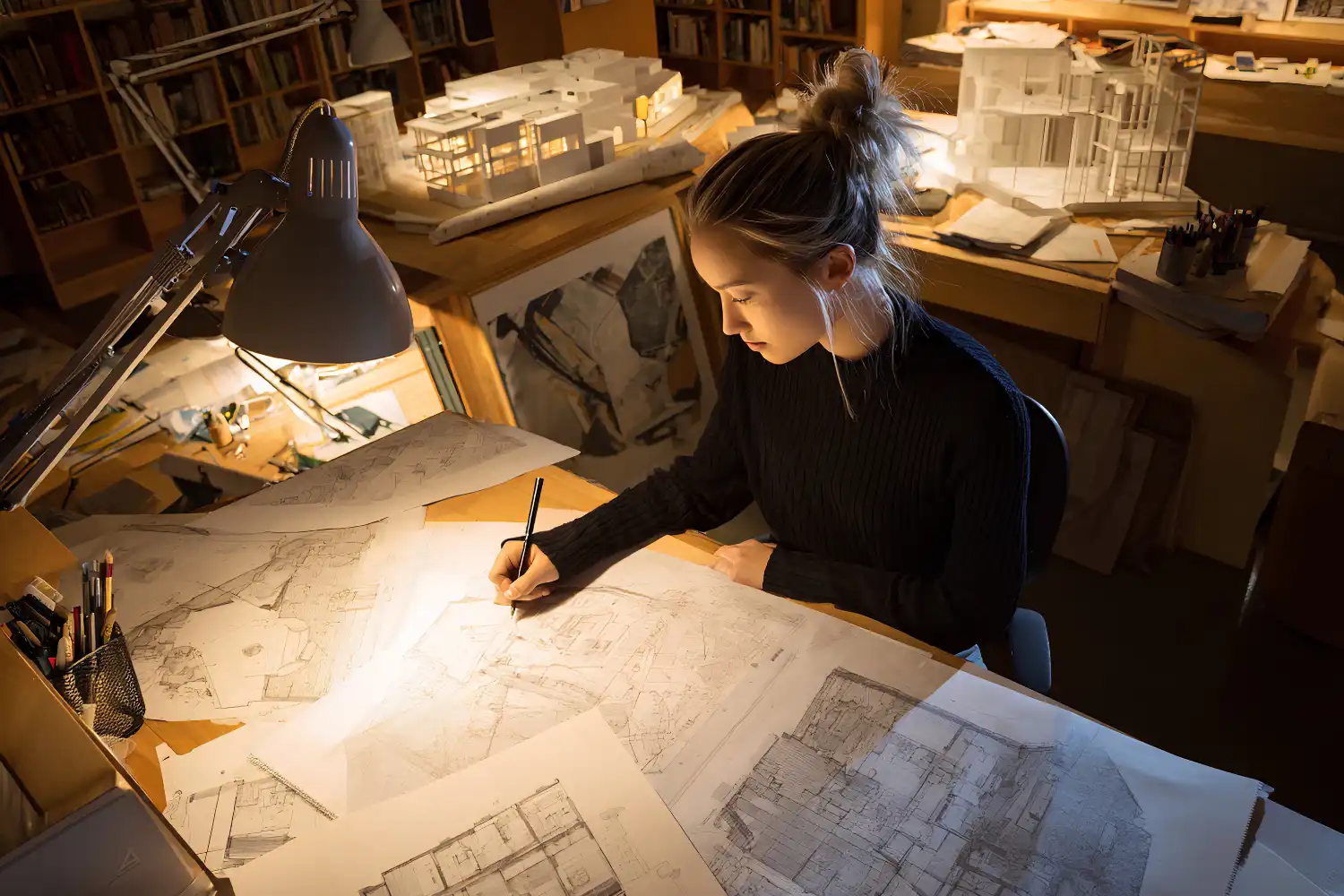
A precedent study in architecture is a structured analysis of an existing building or project, where you examine design decisions, spatial organization, materiality, and context to extract lessons for your own work. Knowing how to do a precedent study well gives you a repeatable framework that strengthens every studio project from first year through thesis.

What Is a Precedent Study in Architecture?
A precedent study is a focused investigation into a completed design. The word “precedent” comes from legal terminology, where past rulings guide future decisions. In architecture, the idea works the same way: by studying how other architects solved specific problems, you build a reference library of strategies you can adapt. This is not about copying. It is about understanding the reasoning behind choices so you can make better ones yourself.
Precedent studies in architecture appear at every stage of design education and practice. In studio, professors assign them early to build analytical skills. In professional offices, architects research precedents before starting schematic design to test assumptions about program, circulation, and structure. Whether you are studying a museum by Renzo Piano or a small pavilion by a regional firm, the method stays the same.
The approach also applies beyond buildings. A precedent study in landscape architecture follows a similar logic, examining how designers handled grading, planting, water management, and public space at an existing site.
💡 Pro Tip
Start collecting precedents before you have a project brief. Keep a running folder of buildings organized by typology, material, or spatial strategy. When a new studio project arrives, you already have a shortlist instead of scrambling for references the night before a pin-up.
How to Do an Architectural Precedent Study in 6 Steps
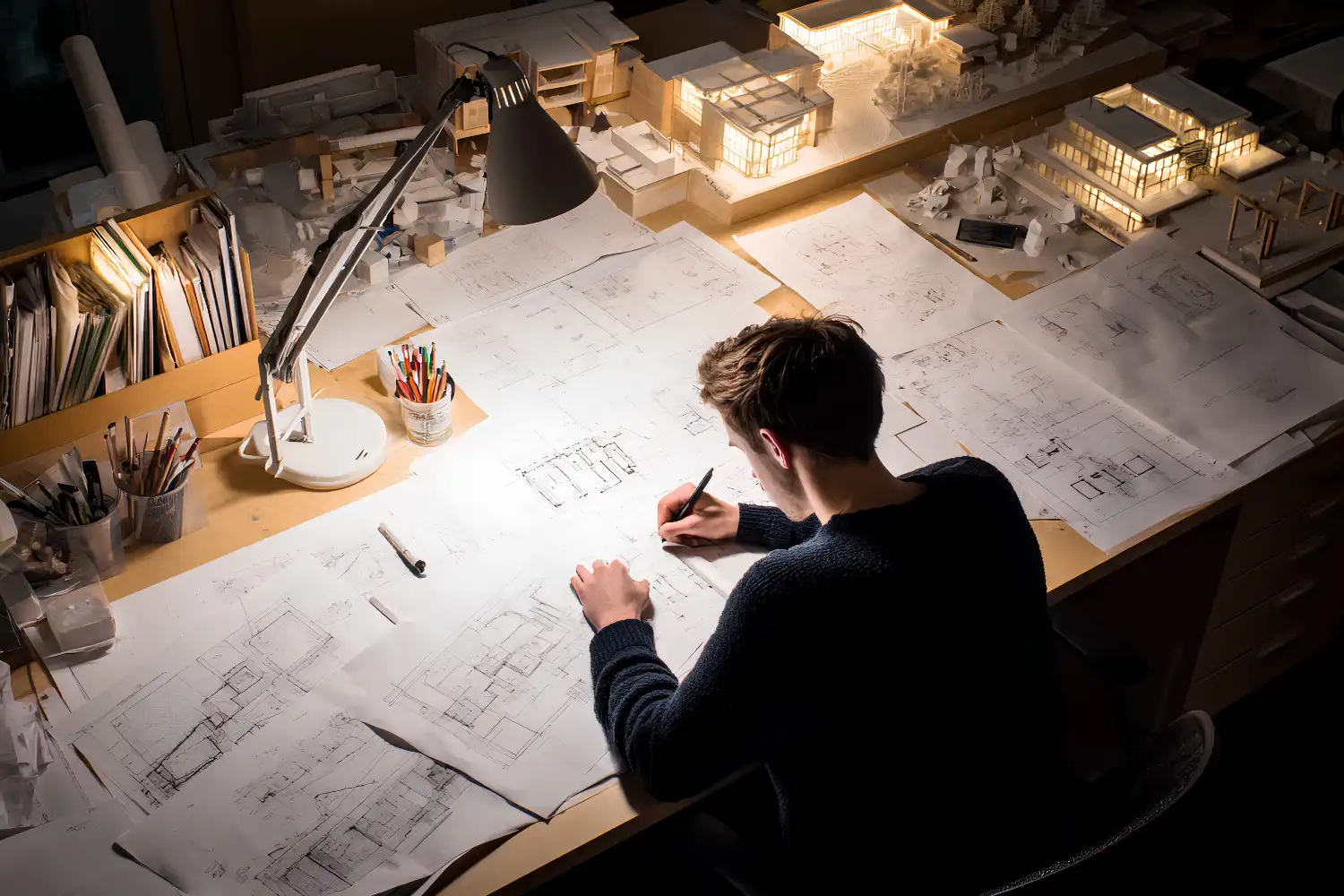
Breaking the process into clear steps keeps your analysis focused and your output presentation-ready. Below is a method that works for both quick studio exercises and longer research assignments.
Step 1: Choose the Right Building
Selection matters more than most students realize. Pick a project that shares at least one strong connection with your design problem, whether that is program type, site condition, climate, scale, or structural approach. A children’s library in Helsinki and a community center in rural Mexico may look nothing alike, but both solve problems of public circulation and daylight access that could apply directly to your brief.
Avoid picking only iconic buildings. Famous projects have extensive documentation, which helps, but lesser-known works often reveal more original solutions because fewer students have already analyzed them. Check ArchDaily and Dezeen for recent projects with good drawing sets and photographs.
Step 2: Gather Primary Sources
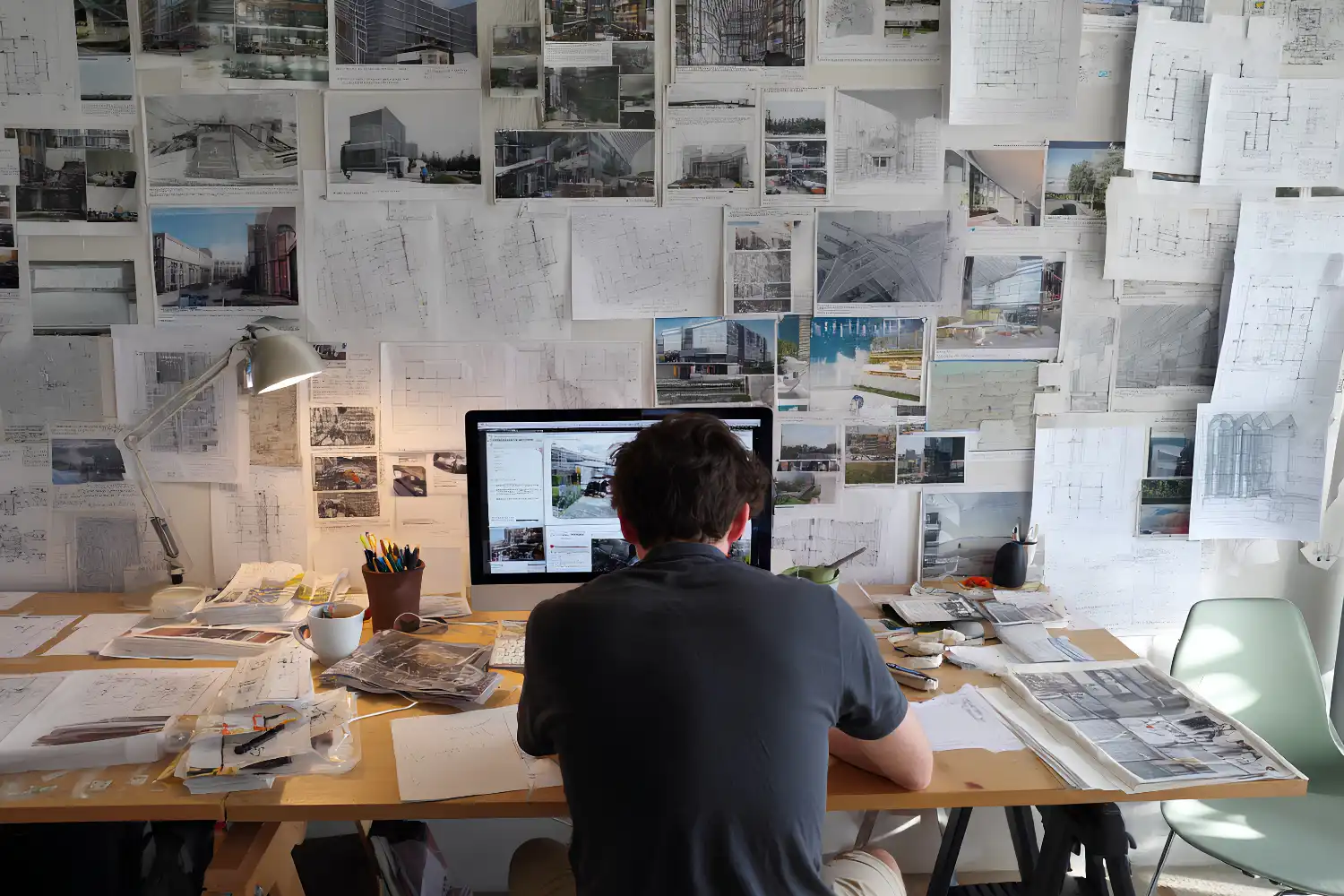
Strong precedent studies rely on primary material: original drawings, the architect’s own project descriptions, published interviews, and professional photographs. Search the architect’s website first, then look for coverage in architectural journals. University libraries with strong architecture programs often provide access to the RIBA journal archive and similar databases.
Collect floor plans, sections, elevations, site plans, and construction photographs. If the building is nearby, visit it. Walking through a space tells you things that no plan can communicate, especially about light quality, acoustic character, and the feel of material transitions.
⚠️ Common Mistake to Avoid
Many students rely entirely on Google Images and Pinterest for their research. These sources rarely include accurate scale references, and images are often cropped, filtered, or mislabeled. Always trace images back to the original publication or the architect’s own portfolio to confirm accuracy.
Step 3: Define Your Analysis Categories
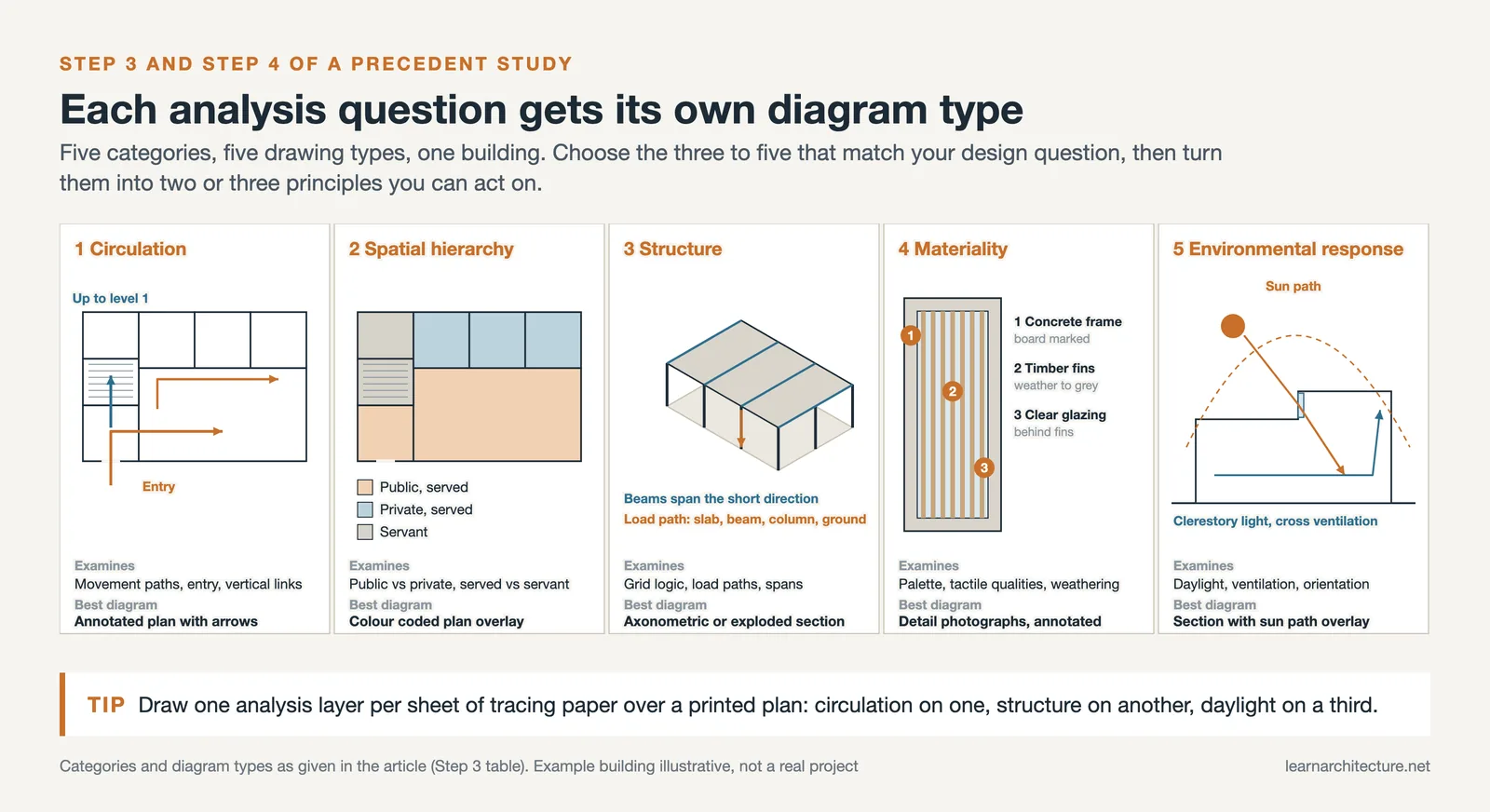
Do not try to analyze everything at once. Pick three to five categories that relate to your design question. Common categories include:
| Category | What to Examine | Best Diagram Type |
|---|---|---|
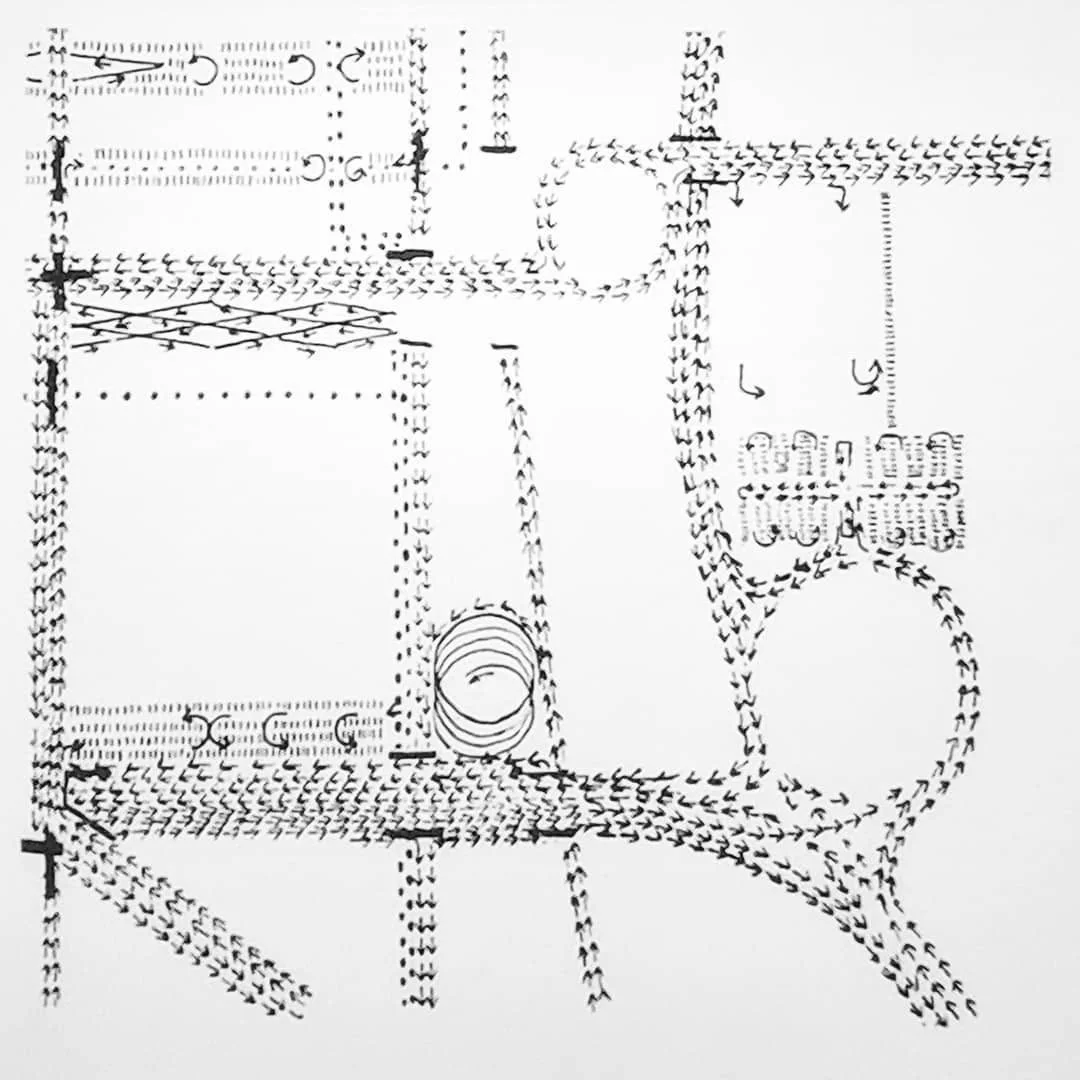
| Circulation | Movement paths, entry sequences, vertical connections | Annotated plan with arrows |
| Spatial hierarchy | Public vs. private zones, served vs. servant spaces | Color-coded plan overlay |
| Structure | Grid logic, load paths, span decisions | Axonometric or exploded section |
| Materiality | Palette choices, tactile qualities, weathering | Detail photographs with annotations |
| Environmental response | Daylight strategy, ventilation, orientation | Section with sun path overlay |
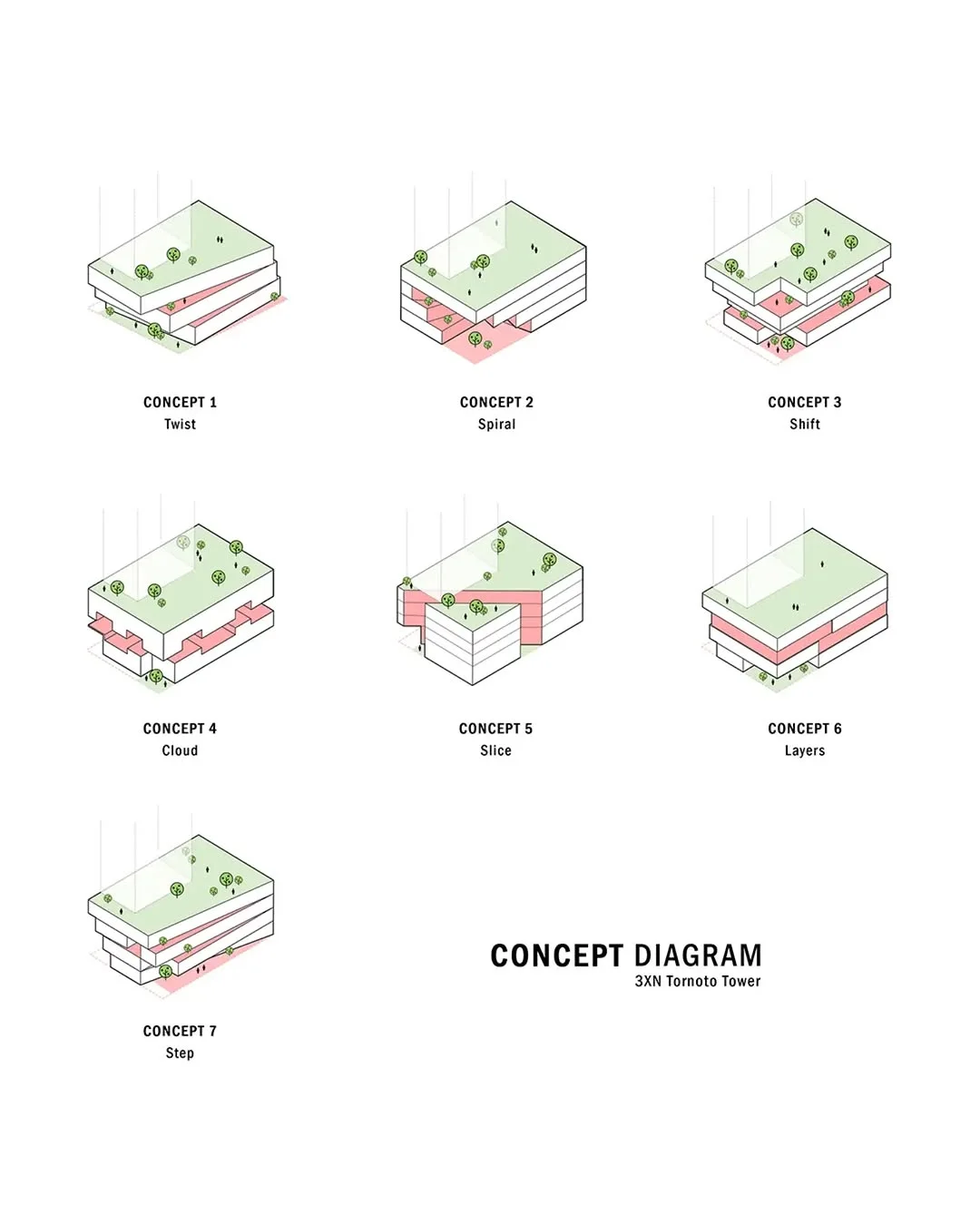
If you need a deeper breakdown of diagram types and how to create them, the guide to architectural concept diagrams covers the full range from bubble diagrams to analytical overlays.
Step 4: Redraw and Diagram
Redrawing plans, sections, and details by hand or in CAD forces you to understand the building at a level that simply reading about it cannot match. When you redraw a floor plan, you notice column grids, wall thicknesses, and spatial proportions that photographs hide. This is where real learning happens.
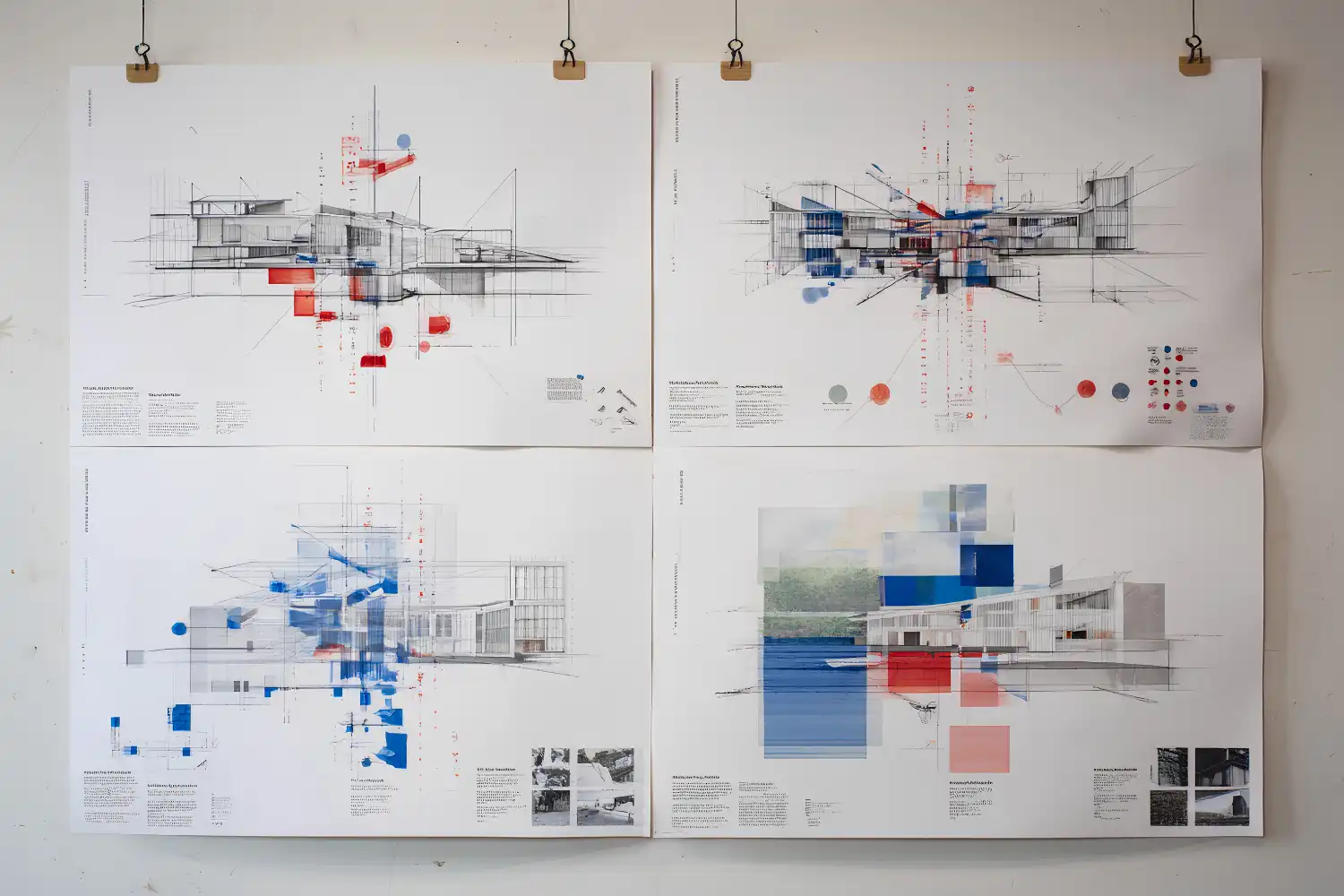
Produce analytical diagrams that strip the building down to its core logic. A parti diagram captures the fundamental organizational idea in a few lines. Circulation diagrams trace movement. Zoning diagrams separate public and private. Structure diagrams reveal how loads travel to the ground. Each diagram should answer one question clearly.
💡 Pro Tip
Use tracing paper over a printed plan to create quick overlay diagrams. Draw one analysis layer per sheet (circulation on one, structure on another, daylight on a third), then photograph or scan each layer. This analog method is faster than digital for early-stage analysis and produces visually distinctive results for reviews.
Step 5: Extract Transferable Principles
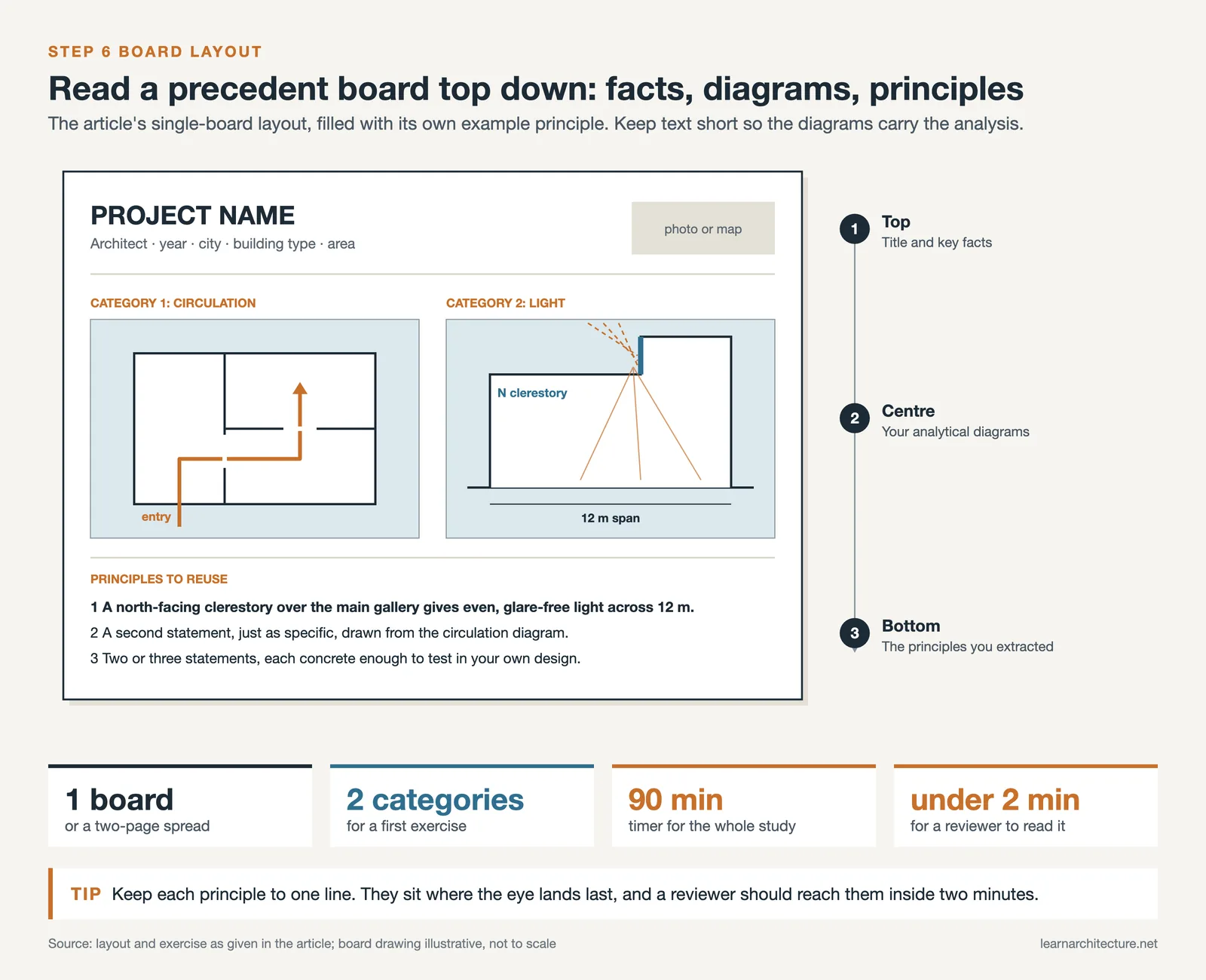
This is the step most architecture student precedent studies miss. After analyzing the building, identify two or three specific design principles you can carry into your own project. These should be concrete enough to act on. “The building uses light well” is too vague. “The architect placed a north-facing clerestory above the main gallery to provide even, glare-free daylight across a 12-meter span” gives you something you can test in your own design.
Write these principles as short statements. They become the bridge between research and design, connecting your precedent analysis to your concept development process.
Step 6: Present Your Findings
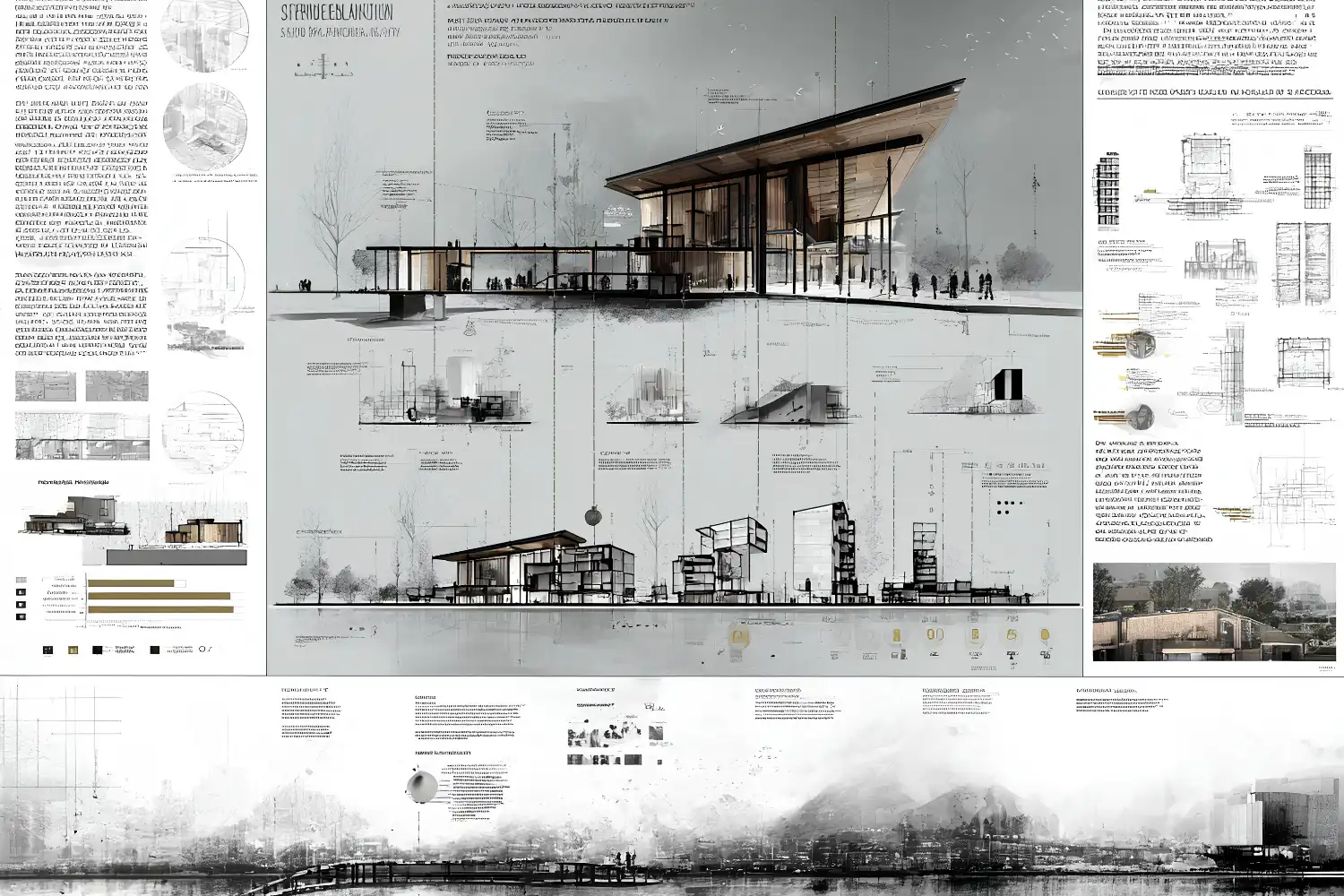
Layout matters. Organize your precedent study on a single board or a two-page spread with a clear visual hierarchy: project title and key facts at the top, your analytical diagrams in the center, and your extracted principles at the bottom. Reviewers should be able to read your analysis in under two minutes.
Keep text minimal. Let diagrams do the heavy lifting. If you are including the precedent study in a student portfolio, place it before the project it informed so the reader understands your design reasoning from the start.
📌 Did You Know?
Roger H. Clark and Michael Pause’s book Precedents in Architecture (first published in 1985 by Van Nostrand Reinhold) introduced a systematic diagramming method that analyzed 88 buildings across history using consistent graphic conventions. The book remains one of the most widely assigned texts in architecture schools worldwide and is now in its fourth edition.
Architecture Precedent Study Examples: What Good Analysis Looks Like
Looking at precedent studies architecture examples helps clarify the difference between surface-level description and genuine analysis. A weak precedent study lists facts: the building was completed in 2015, it is made of concrete, and it has three floors. A strong one explains why those decisions were made and what effect they produce.
For instance, a good analysis of Tadao Ando’s Church of the Light in Ibaraki would not simply describe the cross-shaped opening in the chancel wall. It would explain how the narrow slot controls light direction, how the concrete surfaces absorb and reflect that light differently throughout the day, and how this strategy creates a spatial experience that reinforces the building’s programmatic purpose. That kind of analysis produces transferable insight.
If you want to see how professional firms present building analysis, the First In Architecture precedent study guide walks through a structured approach with visual examples. For academic frameworks, the research paper by Binti Musa et al. on precedent studies as a pedagogical approach published on ResearchGate provides a useful theoretical foundation.
Video: How to Analyse an Architectural Precedent
This video walks through a practical method for analyzing architectural precedents, using Maggie’s Centres in the UK as case studies to demonstrate how to break down design decisions systematically.
How to Connect Precedent Research to Your Own Design
A precedent study that sits in a binder and never influences your project is wasted effort. The connection between analysis and design should be visible. When you present your studio project, reference your precedent directly: “I adapted the split-level section strategy from Building X to manage the 3-meter grade change on my site.”
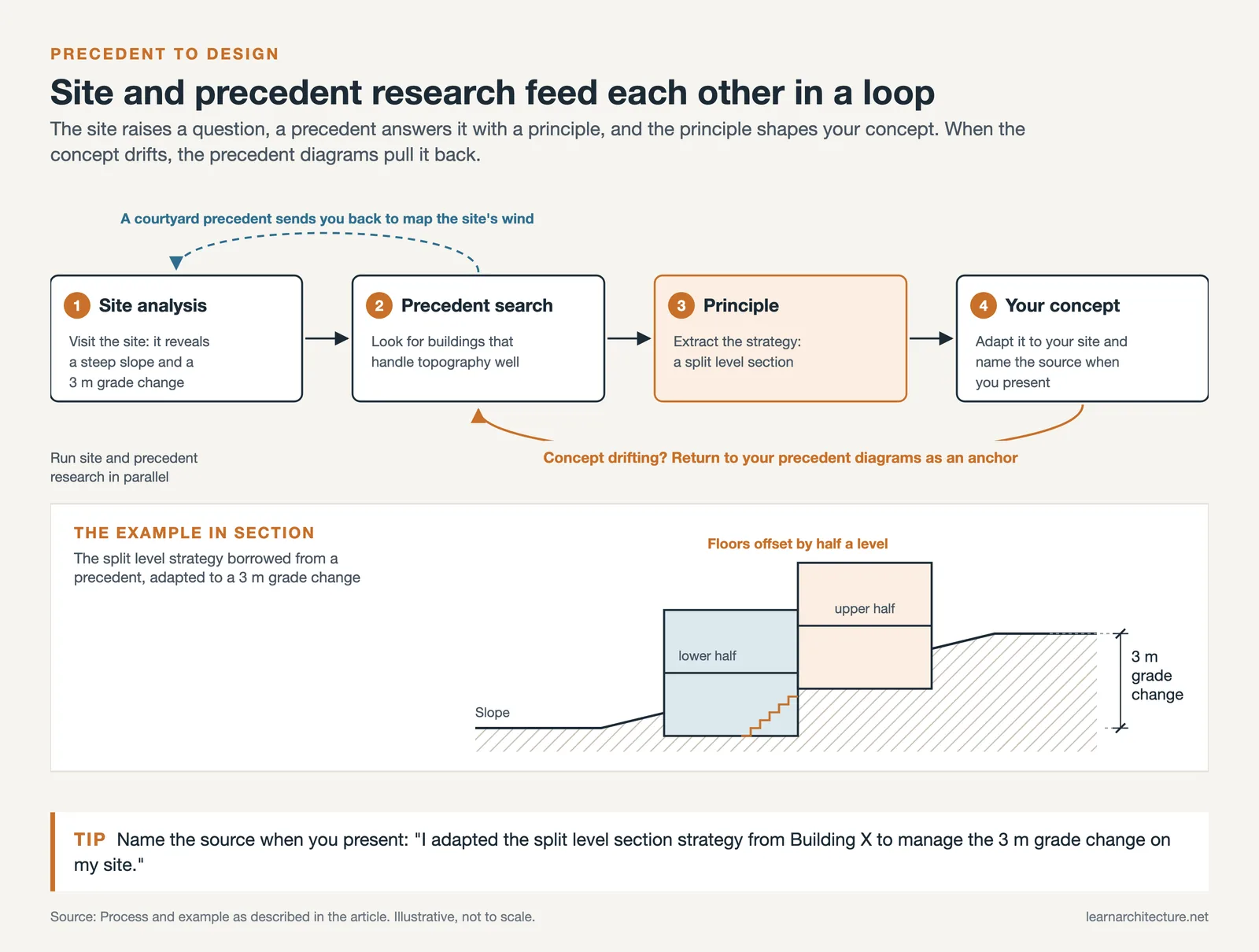
Start your site analysis and precedent research in parallel. The two feed each other. A site visit might reveal a steep slope, which sends you looking for precedents that handle topography well. A precedent might show a courtyard strategy that only makes sense once you map your site’s wind patterns.
As you develop your own design, keep returning to your precedent diagrams. If your concept starts drifting, your precedent analysis can act as an anchor, reminding you of the spatial logic that made you choose this direction in the first place. This feedback loop between precedent research and concept development is what separates a strong studio project from one that feels arbitrary.
Where to Go From Here
Your Next Step: Pick one building you admire, set a 90-minute timer, and complete a single-page precedent study using the six steps above. Focus on just two analysis categories. Once you have done it once, the process becomes second nature, and every studio project you tackle will start from a stronger foundation.

FAQ
How many precedent studies should I do for a studio project?
Two to four is a practical range for most studio projects. One primary precedent that closely matches your program and site, plus one or two secondary precedents that address specific issues like materiality, structure, or environmental strategy. Going beyond four often dilutes your analysis without adding proportional value.
Can I use unbuilt projects as precedents?
Yes, but with caution. Competition entries and speculative projects can offer strong conceptual ideas, yet they lack the feedback that construction and occupation provide. If you use an unbuilt project, acknowledge that its performance is theoretical and pair it with at least one built precedent for balance.
What is the difference between a precedent study and a case study?
A case study typically covers the full lifecycle of a project, from brief through construction and post-occupancy. A precedent study is narrower. It focuses on extracting specific design lessons that apply to your current project rather than documenting the entire development process. Both involve analysis, but the precedent study is driven by a design question you are trying to answer.
Where can I find floor plans and sections for precedent research?
Start with the architect’s own website, then check ArchDaily, Divisare, and the AIA project database. For historical buildings, university library databases like the Avery Index provide access to published drawings in architectural journals. Books remain one of the best sources for complete drawing sets with consistent scales.
- architecture precedent study
- architecture precedent study examples
- architecture student precedent studies
- how to do an architectural precedent study
- precedent studies architecture
- precedent studies architecture examples
- precedent studies in architecture
- precedent study architecture
- precedent study landscape architecture
- what is a precedent study in architecture
- what is precedent study in architecture











Leave a comment