


Table of Contents Show
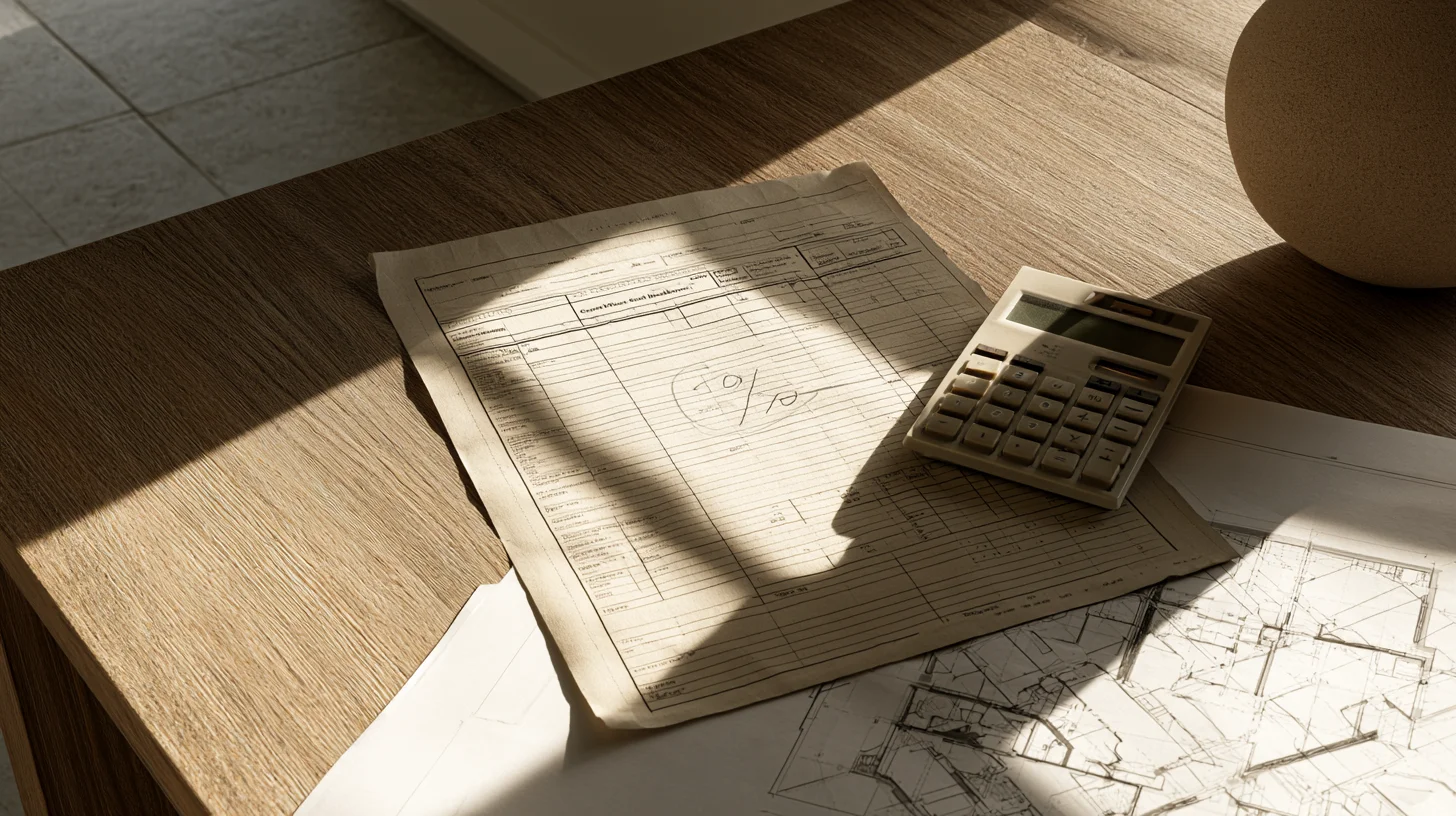
Architect fee structures explained simply: most architects charge using one of four methods, a percentage of construction cost, a fixed lump sum, an hourly rate, or a price per square foot. Percentage fees usually run 5 to 15 percent of the build cost, while hourly rates sit around 125 to 250 dollars depending on experience and location.
If you have asked a few firms for a quote, you know the numbers can swing wildly. One gives a single flat figure, another quotes a percentage, and a third wants an hourly retainer. The method matters as much as the number, because each one shifts who carries the risk if the project grows or changes. This breakdown shows how architects bill, what each model costs, and how to read a fee proposal with confidence.
How Much Do Architects Charge? A Quick Overview
There is no fixed national rate. For most residential and small commercial work, architect fees land somewhere between 5 and 20 percent of construction cost, or a comparable flat or hourly figure that produces a similar total. A small renovation might cost a few thousand dollars in design fees, while a custom home can run into the tens of thousands. The right number depends on scope, complexity, and how much of the work the architect handles from concept to handover.
🔢 Quick Numbers
- Most architects charge 125 to 250 dollars per hour, with intern-level staff often billed at 65 to 90 dollars (Angi, 2026)
- Per-square-foot design fees typically run 2 to 15 dollars depending on project scope (Angi, 2026)
- Hiring an architect costs an average of 6,630 dollars, with most homeowners spending 2,189 to 11,550 dollars (HomeAdvisor, 2025)
- The median annual wage for architects was 96,690 dollars in May 2024 (U.S. Bureau of Labor Statistics)
Architect Fee Structures Explained: The Four Main Methods
Almost every fee proposal you receive uses one of four billing models, sometimes blended together across project phases. Understanding architect fees starts with knowing what each method covers and where the financial risk sits.
1. Percentage of Construction Cost
This is the traditional approach, and still the most common for full-service projects. The architect charges a set percentage of what the building costs to construct. Rates generally fall between 5 and 15 percent, and the percentage usually drops as the build budget rises, since a larger project benefits from economies of scale. Renovations and historic work tend to sit at the higher end because they carry more unknowns. According to the American Institute of Architects, percentage-based compensation is now often tied to the owner’s budget at signing rather than the final construction cost, which protects both sides if the scope shifts later.
2. Fixed Fee (Lump Sum)
A fixed fee is a single agreed price for a defined scope of work. It gives you budget certainty, which is why many clients prefer it for straightforward projects with a clear brief. The catch is that the scope must be tightly written. If you ask for extra revisions or add a wing halfway through, the architect issues a change order, and the fixed price no longer applies to that new work.
3. Hourly Rate
Hourly billing charges for time actually spent, usually with a cap or estimate so the bill does not run away. It suits early-stage feasibility studies, consulting, and projects where the scope is genuinely unclear at the start. Rates vary by seniority, with principals and project leads commanding the top of the range and junior staff billed lower. Many firms use hourly billing for the schematic phase, then switch to a percentage or fixed fee once the scope settles.
4. Per Square Foot
Some architects quote a price per square foot of the finished building. It is easy to understand and quick to estimate, which makes it popular for early conversations. The weakness is that it ignores complexity. A simple rectangular warehouse and a steel-and-glass home of the same area demand very different amounts of design work, yet a flat per-square-foot rate treats them the same.
💡 Pro Tip
When you compare proposals, ask each firm what services are included at their quoted fee, not just the number. One architect’s percentage may cover construction administration and site visits, while a cheaper flat fee stops at permit drawings. Comparing the totals without comparing the scope is how clients get surprised by extra bills later.
Architect Fee Methods Compared
The table below summarizes how the four common billing methods differ in practice:
| Fee Method | Typical Range | Best For | Main Trade-Off |
|---|---|---|---|
| Percentage of cost | 5 to 15% of build cost | Full-service custom projects | Fee rises if construction cost rises |
| Fixed fee | Single agreed sum | Clear, well-defined scope | Extra work triggers change orders |
| Hourly rate | 125 to 250 dollars per hour | Feasibility, consulting, vague scope | Final total is harder to predict |
| Per square foot | 2 to 15 dollars per sq ft | Quick early estimates | Ignores design complexity |
Fixed Fee vs Percentage Architects: Which Works Best?
The fixed fee vs percentage architects debate comes down to certainty against flexibility. A fixed fee tells you the exact design cost on day one, which helps when your own budget is tight and your brief is settled. A percentage fee flexes with the project, so if you upgrade finishes or expand the footprint, the architect is fairly paid for the added effort without a fresh negotiation each time.
For a defined project such as a single-story extension, a fixed fee usually serves the client well. For an ambitious custom home where the design will evolve through many conversations, a percentage often produces a fairer outcome for both parties. Neither is automatically cheaper. The better choice is the one that matches how stable your scope really is.
⚠️ Common Mistake to Avoid
Many clients assume the architect’s fee is the whole cost of design. In reality, structural engineers, surveyors, planning consultants, and permit fees are often billed separately. Ask early whether these consultants are inside the architect’s fee or arranged on your own account, so the headline number does not hide several thousand dollars of extra spending.
What Drives Architect Fees Up or Down?
Two identical-looking houses can carry very different fees. The variables that move the number most are project complexity, location, the architect’s experience, and how much of the work you ask the firm to handle. A licensed architect with a strong reputation charges more than a recent graduate, and a tight urban site with strict planning rules takes more design time than an open rural plot.
Renovations and additions usually cost more per square foot than new builds, because working around an existing structure adds uncertainty. Specialized work, such as energy-efficient or heritage design, also pushes fees higher, a pattern that shows up clearly in the cost of green architecture design. Understanding what an architect actually delivers across a project helps explain the fee, and the full scope of an architect’s roles and responsibilities covers far more than drawings alone.
Architect Fees Breakdown by Project Phase
A full architect fees breakdown usually maps to the phases of work, and many firms invoice as each phase completes rather than asking for the whole fee upfront. A common pattern splits the fee across early design, technical design, and construction stages, often weighted toward the front and middle of the project.
- Concept and schematic design: roughly the first third of the fee, covering feasibility, initial layouts, and planning submissions.
- Technical design and documentation: a further third, producing the detailed drawings a contractor builds from.
- Construction and handover: the remaining share, covering site visits, queries, and final sign-off.
This staged structure means you rarely pay everything at once, and you can sometimes stop after an early phase if the project does not proceed. The American Institute of Architects describes several billing approaches in its guidance on charging for architectural services, from retainers to milestone-based payments, and its overview of calculating the architect’s fee explains why percentage rates fall as project size grows.
If you are weighing the cost of an independent professional against a larger practice, the trade-offs around hiring freelance architects are worth reading, since lower overhead can mean more affordable rates. Architects setting their own prices face the same math from the other side, which the guide to becoming a freelance architect covers in detail.
Are Architect Fees Worth the Cost?
A good architect does more than draw plans. Smart space planning, accurate documentation, and skilled coordination with contractors can reduce build waste, prevent expensive mistakes, and add resale value, which often offsets part of the fee. Earnings data reflects the value firms place on the role, as shown in the wider picture of how well architects are paid. For high-value builds, the design fee is usually a small slice of total project spending and one of the higher-return parts of it.
Cost figures in this article are approximate and vary by region, material supplier, project scope, and the individual architect. Always request a written fee proposal for your specific project.
Frequently Asked Questions
How much does an architect cost for a house?
For a custom home, architect fees commonly run between 8 and 15 percent of construction cost, though the exact figure depends on size and complexity. Industry data from HomeAdvisor puts the average architect engagement at around 6,630 dollars, with most homeowners spending between 2,189 and 11,550 dollars.
Do architects charge for an initial consultation?
Many architects offer a short first meeting at no charge to discuss your project and see if you are a good fit. Detailed work beyond that, such as feasibility studies or sketches, is usually billable, often at an hourly rate. Always confirm what is free and what is paid before the meeting.
Is it cheaper to hire an architect hourly or on a fixed fee?
Neither is automatically cheaper. Hourly billing can cost less for small, well-scoped tasks, but it carries uncertainty if the work expands. A fixed fee gives a known total and tends to suit defined projects. The cheaper option is whichever matches how clear and stable your scope is.
Can I negotiate an architect’s fee?
Fees are often open to discussion, especially the scope behind them. Rather than pushing the number down alone, ask which services you can remove, such as construction administration, or whether a phased agreement lets you pay stage by stage. This protects quality while keeping the upfront cost manageable.
Putting It All Together
Bottom Line: Architects charge through percentage, fixed, hourly, or per-square-foot models, and the method shapes your risk as much as the price. Compare proposals on scope rather than headline figures, match the billing structure to how settled your project is, and treat a clear written fee agreement as the single best protection against surprise costs.

















Leave a comment