



Samsung C&T announced on September 28, 2026 that the Korea Concrete Institute had certified its beam-column dry-joint system at the special moment frame level, the highest seismic rating the institute awards for this kind of connection. The company’s engineering and construction arm says the approval clears the way for wider use of the method in its column-free housing concept, called Next Home.
According to Samsung C&T, this marks the first occasion a Korean construction firm has secured special moment frame status for a dry-joint precast technique, as opposed to conventional cast-in-place or wet-joint methods.
What the Beam-Column Dry-Joint System Certification Covers
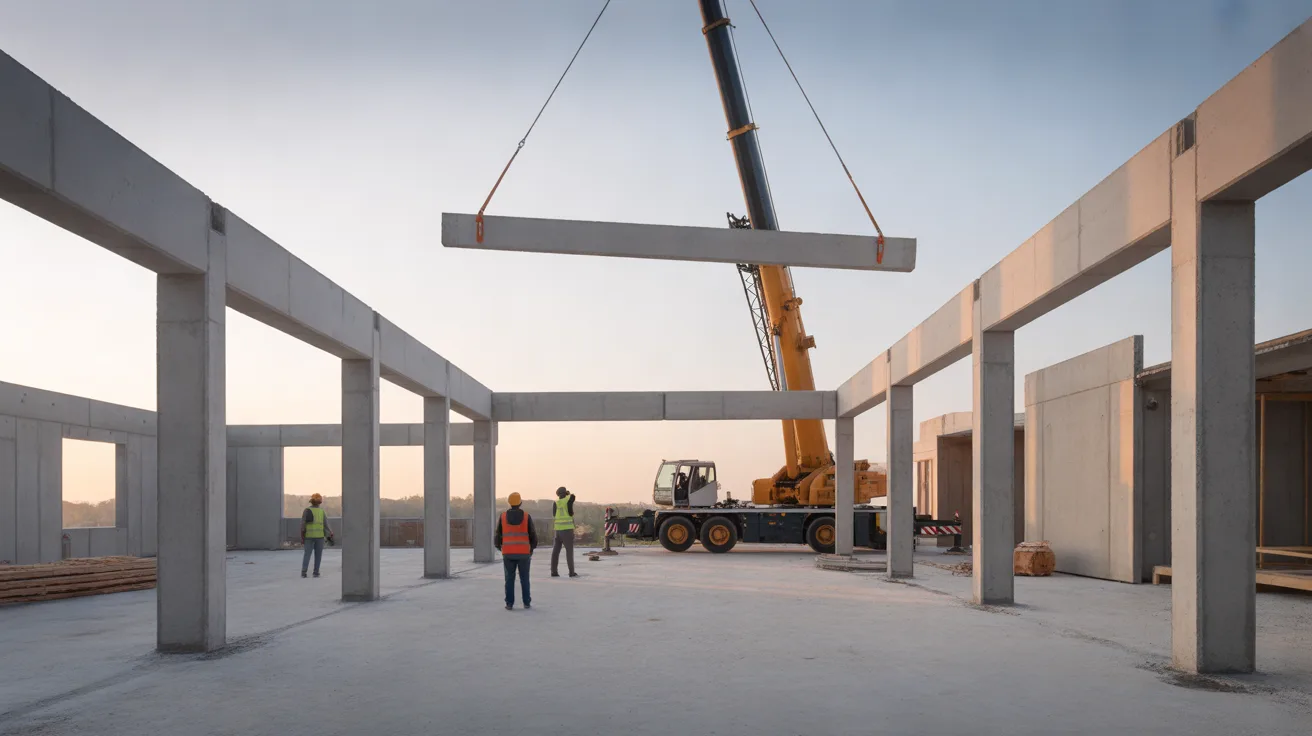
Next Home is Samsung C&T’s pitch for housing that owners can rearrange over time, built around precast rigid frames with no interior columns blocking the floor plan. Removing those columns puts extra weight on the connections between the remaining columns and beams, so the company has focused its engineering on that joint.
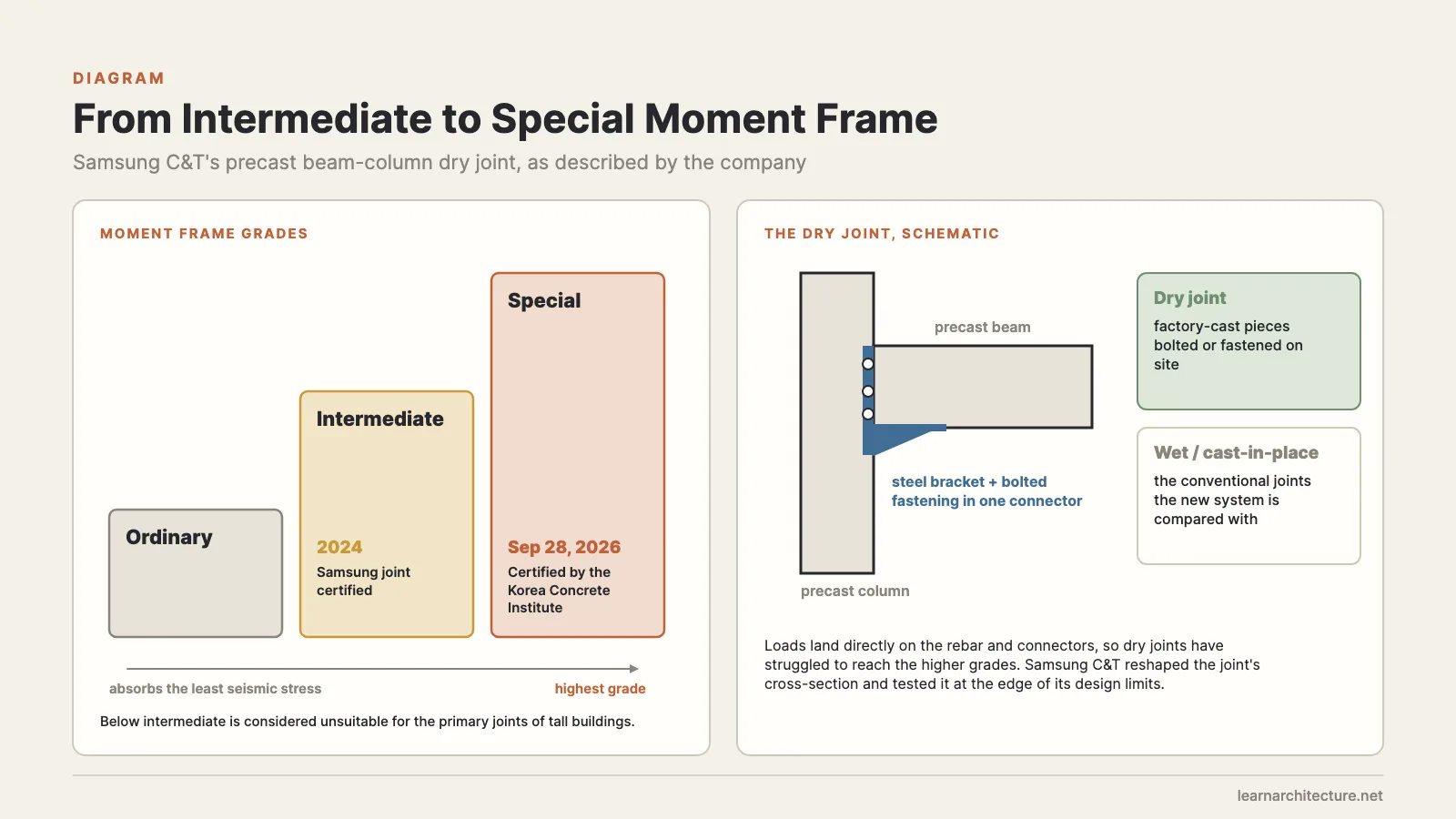
Moment frame structures, which carry building loads through their columns and beams, are graded ordinary, intermediate, or special based on how much seismic stress they can absorb. Anything below intermediate grade is considered unsuitable for the primary joints of tall buildings. Dry-joint precast assembly, where factory-cast concrete pieces are bolted or fastened together on-site rather than poured in place, has historically struggled to reach those higher grades because the building loads land directly on the rebar and connectors, making the joints harder to engineer for strength.
How Samsung C&T Reached the Special Moment Frame Standard
Samsung C&T’s answer was a proprietary connector pairing a steel bracket with bolted fastening in one unit. That design earned intermediate moment frame certification in 2024. Engineers then reshaped the cross-section of the joint and ran repeated tests at the edge of its design limits, pushing its rated seismic capacity up to the special moment frame threshold now certified.
The company says the upgraded joint should let it guarantee structural safety and build quality on future high-rise projects that use precast rigid frames, while also cutting overall construction timelines.
Byun Dong-kyu, who heads Samsung C&T’s housing technology innovation team, framed the certification as proof of concept for factory-built seismic engineering:
“This certification is significant because it means we have implemented the high seismic performance required for precast rigid-frame structures through a practical dry-joint technology and received official recognition for it.”
He added that the company intends to keep pushing off-site construction, known in the industry as OSC, as a point of difference:
“We will continue to lead change in the construction business through off-site construction, or OSC, and create distinctive value based on differentiated technology and quality.”
Samsung C&T says it now plans to broaden where it applies OSC methods and build on this certification as it develops future housing technology.








Leave a comment