


OpenAI launched its GPT-6 Astra model on September 21, 2026, and buried inside a wide-ranging rollout covering coding, cybersecurity and computer-use tasks was a result that speaks directly to designers and manufacturers: a benchmark showing the model can turn photos into editable CAD models expressed as code, rather than a flat mesh or image.
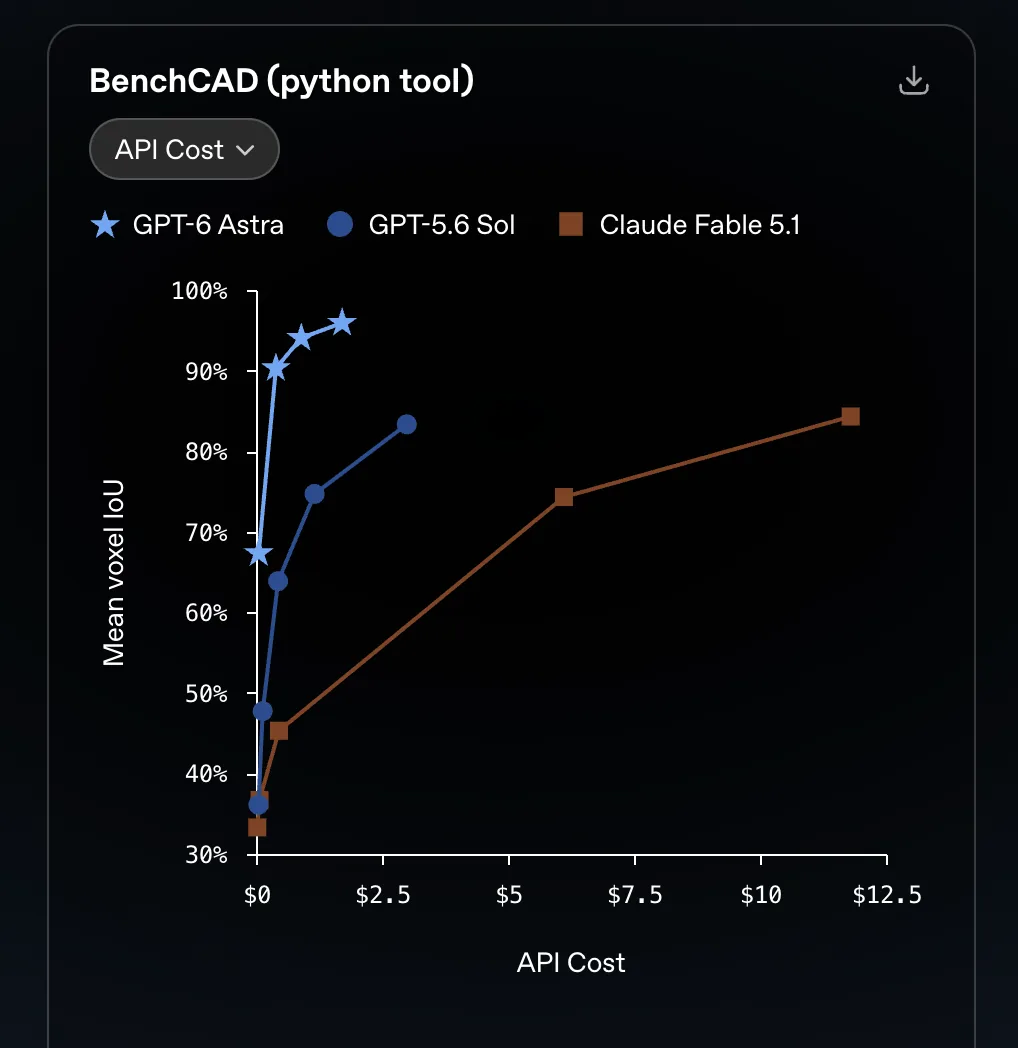
The metric in question, BenchCAD, checks whether a model can look at several angled views of an object and rebuild it as parametric CAD, the kind of file that can be opened, edited and adjusted in standard design software. Astra posted a mean voxel IoU score of 95.9% on that test, a measure of how closely its reconstructed geometry lines up with the source object.
What the GPT-6 Astra benchmark actually measures
That score is a sizable jump from the 83.3% OpenAI reported for its previous model, GPT-5.6 Sol, and it edges past the 84.3% that Anthropic’s Claude Fable 5.1 achieved on the same test. OpenAI also says Astra hit its number more cheaply, with an estimated API cost roughly 43% lower than Sol and 86% lower than Fable 5.1 in the configurations it tested.
In OpenAI’s own framing, the significance is less about the raw score and more about the format of the output. “A frontier model generating parametric CAD from photos, rather than a picture or a fixed mesh, is closer to what an AM workflow needs than any prior general-purpose model result,” the company said, adding that “the jump from 83.3% to 95.9% on BenchCAD suggests that capability is moving quickly.”
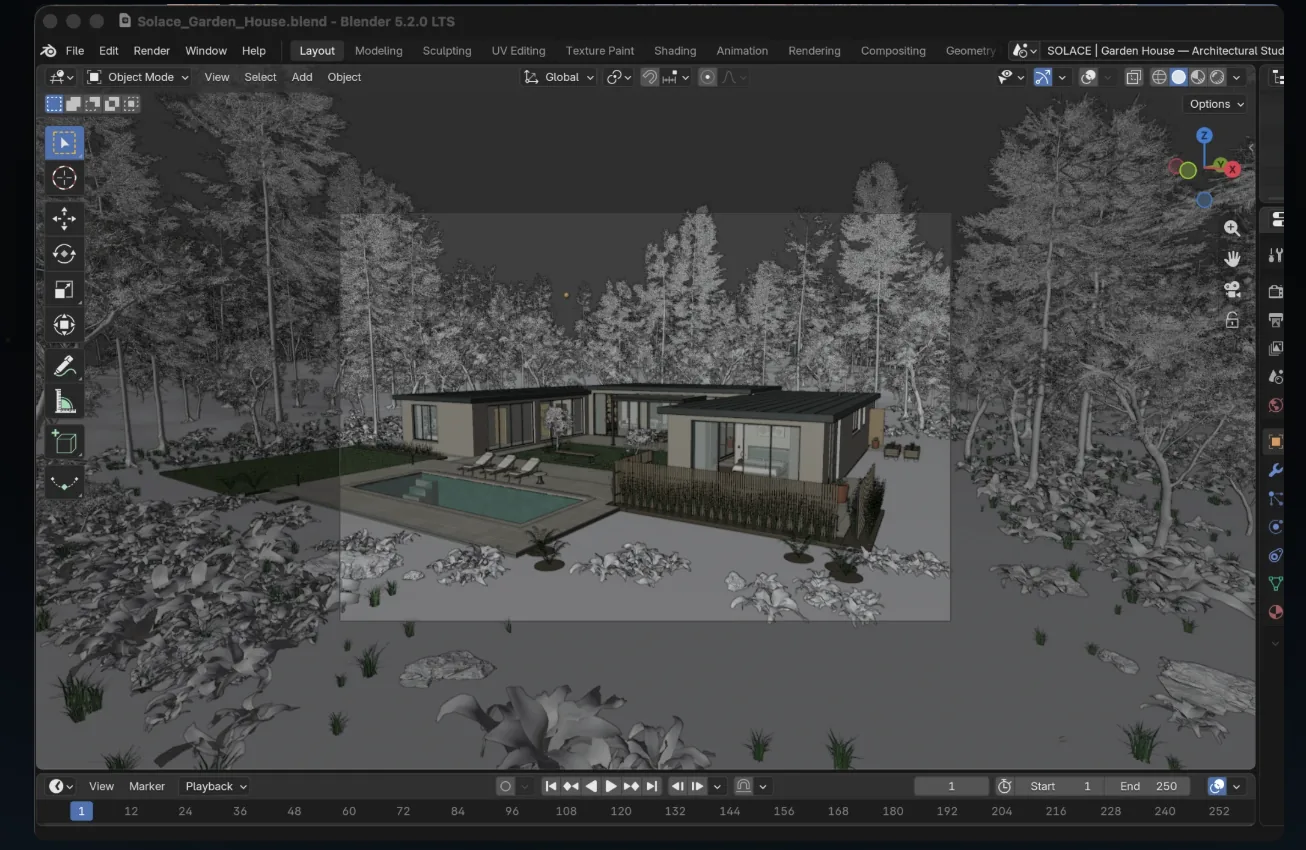
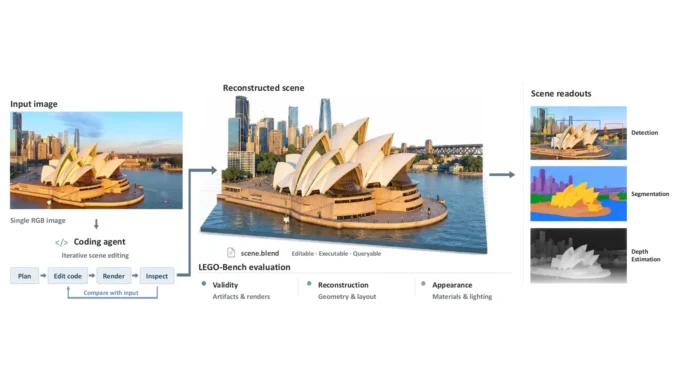
Alongside the benchmark, OpenAI showed Astra building a house model in Blender and porting it into a walkable Unreal Engine 5 scene, pitched as a way to let clients tour a design before construction begins. It is a separate use case from single-part reconstruction, but it leans on the same underlying skill: converting a static reference into structured, editable geometry.
Why additive manufacturing is watching this closely
The reason this matters beyond OpenAI’s own product line is the scan-to-CAD bottleneck that has long dogged 3D printing and reverse engineering. Data captured by a 3D scanner typically arrives as a mesh or point cloud that cannot be fed straight into CAD software; turning it into something editable and printable has usually meant manual redrawing or specialized reverse-engineering tools.
Several companies have built entire businesses around closing that gap. Backflip, started by Markforged founders Greg Mark and David Benhaim, has developed a foundation model that reconstructs parts feature by feature, the way an engineer would, and has driven the cost of digitizing a single part down from around $1,500 to roughly $10. On the hardware side, Creality has partnered with KVS Ltd to offer a scan-to-CAD pipeline that lets an engineer scan a damaged component and have it ready for CNC machining or 3D printing within minutes.
Seen against that backdrop, Astra’s result does not open a new problem for the additive manufacturing industry so much as insert a general-purpose AI model into a race that specialized tools have already been running.
OpenAI notes that BenchCAD tests reconstruction against clean, multi-view renders built for evaluation, not scans of real, imperfect physical objects, so the model has not yet been measured against the dimensional tolerances that determine whether a part actually prints correctly. Astra is being rolled out first to a limited group of organizations, with wider access for ChatGPT Plus, Pro, Business and Enterprise users, and for developers through the OpenAI API, Microsoft Azure and AWS Bedrock, expected in the coming days.









Leave a comment