


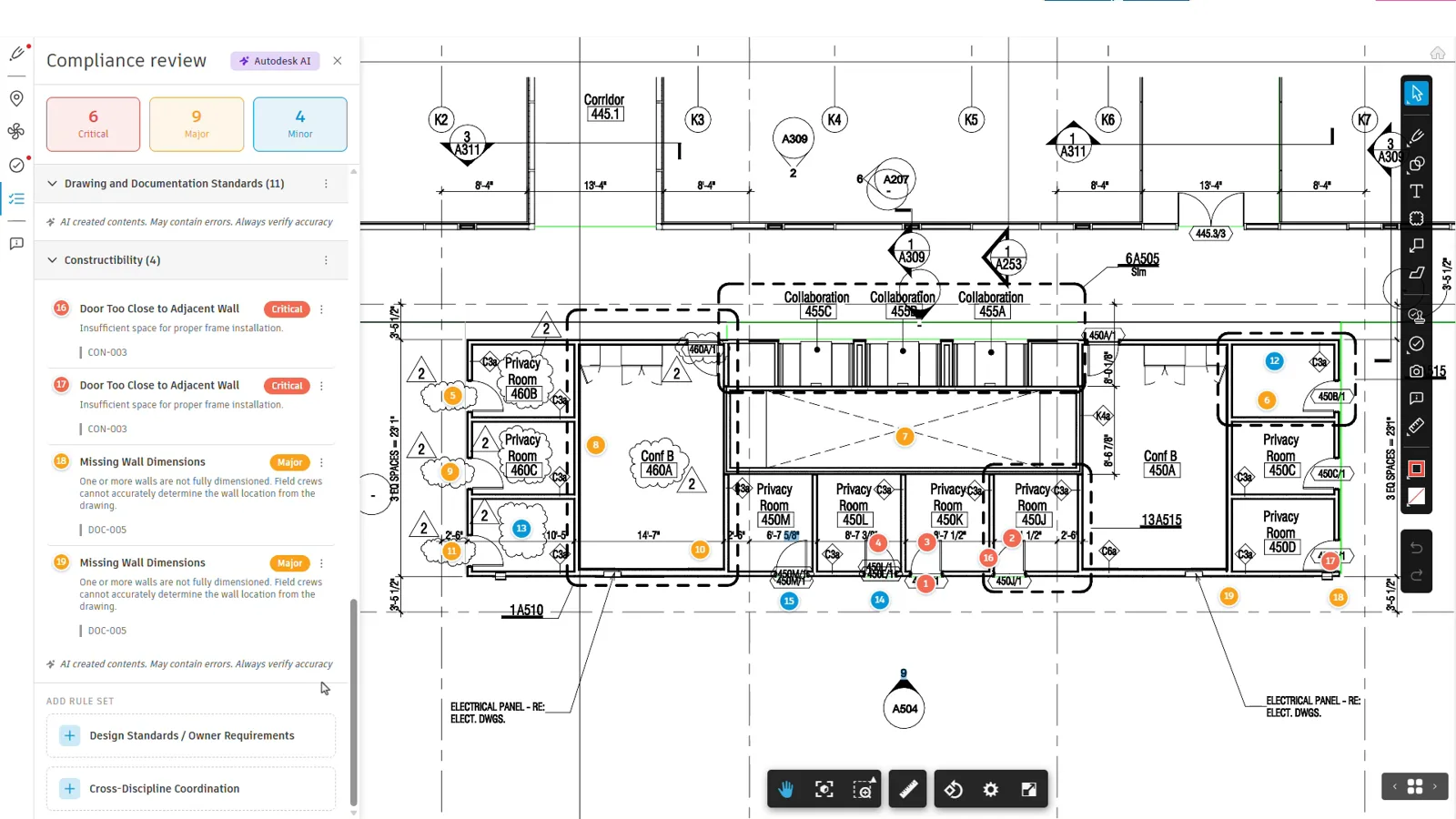
Autodesk used its annual university conference in Las Vegas to unveil Drawing Compliance Review, a new AI feature built to check architectural and engineering drawings against building codes before they go out for approval. The company says the tool, slated for release in early 2027, is being designed so a human reviewer remains part of every check rather than letting the software sign off on its own.
The announcement came at Autodesk University 2026 in Las Vegas, where the company laid out a broader push to weave artificial intelligence through every stage of a building’s life, from early planning sketches to maintenance requests raised years after opening. Where last year’s conference dealt mostly in promises, this year’s event was pitched as proof that those ideas are being built into shipping products.
Drawing Compliance Review keeps a person in the loop
Drawing Compliance Review is part of Forma Data Management, where it joins drawing search and Drawing Change Analysis. According to Autodesk, it will evaluate drawing packages against building codes, design standards and the owner requirements a team brings to a project, sorting what it finds into critical, major and minor issues so they can be resolved earlier in design. Separately, Autodesk Assistant and Building Layout Explorer, which checks a multifamily layout against a client’s required unit mix, are coming to Forma Site Design.
Autodesk has been explicit that the compliance checker is not meant to replace the reviewer who signs off on a set of drawings. That caution reflects a wider argument the company’s leadership made throughout the conference: in fields like architecture and engineering, an answer that is merely plausible can still be dangerously wrong. Autodesk chief executive Andrew Anagnost put it bluntly during a Q&A session: “Not all AI is the same.”
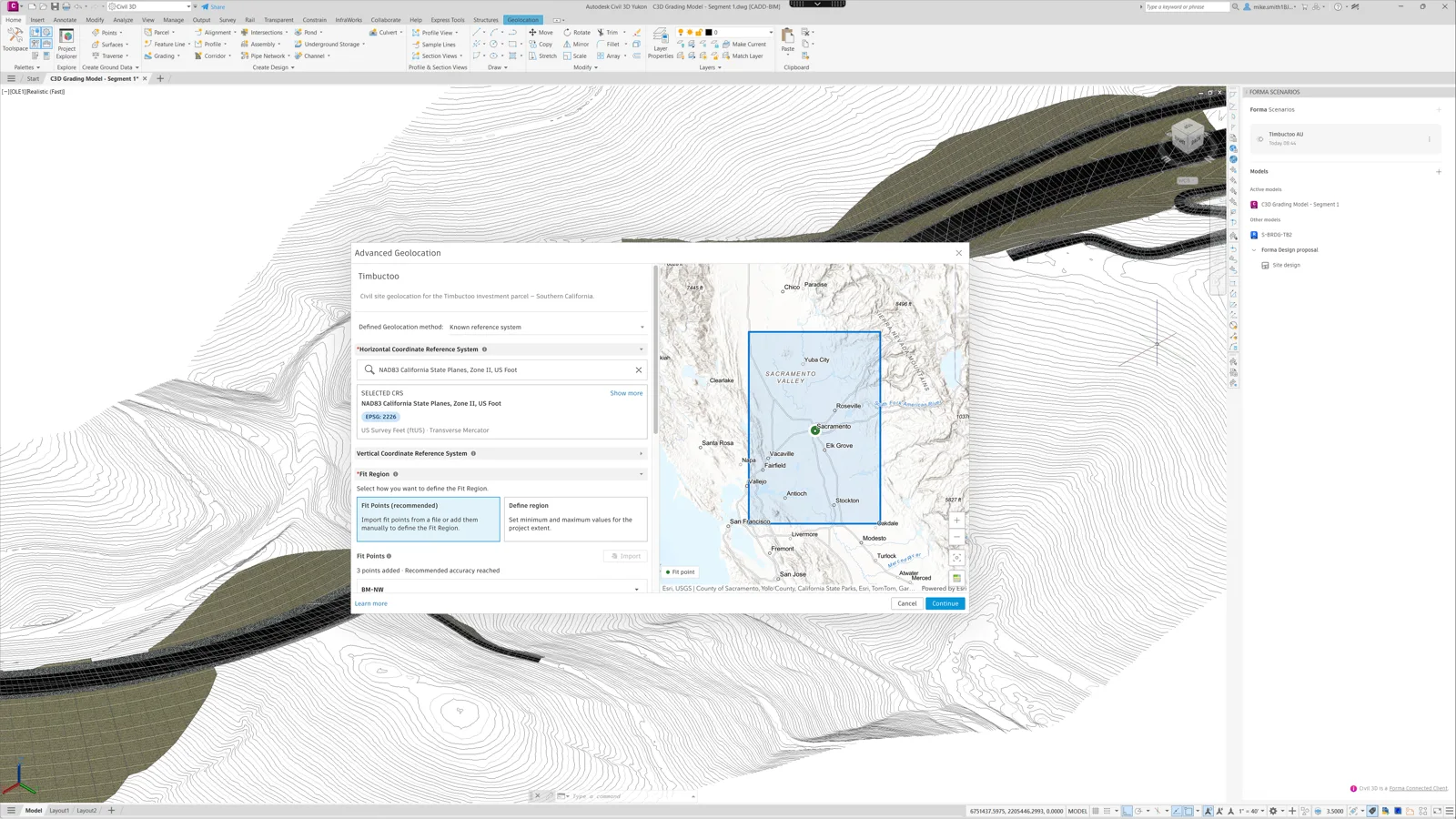
That philosophy runs through much of what Autodesk showed in Las Vegas, including a unified geolocation system linking Forma, Revit and Civil 3D, and an “AI Orchestrator” that picks between different AI models depending on the accuracy, speed, cost or security a given task demands, rather than routing every request through one general-purpose system.
Why Australian firms may be watching closely
The compliance tool lands at a moment when Australian firms are still working out how to bring AI into everyday practice. Autodesk’s 2027 State of Design and Make research, a survey of 443 Australian business leaders across architecture, engineering and construction, found that 34 percent now cite a lack of knowledge or technical skills as a barrier to implementing digital solutions, up from 27 percent in 2025. Cost control remains the top challenge to AI adoption, cited by 39 percent. A tool that automates part of the compliance check, while still requiring sign-off from a qualified reviewer, could address both concerns at once: cutting the hours spent manually cross-referencing codes without asking firms to hand over legal responsibility to a machine.
Practitioners at the conference were cautiously positive about where AI fits into daily design work, provided it does not replace judgement. Julia Allen, design technology leader at Hassell Services, whose projects include Doha’s Grand Terminal and the Arup Brisbane workplace, said the technology needs to support, not drive, decision-making. “AI has to be threaded into the process for a better design outcome,” she said, adding that at Hassell, “AI gives Hassell more room to explore, challenge and refine ideas, so technology accelerates the process without narrowing the ambition.”
Neither Autodesk’s announcement nor the iTWire report says which jurisdictions’ codes the tool will support at launch. For now, the company’s stated timeline points to an early 2027 rollout, with human review built in as a permanent feature of the process rather than an interim safeguard.











Leave a comment