


Table of Contents Show
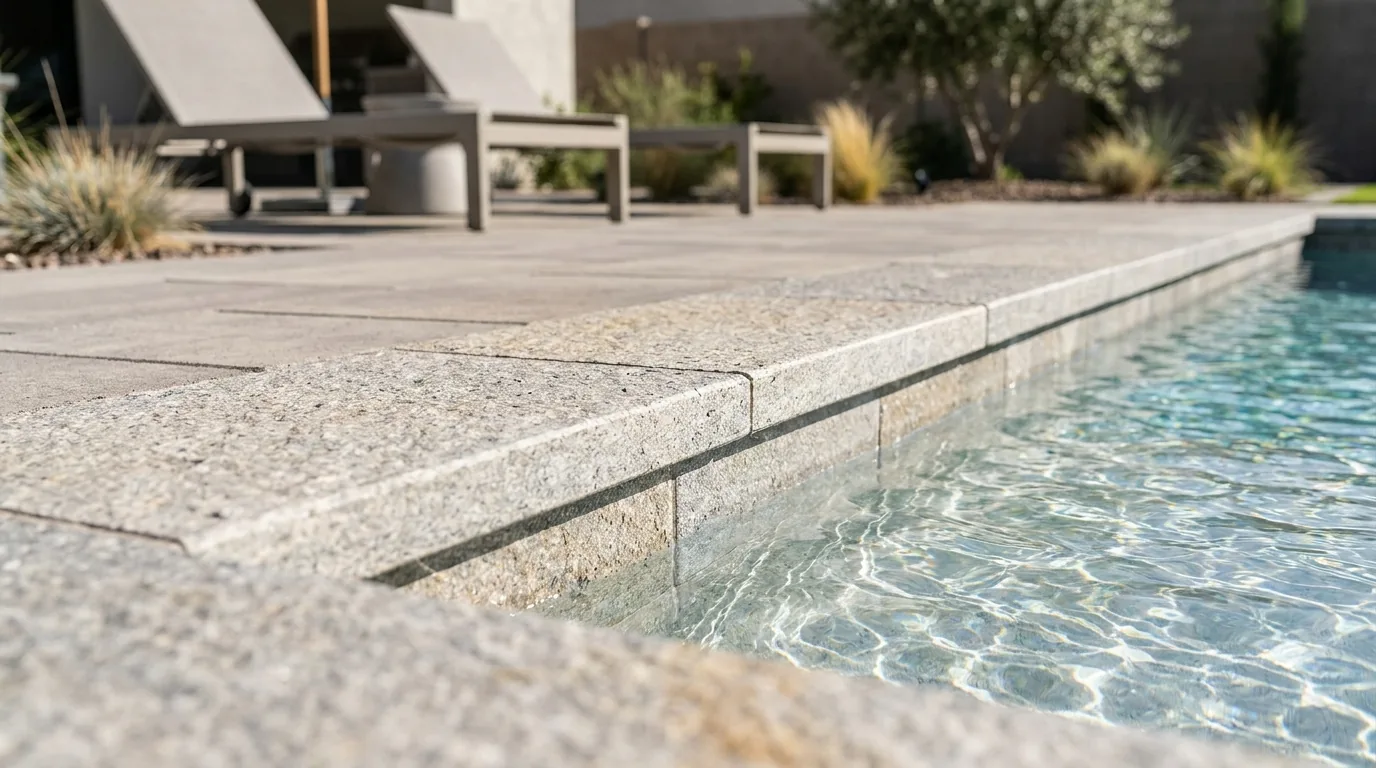
Pool coping is the finished edge that caps the top of a pool wall and frames the waterline. It takes constant splashing, pool chemicals, sun, and foot traffic, so it wears faster than almost any other surface in your backyard. Choosing the right coping protects the pool structure and keeps the whole area looking finished for years. This guide explains what coping does, which materials last longest, how to maintain them, and what drives the cost.
What Are Pool Coping Stones and Why Do They Matter?
Pool coping stones are the units that sit on top of the pool wall, bridging the gap between the shell and the surrounding deck. They create a clean border, direct splash-out water away from the pool, and give swimmers a defined edge to grip. Without a durable cap, water can seep behind the wall and damage the structure over time.
Because the edge takes the most abuse, the material you choose there matters more than almost anywhere else around the pool. Manufacturers like Techo-Bloc produce pool coping stones built for wet, high-traffic edges, which helps the border resist chipping and staining season after season. Picking a purpose-built cap from the start saves you from early repairs and mismatched replacements later.
What Role Does Coping Play Around a Pool?
Coping does more than finish the look of a pool. It seals the joint between the pool shell and the deck, which stops water from infiltrating the bond beam. A well-set edge also sheds splash water outward, protecting the deck base and reducing slippery pooling near the steps.

Which Materials Are Commonly Used for Pool Coping?
Most coping falls into three material families: natural stone, poured concrete, and manufactured concrete units. Natural stone includes options like travertine, limestone, and granite. Poured concrete is formed on-site, while manufactured units are precast pavers made to consistent dimensions. Each family handles water, heat, and freeze cycles differently, which is why material choice drives long-term durability.
How Do You Choose Pool Coping That Lasts?
Choosing coping that lasts comes down to matching the material to your climate, your usage, and the surface conditions around your pool.
What Factors Determine Coping Durability?
Durability depends on how well a material resists water absorption, surface abrasion, and chemical exposure. Low-porosity stones and dense manufactured units absorb less water, so they resist staining and spalling. Here are the main factors to weigh:
- Water absorption rate: lower porosity resists staining and cracking.
- Surface texture: a textured finish stays safer underfoot when wet.
- Chemical resistance: chlorine and salt break down softer stones faster.
- Color retention: UV-stable pigments hold their look for years.
How Does a Freeze-Thaw Climate Affect Coping Performance?
In cold regions, water trapped inside a porous cap freezes, expands, and breaks the surface apart. This freeze-thaw cycle is the main reason coping cracks and flakes in northern climates. Dense, low-absorption materials rated for freeze-thaw exposure hold up far better where winters are harsh, so a cold-weather rating should guide the choice in places like Quebec and the northern US.
Which Pool Coping Materials Hold Up Best Over Time?
No single material wins everywhere, but a few consistently outperform the rest once climate and maintenance are factored in.
Natural Stone vs. Manufactured Concrete Coping: Which Lasts Longer?
Natural stone offers a premium look, but its lifespan swings widely by type. Dense granite resists wear for decades, while softer travertine and limestone can pit and stain in salt or freeze-prone settings. Manufactured concrete coping is engineered to a controlled density, so quality precast units often match or outlast softer natural stones while costing less and offering consistent sizing.
Are Precast Pavers a Reliable Coping Option?
Precast concrete pavers are one of the most reliable coping choices for demanding climates. Because they are made to uniform dimensions and a specified strength, they install cleanly and resist freeze-thaw damage when rated for it. Their consistent shape also makes future repairs easier, since a damaged unit can be swapped without recutting an entire edge.

How Do You Maintain Pool Coping for Long-Term Durability?
Even the best coping lasts longer with simple, regular care that keeps water and chemicals from working into the surface.
What Routine Maintenance Keeps Coping Looking New?
Routine maintenance starts with rinsing the coping to remove pool chemicals, dirt, and debris. A mild cleaner and soft brush lift stains before they set, and clearing the joints keeps water draining properly. A quick seasonal inspection catches loose units or worn joints before they turn into bigger repairs.

How Do You Prevent Cracking, Staining, and Water Damage?
Sealing porous coping is the most effective way to prevent staining and water intrusion. A quality sealer blocks absorption, which limits freeze-thaw cracking and keeps chemicals from etching the surface. Keeping the joints caulked and the deck draining away from the pool also protects the cap from the water that causes most long-term damage.
What Affects the Cost of Durable Pool Coping?
Coping pricing reflects the material, the complexity of the installation, and how the cap performs over its lifetime.
What Drives the Price of Coping Stones?
Material is the biggest cost driver, followed by shape complexity and labor. Premium natural stone and custom-cut edges cost more than standard precast units. Installation difficulty, such as curved pool edges or raised walls, also raises the total because it takes more cutting and fitting.
Does a Higher Price Always Mean Better Durability?
A higher price does not guarantee a longer life. A premium stone that is poorly suited to a freeze-thaw climate can fail faster than a mid-priced precast unit rated for cold weather. The better measure of value is matching the material’s performance rating to your conditions, not the price tag alone.
Key Takeaways for Choosing Long-Lasting Pool Coping
Durable pool coping comes from matching the right material to your climate, usage, and maintenance habits. Prioritize low water absorption, a freeze-thaw rating, and slip resistance over looks alone. With the right cap and simple seasonal care, your pool edge can stay safe and attractive for decades.
Frequently Asked Questions About Pool Coping Stones
How Long Do Pool Coping Stones Typically Last?
Well-chosen coping can last 20 years or more when it matches the climate and gets basic care. Dense materials rated for freeze-thaw conditions tend to reach the longer end of that range. Softer stones in harsh climates may need repairs or replacement sooner.
Can You Replace Pool Coping Without Redoing the Whole Deck?
In many cases, yes. Coping is often set as a distinct top course, so individual units or the full edge can be replaced while leaving the surrounding deck intact. Precast units are especially easy to swap because of their consistent sizing.
What Is the Best Coping for a Saltwater Pool?
Saltwater calls for materials that resist salt corrosion and absorption. Dense, low-porosity options and quality sealed precast units handle salt better than soft, porous stones. Sealing and rinsing matter even more around saltwater systems.
Do Pool Coping Stones Need to Be Sealed?
Most porous coping benefits from sealing, while very dense materials may not require it. Sealing reduces staining, water absorption, and freeze-thaw damage. Check the manufacturer’s guidance, since the right sealer and reapplication schedule depend on the material.








Leave a comment