


Table of Contents Show
Where is our profession headed next? The future of architecture and architects is being written in real time by climate realities, demographic shifts, rapid tech, and new economics. If we want to shape what’s coming, rather than react to it, we need to understand the forces at play and the trends reshaping how we design, deliver, and steward the built environment.
Forces Reshaping Architecture
Climate Imperatives And Resource Constraints
We’re designing in an age of carbon budgets, water scarcity, and extreme weather. Every project now sits within planetary limits: heatwaves, wildfire smoke, flood risk, and material scarcity are no longer edge cases, they’re baselines. The future of architecture and architects trends shaping practice start with mitigation and adaptation: smaller energy loads, passive first strategies, on-site renewables, and site-specific resilience. We also face volatile supply chains and rising material costs, which push us toward local sourcing, re-use, and durability over novelty.

Demographics, Urbanization, And Shifting Lifestyles
Aging populations, shrinking households, and migration are reorganizing demand. Urbanization continues, but growth is polycentric: secondary cities, exurbs, and new town centers are evolving in parallel. People expect hybrid living, homes that flex for work, care, and community. Accessibility, neurodiversity, and well-being are no longer “nice-to-haves,” they’re core program drivers. We must design spaces that adapt over decades, not just years.
Economic Pressures, Housing Needs, And Risk
High interest rates, insurance challenges in climate-exposed regions, and construction inflation are reshaping pro formas. The housing crisis is forcing faster delivery, leaner footprints, and new tenure models, from co-living to community land trusts. Risk transfer is changing contracts, with performance guarantees and resilience criteria emerging alongside schedule and cost. Our value grows when we reduce total cost of ownership and future-proof assets.
Regenerative And Low-Carbon Design Becomes Standard
From Net Zero To Net Positive And Resilience
We’re moving from “do less harm” to “leave places better.” That means projects that generate more energy than they use, restore habitat, replenish water, and improve local microclimates. Resilience is integrated, not an add-on, through passive survivability, islandable microgrids, and community cooling centers. Performance is planned from day one and verified post-occupancy.

Embodied Carbon, Circularity, And Material Passports
As grids decarbonize, embodied carbon dominates early-life emissions. We prioritize structural efficiency, low-carbon concrete, mass timber where appropriate, and reuse of existing elements. Circularity requires designing for disassembly, standardized components, and documentation. Material passports, digital records of product origin, composition, and reuse potential, help owners treat buildings as material banks, unlocking residual value at end of life.
Bio-Based Materials And Nature-Integrated Strategies
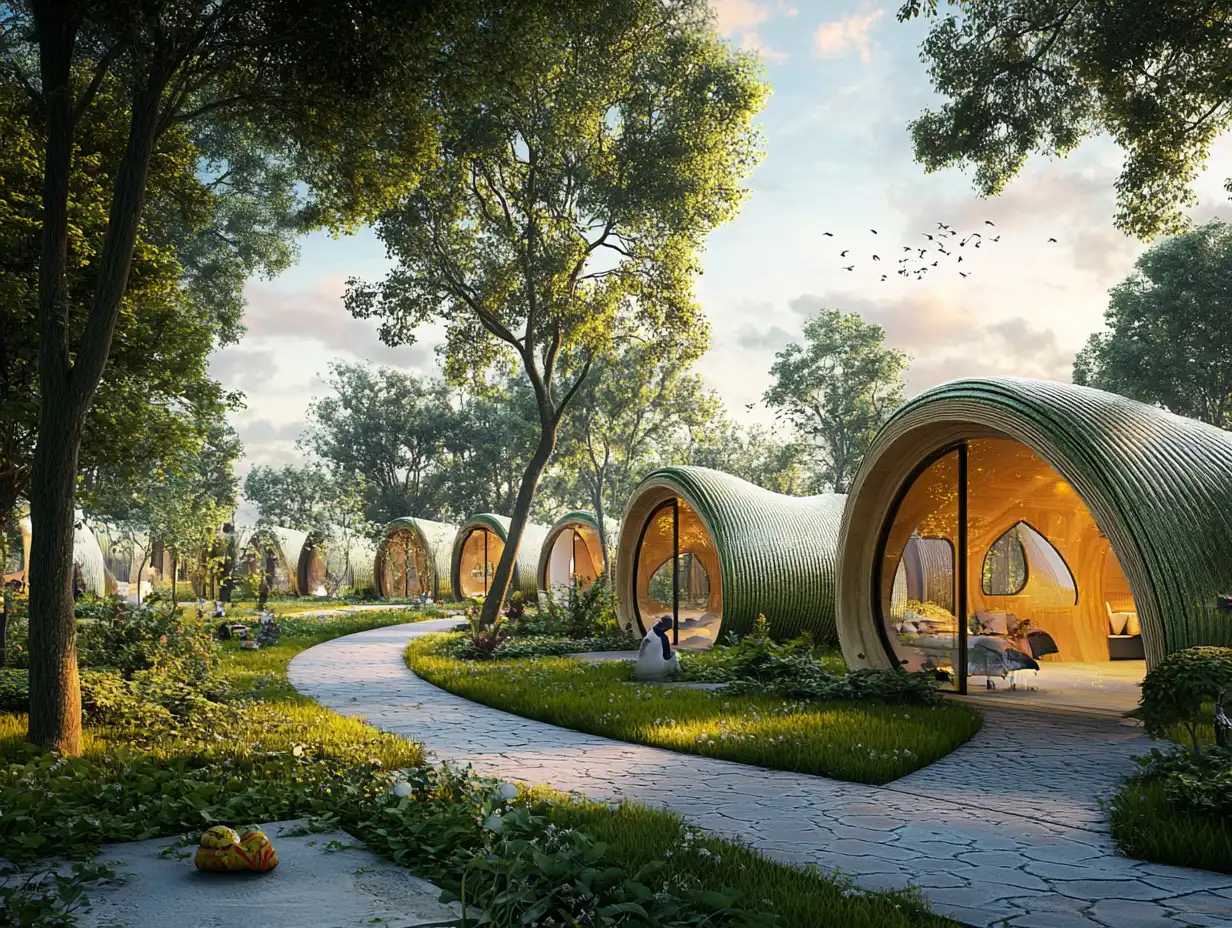
Hemp-lime, straw, mycelium composites, cork, and cellulose insulation are moving from prototypes to spec books. Green roofs and facades aren’t just aesthetic: they manage stormwater, cool cities, and support biodiversity. Nature-based shading, daylight optimization, and natural ventilation cut loads while enhancing comfort and biophilia.
Data-Driven, Intelligent, And Adaptive Buildings
BIM To Digital Twins And Continuous Commissioning
We’re extending BIM into operational digital twins: live models that mirror building performance using sensor data. This enables continuous commissioning, fine-tuning HVAC, lighting, and controls to keep performance aligned with design intent. Owners see energy, comfort, and maintenance benefits: we see proof that our designs deliver.

AI-Enhanced Design, Simulation, And Code Compliance
AI accelerates optioneering, daylight and energy simulations, and site massing under constraints. It can flag code issues early, generate documentation, and coordinate clashes across disciplines. But it’s a copilot, not a substitute: our judgment translates community values, safety, and aesthetics into sound decisions. We set the objective functions: the tools speed the path.
Smart Operations, Privacy, And Cybersecurity
Smart systems enable fault detection, space utilization insights, and demand response. With that comes responsibility: privacy-by-design for occupancy analytics, governance for data retention, and robust cybersecurity that treats building systems like critical infrastructure. We architect not just spaces, but trusted data ecosystems.
Industrialized Construction And New Making Methods
DfMA, Modular, And Platformized Building Systems
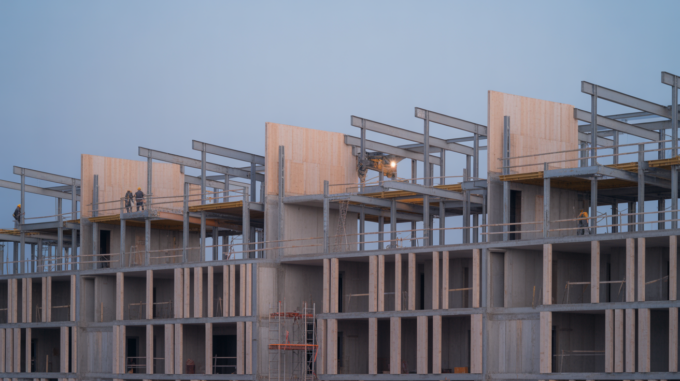
Design for Manufacture and Assembly (DfMA) reduces waste, improves safety, and shortens schedules. Platformized kits-of-parts let us customize within standard interfaces, think chassis plus options rather than one-off prototypes. Modular and panelized approaches are especially potent in housing, healthcare, and education where repetition meets urgency.
Robotics, 3D Printing, And Automated Fabrication
Robotic layout, rebar tying, and facade installation are hitting job sites. Large-format 3D printing can accelerate foundations and small structures, while CNC and automated joinery elevate precision in off-site factories. Our drawings become machine-readable instructions, so early coordination and tolerances matter more than ever.

Supply Chains, Quality Control, And Cost Certainty
Moving work off-site shifts risk to logistics and QA. We design for transport constraints, lifting points, and weatherproofing during transit. The payoff: predictable schedules, tighter quality, and better cost certainty, critical in volatile markets.
Evolving Cities, Adaptive Reuse, And The Public Realm
15-Minute Neighborhoods And Multimodal Mobility
Cities are rebalancing from car-first to human-scaled. Mixed-use, mixed-income districts with daily needs within a short walk or roll reduce emissions and improve health. Curb space becomes flexible: bike lanes, delivery, parklets, and transit priority. We stitch buildings into mobility networks, not parking quotas.

Deep Retrofits, Conversion, And Heritage Reuse
The greenest building is the one we keep. Deep energy retrofits, envelope upgrades, and MEP right-sizing can halve operational emissions. Office-to-residential conversions address vacancies and housing demand, if we solve cores, daylight, and egress creatively. Heritage reuse pairs cultural continuity with carbon savings.
Heat, Flood, And Social Resilience In Public Space
Shade, trees, reflective materials, and water features cool streets. Sponge-city tactics, bioswales, permeable pavements, raised plazas, manage floods while inviting people in. Social resilience matters too: inclusive benches, lighting, and programs that make plazas safe and welcoming across ages and incomes.
The Architect’s Expanding Role And Skill Set
Interdisciplinary Leadership And Systems Thinking
We’re conveners across ecology, engineering, finance, and community. Systems thinking helps us map feedback loops, energy, water, carbon, mobility, and find leverage points. The best solutions often live in the seams between disciplines.

Business Models, Risk, And Value-Based Services
Fixed-fee drawings are giving way to performance services: carbon modeling, material reuse audits, post-occupancy services, and ESG reporting. We share risk and reward through integrated delivery and outcome-based contracts. When we tie design to measurable results, our value is unmistakable.
Education, Licensure, And Lifelong Micro-Credentials
Curricula are catching up with climate science, data literacy, and fabrication. Licensure will increasingly recognize practice-based competencies. We’ll stack micro-credentials, passive house, mass timber, accessibility, cybersecurity, to stay current without pausing our careers.
Ethics, Equity, And Responsible Technology Use
We design for dignity. That means equitable engagement, universal design, and avoiding displacement through community benefits and anti-displacement strategies. On tech, we set guardrails for AI transparency, bias mitigation, and data stewardship. Our oath to protect health, safety, and welfare now spans the digital layer too.
Conclusion
The future of architecture and architects will reward those who pair low-carbon, resilient design with data fluency and human-centered city-making. If we embrace industrialized delivery, regenerative thinking, and ethical tech, we won’t just keep up, we’ll lead. Our task is simple to say and hard to do: design buildings that make people and the planet measurably better off, and prove it over time.
- 3D printing in architecture
- architectural trends
- architecture and design
- Architecture design process
- architecture industry future
- architecture innovation
- architecture technology
- architecture trends 2023
- building trends for architects
- digital architecture
- emerging architecture designs
- future architectural styles
- Future of Architecture
- future of urban planning
- green architecture innovations
- Modern Architecture
- smart building design
- Sustainable Architecture
- sustainable building practices
- urban design trends







Leave a comment