


Table of Contents Show
Contemporary materials in architecture include concrete, steel, glass, engineered timber, and a fast-growing range of bio-based and composite products. Beyond holding a building up, these materials shape how it feels, performs, and connects to its site. Materiality, the deliberate use of a material’s texture and surface, now sits at the heart of modern design.
Material choice used to be treated as a final layer applied over a finished form. That has changed. The role of contemporary materials in architecture now begins at the concept stage, where a single material decision carries structural, environmental, and emotional weight at once. Looking at the core elements of architecture, material sits alongside light and proportion as something a building cannot do without.
What Is Materiality in Contemporary Architecture?

Materiality is the architectural quality that comes from how a material looks, feels, and behaves, not just what it is made of. A concrete wall and a timber wall can enclose the same room, yet each creates a different sense of weight, warmth, and permanence. Materiality is the distance between a material on a specification sheet and the experience of standing next to it.
It helps to separate two ideas that often get blurred. A material is the physical substance, such as oak, limestone, or steel. Materiality is what an architect does with that substance, including how it is cut, joined, finished, and lit. The same brick can read as rough and industrial or smooth and refined depending on the mortar, the bond pattern, and the surface treatment. These decisions show up clearly when you study the architectural details that give a building its character.
🎓 Expert Insight

“When I start, my first idea for a building is with the material.”
Peter Zumthor, Pritzker Prize-winning architect
Zumthor builds his projects outward from a single material decision rather than fitting materials to a finished shape. His book Atmospheres argues that the presence of a material does more to define a space than its form, which is the core idea behind contemporary materiality.
Why Materiality Shapes Experience and Meaning
Materials carry associations that go beyond performance. Stone reads as permanent. Timber reads as warm and alive. Polished concrete reads as restrained and serious. Architects use these associations the way a writer uses tone, choosing surfaces that tell visitors how to feel before they have consciously registered anything.
Material also ties a building to its place. A structure built from local stone or regional clay belongs to its setting in a way that a generic glass box never quite does. This is one reason architects increasingly specify regional products, a choice covered in our look at the advantages of using local materials. The material becomes a record of where the building stands and what was available to build it.
🏗️ Real-World Example
Therme Vals (Vals, Switzerland, 1996): Peter Zumthor built these thermal baths from layers of locally quarried Valser quartzite, cut into thin slabs and stacked to echo the surrounding mountain. The stone is both structure and meaning, grounding the building in its valley. You can see the project on ArchDaily.
What Materials Are Used in Contemporary Architecture?

The range of contemporary materials in architecture is wide, but a handful of families do most of the work: concrete, glass, steel, engineered timber, brick, and a newer group of bio-based composites. Each one offers a different mix of strength, appearance, and environmental cost, which is why most modern buildings combine several rather than relying on one.
Common Materials in Contemporary Architecture
The table below outlines the main material families architects work with today and what each one brings to a project.
| Material | Defining Quality | Typical Use | Key Consideration |
|---|---|---|---|
| Concrete | Mass and plasticity | Structure, walls, exposed finishes | High embodied carbon from cement |
| Glass | Transparency and light | Facades, curtain walls, openings | Heat gain and energy performance |
| Steel | Strength and slenderness | Frames, long spans, towers | Recyclable but energy-intensive |
| Engineered timber (CLT) | Warmth and carbon storage | Mid-rise structure, floors, walls | Moisture and fire detailing |
| Brick | Texture and durability | Cladding, load-bearing walls | Labor-intensive to lay |
| Bio-based composites | Low carbon and renewability | Insulation, panels, infill | Still proving long-term durability |
Concrete remains the most used construction material on earth, valued for the way it can be poured into almost any shape and left exposed as a finish. Glass does the opposite work, dissolving the boundary between inside and outside. The clear growth area sits in timber and bio-based products, which store carbon rather than release it, a shift explored in our guide to sustainable materials. This is also why embodied carbon, the emissions locked into a material before a building even opens, has become a central concern in material selection.
📌 Did You Know?
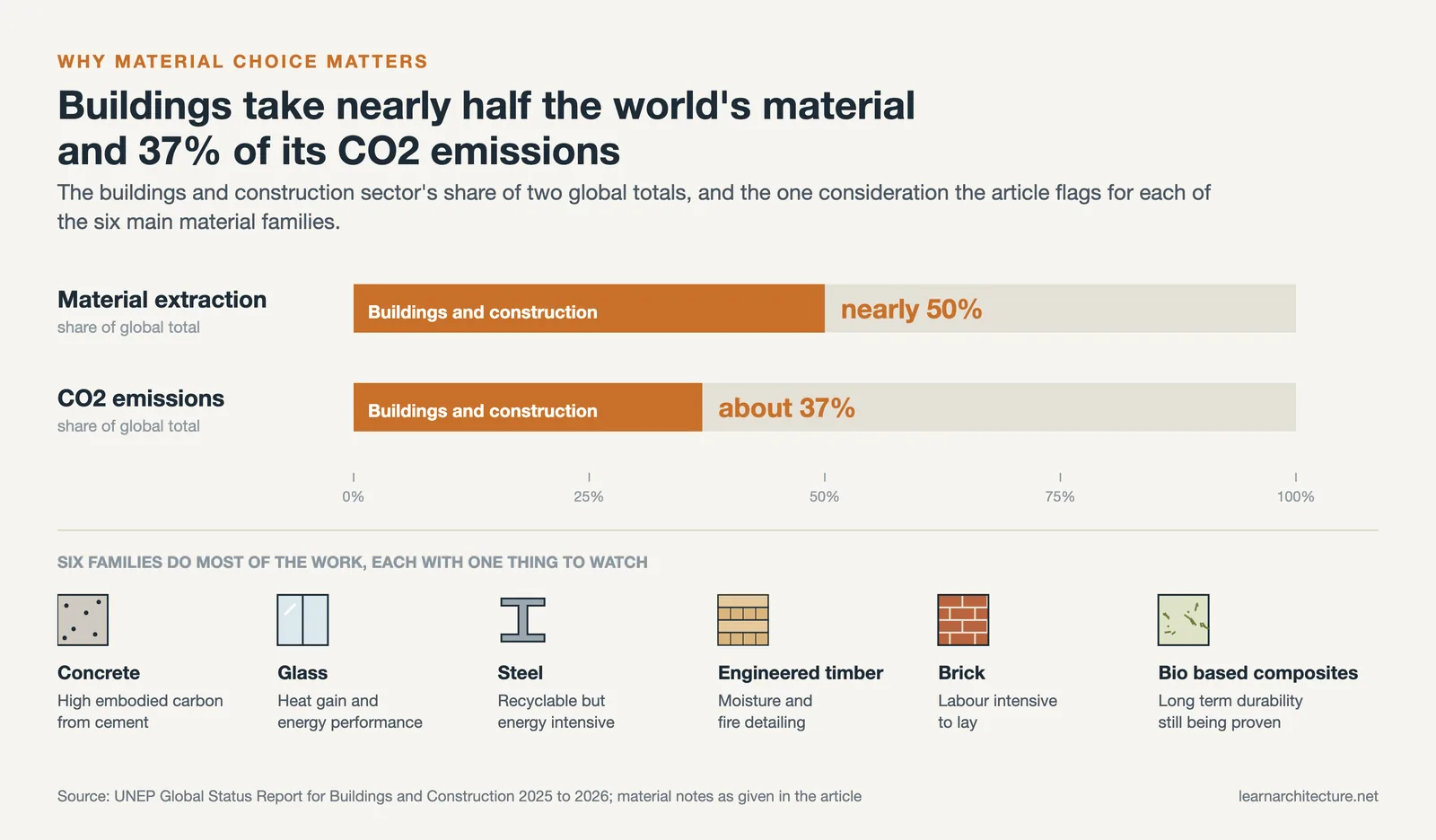
The buildings and construction sector accounts for nearly 50 percent of global material extraction and around 37 percent of global CO2 emissions, according to the UN Environment Programme’s Global Status Report for Buildings and Construction 2025-2026. Material choice is now an environmental decision as much as an aesthetic one.
Innovative and Emerging Materials
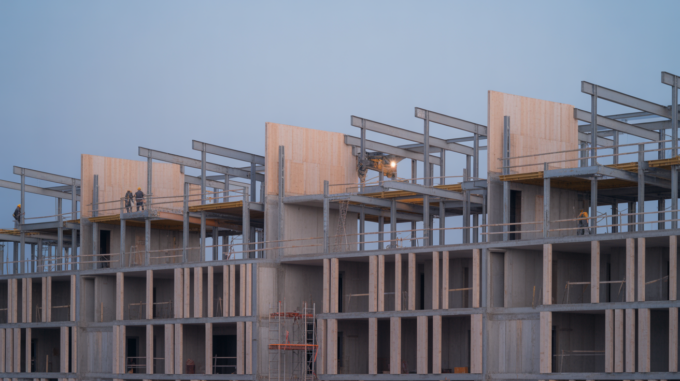
The most interesting material work in contemporary architecture is happening at the lower-carbon end of the palette. Mass timber, especially cross-laminated timber, lets architects build mid-rise and even tall structures from a renewable material that locks away carbon dioxide pulled from the air during the tree’s growth. Engineered timber also arrives prefabricated, which speeds construction and cuts site waste.
Beyond timber, a wave of grown and recycled products is moving out of the lab and into real projects. Mycelium panels grown from fungal networks, hempcrete walls, and recycled steel all reduce a building’s footprint while opening up new textures and finishes. These options sit at the front of current research into healthier construction, a topic we cover in detail in our piece on biocompatible materials.
💡 Pro Tip
When specifying a newer bio-based material, ask the supplier for an Environmental Product Declaration and a third-party emissions test before committing. Materials that perform well in a brochure can behave differently under local humidity and fire codes, and catching that early saves expensive substitutions later in the project.
The Bigger Picture

It is tempting to read materiality as a question of taste, a choice between warm wood and cool concrete. The harder truth is that every material carries a hidden cost in carbon, water, and land, and that cost now shapes which surfaces a building can honestly afford to wear. The next generation of memorable architecture will likely come from architects who treat that limit not as a restriction but as the source of a new material language.
Frequently Asked Questions
Is concrete still important in contemporary architecture?
Yes. Concrete remains the most widely used construction material because of its strength, low cost, and the freedom it gives architects to shape almost any form. The main shift is toward lower-carbon mixes and exposed finishes that treat concrete as a visible material rather than something to hide behind cladding.
What is the difference between a material and materiality?
A material is the physical substance, such as timber, stone, or steel. Materiality is how that substance is used, including its finish, its joints, and the way it catches light. Two buildings can use the same material and feel completely different because their materiality is handled differently.
What are the most sustainable building materials right now?
Mass timber, hempcrete, rammed earth, recycled steel, and mycelium-based panels rank among the lower-impact options. Many of these store carbon or use waste streams as feedstock. Their performance still depends on local climate and detailing, so they work best when matched carefully to the project.
How do architects decide which material to use?
Architects weigh structural needs, budget, climate, local availability, environmental cost, and the feeling they want a space to have. In contemporary practice, embodied carbon has become a major factor alongside appearance and durability, pushing many designers toward regional and renewable materials.
- building materials used in contemporary architecture
- contemporary materials in architecture
- innovative building materials architecture
- materials and meaning in contemporary japanese architecture pdf
- materials used in contemporary architecture
- modern construction materials in architecture
- what materials are used in contemporary architecture








Leave a comment