


Table of Contents Show
Extreme climate architecture is the practice of designing buildings that stay safe, comfortable, and durable in environments of severe heat, cold, wind, or aridity. Architects respond to the local climate first, using orientation, thermal mass, insulation, shading, and passive ventilation to cut how much a building depends on mechanical heating and cooling.
Designing for extreme conditions starts with respect for what is happening outside. A house in the Sahara and a research base on an Antarctic ice shelf face opposite problems, yet both succeed or fail on the same idea: work with the climate instead of fighting it. The strategies below show how architects handle desert heat, arctic cold, and other harsh settings, and why the strongest solutions usually rely on form and physics before any technology. For a broader view of low-impact building, our overview of sustainable shelter concepts applies many of the same ideas to everyday housing.
What Is Extreme Climate Architecture?
Extreme climate architecture covers any design approach made for places where temperature, wind, humidity, or sunlight reach levels that standard construction cannot handle well. The aim is consistent across very different sites: keep people comfortable and the structure sound while using as little energy as possible. Architecture for extreme environments has deep roots in vernacular building, from the snow-insulated igloo to the shaded courtyard house and the wind tower that pulls cool air through a home.
What has changed is the level of precision. Architects now study a site through climate data and Koppen zone classifications, then test designs with energy and airflow simulation before anything is built. This turns old intuition into measurable performance, so a building can be tuned to its exact location rather than copied from a textbook. The result is climate-responsive design that treats heat, cold, and wind as inputs to work with, not obstacles to seal out.
How Do Architects Design for Hot Desert Climates?
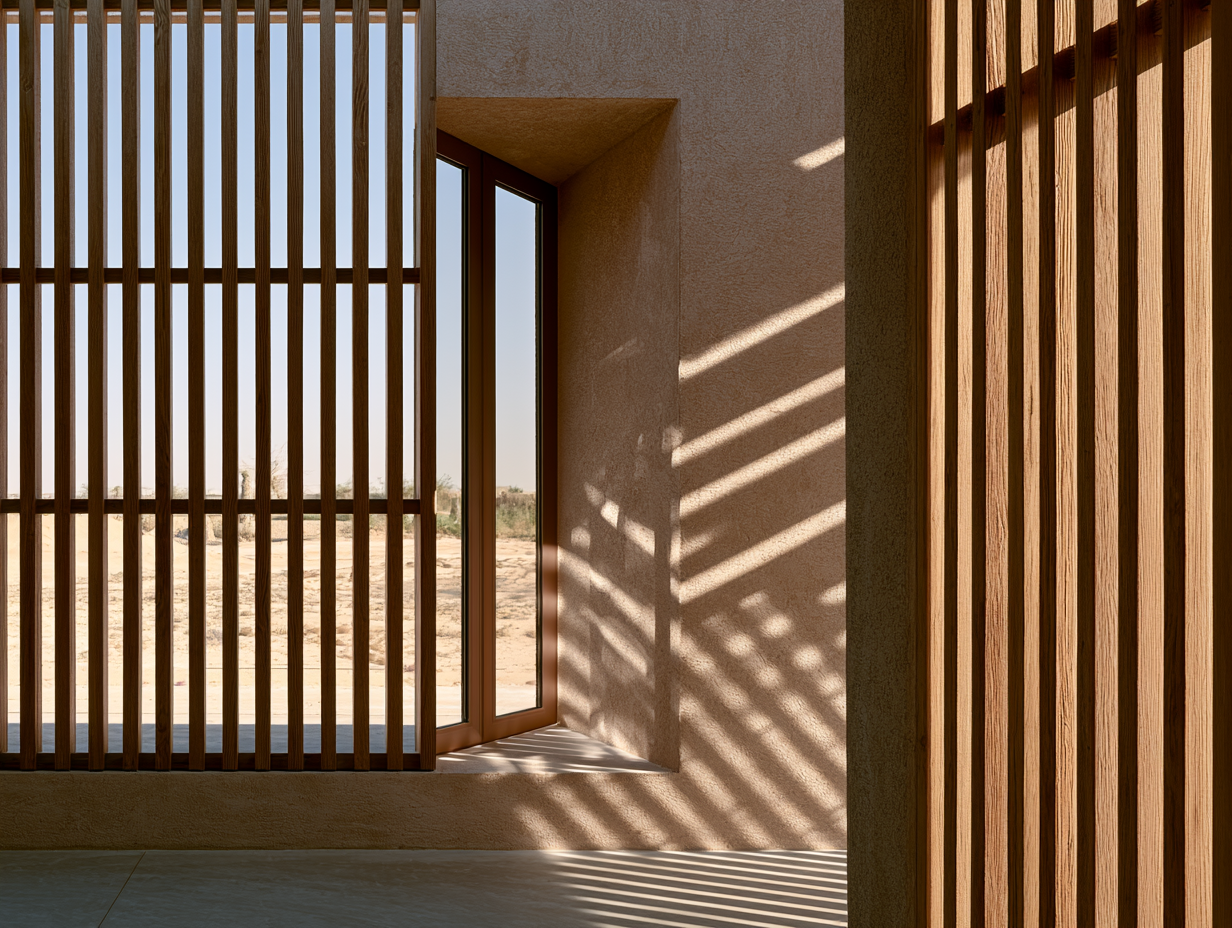
In hot, arid climates, architects focus on two things: block the sun and use the large gap between day and night temperatures. Thermal mass does most of the heavy lifting. Thick walls of adobe, rammed earth, or stone absorb heat slowly through the day and release it after dark, keeping interiors steady while the air outside swings by twenty degrees or more.
Orientation matters just as much. Long facades are kept away from low east and west sun, which is hard to shade, while windows stay small and deeply recessed. Courtyards, screens, and shaded outdoor rooms create cool buffers between the interior and the open desert. Reflective surfaces help too, and a well-designed roof can reject a large share of solar heat before it ever reaches the rooms below, a point covered in our guide to the design of roofs in sustainable architecture.
💡 Pro Tip
On hot-climate sites, treat the east and west elevations as the real problem. Midday sun from overhead is easy to block with overhangs, but low-angle morning and evening sun slips right under them. Vertical fins, screens, or planting on these faces usually do more for comfort than tinted glass ever will.
Cities are now applying the same thinking at street scale. Work documented by ArchDaily on passive cooling in the United Arab Emirates and India shows how layered shade, water, and planting can lower outdoor temperatures in some of the hottest places on earth.
Arctic Architecture and Extreme Cold Climate Design
In extreme cold, the priorities flip. Instead of rejecting heat, the building has to trap it, block relentless wind, shed heavy snow, and protect its foundations from frost. Extreme cold climate architecture leans on a continuous, heavily insulated building envelope with as little surface area as possible, since every square meter of wall is a route for heat to escape. Compact forms, small triple-glazed windows, and airtight construction all reduce losses.
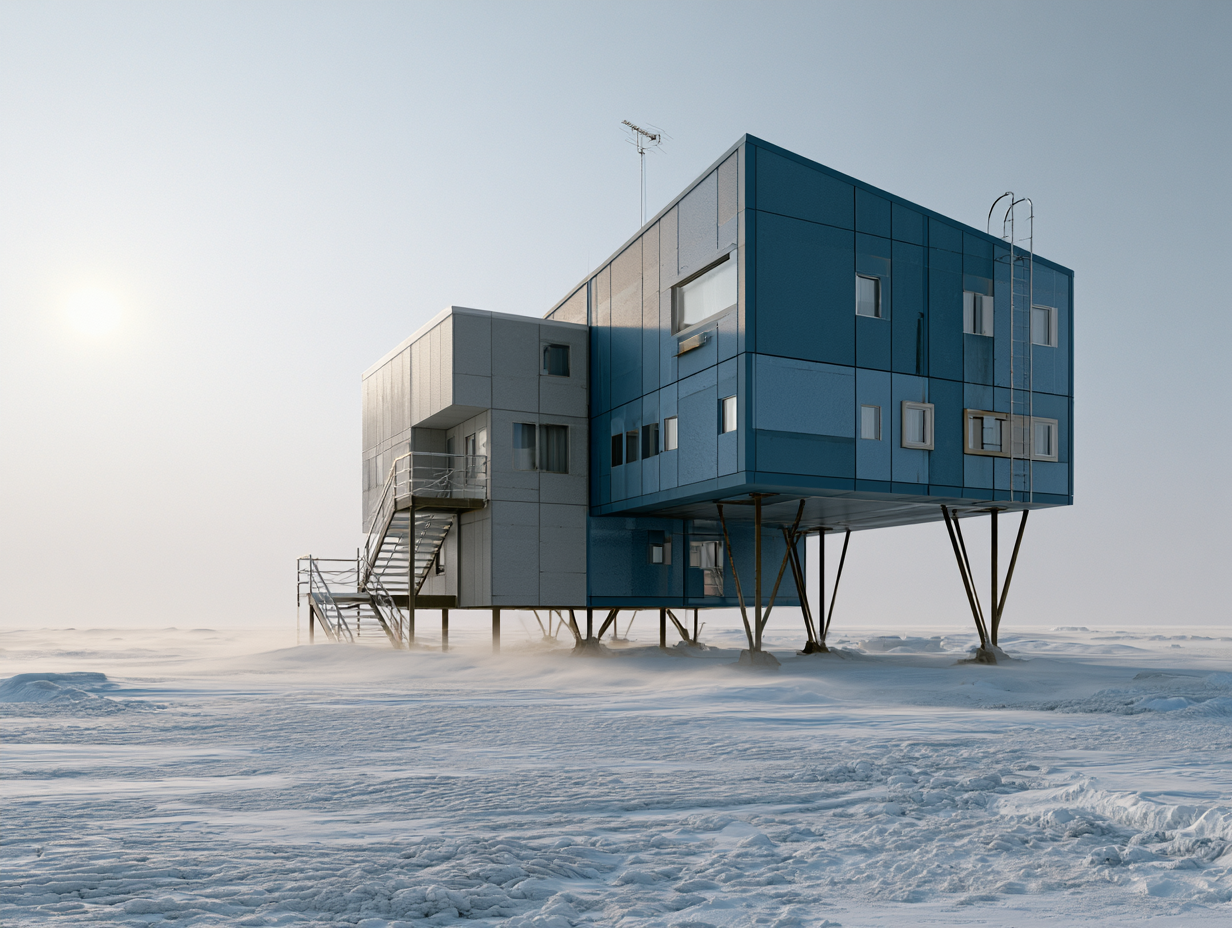
Arctic architecture also has to deal with the ground itself. On permafrost or shifting ice, buildings are often raised on legs so warm interiors do not melt the surface beneath them, and so drifting snow can blow underneath rather than bury the structure. The clearest modern example is the Halley VI research station, designed by Hugh Broughton Architects with engineers AECOM for the British Antarctic Survey. Its modules sit on hydraulic ski-legs that can be jacked up above the annual snowfall and towed to a new position as the ice moves.
📌 Did You Know?
Halley VI sits on the Brunt Ice Shelf, which flows about 400 meters toward the sea every year while snow piles up by roughly a meter. Winter temperatures fall to around -56°C and the sun stays below the horizon for 105 days, which is why the entire station was built to lift itself clear of the snow and relocate inland. (Source: British Antarctic Survey and Hugh Broughton Architects.)
Passive Design Strategies for Extreme Climates
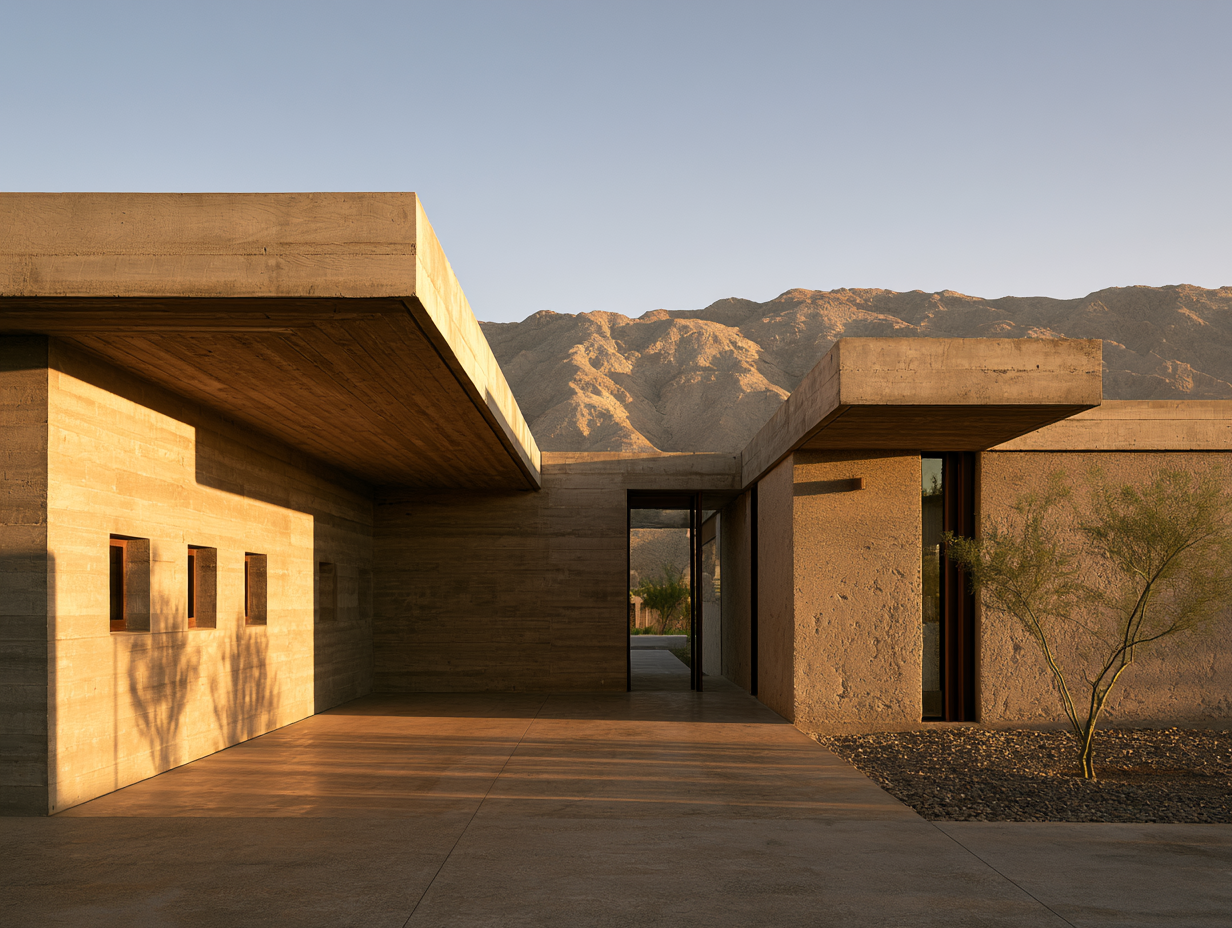
Passive design uses a building’s shape, materials, and openings to manage temperature with little or no mechanical help, and it is the backbone of work in extreme climates. The same toolkit serves hot and cold sites, just tuned in opposite directions: control solar gain, store or block heat with thermal mass and insulation, and move air on purpose rather than by accident. Good passive design can carry a building through most of the year before any heating or cooling switches on.
Ventilation is a large part of it. Stack effect, cross-ventilation, and night purging can flush heat from a building without fans, as explained in our guide to passive ventilation strategies for sustainable architecture. One famous case is the Eastgate Centre in Harare, modeled on the self-cooling structure of termite mounds, which we cover among other green architecture projects. It runs on a fraction of the energy a conventional air-conditioned building of the same size would need.
Formal standards have turned these ideas into hard targets. The Passive House Institute defines an envelope-first approach that has been used everywhere from German suburbs to high-rise towers in Bilbao.
📐 Technical Note
To reach Passive House certification, a building must hit an airtightness of 0.6 air changes per hour at 50 pascals (measured by a blower-door test) and keep annual heating demand at or below 15 kWh per square meter, calculated with local climate data in the Passive House Planning Package. (Source: Passive House Institute.)
These numbers explain why detailing matters so much in harsh climates. A single weak junction can undo an otherwise strong wall, since heat and moisture both follow the path of least resistance. That is also where many projects go wrong.
⚠️ Common Mistake to Avoid
Treating extreme climate design as “add more insulation” or “fit a bigger air conditioner” while ignoring orientation, shading, and airflow. Over-sealing a building in a hot, humid climate is just as risky, because a tight envelope with no ventilation traps moisture and breeds mold. Start with climate-led form and openings, then add mechanical systems to handle only what is left.
Climate Resilient Architecture: Choosing Materials for Harsh Environments
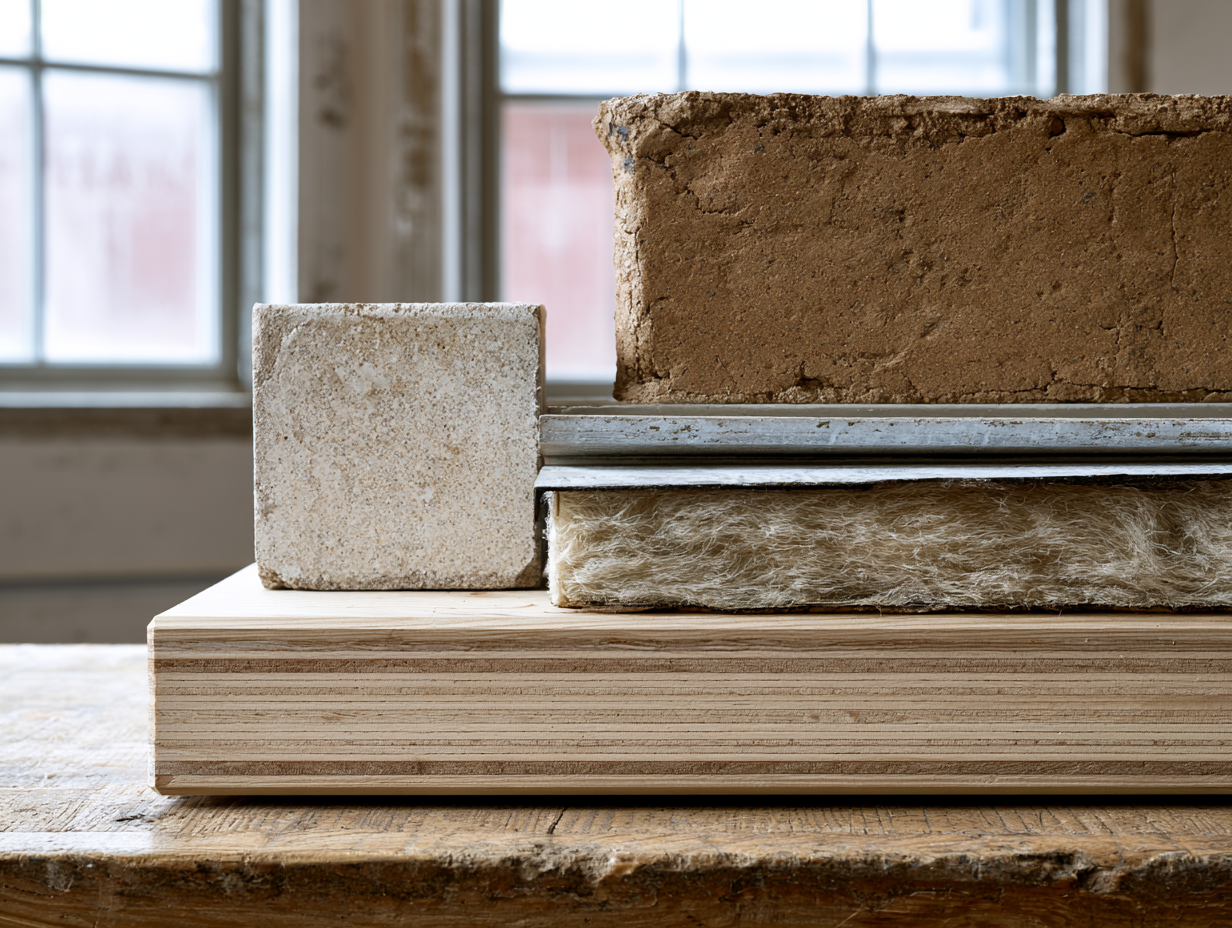
Climate resilient architecture depends on materials that can take thermal stress, moisture, ultraviolet light, and constant movement for decades without failing. In hot, dry regions, heavy materials such as adobe, rammed earth, and concrete provide the thermal mass that steadies indoor temperatures, an approach detailed in Architizer’s look at designing for the southwest desert. In cold and wet regions, the priority shifts to insulation, airtight layers, and cladding that resists corrosion and freeze-thaw damage.
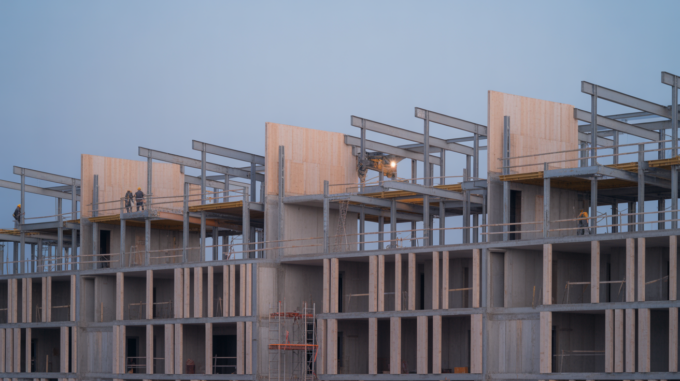
Timber is earning a larger role in both settings. Cross-laminated timber and other engineered woods offer strength with lower embodied carbon, and natural insulators such as hempcrete let a wall do some of the climate work on its own, as we explain in our guide to biocompatible materials for architecture. Whatever the palette, local sourcing usually pays off, since materials that evolved in a region tend to suit its climate and age gracefully in it.
💡 Pro Tip
Match your fasteners, sealants, and flashings to the climate, not just the walls. Where temperatures swing hard between day and night, materials expand and contract at different rates, and the joints fail long before the structure does. Specify components rated for the full annual temperature range on site, and detail for movement from the start.
The Bigger Picture
As climate change pushes heatwaves, cold snaps, and violent storms into regions that never planned for them, the line between extreme and ordinary is starting to blur. The thick walls, deep shade, and airtight envelopes once reserved for deserts and ice shelves are slowly becoming standard tools for everyday buildings. Seen that way, almost every architect is now designing for extreme conditions, whether the brief says so or not.
Technical specifications and performance figures vary by project, site, and local building codes, and should be confirmed with a licensed professional before any design decision.
Frequently Asked Questions
What is extreme climate architecture?
It is the design of buildings for places with severe heat, cold, wind, or aridity, where standard construction would be uncomfortable or unsafe. The approach puts the local climate first, using form, materials, and passive strategies to keep interiors stable while limiting energy use.
What is the difference between desert and arctic architecture?
Desert architecture works to keep heat out and exploit cool nights, using thermal mass, shading, and small openings. Arctic architecture does the opposite, trapping heat with heavy insulation and airtight walls while raising structures above snow and protecting them from frost. The underlying logic, designing around the climate, is the same in both.
Does passive design work in extreme climates?
Yes, and it is most valuable exactly where conditions are harsh, because every degree managed without machinery saves energy and reduces strain on equipment. Orientation, thermal mass, insulation, and natural ventilation can carry a building through much of the year, with mechanical systems handling only the extremes.
What materials work best in harsh climates?
It depends on the climate. Hot, dry regions favor high thermal mass such as adobe, rammed earth, and stone. Cold or wet regions need strong insulation, airtight layers, and corrosion-resistant cladding. In both cases, durable and locally suited materials that handle temperature swings and moisture tend to perform best over time.









Leave a comment