



Table of Contents Show
Learning architecture as a beginner means building a foundation across several disciplines at once: spatial thinking, drawing, materials, history, and increasingly, digital tools. Most people try to start with software or jump straight into design projects, but the strongest beginners start earlier, with observation and fundamentals. This guide walks through exactly what to focus on, in what order, and why it matters for long-term growth as a designer or student.
What Does Learning Architecture Actually Involve?
Architecture is not one subject. It is a cluster of related skills that develop together over time. When you begin learning about architecture, you are really starting several parallel tracks: understanding how buildings are put together structurally, developing an eye for proportion and space, learning to communicate ideas through drawing, and studying the history of how built environments have evolved.
For beginners, this can feel scattered. The key is to accept that you will not master any single area quickly, and that early progress looks more like “I am starting to notice things I never saw before” than “I can design a building.” That shift in perception is actually the most important first milestone in architecture learning.
⚠️ Common Mistake to Avoid
Many beginners assume that learning architecture means learning software. Tools like SketchUp or AutoCAD are useful, but they are means to an end, not the foundation. Students who start with software before understanding space, proportion, and structure often produce technically functional models that feel empty. The fundamentals come first; the tools serve them.
Start with Design Principles: Space, Form, and Function
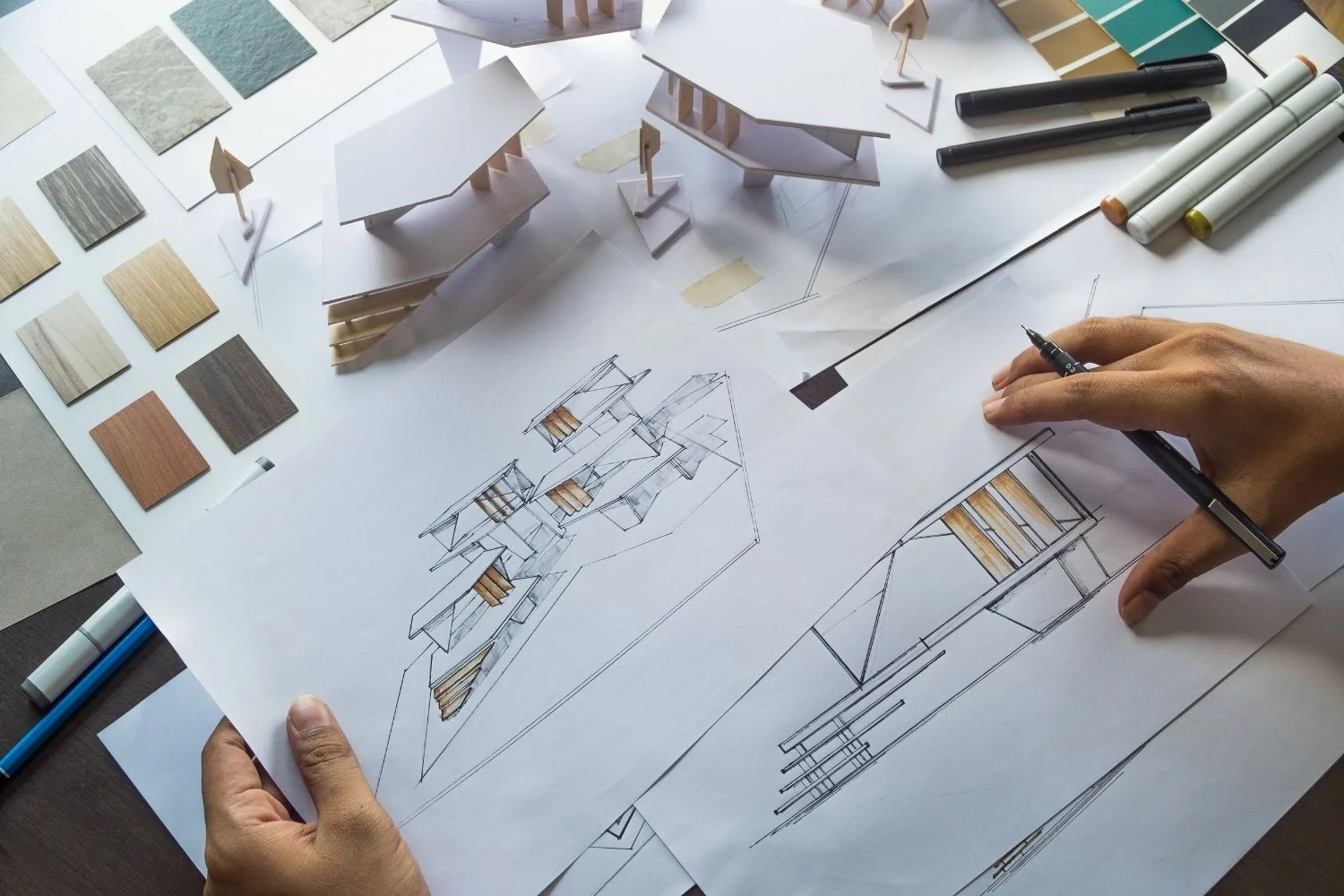
The most efficient entry point for learning architecture is understanding its core design principles. These are not abstract ideas; they are the lens through which every building decision gets made.
Space is the primary material of architecture. Unlike sculpture or painting, architecture creates environments that people move through and inhabit. Learning to think about how a room feels from inside, how light enters and shifts across a day, and how one space transitions to another is the first real skill to develop.
Form follows from space. The shape, massing, and proportion of a building communicate something before anyone walks through the door. Studying why certain facades feel balanced and others feel heavy is part of learning architecture at the foundational level.
Function constrains and enables both. The best resource for learning these three principles together is Architecture: Form, Space, and Order by Francis D.K. Ching. Published originally in 1979 and updated multiple times since, it remains the most widely used foundational text in architecture schools worldwide. Its combination of clear diagrams and concise explanations makes abstract principles concrete and memorable for beginners.
💡 Pro Tip
When you first study design principles, pick a single building you can visit or photograph thoroughly. Apply each principle you learn to that one building: trace where space compresses and expands, note where the facade rhythm changes, identify what the main entrance communicates. Applying theory to a specific, real example is far more effective than reading through concepts abstractly.
Why Architectural History Matters for Beginners

Learning about architecture without history is like learning to write without reading. The buildings and movements that came before are the vocabulary that contemporary architecture either draws from or reacts against.
You do not need to memorize every period in detail. For a beginner, the goal is to understand a few key transitions: why ancient Greek and Roman architecture organized buildings around columns and symmetry, how the Gothic period solved the problem of getting light into stone buildings, what Modernism rejected and why, and how Postmodernism responded to Modernism’s limitations.
Each of these moments had a logic. Understanding that logic builds the kind of critical thinking about buildings that separates someone who looks at architecture from someone who sees it.
A practical way to build this knowledge is through architecture learning websites like ArchDaily, which publishes detailed project descriptions alongside photographs, allowing you to study contemporary work in depth. For historical foundations, MIT OpenCourseWare offers free lecture materials from actual architecture courses, including history surveys taught at one of the top architecture programs in the world.
📌 Did You Know?
The Bauhaus school, which operated in Germany from 1919 to 1933, trained fewer than 1,300 students in its 14 years. Yet its graduates went on to shape design education, furniture, typography, and architecture across Europe and the United States for decades. Many of the teaching methods used in architecture schools today, including studio critique and material experimentation, trace directly back to Bauhaus pedagogy.
How to Start Sketching and Drawing as a Beginner
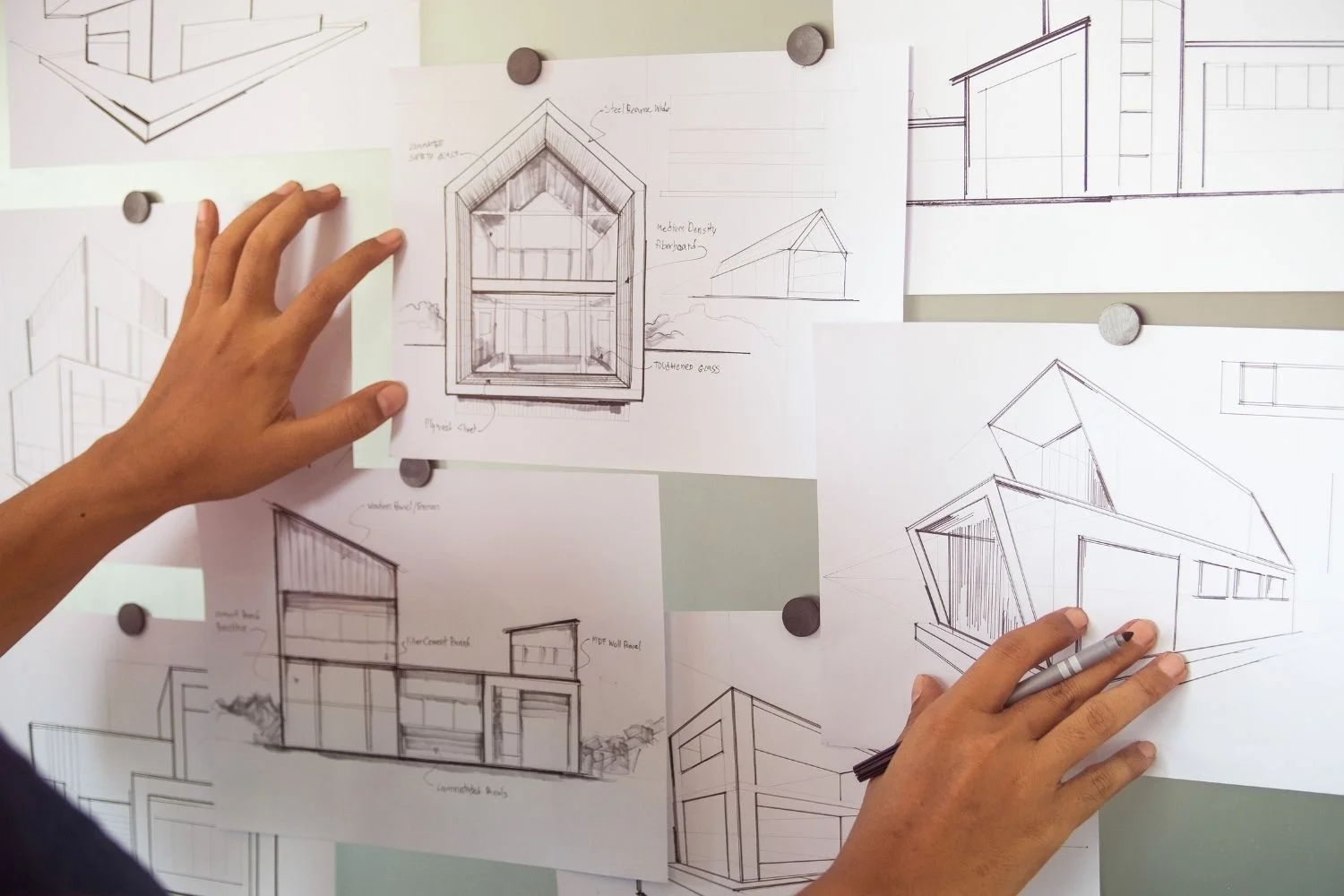
Sketching is not about producing beautiful drawings. It is a thinking tool. When you put pen to paper and try to draw a building you are looking at, you are forced to observe it in detail you would otherwise miss. Proportions, the depth of window reveals, how a cornice line meets a wall, where a roof begins.
The good news is that architectural sketching for beginners does not require drawing talent. It requires practice and patience. Start with simple geometric forms: boxes, cylinders, basic perspective construction. Work your way toward drawing real buildings, interior spaces, and eventually design ideas.
Our detailed guide to architectural sketching and drawing techniques for beginners covers one-point and two-point perspective, shading, and how to build a daily drawing habit that produces visible progress within weeks.
For digital sketching, applications like Concepts (iOS/iPad) and Procreate work well for beginners who want to sketch without carrying physical materials. They are not replacements for hand drawing; they are a useful complement.
Architecture Learning Books Worth Reading Early
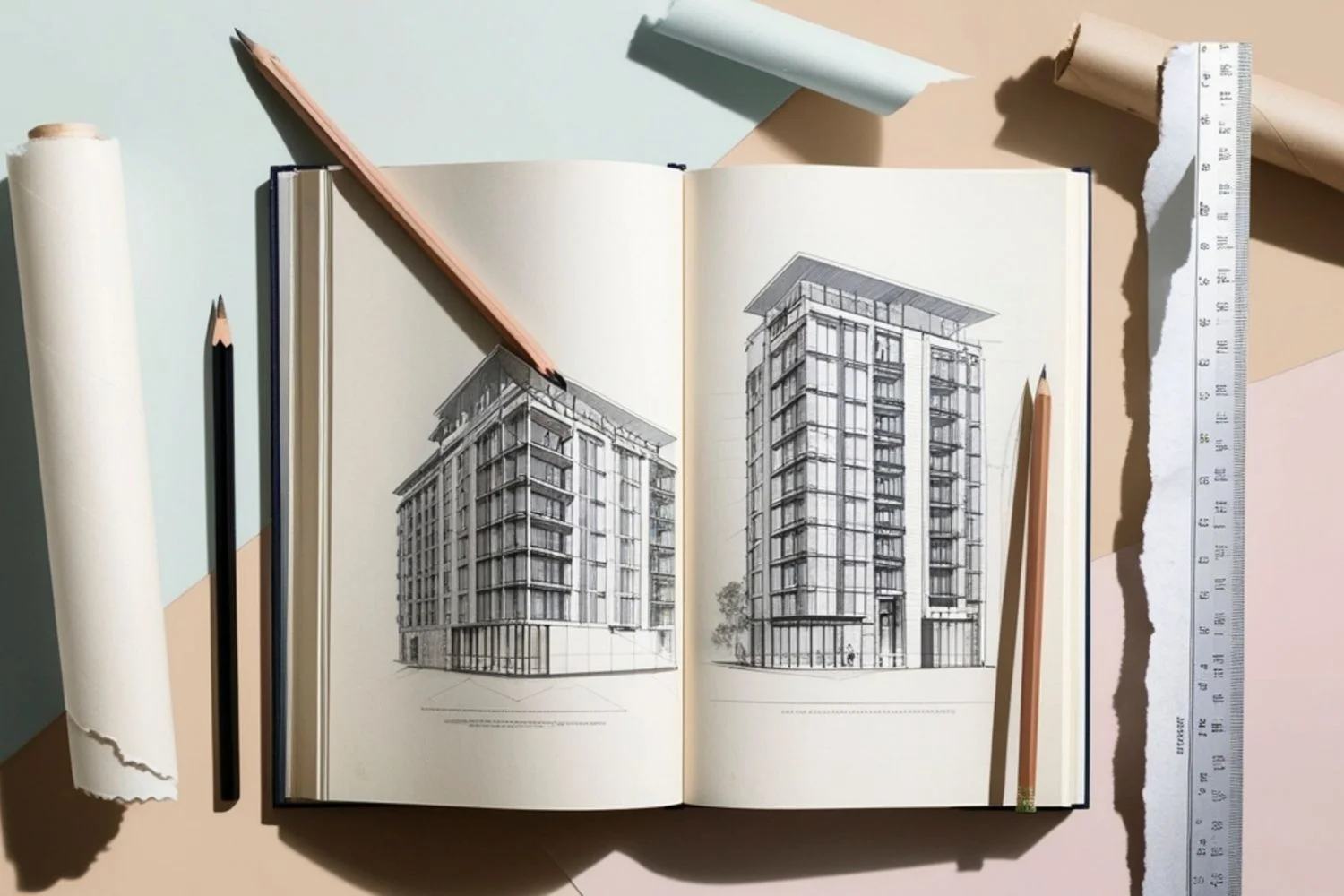
Books remain one of the most efficient ways to build architectural knowledge, because the best ones are dense with diagrams, precedent images, and explained reasoning that short-form content cannot match.
Beyond Ching’s foundational text, a few architecture learning books stand out for beginners:
Experiencing Architecture by Steen Eiler Rasmussen explores how people actually perceive buildings, covering texture, scale, rhythm, and sound in ways that shift how you move through spaces. A Pattern Language by Christopher Alexander, Sara Ishikawa, and Murray Silverstein offers 253 described patterns for spaces from cities down to individual rooms, giving you a framework for thinking about why certain spatial configurations feel right.
For those approaching from a more technical direction, The Architecture Reference and Specification Book by Julia McMorrough is a practical desk reference covering dimensions, materials, building systems, and drawing conventions used in professional practice.
Our editorial team has reviewed and ranked the most useful architecture learning books for beginners and experts across multiple levels, from first-year fundamentals to advanced theory.
🎓 Expert Insight
“Architecture should speak of its time and place, but yearn for timelessness.”
Frank Gehry
For beginners, this quote points toward something important: understanding what is permanent in architecture (proportion, light, human scale) versus what changes with each era (materials, technology, style). Reading widely across periods helps calibrate that judgment early.
What to Learn About Architecture: Digital Tools and Software

Once you have spent time building foundational knowledge, digital tools become genuinely useful. The three most relevant platforms for beginners are SketchUp, AutoCAD, and Revit, each serving a different purpose.
SketchUp is the most beginner-friendly option for three-dimensional modeling. Its push-pull interface is intuitive enough that most beginners produce a usable 3D model in their first session. SketchUp’s official free version runs in-browser without installation, making it accessible for anyone starting out. It is best for early design exploration and quick massing studies.
AutoCAD is the industry standard for two-dimensional drafting. Floor plans, sections, elevations, and construction documents are typically produced in AutoCAD or a similar CAD platform. Autodesk’s educational program provides free access to AutoCAD and other Autodesk products for students and educators.
Revit takes longer to learn but introduces BIM (Building Information Modeling), the workflow most large architecture firms now use. It is not the right starting point for beginners, but knowing it exists and understanding what BIM means is useful early context.
For a structured approach to developing technical skills alongside design thinking, the architecture education tips we have gathered from students and professionals cover time management, studio habits, and how to balance software training with conceptual development.
💡 Pro Tip
When learning a new software tool, pick one real project to work through from start to finish rather than jumping between tutorial exercises. Model your own apartment, or a small building you have visited. The decisions you face when applying a tool to something real, such as how to represent a curved wall or how to set up a section cut, teach far more than any isolated exercise.
Architecture Learning Websites and Online Resources
The internet has made architecture learning more accessible than at any point in history. Several architecture learning websites consistently provide high-quality content for people at the beginning of the learning curve.
ArchDaily and Dezeen publish daily project coverage from architects worldwide. Studying projects on these platforms, not just looking at the images but reading the project descriptions, attending to the stated design intentions and the client brief, builds the kind of analytical habit that formal education develops over years.
For more structured learning, Coursera hosts architecture introductions from universities including the University of Tokyo’s course on Japanese architecture and an introduction to sustainable design from the University of Florida. These courses are free to audit, though certificates require payment.
YouTube channels from practicing architects are particularly useful because they show the thinking behind actual projects, not just finished results. The 30X40 Design Workshop channel, run by architect Eric Reinholdt, is widely cited among beginners for its clear explanations of design decisions, portfolio development, and the realities of practice.
Building Architectural Concepts and Design Thinking

Architecture learning deepens when you start developing your own design ideas rather than only analyzing others’. This is the point where the accumulated reading, drawing, and observation starts to synthesize into an actual creative process.
An architectural concept is the organizing idea behind a design. It is not decoration or style; it is the central argument that every decision in the project should serve. Beginners often skip this step and start designing by placing walls, but projects developed from a clear concept are more coherent and easier to develop under constraints.
Our article on developing architectural concepts walks through how to generate ideas from site, program, history, and material, and how to test whether a concept is strong enough to drive a full project.
A useful early exercise is to visit a building you find compelling and try to write one sentence that captures its central idea. Then test that sentence against every design decision you observe. If the concept holds, you will find it everywhere in the building. If it does not hold, the sentence needs revising.
Architecture Deep Learning: Going Beyond the Basics
After the foundations are in place, architecture deep learning means pushing into areas that formal architecture education covers in years two through five: structural systems, environmental performance, building technology, and the relationship between architecture and urban context.
Structural literacy, understanding why buildings stand up and how forces move through a building, is essential for designing anything beyond simple forms. The Arup publications archive offers free technical reading on structures, facades, and building systems from one of the leading engineering consultancies in the world.
Environmental performance covers daylighting, thermal comfort, passive ventilation, and energy use. This area is increasingly important as sustainability requirements tighten globally. The USGBC (US Green Building Council) maintains publicly available resources on green building standards and LEED certification, which frames most of the sustainability conversation in professional practice.
Detailing, the technical craft of how buildings are actually assembled at junctions and connections, is where many students spend the least time and where professional practice demands the most precision. Our guide on improving your architecture detailing skills covers both the observational habits and the technical knowledge required to develop this area systematically.
How to Know If You Are Progressing
Learning architecture is not a linear process with clear milestones, which can make progress hard to gauge. A few reliable indicators that you are developing:
You start noticing things in buildings that you previously looked past, the way a ceiling drops before a threshold, the way a circulation route compresses before releasing into a main space, the quality of light in a room at different times of day. This perceptual shift is one of the most reliable signs of genuine architectural literacy developing.
Your drawings improve not just technically but in what they capture. Early architectural sketches tend to record outlines. More developed drawings capture spatial depth, material weight, and the relationship between light and shadow.
You can articulate why you respond to a building, not just that you like it. The vocabulary for describing architectural qualities, proportion, rhythm, materiality, spatial sequence, becomes part of your thinking rather than borrowed language.
For anyone preparing to document that progress for school applications or professional opportunities, our guide to crafting an impressive architectural portfolio covers how to select, sequence, and present work at every stage of learning, from early student projects to professional commissions.
✅ Key Takeaways
- Learning architecture starts with design fundamentals: space, form, and function, not software.
- Architectural history is practical knowledge, not background reading. Understanding past movements sharpens critical judgment about current work.
- Sketching is a thinking tool. Regular drawing practice develops observation skills faster than any other habit.
- The best architecture learning books, including Ching’s Form, Space, and Order and Rasmussen’s Experiencing Architecture, remain essential starting points because they explain principles rather than just showing examples.
- Software matters, but the sequence matters more: SketchUp for early 3D exploration, AutoCAD for technical drawing, Revit for BIM as your skills develop.
- Progress in architecture learning shows up as perceptual change first, before technical skills become visible.
Frequently Asked Questions
Can I learn architecture online without going to school?
You can develop substantial architectural knowledge and many practical skills through online resources, books, and self-directed projects. Platforms like MIT OpenCourseWare, Coursera, and YouTube channels from practicing architects provide genuinely rigorous content. What online learning cannot replicate is studio culture, peer critique, and the guidance of experienced faculty through complex design problems. For anyone aiming to become a licensed architect, formal education combined with supervised practice hours remains the path in most countries.
What should I learn about architecture first?
Start with design principles covering space, form, and function, typically through Francis D.K. Ching’s Architecture: Form, Space, and Order. Alongside that, begin sketching regularly, even at a very basic level. These two habits, reading foundational theory and drawing daily, build the observational and analytical skills that everything else depends on. Software, structural knowledge, and history can follow once those foundations are in place.
How long does it take to learn architecture as a beginner?
Building a solid foundational understanding of architectural principles, history, and basic drawing skills typically takes six to twelve months of consistent study. Reaching a level where you can develop and communicate original design ideas with competence is more like two to three years of dedicated work. Architecture is a discipline where learning continues throughout a career; even experienced architects describe themselves as still developing their eye and judgment on every project.
What are the best architecture learning websites for beginners?
ArchDaily and Dezeen are the most widely used platforms for studying contemporary projects, both free to browse. MIT OpenCourseWare offers free architecture course materials including history surveys and design theory. Coursera hosts structured university courses, most auditable for free. YouTube channels like 30X40 Design Workshop provide practical insight from a working architect. For technical skills and software, the official learning resources from Autodesk and SketchUp’s own tutorial library are reliable starting points.














Leave a comment