


Table of Contents Show
Freelance architecture is more than drawing beautiful plans on our own terms, it’s running a practice, stewarding risk, educating clients, and carving out a niche that lets us do meaningful work profitably. If we’re considering going independent or leveling up an existing studio, this guide lays out what the work involves, how we set up sustainably, and the levers we can pull for steady growth.

What Freelance Architecture Involves
Core Services And Deliverables
As freelancers, we typically deliver phased services aligned to industry standards: pre-design and feasibility, schematic design, design development, construction documents, bidding/permitting support, and construction administration. Common outputs include zoning and code summaries, test fits, site studies, 3D massing, renderings, BIM models, annotated drawings, specifications, permitting packages, and submittal/RFI responses. Many of us also add add-ons like as-built laser scans, energy modeling, and post-occupancy reviews.
The key is clarity: we define what’s in and out, number of iterations, drawing list, visualization level (e.g., white-box vs. photoreal), and CA hours. That keeps scope creep from devouring margins.

High-Value Niches To Consider
We can differentiate fast by solving specific problems:
- Residential ADUs and additions with permit-ready sets in tricky jurisdictions.
- Small commercial interiors (F&B, retail, wellness) with speed-to-permit workflows.
- Passive House/Net-Zero consulting, envelope detailing, and energy modeling.
- Hospitality concept packages for developers needing investor-ready visuals.
- Adaptive reuse and change-of-use code strategy packages.
- Healthcare tenant improvements where compliance drives value.
- Computational design and façade rationalization for GCs/fabricators.
Niches let us productize, fixed-fee packages, tighter timelines, and repeatable quality.
Setting Up Your Practice
Licensure, Business Structure, And Insurance
If we’re stamping drawings, we need an active license in the project’s jurisdiction and to understand reciprocity. NCARB, AXP, and the ARE still matter, even as consultants. Choose a structure that fits risk and taxes: LLC/PLLC or S-Corp are common for freelancers. Keep a clean separation between business and personal finances.
Insurance isn’t optional. Carry professional liability (errors & omissions), general liability, and, if we hire, workers’ comp. Cyber liability is increasingly relevant with cloud sharing. Some clients will require minimum limits, know them before signing.
Toolstack: CAD/BIM, Visualization, And Collaboration
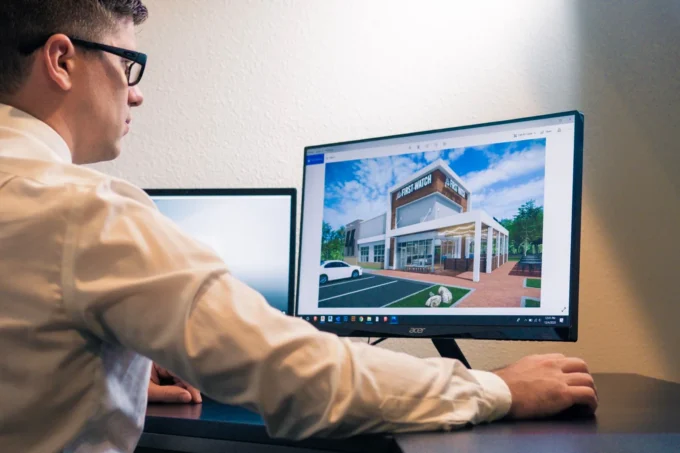
Our core stack often includes Revit or Archicad for BIM: AutoCAD for 2D: SketchUp, Rhino + Grasshopper for concept work: and Enscape, Twinmotion, or Lumion for fast visuals. For coordination, BIM 360/Autodesk Construction Cloud, Bluebeam, and Navisworks help. We corral discussions in Slack or Teams, use Miro for workshops, and manage tasks in Notion or Asana. Consistency wins: set up templates, view filters, and detail libraries to save hours on every job.

Pricing, Proposals, And Client Acquisition
Pricing Models And How To Estimate Scope
We can price hourly, fixed-fee, or percentage-of-construction-cost (often 6 to 10% for full scope, lower for limited services). Many of us blend models: discovery at a small fixed fee, main phases fixed with caps, CA hourly against a retainer. Typical freelance rates range from $75 to $200+ per hour, depending on market, licensure, and complexity.
Estimating starts with a simple work breakdown structure by phase. Assign level-of-effort hours to tasks (e.g., code study, 3 plan iterations, 12 sheets CDs), add QA/QC and admin, then multiply by your rate. Pad for unknowns (10 to 20%) and clearly state assumptions.
Proposals, Contracts, And Red-Flag Clauses
A strong proposal includes: project understanding, phased scope and deliverables, schedule milestones, fee and payment terms, client responsibilities (surveys, geotech, timely feedback), and assumptions/exclusions. For contracts, align with AIA short forms when possible.
Red flags to push back on:
- Broad indemnity or unlimited liability.
- IP assignments that strip our right to reuse standard details.
- “Pay-if-paid” or long net terms (we prefer deposits and progress billing).
- No limit on redesign after AHJ comments.
- Required starts without notice to proceed or retainer.

Finding Clients: Networks, Platforms, And Partnerships
Warm networks convert best: past employers, GCs, engineers, realtors, and property managers. We can also win work on platforms like Archinect, Upwork (for visualization or drafting), and Houzz for residential leads. Content drives inbound: local SEO on our site, case studies, and Google Business Profile updates. Partnerships with contractors and interior designers can feed a steady pipeline, be the architect who answers quickly and delivers permit-ready sets that pass first review.
Project Delivery, Risk, And Ethics
Workflow From Discovery To Closeout
Our typical flow: discovery call and budget check: paid feasibility/code scan: proposal and retainer: schematic design options and alignment: design development with consultant coordination: construction documents with QA/QC: permit submittal support: bidding/negotiation: and construction administration (RFIs, submittals, site visits, punchlist). We close with as-builts or a post-occupancy check-in for testimonials and lessons learned.

Managing Liability, Changes, And Approvals
We protect ourselves by documenting decisions, keeping an RFI/submittal log, and issuing formal addenda. Changes go through written change orders with fee and schedule impacts. For approvals, we pre-flight with the AHJ: early zoning meetings, code compliance summaries on sheets, and responses packaged by issue. Never certify means and methods: keep shop drawing reviews to “general conformance.”
Professional Ethics And Client Education
Health, safety, and welfare come first. If budget pressures clash with code or safety, we say no and explain the risk plainly. We disclose conflicts, credit collaborators, and only practice within competence. We also educate: many clients have never pulled a permit. Clear roadmaps, realistic timelines, and cost ranges reduce friction and build trust.
Career Growth And Resilience
Brand And Portfolio Strategy
Our brand isn’t a logo, it’s a promise. We position around outcomes (faster permits, energy savings, tenant turnover speed) and back it with sharp case studies: problem, constraints, solution, measurable result. Keep a lean site with services pages optimized for local keywords, publish process posts, and showcase before/after and annotated details. Social proof, reviews, awards, press, compounds.

Upskilling, Specialization, And Scaling Options
We stay valuable by learning: code updates, embodied carbon tools, Passive House, LEED/WELL, accessibility details, mass timber, and point-cloud workflows. Specialization can command premium fees. To scale, we create SOPs, use contract collaborators, and assemble a virtual bench (structural, MEP, permit expediters, visualizers). When demand justifies, we form a studio, but even as solo practitioners, we can run like a team with clean processes and reliable partners.
Conclusion
Freelance architecture rewards clarity, discipline, and niche focus. When we set the right foundations, clean contracts, defined scope, reliable tools, and choose problems we’re uniquely good at, the work becomes both profitable and creatively satisfying. Build relationships, price for value, and keep learning. The market respects architects who communicate well and deliver on time: let’s be those architects.
- architecture freelance websites
- architecture freelance work
- architecture freelancing opportunities
- Becoming a freelance architect
- building a freelance architecture business
- challenges in freelance architecture
- freelance architect career tips
- freelance architect client management
- freelance architecture income
- freelance architecture jobs
- freelance architecture portfolio
- freelancing benefits for architects
- growth in freelance architecture career
- how to start freelancing in architecture
- networking for freelance architects
- online platforms for freelance architects
- pros and cons of freelance architecture
- remote architecture freelance projects
- skills for freelance architects
- successful freelance architecture career










Leave a comment