


Table of Contents Show
Learning how to manage time for architecture students is one of the most valuable skills you can develop during your degree. Between studio projects, theory courses, part-time work, and personal life, poor scheduling leads directly to sleep loss, missed deadlines, and burnout. The strategies below give you a tested framework to plan your weeks, protect your energy, and produce better work in less time.
Architecture school is demanding by design. Studio-based learning means open-ended projects with long timelines, group critiques, and technical requirements that pull you in several directions at once. Unlike most university programs where exams and essays follow predictable cycles, architecture students deal with overlapping deliverables: a site analysis due on Monday, a physical model review on Wednesday, and a history essay on Friday. Without a clear system for managing these competing deadlines, even the most talented students fall behind. According to the NCARB 2025 report, more than 33,000 students were enrolled in NAAB-accredited architecture programs in the 2023-2024 school year, and the pressure to perform starts early. The good news is that time management is a skill, not a personality trait. You can learn it, practice it, and get measurably better at it over the course of a single semester.
Why Time Management Matters More in Architecture Than Other Degrees
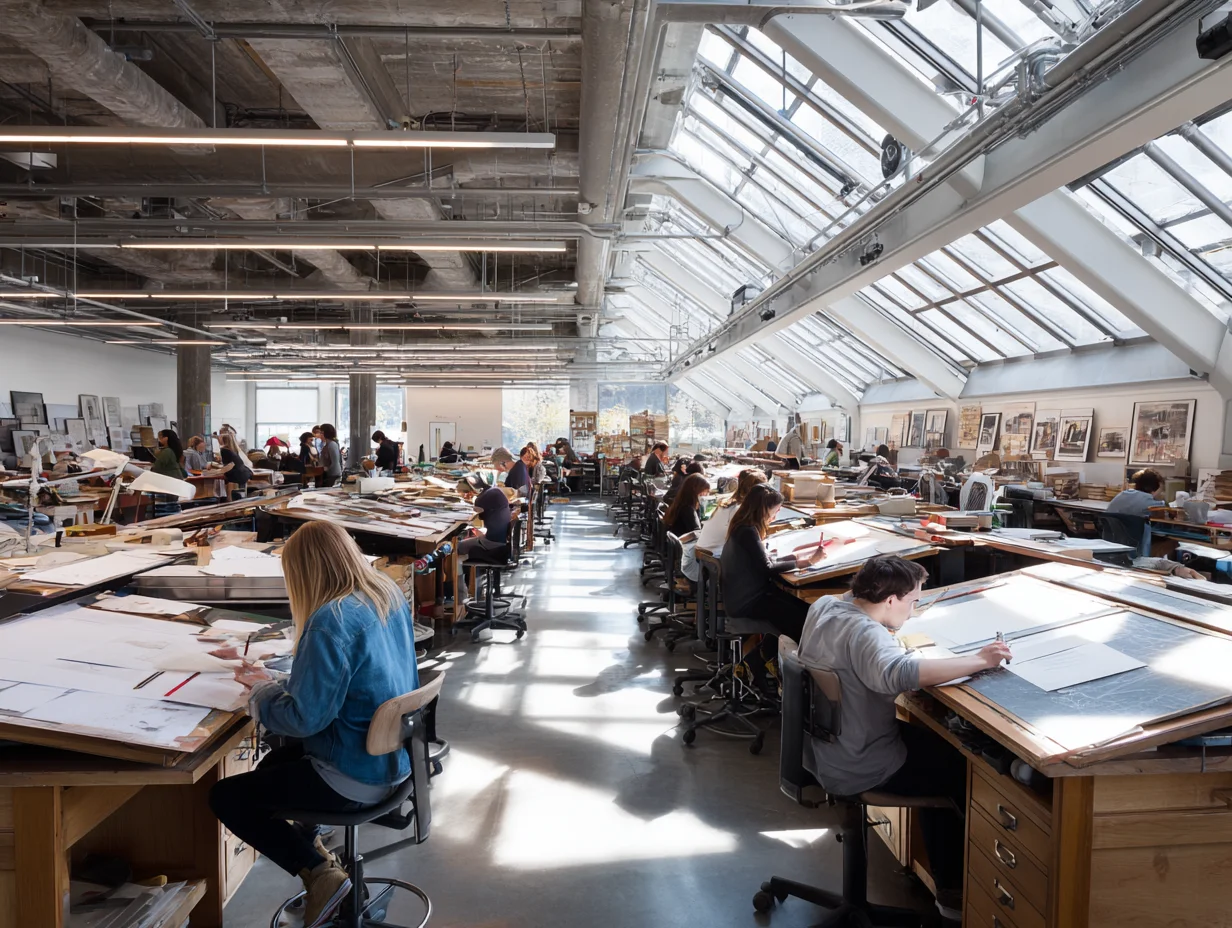
Most university degrees have clear boundaries. You attend lectures, complete readings, write assignments, and sit exams. Architecture operates differently. Studio projects can absorb unlimited hours because there is always another iteration, another layer of detail, or another rendering angle you could refine. This open-ended nature makes architecture uniquely susceptible to time mismanagement. A 2018 SONA survey found that 86% of architecture students reported sometimes or always going without sleep to complete a project. The American Institute of Architecture Students (AIAS) has documented the mental health consequences of this culture since its 2002 Redesign of Studio Culture report, and follow-up studies in 2004 and 2020 confirmed that little had changed structurally.
The issue is not that architecture students are lazy or disorganized. The problem is that the program structure rewards visible effort over efficient output, and students internalize the idea that more hours equals better work. Breaking that cycle starts with how you plan your week.
🔢 Quick Numbers
- 86% of architecture students reported going without sleep to complete projects (SONA Survey, 2018)
- 37% of U.S. college students screened positive for moderate or severe depression (Healthy Minds Study, 2024-2025)
- More than a third of licensure candidates stop pursuing architecture over a 10-year period (NCARB, 2025)
Treat Studio Hours Like a Job
One of the most effective study tips for architecture students is to treat your studio time as fixed working hours. If your studio is open from 9 AM to 6 PM, commit to being present and productive during those hours as if you were working at an architecture firm. This single habit eliminates the need for most late-night sessions because you are putting in concentrated work during the day instead of spreading it across fragmented evening hours.
Set a start time and an end time each day. When 6 PM arrives, leave. This feels uncomfortable at first, especially when classmates are settling in for an all-nighter. But the research consistently shows that productivity drops sharply after eight to ten hours of focused work, and the quality of design decisions made at 2 AM is measurably worse than those made during daylight hours. A structured schedule also gives your brain downtime to process design problems subconsciously, which often leads to better ideas the next morning.
💡 Pro Tip
Block the first 90 minutes of your studio day for your hardest task, whether that is a section drawing, a model iteration, or a site analysis diagram. Cognitive performance peaks early in the day for most people, and tackling the most demanding work first prevents it from lingering as anxiety through the afternoon.
Break Projects into Weekly Milestones

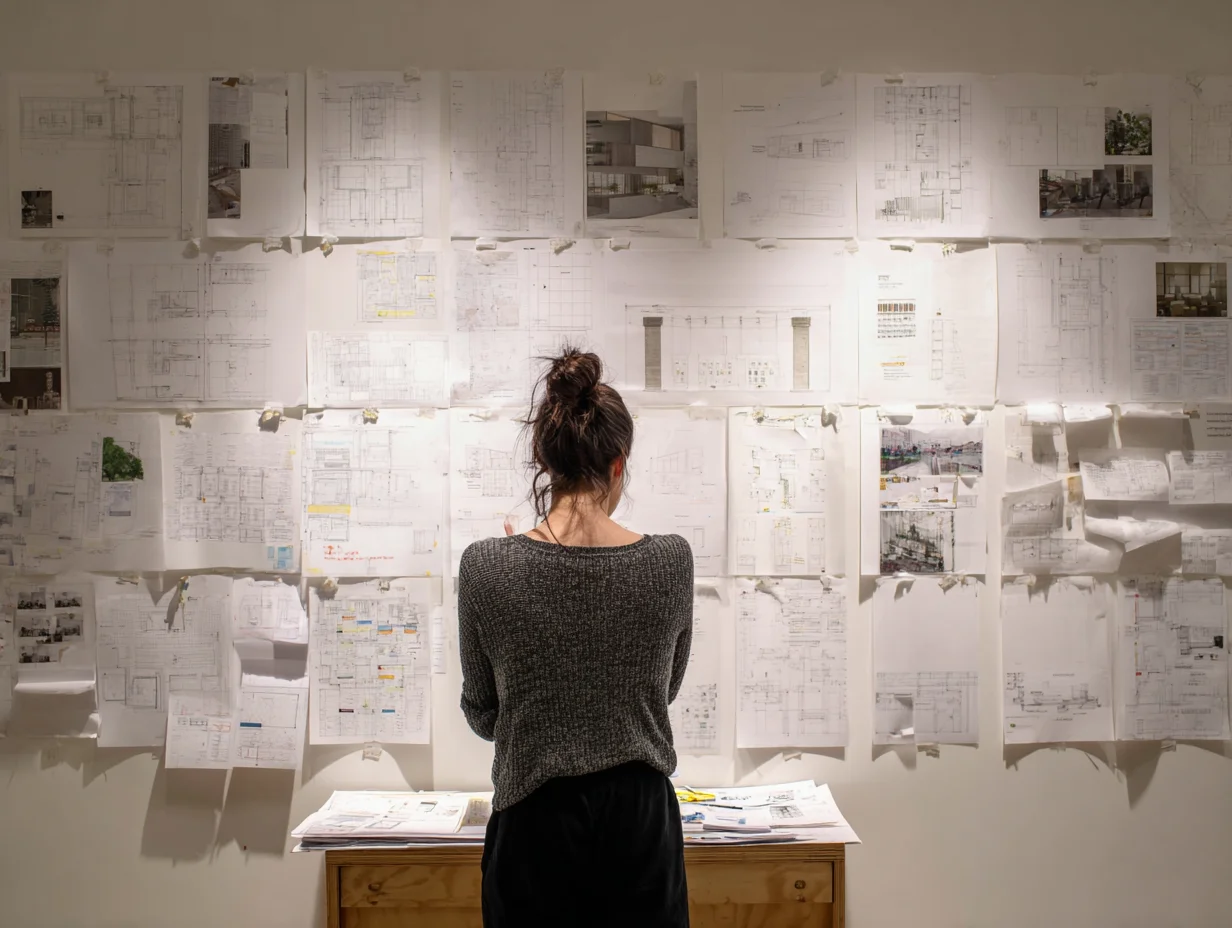
Architecture projects often span four to twelve weeks, and the biggest time management trap is treating the final deadline as the only deadline. When you receive a project brief, work backward from the review date and set yourself weekly checkpoints. Week one might be site research and precedent analysis. Week two could focus on concept development and initial sketches. Week three moves into plan development, and so on.
Writing these milestones down matters. Use a physical planner, a digital calendar, or a simple spreadsheet. The format does not matter as much as the act of making your timeline visible. Each milestone should be specific enough that you can clearly tell whether you hit it or missed it. “Work on design” is too vague. “Complete three floor plan options at 1:200 scale” is actionable. This approach also helps you identify bottlenecks early. If you are behind after week two, you know you need to adjust your pace or simplify your concept, rather than discovering at 3 AM the night before the review that you cannot finish.
Architecture student time management improves dramatically when you stop viewing a project as one large block and start treating it as a series of smaller, concrete tasks. This also aligns with how professional architecture firms structure project timelines, so the habit translates directly into your career.
How to Prioritize When Everything Feels Urgent
A common struggle for architecture students is knowing what to work on when multiple deadlines compete for attention. The Eisenhower Matrix is a simple tool that helps: divide your tasks into four categories based on urgency and importance. Tasks that are both urgent and important (a model due tomorrow) get done first. Tasks that are important but not urgent (starting research for a project due in three weeks) get scheduled. Tasks that are urgent but not important (replying to a non-critical email from a group member) get delegated or handled quickly. Tasks that are neither urgent nor important (scrolling ArchDaily for two hours without a specific goal) get eliminated.
The mistake most students make is spending all their time in the “urgent and important” quadrant, which means they are constantly reacting to crises. Effective time management for architecture students means spending more time in the “important but not urgent” category, where you do research, develop ideas, and build skills before deadlines force your hand.
⚠️ Common Mistake to Avoid
Many architecture students confuse being busy with being productive. Spending five hours rendering a perspective before the floor plan is resolved feels like progress, but it is actually avoidance. Always confirm that your core design decisions are solid before investing time in presentation-quality outputs. Renderings of a weak design do not become strong just because they look polished.
Protect Your Sleep to Protect Your Work
Sleep deprivation is treated as a badge of honor in many architecture schools, but the evidence is clear: it damages both your health and your design output. The CDC reports that six out of ten college students experience poor sleep quality, and architecture students fare worse than average because studio culture normalizes all-nighters. Research published in the journal Building and Environment and systematic reviews from 2025 confirm that chronic sleep loss among architecture students correlates with higher rates of anxiety, depression, and academic disengagement.
Protecting your sleep is not a luxury. It is one of the most practical time management tips for architecture students because well-rested brains make faster, better decisions. Set a hard cutoff for work each night, even during review weeks. If you have managed your weekly milestones correctly, you should rarely need to work past midnight. When you do face a genuine crunch, limit it to one or two nights maximum and recover the sleep afterward. The students who pull three consecutive all-nighters before a review almost always produce worse work than those who slept six hours each of those nights and used their waking hours efficiently.
Video: Time Management for Architecture Students
This video from the “Successful Archi Student” podcast covers five practical time management strategies specifically designed for architecture students juggling studio, coursework, and personal commitments.
Use Digital Tools to Stay Organized
Simple tools can make a real difference in how you manage your time as an architecture student. A digital calendar (Google Calendar, Apple Calendar, or Outlook) gives you a visual overview of your week, and the act of time-blocking specific tasks into specific slots forces you to be realistic about how long things take. Most students underestimate task duration by 30 to 50 percent, a cognitive bias researchers call the “planning fallacy.” Calendar blocking exposes this because you quickly see when your schedule is physically impossible.
Task management apps like Todoist, Notion, or even a basic checklist in your phone’s notes app help you track smaller to-do items that otherwise slip through the cracks. The key is picking one system and sticking with it. Switching between three different apps wastes more time than it saves. Pair your digital tools with a weekly review: spend 20 minutes every Sunday evening looking at the week ahead, identifying your top three priorities, and adjusting your calendar to match.
For managing your design files and keeping your digital workspace organized, the same discipline applies. Name files consistently, maintain clear folder structures, and back up your work regularly. Losing a Rhino file at 11 PM because your laptop crashed and you did not save is not bad luck; it is a preventable time management failure. A good file management system is also essential when you begin building your architecture student portfolio, since well-organized project files make compiling your best work much faster.
🎓 Expert Insight
“Architecture school teaches you to design buildings, but it does not teach you to manage your time. Students who develop that skill on their own are almost always the ones who finish with their passion for design intact.” — Licensed architect with 15+ years of practice and adjunct teaching experience
This observation reflects a recurring theme across architecture education research. The AIAS has repeatedly recommended that schools integrate time management and wellness skills into the curriculum, yet most programs still leave this responsibility entirely to students.
Work-Life Balance for Architecture Students

The phrase “work-life balance” can feel irrelevant when you are deep in a studio project, but maintaining activities outside of architecture is directly linked to long-term academic performance and mental health. Students who exercise regularly, maintain friendships outside of their program, and pursue hobbies report lower levels of burnout and higher satisfaction with their education, according to multiple studies cited in the AIAS Learning and Teaching Culture Policy reports.
You do not need hours of free time each day. Even 30 minutes of physical activity, a meal with friends who are not architecture students, or a short walk without your phone can reset your mental state. The goal is to prevent architecture from becoming your entire identity, because when your self-worth is tied exclusively to design reviews and grades, negative feedback hits much harder. Keeping a life outside the studio gives you perspective that helps you survive architecture school and come out the other side still wanting to practice.
If you are struggling to find time for anything beyond studio, that is a sign your scheduling system needs adjustment, not that you should sacrifice more personal time. Revisit your weekly milestones and look for inefficiencies. Are you spending two hours on something that should take 45 minutes because you are distracted? Are you redoing work because you did not plan your design sequence properly? Fixing these process issues frees up time without adding hours to your day.
How to Handle Review Weeks Without Burning Out
Review weeks (also called “crits” or “juries”) are the peak stress points of every architecture semester. The two weeks before a major review often feel impossible, and this is where most architecture students abandon their time management systems entirely. Instead of reverting to chaos mode, plan your review week backward from the presentation date.
Three days before the review, your design should be finished. The final 72 hours are for production only: printing, plotting, mounting boards, assembling models, and rehearsing your presentation. If you are still making design changes 48 hours before a crit, you will not have time to produce clean deliverables, and your presentation will suffer. This means the real deadline for design decisions is not the review date; it is three to four days earlier.
Build a review-week checklist that covers every deliverable: plans, sections, elevations, diagrams, models, renderings, and any written components. Assign each item a time estimate and schedule it into your calendar. Having a physical or digital checklist to mark off as you complete each task reduces anxiety because you can see your progress rather than panicking about an abstract cloud of remaining work.
💡 Pro Tip
Print a test version of your final boards at least two days before the review. Viewing your work at full scale often reveals layout problems, text sizing issues, or drawing gaps that are invisible on screen. This single step saves many students from last-minute reprinting panic and lets you refine your presentation with a clear head.
Build Long-Term Habits That Last Beyond School

The time management skills you develop as an architecture student directly transfer to professional practice. Architecture firms operate on project schedules with fixed milestones, client deadlines, and coordination meetings. The students who learn to structure their own time in school arrive at their first job already equipped with the most important non-design skill a young architect can have. If you are preparing for your transition into practice, the architecture thesis process offers an excellent opportunity to test your self-management abilities on a long-term, self-directed project.
Start small. Pick one habit from this guide and apply it consistently for two weeks before adding another. Trying to overhaul your entire workflow overnight usually leads to frustration and abandonment. Track what works and what does not, and adjust. Time management is personal; the specific tools and techniques that suit one student may not fit another. What matters is having a system, any system, and refining it as you go.
Architecture school will always be intense. The workload is real, and the standards are high. But intensity does not have to mean chaos, and hard work does not have to mean sacrificing your health. The students who learn to manage their time effectively do not just survive their degree. They produce stronger work, maintain their physical and mental health, and graduate ready to build a sustainable career in a profession they still love.
✅ Key Takeaways
- Treat studio hours like a fixed work schedule to eliminate unnecessary late nights and protect your daily productivity.
- Break every project into weekly milestones with specific, measurable deliverables rather than working toward one distant deadline.
- Prioritize tasks using urgency and importance to spend more time on planned work and less time reacting to last-minute crises.
- Protect your sleep consistently; well-rested students make faster decisions and produce better design work than sleep-deprived peers.
- Maintain activities and relationships outside of architecture to prevent burnout and keep design criticism in perspective.
Frequently Asked Questions
How many hours a week should architecture students study?
Most architecture students report spending 30 to 50 hours per week on studio and coursework combined, though this varies by school and year level. The goal is not to maximize hours but to maximize productive hours. Students who work 35 focused hours with clear milestones often outperform those who spend 50 unfocused hours in studio.
Is it normal to feel burned out in architecture school?
Yes. Burnout is extremely common among architecture students due to the open-ended nature of design work, sleep deprivation, and high-stakes critique culture. Recognizing burnout early and adjusting your schedule, sleep, and personal boundaries is far more effective than pushing through until you crash.
What are the best apps for architecture student time management?
Google Calendar for time-blocking your week, Todoist or Notion for task tracking, and a simple timer app for focused work sessions (the Pomodoro technique works well for drafting and modeling tasks). Choose one system and commit to it for at least a month before switching.
How can architecture students balance studio with other courses?
Schedule your non-studio coursework into specific time slots and treat those blocks as non-negotiable. Many students let studio absorb all their time and then rush through essays and exams. Allocating even two focused hours per week to each non-studio course prevents last-minute cramming and protects your GPA.
Does poor time management affect architecture portfolio quality?
Directly. Students who rush through projects because of poor planning produce lower-quality drawings, weaker models, and inconsistent presentation materials. Since your architecture portfolio is built from your best project work, investing in time management during the semester pays off in stronger portfolio pieces at graduation.















Leave a comment