


Table of Contents Show
Biomimicry in architecture is the practice of studying how living organisms solve functional problems and applying those solutions to building design. Rather than copying a leaf’s shape for decoration, architects who work with biomimicry translate biological strategies for ventilation, structure, water management, and material efficiency into buildings that perform better while consuming fewer resources.
What Is Biomimicry in Architecture?
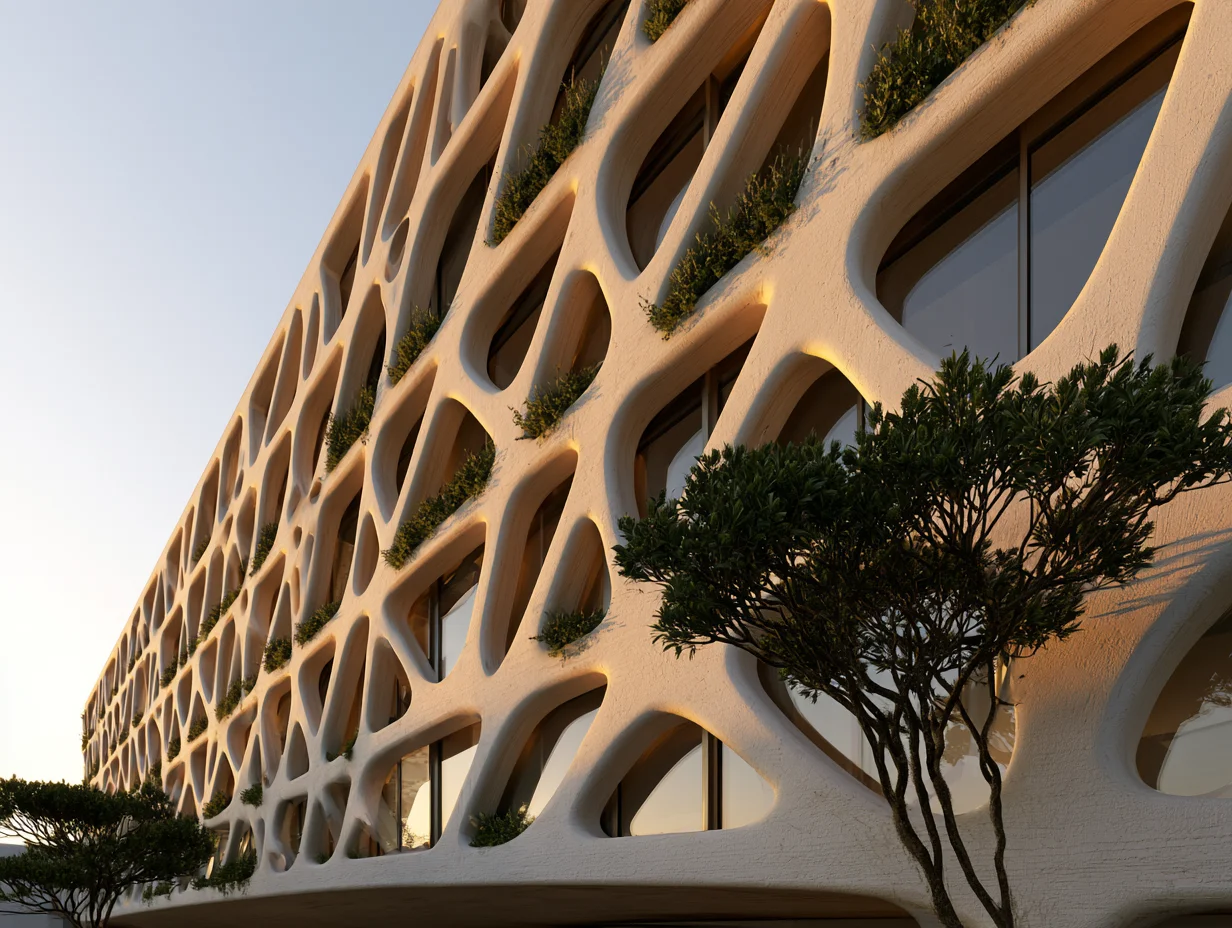
The term biomimicry was coined by biologist Janine Benyus in her 1997 book Biomimicry: Innovation Inspired by Nature. In that book, Benyus argued that organisms have spent 3.8 billion years refining strategies for energy use, structural integrity, and waste reduction. Architects, she proposed, could treat the natural world as a research lab rather than just a source of aesthetic inspiration.
So what is biomimicry in architecture in practical terms? It operates on three levels. At the organism level, designers mimic a specific creature’s form or function, such as shaping a roof shell after a sea urchin’s ribbed skeleton to achieve stiffness with minimal material. At the behavior level, they study how organisms interact with their environment, like how a cactus self-shades its surface through ribbing and spines. At the ecosystem level, architects model entire building systems after ecosystems, designing structures that produce zero waste, run on solar energy, and cycle water internally.
This three-tier framework separates biomimicry in architecture from simple biomorphic design, where a building merely looks like something from nature without performing like it. A building shaped like a seashell is biomorphic. A building that distributes loads the way a seashell does is biomimetic.
🎓 Expert Insight
“You can either see the natural world as a source of raw materials, or you can see it as a source of ideas. The latter is far more valuable.” — Michael Pawlyn, Founder of Exploration Architecture
Pawlyn, author of the biomimicry in architecture book of the same name (now in its second edition), has spent over two decades translating biological strategies into built projects. His work on the Eden Project in Cornwall remains one of the most cited examples of biomimicry in architecture worldwide.
Principles of Biomimicry in Architecture
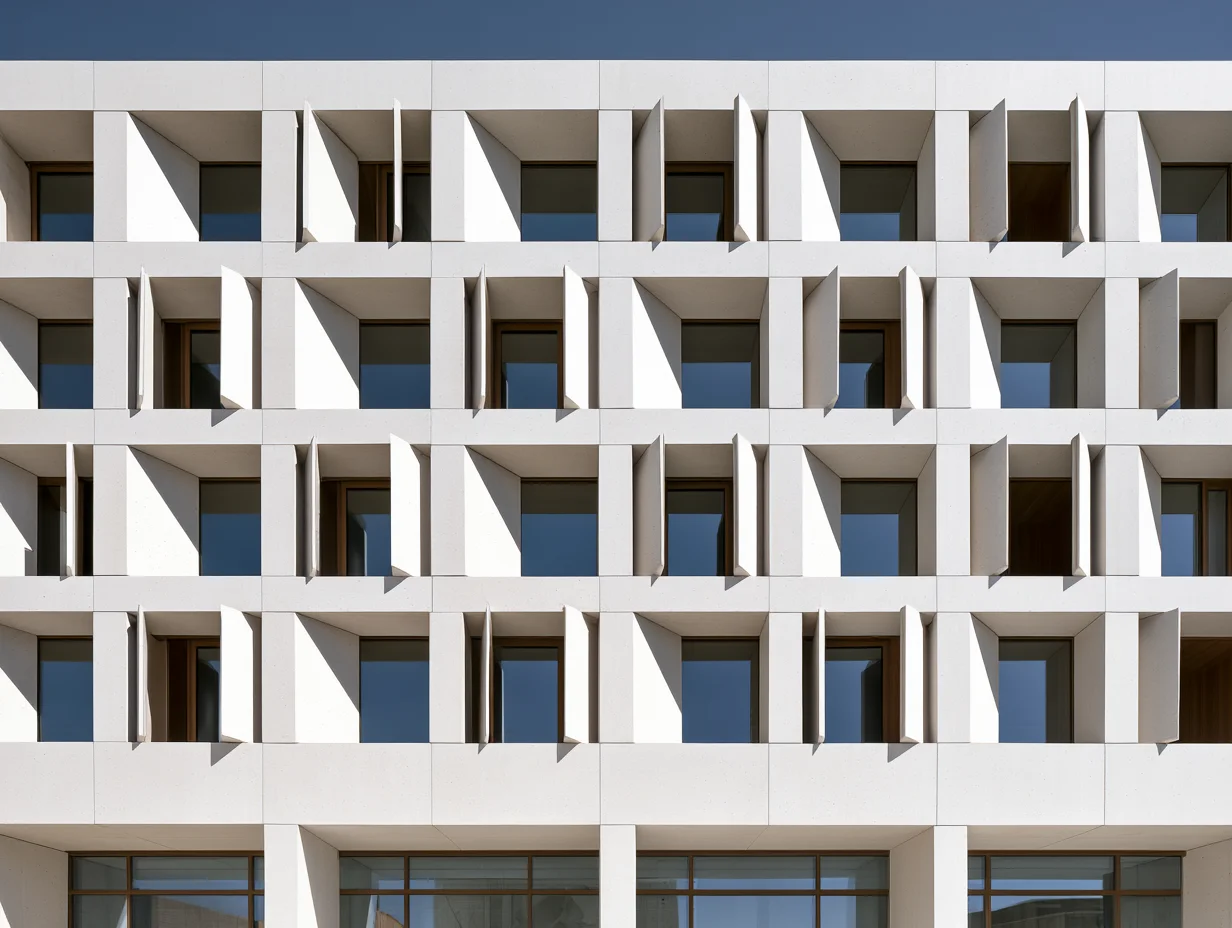
The principles of biomimicry in architecture are not a rigid checklist but a set of questions designers return to throughout a project. Each principle maps to a strategy that living systems have refined over millennia.
Form follows function, not fashion. In nature, every shape serves a measurable purpose. A honeycomb is hexagonal because that geometry stores the most volume with the least wax. A bone is hollow and ribbed because that layout resists bending with minimal mass. Architects who apply this principle start by defining a performance target, say, reducing solar heat gain by 40%, and then search for organisms that have solved an equivalent problem under similar constraints.
Resource efficiency is another core principle. Nature builds at ambient temperatures, uses water as a solvent instead of toxic chemicals, and generates zero landfill waste. Eco-friendly building materials inspired by these strategies include self-healing concrete (modeled after bone regeneration) and mycelium-based insulation panels grown from agricultural waste.
A third principle is adaptation to local conditions. A polar bear’s fur works in the Arctic, not in the Sahara. Similarly, a biomimetic cooling strategy derived from termite mounds belongs in hot-arid climates, not in subarctic cities. The best biomimicry in architecture case study projects always begin with a site-specific climate analysis before selecting a biological model. For more on climate-responsive design, see this guide to passive ventilation strategies.
💡 Pro Tip
Before picking a biological model, write a clear challenge statement: “Maintain 24-26°C operative temperature in a hot-humid atrium using less than 3 W/m² fan energy.” That specificity helps biologists identify the right organisms and prevents the project from drifting into decoration. The Biomimicry Institute’s AskNature database organizes biological strategies by function, making it a practical starting point for this kind of search.
Examples of Biomimicry in Architecture
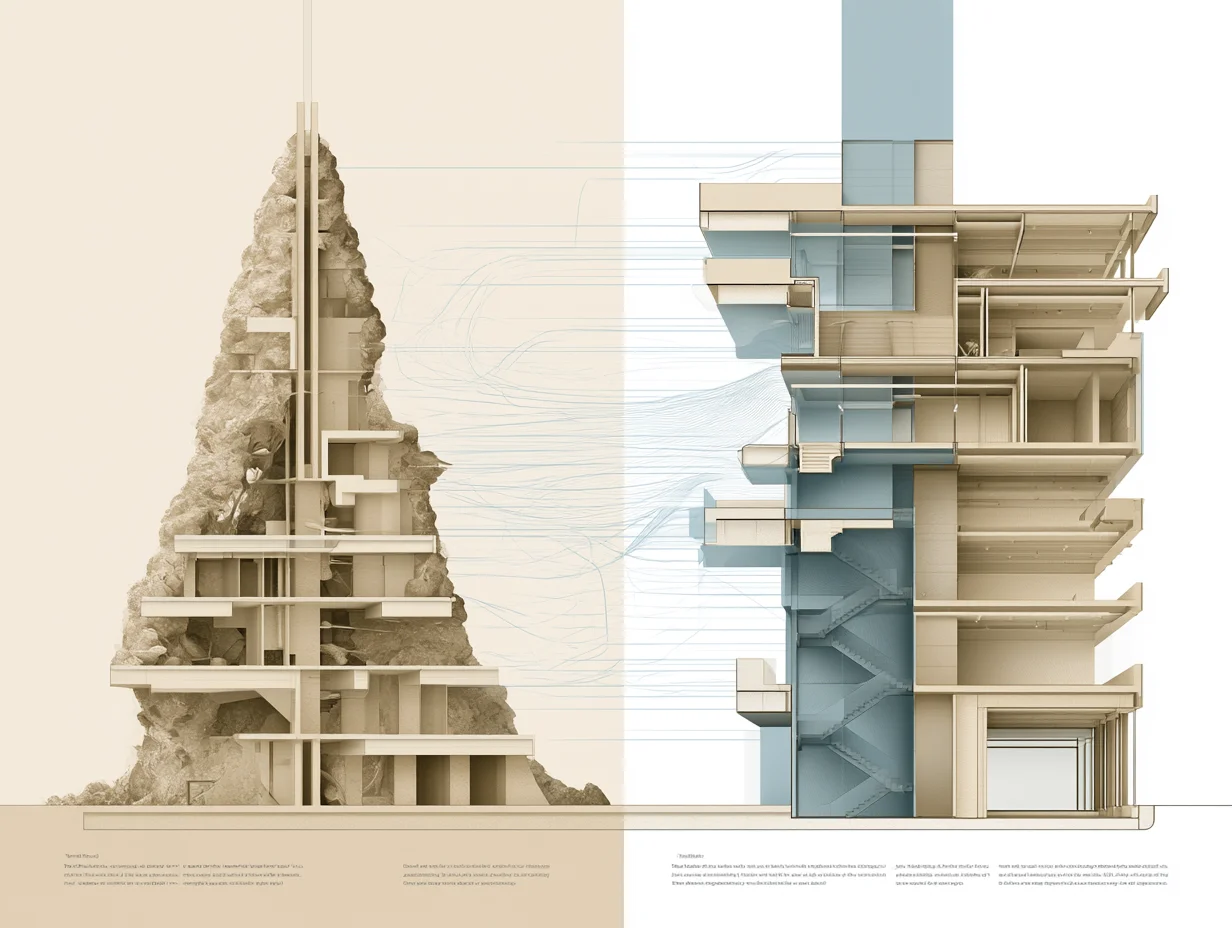
The most discussed biomimicry examples in architecture involve buildings where biological strategies produced measurable performance gains, not just visual novelty.
The Eastgate Centre, Harare
Architect Mick Pearce designed the Eastgate Centre in Harare, Zimbabwe (completed 1996) with a ventilation system inspired by the mound-building practices of African termites. Termites maintain a near-constant 31°C inside their mounds despite outdoor swings from 2°C at night to 40°C during the day. Pearce translated the mound’s chimney-and-tunnel logic into a system of concrete ducts, thermal mass floors, and rooftop exhaust chimneys. The result: the Eastgate Centre uses roughly 35% less energy than comparable air-conditioned buildings in Harare, and its capital cost came in about 10% lower because it skipped a conventional HVAC system entirely.
🏗️ Real-World Example
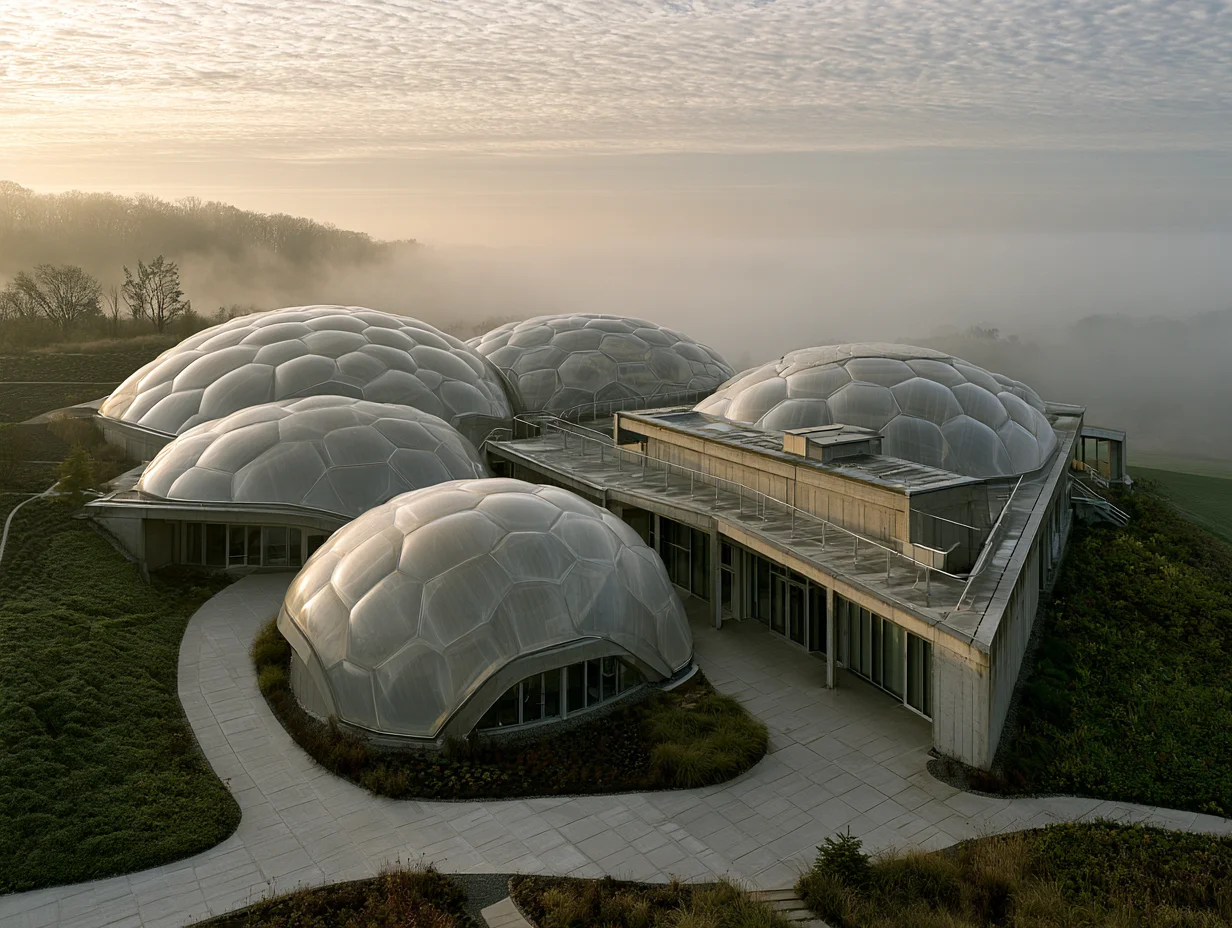
Eden Project (Cornwall, UK, 2001): Nicholas Grimshaw’s geodesic biomes draw their structural geometry from soap bubbles and pollen grains. Hexagonal ETFE cushions distribute loads across curved surfaces with minimal material, making the superstructure lighter than the air contained inside it. The project demonstrates how organism-level biomimicry (geometry of pollen) and behavior-level biomimicry (load distribution in soap films) can combine in a single structure.
30 St Mary Axe (The Gherkin), London
Foster + Partners’ diagrid tower in London borrows its structural logic from the glass sponge Euplectella aspergillum, whose lattice skeleton channels water flow while resisting ocean currents. The building’s exoskeleton similarly channels air for natural ventilation, reducing reliance on mechanical cooling. Wind tunnel tests showed the tapered form cuts wind loads at street level compared to a conventional rectangular tower of the same floor area.
Other Notable Projects
Biomimicry in architecture examples extend well beyond these two landmarks. The Al Bahar Towers in Abu Dhabi use a responsive facade inspired by the folding mechanism of the Strelitzia reginae flower, reducing solar gain by over 50%. The Esplanade in Singapore takes its spiked-shell cladding from the durian fruit, controlling daylight penetration into performance halls. For a deeper look at built projects, see this roundup of biomimicry in architecture examples with performance data.
📌 Did You Know?
Spider silk is five times stronger than steel by weight, yet spiders produce it at ambient temperature using water as a solvent. Researchers at Cambridge University and MIT have been developing synthetic spider silk composites for building applications, aiming to replace energy-intensive steel reinforcement in thin-shell concrete structures.
How to Start Applying Biomimicry to Your Projects

You do not need a biology degree to work with biomimicry. The process follows a structured sequence that any design team can adopt.
First, identify the functional challenge. Frame it in biological terms: “How does nature cool a surface in a hot-arid environment?” or “How does nature create a waterproof membrane without petroleum-based sealants?” The more specific the question, the more useful the biological search will be.
Second, research organisms that solve the same problem. The AskNature platform, maintained by the Biomimicry Institute, catalogs over 1,800 biological strategies organized by function. Collaborating directly with a biologist, if your firm can access one through a university partnership or consultancy, tightens the translation from biology to engineering.
Third, abstract the principle. Do not copy the organism literally. A termite mound is not a building; the principle of using thermal mass plus convective chimneys to buffer temperature swings is what transfers. Abstraction is where most projects fail or succeed.
Fourth, test through simulation. Run CFD (computational fluid dynamics) or thermal modeling to validate that the biological strategy actually improves performance against your original targets. If it does not, iterate or select a different organism. Biomimicry is not a guarantee; it is a design method that still requires engineering rigor. Performance-driven biomimicry strategies go deeper into simulation workflows and target-setting for this process.
Finally, integrate with nature-inspired design concepts at the systems level. A biomimetic facade works best when paired with a biomimetic ventilation strategy and a site plan that responds to local ecology rather than fighting it.
Video: Biomimicry in Architecture with Michael Pawlyn
In this presentation, architect Michael Pawlyn explains how nature provides a sourcebook of design solutions for resource efficiency, closed-loop systems, and a solar economy, with built examples from his own practice.
The Bigger Picture
Most buildings still treat the natural world as something to keep out: seal the envelope, pump in conditioned air, bolt on cladding that ignores the sun’s path. Biomimicry inverts that assumption. The most durable, energy-efficient structures we know of, coral reefs, termite mounds, beaver dams, are not designed against their environment but with it. As material science catches up to biology and computational tools make complex organic geometries buildable at scale, the gap between what nature already does and what architects can replicate keeps shrinking. The question is no longer whether biomimicry belongs in architecture; it is how quickly the profession is willing to learn from 3.8 billion years of prototyping.










Leave a comment