


Table of Contents Show
The transformation of Landgasthof Riehen by pfeffermint AG is a carefully calibrated project that bridges heritage, contemporary comfort, and cultural sensibility. Located in Riehen, Switzerland, the historic inn has been thoughtfully refurbished to respond to changing expectations of hospitality while preserving the atmosphere and social role that have long defined the Landgasthof typology.

Rather than pursuing a radical redesign, the project adopts an attitude of continuity. Through subtle spatial adjustments, refined material choices, and an interior language shaped by art and craftsmanship, the former building, once perceived as outdated, has been brought into a new era. The result is a hotel and restaurant that feels both familiar and renewed: rooted in local tradition yet open to a broader, culturally engaged audience.

Context and Cultural Positioning
Riehen occupies a unique position at the intersection of local life and international culture. The Landgasthof benefits from its proximity to major cultural institutions such as the Fondation Beyeler, the Vitra Design Museum, and the global art event Art Basel. This cultural landscape informed the design strategy, encouraging an atmosphere that resonates with art lovers and design-conscious travelers while remaining accessible to the local community.
The ambition was not to turn the Landgasthof into a boutique hotel detached from its surroundings, but to enhance its role as a neighborhood gathering place and a refined retreat for visitors drawn by the region’s vibrant art scene.

Interior Strategy: Timelessness Through Detail
The refurbishment focuses primarily on interior architecture, where pfeffermint AG introduced a palette of materials and finishes that balance warmth, elegance, and restraint. Wood surfaces, tactile textiles, and carefully selected furnishings create spaces that feel calm and enduring rather than trend-driven. The design avoids visual excess, allowing proportion, texture, and craftsmanship to define the atmosphere.
Throughout the hotel and restaurant, timeless elegance is achieved through small yet deliberate gestures: custom furniture elements, subtle color contrasts, and lighting that emphasizes intimacy over spectacle. These details preserve the building’s character while gently reinterpreting it through a contemporary lens.

The Restaurant as a Social Anchor
At the heart of the project lies the restaurant, conceived as a lively and inclusive meeting place for the neighborhood. True to the Landgasthof tradition, it functions as a social anchor where locals gather, conversations unfold, and a sense of community is reinforced. The interior design supports this role through warm materials, human-scale proportions, and an atmosphere that feels welcoming rather than formal.
While the restaurant celebrates regional tradition, it does so without nostalgia. Contemporary design elements are woven seamlessly into the space, ensuring that the restaurant feels current and relevant while maintaining its cultural familiarity.

The Hotel: A Quiet Retreat for Art and Design Enthusiasts
In contrast to the animated character of the restaurant, the hotel spaces are conceived as calm retreats. Guest rooms and shared areas offer an environment of understated comfort, appealing to visitors seeking inspiration, reflection, and proximity to art and culture. The interior language remains consistent (restrained, tactile, and thoughtfully composed), allowing guests to feel at ease without distraction.
This duality between lively public spaces and quiet private zones is central to the project’s success. It enables the Landgasthof to serve multiple audiences simultaneously, accommodating both everyday local life and culturally motivated travel.

Architecture of Continuity
The Landgasthof Riehen refurbishment exemplifies an architectural approach based on care rather than replacement. By respecting the existing structure and atmosphere while introducing contemporary comfort and artistic sensitivity, pfeffermint AG demonstrates how adaptive transformation can extend the life and relevance of traditional hospitality buildings.
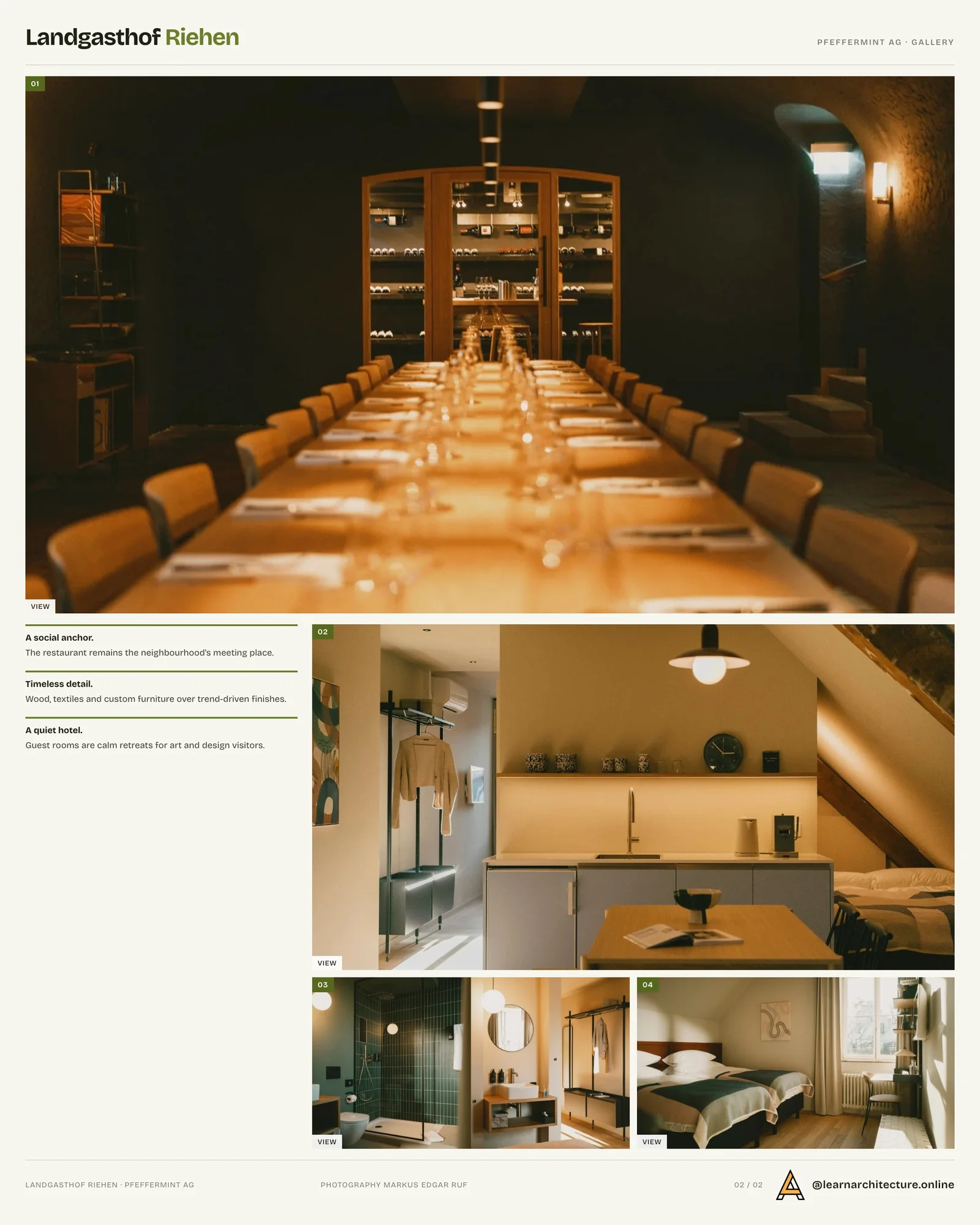
The project shows that modernization does not require the loss of identity. Instead, through precision, restraint, and attention to detail, tradition can be carried forward, reinterpreted for a new generation of guests while remaining deeply connected to its place.
Photography: Markus Edgar Ruf


- Adaptive reuse hotel
- Art and culture hotel
- Art-focused hotel design
- Boutique hotel Switzerland
- community-oriented design
- Contemporary inn architecture
- Contemporary Swiss design
- Cultural hospitality design
- Hospitality renovation project
- Hotel and restaurant design
- Hotel near Fondation Beyeler
- Interior refurbishment project
- Landgasthof Riehen
- Modern traditional interiors
- pfeffermint AG
- Restaurant interior design
- Riehen architecture
- Swiss hotel renovation
- Swiss restaurant architecture
- Timeless interior architecture







Leave a comment