


Table of Contents Show
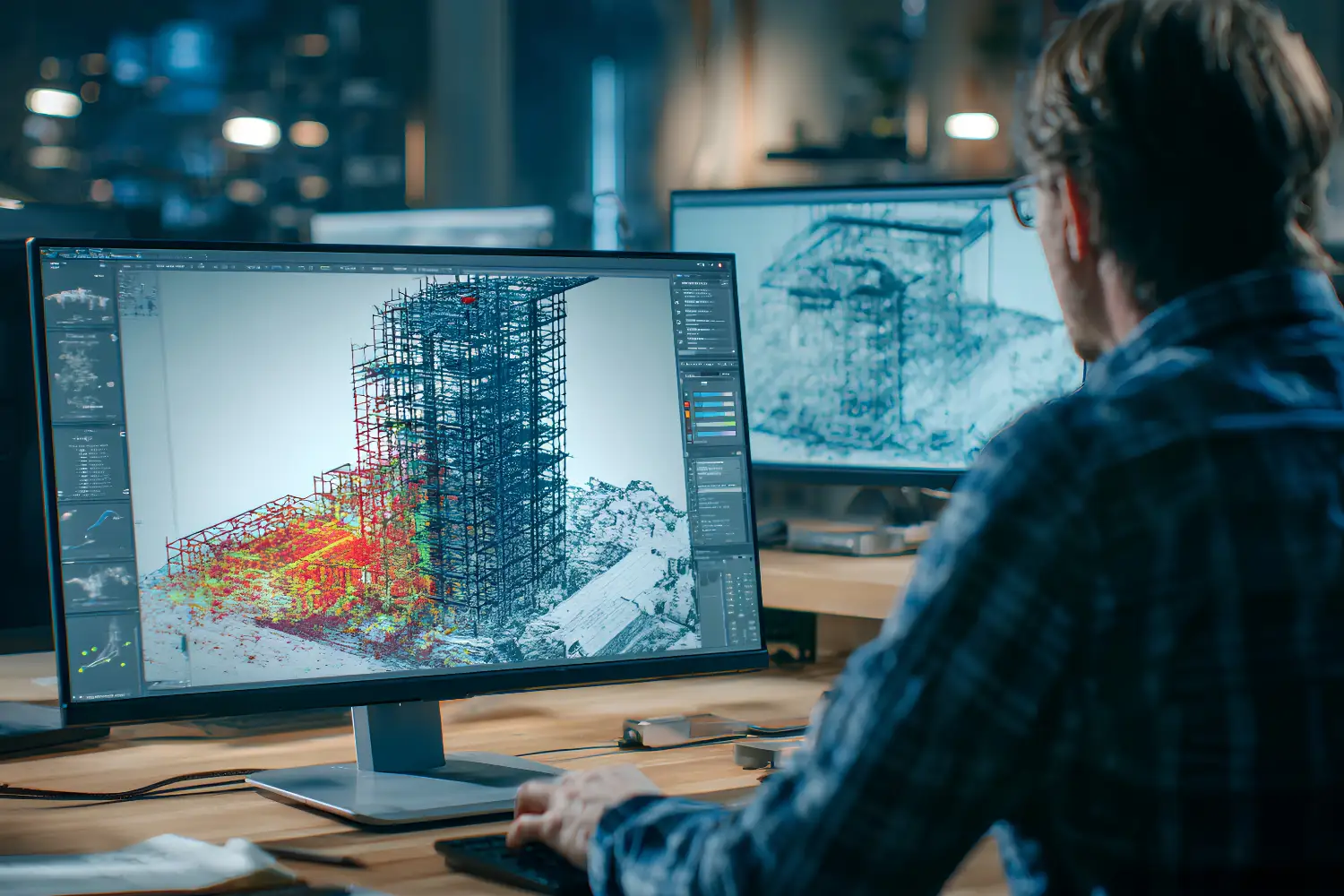
AI in structural engineering applies machine learning, generative algorithms, and data-driven simulation to design, analyze, and monitor buildings. These tools predict how a structure behaves under load, propose efficient framing options, and flag problems early, helping engineers test more design ideas in less time while keeping human judgment in charge of safety.
For most of the last century, structural design followed a steady rhythm. An engineer sized a beam, ran the numbers, checked a code clause, then repeated the cycle for the next member. That rhythm is changing. Software can now generate hundreds of viable structural schemes overnight, learn from thousands of past projects, and predict failure modes that once took weeks to expose. The shift is less about replacing engineers and more about changing what they spend their hours on.
What Does AI in Structural Engineering Actually Do?
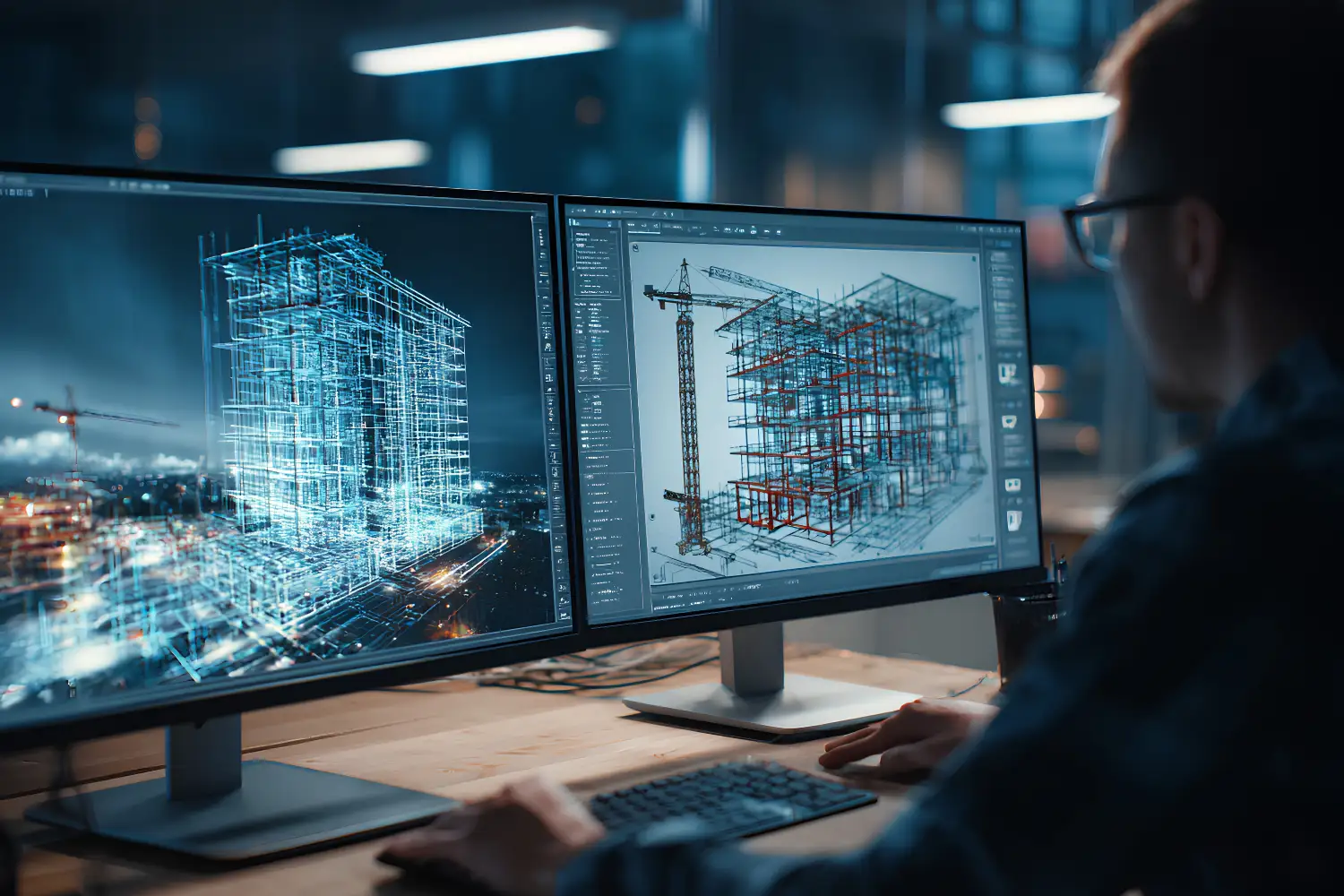
AI in structural engineering covers a group of methods rather than a single product. At one end sit machine learning models trained on past projects, test data, and simulations, which learn to predict how a beam, frame, or facade will respond without running a full finite element analysis every time. At the other end are generative tools that produce and rank many structural options against goals such as weight, cost, and stiffness.
These methods slot into work engineers already do. Load takedowns, member sizing, connection design, and code checking each have repetitive steps that pattern recognition handles well. The same logic that drives generative design in form making now reaches into framing plans and reinforcement layouts. For a wider view of how these computational methods change daily practice, the background on computational design in architecture is a useful starting point.
It helps to group the activity into four areas. The first is design generation, where algorithms produce framing and form options. The second is prediction, where a model estimates response, capacity, or cost without a full solve. The third is monitoring, where AI reads sensor streams from a finished building. The fourth is document automation, where routine drafting, scheduling, and clash detection run with less manual input. A single project may touch all four, often through the same BIM model that already holds the geometry.
🎓 Expert Insight
“Artificial intelligence cannot serve as a replacement for the professional judgment of a licensed professional engineer.”, American Society of Civil Engineers, Policy Statement 573
That position shapes how firms adopt these tools. AI handles the search and the math, but a licensed engineer still signs and stamps the result.

From Manual Calculation to Machine Learning Structural Analysis
Traditional analysis is deterministic. You define geometry, materials, and loads, then solve equations for forces and displacements. It is accurate, but slow when you want to test dozens of variations. Machine learning structural engineering flips the cost structure. Training a model takes effort up front, yet predictions afterward are nearly instant.
That speed reshapes how exploration happens. Finite element analysis stays the reference for a final design, but a fast surrogate model can stand in during the search, screening hundreds of variants and discarding weak ones before a single detailed run. The engineer then spends precise analysis only on candidates that already look sound. The two methods work as a pair, with the learned model handling breadth and the classical solver providing the rigor that signs off the result.
How Machine Learning Predicts Structural Behavior
A trained model maps inputs such as span, section, material grade, and load pattern to outputs such as deflection, stress, and capacity by learning from a large set of solved cases. Once trained, it returns an estimate in milliseconds, which lets an engineer sweep through a design space and find promising candidates before committing to detailed analysis. A 2022 review, “Machine Learning in Structural Design,” published in Frontiers in Built Environment, groups these uses into response prediction, capacity estimation, and pattern recognition in monitoring data.

AI Structural Analysis Software in Practice
Commercial AI structural analysis software now sits beside familiar packages. Some tools suggest section sizes as you model, others optimize reinforcement or detect clashes between structure and services. Many connect directly to BIM, so a change in the model updates schedules and drawings at once. If you are mapping the wider toolset, the roundup of AI tools every architect should know covers where these features appear across design and documentation.
💡 Pro Tip
Treat generative and machine learning output as a starting point, not a final answer. When a tool proposes an optimized truss or slab layout, run the governing load cases through a conventional code check before you trust the geometry. Engineers who pair AI exploration with hand verification catch the odd result that looks efficient on screen but fails a basic stability or deflection limit.
AI Building Analysis and Performance Prediction
Structure rarely stands alone. AI building analysis links structural behavior to energy use, daylight, wind, and seismic response, which lets teams judge a scheme on more than one axis at a time. Wind tunnel results, for example, can train a model that estimates pressures on a new tower shape in seconds, guiding the bracing strategy long before a physical test runs.

AI in Building Analysis for Seismic and Wind Loads
Lateral loads are where prediction pays off most. Earthquake and wind effects depend on shape, mass distribution, and ground conditions in ways that are expensive to model from scratch for every option. Trained on records from past events and prior simulations, a model can rank bracing schemes or core layouts by likely drift and acceleration, then point the engineer toward the few worth a full nonlinear analysis. The result is fewer dead-end iterations and earlier confidence in the lateral system. For tall buildings, where a single wind tunnel campaign can take weeks, that early steer can change the structural concept while it is still cheap to change.
Structural Health Monitoring After Construction
Prediction also continues after a building opens. Sensor networks feed digital twins, which are live models that mirror a real structure and use machine learning to spot fatigue, settlement, or unusual vibration. Instead of waiting for a scheduled inspection, an owner can watch trends and act before small issues grow. This move, from a single check at design time to ongoing AI in building analysis, is one of the clearest signs that AI is reshaping structural engineering as a continuous practice rather than a one-time event. To see how prediction folds into earlier design stages, the look at how AI enhances building design traces the path from concept to construction.
🏗️ Real-World Example
MX3D Bridge (Amsterdam, 2021): This stainless steel footbridge was 3D printed by robotic arms, then fitted with a network of sensors that feed a live digital twin. Researchers at the Alan Turing Institute and Imperial College London apply machine learning to that sensor data to track how the structure behaves under real foot traffic and to catch any drift from its predicted performance.

Generative Design and Artificial Intelligence Structural Design
Generative methods turn design into a search. You set goals and constraints, including span limits, support points, and material, and a solver produces many structural layouts, then ranks them. Topology optimization, a close relative, removes material from a part until only the load-bearing skeleton remains, which often yields organic, bone-like forms.
Artificial intelligence structural design pushes this further by learning which generated options tend to perform and steering the search toward them. Autodesk Research has shown how generative design can produce beam and tube structures that can actually be welded and fabricated, not only 3D printed, which closes the gap between an optimized shape and a buildable one.
The payoff is often material. By placing strength only where loads travel, generative methods can trim mass without weakening a part, which cuts both cost and embodied carbon. A lighter frame also reduces foundation demand, so savings ripple downward through the structure. This is where AI for structural design connects to sustainability goals, since less material usually means a smaller footprint over a building’s life.
The toolset overlaps heavily with parametric work. Engineers and architects use parametric design tools such as Grasshopper and Dynamo to wire goals to geometry, then hand the search to an optimizer. For the broader design context, the guide on using AI across architecture design workflows shows how these stages connect from sketch to documentation.
📌 Did You Know?
According to Autodesk’s 2024 State of Design and Make report, two-thirds of leaders in architecture, engineering, and construction believe AI will be essential to their firm’s daily operations within a few years. Adoption is already visible in structural practice, where AI assisted analysis and optimization are moving from research labs into commercial software.
Computational Structural Engineering AI and the New Workflow
Put the pieces together and a different workflow appears. Computational structural engineering AI does not hand the engineer a finished building. It widens the funnel at the front, where hundreds of options can be tested, then narrows it through human judgment and code-based verification. The engineer’s role moves toward framing the problem well, choosing objectives, setting constraints, and reading results with a critical eye.
This changes team dynamics too. When structural, architectural, and services models share data, a suggestion in one discipline ripples into the others. Coordination that once happened in weekly meetings now happens partly inside the model. The skill premium shifts from raw calculation toward defining good problems and judging machine output. In that sense, AI in structural engineering rewards the engineers who ask sharper questions, not just the ones who compute faster.
The early stage feels the change most. Concept design used to allow only a handful of structural studies because each one cost time. With fast prediction and generative search, a team can compare twenty framing strategies in the same window, then carry the strongest two into detailed design. That breadth tends to surface better answers, since the winning scheme is chosen from a wider field rather than the first idea that worked. Training and hiring follow the same curve, as firms now look for engineers who can script, read data, and still defend a load path by hand.

Limits, Risks, and the Question of Responsibility
The honest view includes the gaps. Most machine learning models are black box systems. They give an answer without showing the reasoning, which is uncomfortable in a field where a wrong number can hurt people. A model trained on common building types may also fail on an unusual one, and it can carry forward bias hidden in its training data.
Data quality is the quiet limiter. A prediction is only as good as the cases it learned from, and structural records are often messy, incomplete, or locked inside individual firms. Researchers are working on interpretable models that expose which inputs drove a result, along with confidence ranges that tell an engineer when to distrust the output. Until those mature, the safe practice is narrow use. Apply AI where you can check the answer, and lean on tested analysis where you cannot.
Accountability stays human. Professional bodies are clear that AI supports the engineer, it does not certify the structure. The 2024 ASCE article on how AI will reshape civil engineering work makes the same point. The tools change daily tasks, but licensed professionals remain answerable for safety. For an overview of where the profession draws these lines, ASCE’s resource on AI and civil engineering tracks standards and policy as they develop.
Technical specifications and structural results produced with AI tools should be verified by a licensed professional engineer for your specific project and local code.
The Bigger Picture
The most useful structural tool of the next decade may not be the one that designs the boldest cantilever. It will be the one engineers trust enough to question. AI can search a million options in an afternoon, yet a structure still has to stand for a century, and someone has to put their name to that promise. The work ahead is less about faster math and more about deciding which answers deserve a signature.














Leave a comment