


Table of Contents Show
Architectural composition is how we turn a list of requirements and a piece of ground into a coherent place that feels inevitable. When we talk about Architectural Composition: Form, Balance, and Order, we’re talking about the decisions, big and small, that make buildings legible, graceful, and useful. In practice, composition is both a framework and a craft: we test, adjust, and align until the parts click into a whole.

What Architectural Composition Means
Composition is the arrangement of parts so that a building communicates purpose and holds together under scrutiny, from urban scale to doorknob. We weigh relationships among program, structure, context, and perception. The goal isn’t a style: it’s coherence. When form, balance, and order line up, users intuit where to go, façades read clearly, and spaces feel calm even when they’re vibrant. That clarity is designed, not accidental.
Understanding Form
Massing And Volume
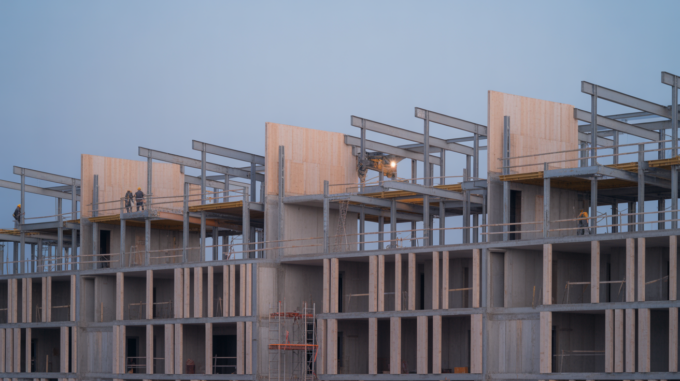
We begin with massing: how volumes stack, carve, and step to shape silhouette and daylight. A simple bar shifted into an L can define a courtyard: a tower’s setbacks tune wind and reduce apparent bulk. We model shadows at different hours and seasons because volume is read by light.

Geometry And Typology
Geometry gives us discipline, rectilinear grids for efficiency, radial systems for focus, diagonals for movement. Typology anchors expectations: a basilica hall signals procession: a courtyard house signals privacy. We often hybridize types to suit program while keeping the geometry clear enough to navigate.
Solid and Void Relationships And The Envelope
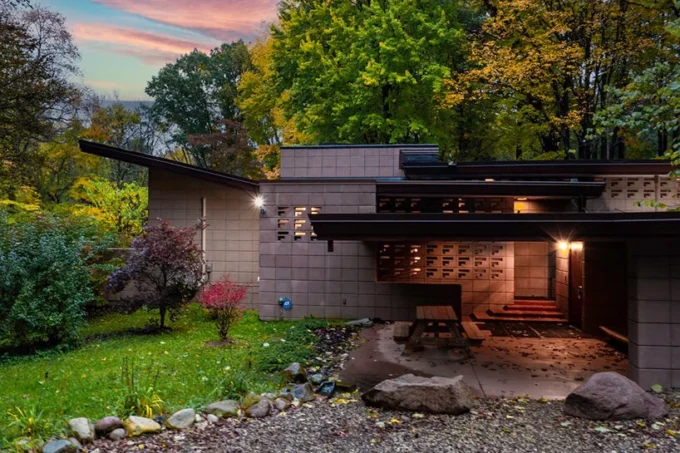
The envelope is where mass meets climate and city. We balance solid and void so façades have proportion and performance: deeper solids for solar control, larger voids to announce entries or views. Voids aren’t just windows: they’re loggias, arcades, and cuts that articulate edges and invite occupation.
Balance In Space And Facade
Symmetry And Asymmetry
Symmetry is persuasive when we need ceremony or ease of orientation. Asymmetry can be more dynamic, distributing functions honestly. We ask: where does equilibrium live? Sometimes a quiet, symmetrical entry stabilizes an otherwise asymmetrical plan.
Visual Weight, Hierarchy, And Rhythm
Materials, depth, and contrast create visual weight. We set hierarchy so the eye finds anchors, entry first, then circulation, then secondary elements. Rhythm, bays, columns, mullions, keeps large façades humane. Breaking rhythm at a corner or threshold can cue a change in use.

Contextual Balance And Scale
We calibrate to neighbors and landscape. Cornice lines, floor-to-floor heights, and storefront cadence align to local scale without mimicry. Balance is also acoustic, thermal, and social: plazas sized to feel lively, not empty: courtyards tuned for daylight without glare.
Order, Proportion, And Systems
Grids, Axes, And Regulating Lines
Order emerges from systems we can repeat and adapt. Grids coordinate structure, planning, and services: axes anchor views and movement. Regulating lines align doors, windows, and joints so details click together and construction tolerances have a margin.

Proportioning Systems And Modules
Proportion is the quiet music of a project. Whether we use classical ratios, the Modulor, or a pragmatic module tied to a brick, consistent relationships reduce visual noise and waste. Modules also accelerate decisions, when everything snaps, we spend energy where it matters.
Sequence, Circulation, And Alignment
Order is felt in time. We choreograph approach, threshold, and reveal, compress then release, frame a view, turn the corner to light. Clear alignments between plan and section prevent wayfinding confusion and make accessibility intuitive, not afterthought.
Composition Strategies And Methods
Framing A Concept And Parti
We distill the brief into a parti, a diagram that states the big move. A bar wrapping a garden, a pinwheel of studios, a ridge that collects rain and people. The parti becomes our north star: when decisions get messy, we check back against it.

Contrast, Harmony, And Unity
We use contrast to create emphasis, heavy/light, rough/smooth, bright/shaded, then reconcile those opposites through alignment and proportion so the project holds together. Harmony comes from repetition and restraint: unity emerges when no piece feels arbitrary.
Light, Material, And Color As Compositional Tools
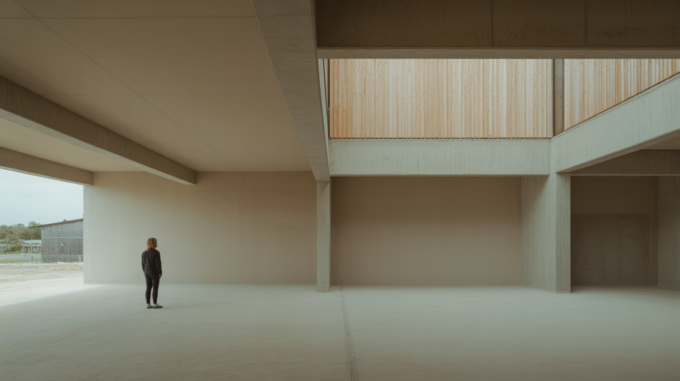
Light is our most persuasive medium. We shape it with depth, louvers, and reflectance so spaces change honestly through the day. Materials carry weight and warmth: we set a palette early and test pairings in real light. Color guides behavior, subtle for calm zones, saturated for cues and identity.
Applying The Principles: From Brief To Detail
Translating Site And Program
We map sun, wind, noise, views, and access, then overlay program adjacencies. If a clinic needs privacy and daylight, we might nest exam rooms around courtyards and lift public circulation to catch views. Architectural composition is the mediator between constraints and character.
Iteration, Testing, And Evaluation
We iterate ruthlessly: quick models, section cuts, and daylight simulations. We pin options, rank them against criteria, performance, cost, experience, and cut. Mockups and VR walkthroughs expose awkward alignments long before they become expensive.

Common Pitfalls To Avoid
- Fetishizing form without use: sculpture is fine: buildings must work.
- Overcomplicating grids: a simple, forgiving system beats a brittle one.
- Ignoring backs and sides: every elevation communicates.
- Letting MEP dictate composition late: coordinate systems early to protect intent.
Conclusion
When we treat Architectural Composition: Form, Balance, and Order as a living process, not a checklist, we get buildings that feel clear, resilient, and memorable. Start with a crisp parti, commit to a legible order, and edit until only the necessary remains. The result? Spaces that serve beautifully today and stay intelligible as needs change.
- architectural aesthetics
- architectural composition
- architectural design principles
- architecture composition techniques
- architecture design balance
- architecture design theory
- architecture form balance order
- balance in architectural design
- design balance in architecture
- elements of architectural composition
- form and order in architecture
- form balance in architecture
- harmony in architectural design
- modern architectural composition
- order in architecture
- principles of architectural design
- proportion in architecture
- spatial composition in architecture
- symmetry in architecture









Leave a comment