


Table of Contents Show
NEOM The Line is a proposed 170-kilometer linear city in Saudi Arabia’s Tabuk desert, designed as two parallel mirrored walls rising 500 meters above the ground and stretching from the Red Sea coast toward the inland mountains. Announced in 2021 as part of Saudi Vision 2030, the project promises a car-free, zero-carbon urban environment for up to 9 million residents powered entirely by renewable energy.
What Is NEOM’s The Line?
The Line is the flagship component of NEOM, a $500 billion development project initiated by Saudi Crown Prince Mohammed bin Salman in the northwest region of the kingdom. The name NEOM itself combines the Greek word for “new” with the Arabic word for “future,” signaling the ambition behind the entire development.

At its core, the neom the line concept rejects nearly every principle of traditional city planning. There are no roads, no cars, no traffic intersections, and no urban sprawl. Instead, all 170 kilometers of the city would be contained within two parallel skyscraper-height walls, 500 meters tall and 200 meters wide in total, including the open space between them, with a mirrored glass exterior reflecting the surrounding desert and sky. The structure would sit on a land footprint of just 34 square kilometers, while the rest of the surrounding territory would remain protected natural land.
The internal layout is organized vertically across multiple levels. Residential units, workplaces, schools, and cultural spaces would be stacked above a high-speed rail spine, making a full end-to-end journey possible in under 20 minutes. All daily essentials would be reachable within a five-minute walk, and artificial intelligence would coordinate everything from traffic management to predictive maintenance of building systems.
🔢 Quick Numbers
- 170 km: planned total length of The Line (NEOM, 2021)
- 500 m: height of each of the two parallel walls (NEOM official data)
- 34 sq km: total land footprint for a city of up to 9 million people (NEOM, 2022)
- $500 billion: total estimated budget for NEOM development, according to Saudi government announcements
The Architectural Concept Behind The Line

The design of neom’s the line draws on several urban planning traditions while breaking most of them. The linear city concept itself is not entirely new; theorists from Le Corbusier to Soviet urban planners proposed linear arrangements as a way to eliminate the centrifugal sprawl of circular cities. What makes The Line different is its scale and its insistence on extreme verticality.
The structural concept was developed with input from several major architecture firms. The city was planned as a chain of numbered modules, with different architecture studios working on different parts. Firms including Morphosis, Cook Haffner Architecture Platform, Pei Cobb Freed & Partners, HOK, LAVA, and OMA have been connected to the project. In November 2024, NEOM officially announced that Delugan Meissl Associate Architects (DMAA) and Gensler were appointed as lead designers for phase one, with Mott MacDonald serving as city infrastructure engineer.
Thom Mayne, founder of Morphosis and one of the architects who has spoken publicly about the project, described the concept as “incredibly simple” in its big idea: a linear form that eliminates the concentric-ring structure of traditional cities and replaces radial movement with purely axial movement. You travel along a single axis rather than outward from a center point.
🎓 Expert Insight
“It’s actually a complicated project, but the big idea is incredibly simple.”
Thom Mayne, Founder of Morphosis
Mayne’s observation points to the central paradox of The Line: its visual concept is strikingly legible, but the engineering, logistics, and governance systems required to make it function are without precedent at this scale. The simplicity of the linear form conceals immense complexity in execution.
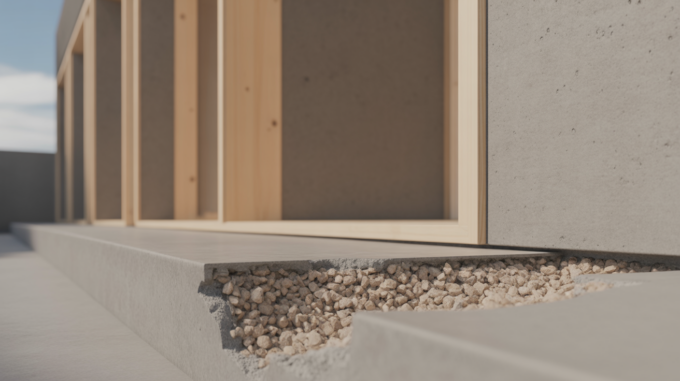
The structural foundation system is equally ambitious. Because The Line crosses wildly varying terrain, including hard mountain rock, open desert, and coastal salt flats, it requires a continuous piled raft foundation running the entire length. This involves driving thousands of concrete piles deep into the ground before connecting them with a continuous reinforced concrete slab. As of late 2024, NEOM reported that more than 120 foundation piles were being cast each week at the phase one site near the coast.
For architects interested in how parametric design tools are reshaping structural planning at extreme scales, our guide on parametric architecture principles provides relevant context on the computational methods being applied to projects like this.
How The Line Approaches Sustainability

The neom saudi arabia the line project positions sustainability as its defining promise. The city would run entirely on renewable energy, with no fossil fuels used in operations, transportation, or manufacturing. The vertical stacking of functions means that one kilometer of The Line could theoretically serve the same population as many square kilometers of conventional low-rise urban development, dramatically reducing infrastructure per capita.
The absence of private vehicles is central to the sustainability case. Roads account for a substantial share of urban land use in most cities, and their elimination would free that footprint for green space, agriculture, and civic uses. Instead, The Line’s primary transit spine is a high-speed rail running along the city’s length, with local mobility handled through pedestrian corridors and vertical circulation systems.
💡 Pro Tip
When analyzing The Line’s sustainability claims, architects and urban planners should distinguish between operational energy (which can realistically run on renewables) and embodied energy (the carbon cost of producing and transporting the vast quantities of concrete, steel, and glass required). The project’s published sustainability metrics focus almost entirely on the former, while critics argue the latter is the more pressing concern for a structure of this scale built in a remote desert location.
Water is among the most discussed constraints. The Tabuk region where The Line is being built receives very little rainfall. NEOM’s plans involve a large desalination facility at the Oxagon industrial port to supply the project, but this infrastructure was still under development as of mid-2025. The current construction phase ships water in by tanker, which is not a scalable long-term solution. For a broader look at how sustainable cities manage ecological limits, the article on ecological boundaries in urban design offers useful frameworks that apply directly to megaproject planning.
The 95% land preservation claim, one of the most cited figures in NEOM’s marketing, refers to the ratio of undeveloped NEOM territory to the total 26,500 square kilometer region. The Line itself sits on just 34 square kilometers, which is a remarkably compact footprint for a city of 9 million. Whether the surrounding protected land actually functions ecologically depends on factors including wildlife corridors, which the mirrored walls would interrupt, and the displacement of the indigenous Huwaitat tribe, which has drawn significant international criticism.
NEOM The Line Progress: What Has Actually Been Built?
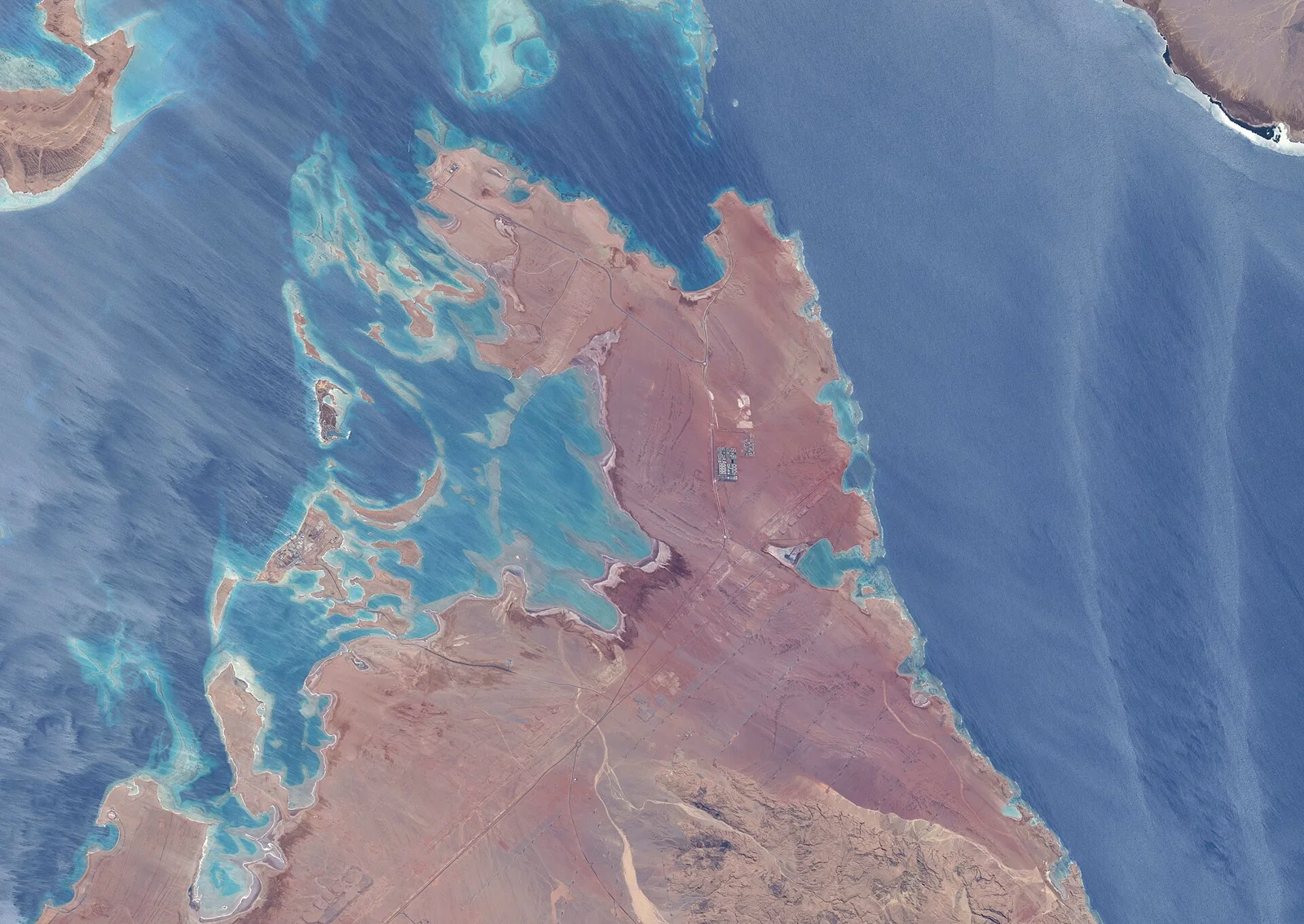
The line neom progress has been slower and more complicated than initial projections suggested. Earthworks along portions of the full 170-kilometer route began in late 2021, and by 2022 satellite imagery confirmed large-scale excavation activity across the site. NEOM’s official communications as of early 2025 described vertical construction beginning on the cores of the first phase near the coast, with piling operations continuing at a rate described as the largest such operation ever undertaken.

However, reporting throughout 2024 and 2025 painted a more sobering picture. The Wall Street Journal reported on an internal audit revealing extensive problems including “evidence of deliberate manipulation” by project managers. Saudi Arabia’s Public Investment Fund suspended work on the project in September 2025 until further notice, according to Wikipedia and multiple media sources. By late 2025, the ambition of the original plan had been substantially reduced.
In October 2024 the target was cut to a 5-kilometer central segment by 2030, with the full 170-kilometer city rescheduled for 2045. In May 2026, Semafor reported that construction had been delayed until at least after 2030. Reports from the Financial Times in early 2026 suggested that The Line would be “a totally different concept” using the existing infrastructure in a different manner, with a greater focus on industrial and data center uses.
⚠️ Common Mistake to Avoid
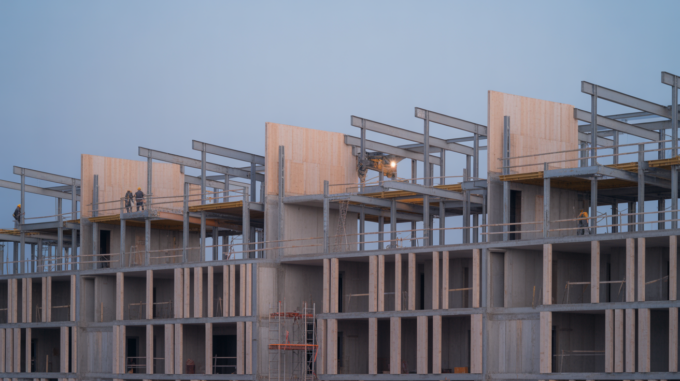
Many architectural discussions of The Line treat it as either a completed vision or a cancelled project. Neither is accurate. As of early 2026, significant foundation and piling work has been completed on a coastal segment, vertical steel cores were started for phase one before work was suspended in September 2025, and the project has been delayed rather than formally cancelled. The distinction matters for architects and urban designers studying the project: there is real built evidence to analyze, not just renderings. What has changed is the stated ambition and timeline, not the existence of physical construction.
Engineering Challenges at Unprecedented Scale
The engineering demands of the line neom saudi arabia project go beyond what any previous construction project has attempted. The 500-meter height is comparable to the world’s tallest buildings, but those are point structures with radial foundations. The Line must maintain that height across 170 kilometers of varying geology, meaning the structural engineering challenges multiply with every kilometer added.

Concrete supply is the most immediate constraint. Pouring concrete at the consistency and volume required for such a project demands a continuous, reliable supply chain for water, aggregate, and cement. Remote desert sections of the route lack all three. The planned solution was a network of concrete factories supplied by the Oxagon desalination plant, but that infrastructure was still in early stages as of 2025.
The mirrored glass exterior, one of the project’s signature visual elements, presents its own technical issues. A continuous reflective surface 500 meters tall and 170 kilometers long would redirect substantial amounts of solar radiation toward the surrounding desert floor and into low-altitude flight paths. NEOM has not publicly addressed how bird migration, which follows the route of the Gulf of Aqaba, would be affected by a continuous 170-kilometer mirror bisecting their flyway.
📌 Did You Know?
A 2023 internal draft board presentation obtained by the Wall Street Journal estimated the full completion of The Line would cost $8.8 trillion, approximately 25 times Saudi Arabia’s annual national budget. The same document projected a cost of $370 billion by 2035 for the first phase alone. These figures help explain why the project’s scope has been repeatedly revised since construction began.
For comparison, the Shanghai Tower, the world’s third-tallest building at 632 meters, took roughly 14 years to design and construct at a cost of approximately $2.4 billion. The Line envisions structures of comparable height running continuously for 170 kilometers. The gap between the two scales illustrates why many engineers have questioned whether the original vision is physically achievable within any realistic timeframe.
What Architects Can Learn from The Line
Whatever the eventual outcome of the neom the line project, its architectural ideas have already influenced the profession. The proposition that cities can be organized linearly rather than concentrically, that verticality can serve equity rather than just density, and that infrastructure can be shared rather than duplicated in every block are all genuine contributions to urban design thinking.
The project has also demonstrated the limits of architecture as a vehicle for social change. Several prominent architects withdrew from the project after concerns about human rights abuses during the displacement of the Huwaitat tribe and labor conditions on site. Norman Foster, for one, distanced himself from NEOM in 2018 after the killing of journalist Jamal Khashoggi, and Germany’s Süddeutsche Zeitung reported on the ethical questions facing the architects involved. These debates raised broader questions within the profession about the ethical responsibilities of architects working on state-funded megaprojects.
💡 Pro Tip
Architecture students and professionals studying The Line should separate three distinct analytical layers: the urban design concept (the linear form and vertical stacking), the technical engineering (foundations, structure, utilities), and the social and political context (land acquisition, labor, governance). Each layer has different lessons and different levels of transferability to other projects. A concept worth borrowing in urban design terms can still be accompanied by practices that are not worth replicating.
For architects interested in exploring how computational and parametric methods are being used across large-scale urban projects, the detailed look at principles of parametric architecture outlines the same tools that firms working on The Line’s modular design system have deployed.
The Broader Context: NEOM and Saudi Vision 2030

The line neom saudi arabia sits within a suite of megaprojects collectively valued at over a trillion dollars. NEOM itself spans approximately 26,500 square kilometers in the Tabuk province and includes several other developments: Trojena, a mountain resort planned to host the 2029 Asian Winter Games (now under review for postponement to 2033), Sindalah, a luxury island development in the Red Sea, and Oxagon, a floating industrial port city.
All of these projects connect to Vision 2030, Crown Prince Mohammed bin Salman’s economic diversification plan that aims to reduce Saudi Arabia’s dependence on oil revenues by developing tourism, technology, and manufacturing sectors. The Line was the most internationally visible component of this strategy, and its difficulties have reflected the broader pressures facing the program as oil prices fluctuated and fiscal constraints tightened after years of ambitious spending.
Jerry Inzerillo, CEO of the $63 billion Diriyah heritage redevelopment in Riyadh, described The Line not as a failure but as a “laboratory for what quality of life might look like in 2040.” This framing is worth taking seriously. Even a scaled-down, partially built version of The Line will generate real data about vertical urbanism, car-free transit systems, and AI-managed infrastructure that no conventional city could produce. For architects focused on how innovative ideas in architecture move from concept to tested reality, The Line’s trajectory, whatever it ultimately becomes, provides a uniquely detailed case study.
🏗️ Real-World Example
Masdar City (Abu Dhabi, 2008 to ongoing): Planned as a zero-carbon, car-free city for 50,000 residents, Masdar City began construction in 2008 and remains only partially built, currently housing roughly 2,000 residents and serving primarily as a research hub. Its partial success and partial failure provide the closest real precedent for evaluating The Line: the zero-carbon infrastructure concept was technically achievable, but population targets and timelines proved wildly optimistic. Many of the same dynamics are now visible in The Line’s development trajectory.
Is The Line Still Being Built in 2025 and 2026?
As of early 2026, The Line’s status is in transition. Saudi Arabia’s Public Investment Fund officially suspended construction in September 2025, and reporting through early 2026 confirmed that a design review was underway, with architects working on a more modest reimagining that would use the existing coastal infrastructure in a different configuration. The original vision of 170 kilometers, 9 million residents, and 2030 completion is no longer the operational target.
What remains is the first coastal segment, where foundation piling and early vertical construction have taken place, and the 2034 FIFA World Cup stadium, which NEOM had planned to include in the project’s first phase suspended approximately 350 meters above the ground. Whether that stadium can be completed in time for the World Cup is one of the most closely watched questions in global construction.
The designation of The Line as a likely architectural failure by international media, noted by multiple outlets in late 2025, should be read carefully. The linear city concept itself has not failed. What has proven unsustainable is the combination of extreme scale, compressed timeline, remote location, and centralized political control operating without the feedback mechanisms that typically help urban projects self-correct. Those are lessons the architecture and urban planning professions will study for decades.
✅ Key Takeaways
- NEOM The Line is a 170km linear city concept designed as two mirrored 500-meter walls in Saudi Arabia’s Tabuk desert, with no roads, cars, or carbon emissions in its operational design.
- Construction began in 2021 with large-scale earthworks; by 2025, a coastal phase one segment was under active vertical construction before being suspended for review in September 2025.
- The original targets of 9 million residents and 2030 completion have been revised; Saudi Arabia cut the target to a 5km segment by 2030 in October 2024, and in May 2026 construction was reported delayed until after 2030.
- Major engineering challenges include concrete and water supply in a remote desert location, seismic and geological variation along the route, and the ecological impact of a continuous mirrored surface on bird migration.
- Several prominent architects, including Norman Foster, withdrew from the project citing human rights and ecological concerns, raising important ethical questions for the profession about large-scale state-funded development.
- The linear city concept itself, separating vehicle infrastructure from urban living, stacking functions vertically, and preserving surrounding land, remains an influential contribution to urban design thinking regardless of the project’s outcome.
Note: Project status, budgets, and timelines for NEOM The Line have changed frequently since the project was announced. The figures and status reports in this article reflect information available as of early 2026. For the latest official updates, visit neom.com.









Leave a comment